


More news on this day
The United States has tightened travel warnings for 13 Middle Eastern nations after a new round of security assessments, signaling a more cautious stance toward nonessential travel across one of the world’s most strategically important regions.
Get the latest news straight to your inbox!
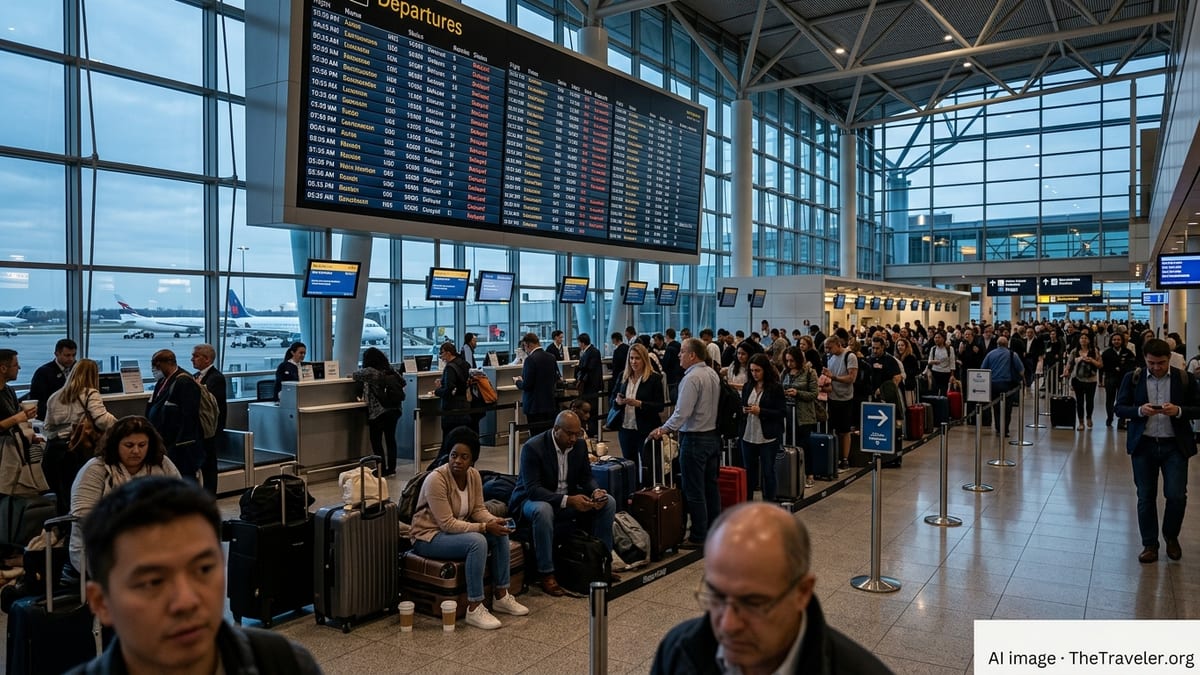
Wide-Ranging Advisories Updated in Late October
Publicly available State Department information shows that travel advisories for 13 Middle Eastern countries were updated in the second half of October 2026, with fresh language highlighting the risk of conflict-related violence, terrorism and sudden disruptions to air travel. The affected destinations are Bahrain, Iran, Iraq, Israel, Jordan, Kuwait, Lebanon, Oman, Qatar, Saudi Arabia, Syria, the United Arab Emirates and Yemen.
Advisory pages for several of these nations now carry update dates around 23 October 2026, indicating that US officials have recently reviewed and adjusted their guidance. For some countries, the overall advisory level has not changed, but the detailed text has been revised to account for new security developments, including an escalation in regional tensions and cross-border attacks.
The updated advisories come on top of a standing worldwide caution that urges Americans to exercise increased vigilance in light of ongoing conflict involving Iran, Israel, Yemen’s Houthi movement and other armed actors. The combination of global alerts and country specific warnings points to what analysts describe in published coverage as a sustained period of elevated risk for civilian travelers in and around the Middle East.
While the advisories are formally described as guidance rather than bans for private citizens, travel industry assessments note that such moves often lead to reduced demand for tourism, corporate travel and religious visits, particularly where levels rise to “Reconsider Travel” or “Do Not Travel.”
Levels Range From ‘Reconsider Travel’ to ‘Do Not Travel’
The 13 updated advisories span the full spectrum of the State Department’s four tier system, from Level 2, which calls for increased caution, to Level 4, the most severe “Do Not Travel” designation. Countries including Iran and Yemen are listed at Level 4, reflecting risks related to armed conflict, terrorism, the possibility of wrongful detention and limited US consular access.
Iraq, Syria and Lebanon also feature prominently among the higher risk destinations, with advisory language emphasizing instability, the presence of armed groups and the potential for kidnapping or rocket and drone attacks. In these cases, the October updates refine existing warnings that have been in place for much of the past year, aligning them with the latest pattern of incidents and military activity.
Saudi Arabia, Qatar, Bahrain, Kuwait, Oman and the United Arab Emirates are generally categorized at intermediate levels, such as Level 2 or Level 3, but the revised text now pays closer attention to threats linked to Yemen’s Houthi movement and Iranian aligned networks. Travelers are informed that airports, oil facilities, border areas and other critical infrastructure have been targeted in recent months, with some attacks resulting in casualties and flight cancellations.
Israel and Jordan, both important gateways for religious and cultural tourism, remain under advisories that stress terrorism and regional conflict risks. Adjustments made in October highlight the possibility of sudden airspace restrictions, curfews or localized fighting, particularly in border regions and areas close to conflict zones.
Regional Security Shifts Behind the New Warnings
The tightened guidance follows a series of security incidents that have drawn renewed attention to civilian vulnerability in the region. Published coverage from international and regional outlets in October 2026 describes expanded missile and drone activity by Yemen’s Houthi forces against targets in Saudi Arabia, including attacks on airports and energy infrastructure that have disrupted commercial flights.
News reports also indicate that the United States has reduced staffing or authorized partial departures at selected diplomatic posts in the Middle East in response to intelligence about possible threats to American personnel. While such measures are primarily aimed at official missions, they are often mirrored in travel advisories so that private citizens can factor the same information into their plans.
In parallel, the State Department’s worldwide caution, last updated in mid 2026, urges Americans to consider the potential for demonstrations, retaliatory attacks and opportunistic violence linked to the broader confrontation involving Iran, Israel and allied groups. Observers note that these dynamics can spill across borders and affect countries that are not direct parties to the fighting but host foreign bases, transit hubs or large expatriate communities.
Security analysts quoted in media assessments argue that the October changes do not necessarily point to an imminent, specific operation but rather codify a trend that has been developing for months: a more volatile environment for aviation and cross border movement in much of the Middle East.
Practical Impact on Flights, Routes and Insurance
For travelers, the most immediate consequence of the new advisories is the possibility of flight disruptions and limited route options. Statements from regional carriers and airport operators over recent weeks describe temporary suspensions or rerouting of services through certain air corridors, particularly those close to Yemen, the Red Sea and parts of the Gulf, as airlines respond to risk assessments and regulatory guidance.
Insurance implications are also significant. Travel and evacuation insurers commonly reference official advisories when setting coverage conditions, premiums and exclusions. Industry briefings circulated in 2026 suggest that journeys into Level 4 destinations, or into Level 3 areas without clear business or humanitarian justification, may attract surcharges or fall outside standard policies, leaving travelers more exposed if emergencies occur.
Package tour operators and pilgrimage organizers are monitoring the situation in countries such as Saudi Arabia, Jordan and Israel, which host major religious and heritage sites. Some itineraries have already been adjusted to reduce time in high risk zones, avoid night time overland travel or shift connecting flights to airports perceived as less vulnerable to missile or drone activity.
Analysts point out that, even where daily life continues largely as normal in major cities, heightened alert levels can affect visa processing times, security procedures at airports and the availability of regional low cost flights, all of which combine to make itineraries less predictable than in previous years.
Guidance for Americans Considering Travel
Public travel advice from US authorities encourages citizens to consult destination specific advisory pages before booking, enroll in the government’s traveler notification program and review contingency plans with family, employers and tour companies. The latest Middle East updates reiterate that conditions can change with little warning, especially in border regions, conflict zones and areas hosting foreign military facilities.
American travelers are urged in publicly available guidance to maintain flexible arrangements, including refundable tickets where possible, and to keep sufficient funds and documentation on hand to change routes or depart at short notice. Travelers transiting major hubs in the Gulf are advised to monitor alerts from both airlines and local airports in case airspace restrictions or security incidents force diversions.
Analytical reports from the travel and hospitality sector contend that demand for trips to parts of the Middle East is unlikely to disappear entirely, given the region’s economic importance and its role as a connector between Europe, Asia and Africa. However, they predict a continued shift toward careful risk management, with businesses and individuals weighing the updated US advisories heavily in their decisions.
The latest tightening of US warnings for 13 Middle Eastern nations therefore marks another step in an evolving realignment of global travel patterns, in which safety assessments, rather than pure tourism appeal, increasingly shape where and how Americans move across the region.