


More news on this day
The United States has tightened travel warnings across 13 countries in the Middle East, updating advisories in late October 2026 in response to missile and drone attacks linked to Yemen’s Houthi movement, wider tensions with Iran and the risk of rapid spillover across the region.
Get the latest news straight to your inbox!
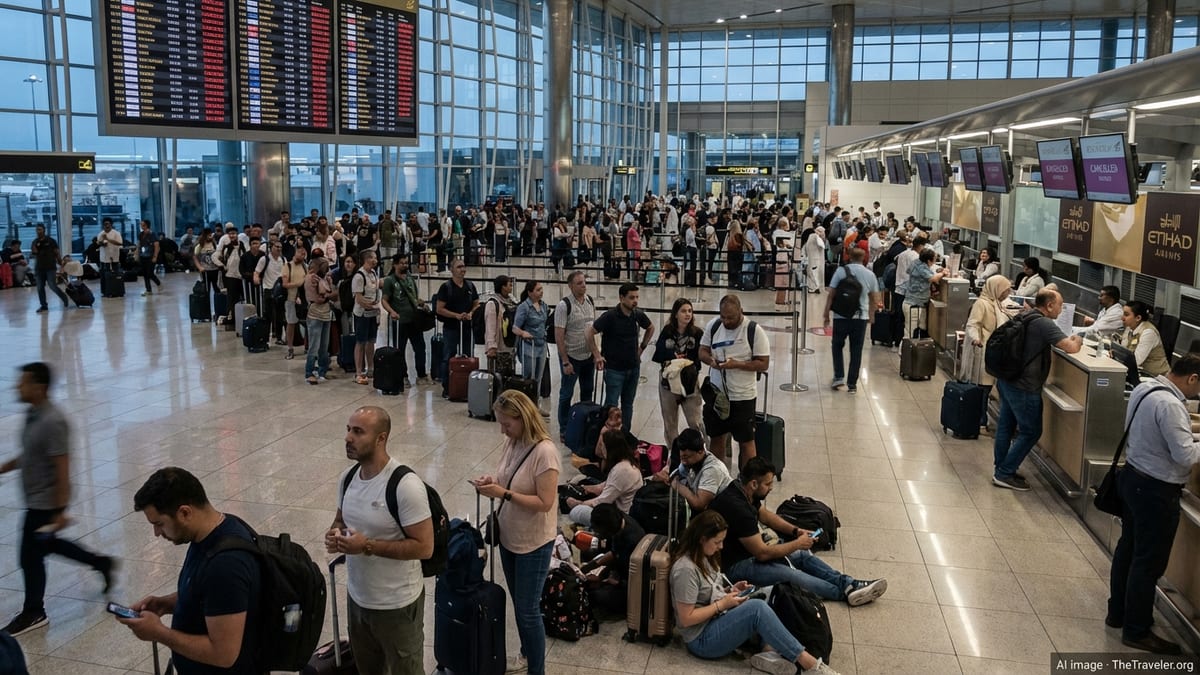
Advisories Updated for a Broad Middle East Arc
According to publicly available State Department advisory pages and compiled media coverage, the refreshed warnings issued around October 23, 2026, apply to Saudi Arabia, Bahrain, Iran, Iraq, Jordan, Lebanon, Kuwait, Oman, the United Arab Emirates, Qatar, Syria, Yemen and Israel. The group spans the Gulf, the Levant and conflict zones along the Red Sea, covering both long-standing hotspots and countries that are normally key transit hubs for global air travel.
Government advisory summaries show terrorism as a central concern across all 13 destinations, with many entries also citing armed conflict, civil unrest, kidnapping and limits on the ability of U.S. personnel to provide emergency assistance outside major cities or in border areas. The revisions do not create new categories of risk, but they align the language across the region to reflect a shared threat environment shaped by recent strikes and retaliatory actions.
Public datasets that track advisory changes indicate that all 13 Middle East entries received updates dated October 23, 2026, marking a coordinated regional review rather than isolated country moves. While overall levels in some places were already high, the synchronized timing underscores a shift from country-specific concerns to a more integrated assessment of how conflict in one area can quickly affect travel conditions across others.
Mixed Risk Levels, From Reconsider Travel to Do Not Travel
Advisory levels now range from Level 3 “Reconsider Travel” to Level 4 “Do Not Travel,” depending on the severity and immediacy of the threat. Public State Department pages show that Iraq, Syria and Yemen are in the highest-risk category, reflecting active conflict, the presence of armed groups and persistent targeting of infrastructure. Separate regional risk assessments circulated earlier in 2026 also place Iran and parts of Lebanon in the same top tier, citing a combination of state and non-state actors and limited safe havens for visitors.
Other destinations central to business and pilgrimage travel, including Saudi Arabia and several Gulf states, are classified at Level 3, signaling that nonessential trips should be deferred or carefully weighed against the security environment. For example, the Saudi Arabia advisory updated on October 23, 2026, notes a heightened possibility of missile and drone attacks, including threats directed at airports and other critical infrastructure, while stopping short of a blanket prohibition on all travel.
Israel and neighboring territories, already subject to extensive security warnings since earlier phases of the regional crisis, remain in the upper tiers of concern. Prior government and industry risk bulletins from spring and summer 2026 highlighted overlapping air-defense alerts, intermittent flight suspensions and restrictions on movements near borders, conditions that still shape the latest advisory language for travelers.
Houthi Attacks and Iran Tensions Drive Regional Rethink
Recent reporting by international and regional outlets links the October 2026 advisory refresh directly to an escalation in attacks attributed to Yemen’s Houthi movement, particularly strikes on airports and energy infrastructure in Saudi Arabia. One widely covered incident involved an attack near Riyadh’s main international airport earlier in the month, in which a U.S. citizen was reported killed, prompting security messages from multiple diplomatic missions across the Gulf.
Coverage from specialist Middle East publications and broadcast networks notes that Washington now treats the Houthi threat less as a localized Yemeni issue and more as a regional risk that can disrupt aviation routes, energy exports and maritime shipping in the Red Sea and the Gulf. The updated advisories emphasize the potential for sudden flight cancellations, temporary airspace closures and restricted access to ports, even in countries that have not themselves been hit by strikes.
At the same time, the travel warning overhaul is occurring against a backdrop of elevated friction with Iran, which faces its own high-level advisory and is referenced in several neighboring country notices as a source of missile, drone or proxy activity. Publicly available summaries for Saudi Arabia, Iraq and Lebanon, for example, highlight concerns about Iranian-supported groups operating in or near their territory, adding another layer of volatility for travelers and airlines planning routes through the region.
Embassy Staffing Cuts and Operational Constraints
In parallel with the advisory updates, news reports from late October 2026 describe a reduction in staffing at U.S. embassies in Jordan, Lebanon, Qatar and the United Arab Emirates, along with an earlier decision ordering nonessential personnel to leave Saudi Arabia. Public statements and leaked guidance cited by major wire services describe the moves as precautionary, intended to reduce exposure of diplomats and their families as missile and drone threats evolve.
Travel advisories explicitly flag that the U.S. government’s capacity to assist citizens is constrained in a number of the 13 countries, either due to the downsizing of missions, movement restrictions on embassy staff or the suspension of routine consular services. In conflict-affected locations such as Iraq, Syria, Yemen and parts of Lebanon, existing limitations on emergency response appear to be reinforced rather than newly created, reflecting long-standing difficulties operating outside secure compounds.
Security alerts issued throughout 2026, including a worldwide caution circulated in the first half of the year and later region-focused notices, warned Americans to be prepared for limited transportation options and to have contingency plans for departure. The latest moves to trim staffing and recalibrate services in several Middle East capitals deepen that guidance, signaling that travelers may need to rely more heavily on their own commercial and private arrangements in the event of a rapid deterioration in conditions.
Impact on Airlines, Transit Hubs and Travelers
Airlines and travel-industry assessments compiled over recent months show that carriers have already adjusted or suspended some routes connecting Europe, Asia and Africa via Middle East hubs. Earlier in 2026, several major European and Asian airlines temporarily halted flights to high-risk destinations such as Iraq and Syria, while trimming frequencies to Gulf gateways during peaks of regional tension. The latest round of U.S. warnings adds to the pressure on carriers to revisit their risk calculations for overflight corridors and stopover schedules.
Large connecting hubs such as Dubai, Doha and Abu Dhabi remain operational, but industry briefings circulated to corporate clients highlight the possibility of longer routings, last-minute schedule changes and tighter security screening for passengers continuing on to or from higher-risk cities. Travelers using these airports as transit points to reach third countries are advised in public guidance to monitor airline notifications closely and to allow additional time for connections in case of disruption.
For individual travelers, the practical effect of the tightened advisories varies widely. Those with essential work assignments, family ties or religious obligations to destinations classified at Level 3 are urged in official guidance to register their travel details, keep documents and communications devices readily accessible, and maintain flexible itineraries that can accommodate sudden changes. For Level 4 locations, U.S. government advice continues to discourage all travel, pointing to the combination of direct security threats and the limited prospect of rapid assistance should conditions worsen.
Publicly available information from both government and industry sources stresses that the situation remains fluid across the Middle East and that further revisions to advisory levels, airline operations and consular presence are possible if the security environment changes again in the weeks ahead.