


More news on this day
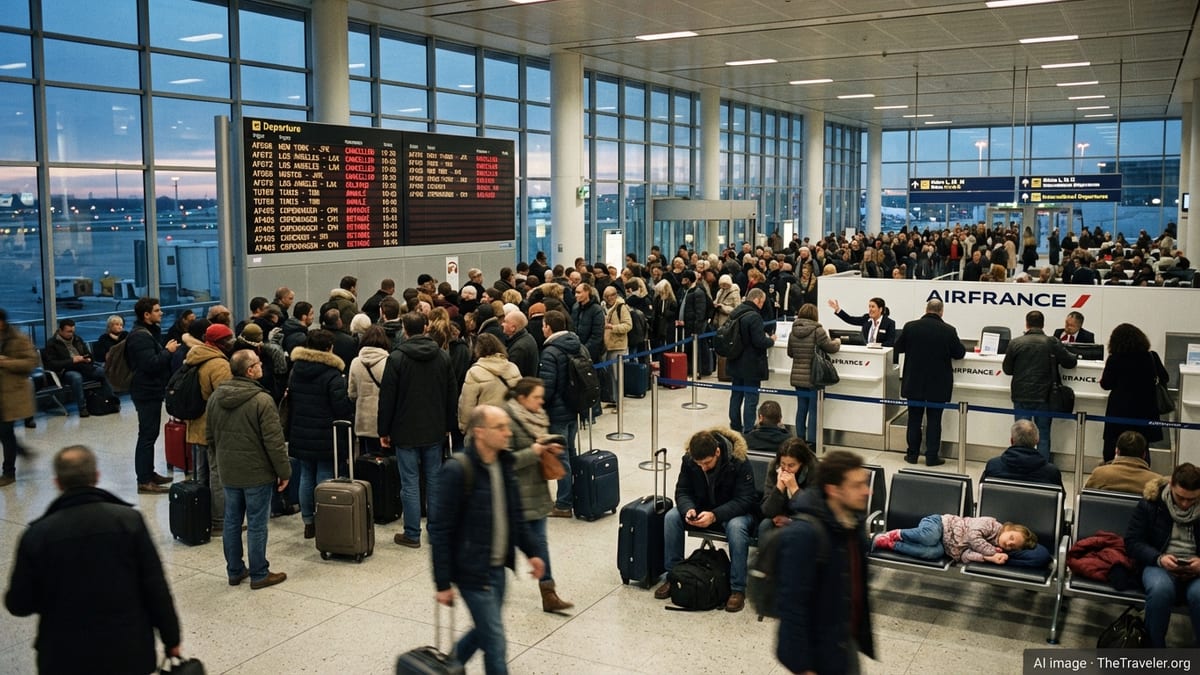
More than 100 Scandinavian Airlines passengers found their overnight travel plans upended after an Airbus A330 operating a New York to Copenhagen flight turned back over the Atlantic and diverted to Newark Liberty International Airport, following what reports describe as a suspected technical issue.
Get the latest news straight to your inbox!
Transatlantic Flight Diverts After Suspected Technical Fault
According to publicly available flight data and published coverage, the incident unfolded on Friday, October 23, 2026, on a Scandinavian Airlines service from New York John F. Kennedy International Airport to Copenhagen Airport. The widebody aircraft, an Airbus A330, had already crossed part of the North Atlantic when the crew opted to turn back toward the New York area due to indications of a possible technical fault.
Data cited in multiple aviation trackers shows the flight abandoning its eastbound course and routing back to the northeastern United States, ultimately landing at Newark Liberty International Airport rather than returning to JFK. Aviation-focused outlets report that no injuries have been noted and that the aircraft landed safely in Newark, where it taxied to a gate for inspection.
While specific technical details have not been disclosed in public sources, the sequence of events suggests a precautionary action by the crew, consistent with standard safety protocols on long-haul operations over oceanic airspace. In such circumstances, flight crews are trained to divert when cockpit indications raise concern about an aircraft system’s reliability.
Federal records reviewed over the weekend do not list any associated accident or damage reports for this particular flight, indicating that the diversion is currently treated as an operational incident rather than a more serious event.
Over 100 Passengers Face Overnight Disruption
Aviation industry coverage of the diversion indicates that more than 100 passengers were aboard the New York to Copenhagen service when the unscheduled return unfolded. Instead of arriving in Denmark on Saturday morning as planned, travelers found themselves unexpectedly disembarked in New Jersey late Friday, needing overnight arrangements before continuing to Europe.
Reports describe passengers being informed of the suspected technical problem during the flight and later being advised of delays while the A330 was evaluated in Newark. With crew duty-time limits, aircraft checks and limited late-night transatlantic departure options, the disruption extended into the next day, leaving travelers to manage missed connections and last-minute changes to onward journeys across Scandinavia and the rest of Europe.
Publicly available accounts suggest that rebooking efforts focused on moving passengers to a replacement Scandinavian Airlines departure from Newark to Copenhagen once an aircraft and crew were available. Flight-status tools show an SAS A330-300 operating the regular Newark to Copenhagen rotation on Saturday, October 24, indicating that transatlantic service from the New York area to the Danish capital resumed the following day.
The incident adds to a series of recent long-haul disruptions where operational or technical concerns led to significant schedule changes, underscoring how quickly a routine overnight crossing can become an unplanned layover for hundreds of travelers.
What Is Known About the Aircraft and Route
Scandinavian Airlines regularly uses Airbus A330 aircraft on routes linking its Copenhagen hub with major North American gateways, including the New York metropolitan area. Fleet data and flight-tracking records show that the A330 involved in Friday’s diversion had continued operating on the carrier’s transatlantic network after the incident, which suggests that any identified issue was either resolved or did not require extended maintenance downtime.
The New York to Copenhagen pairing remains one of SAS’s key long-haul links, feeding connections across Scandinavia and northern Europe. The decision to divert the flight to Newark, rather than returning to JFK or continuing toward Europe, aligns with operational considerations such as available maintenance resources, gate space and crew logistics in the busy New York and New Jersey airport system.
Newark Liberty, while located in neighboring New Jersey, is part of the broader New York aviation market and regularly handles transatlantic traffic. For airlines, the choice of diversion airport in the region can depend on runway length, technical support on the ground, and how easily passengers can be reaccommodated onto later services.
Available schedule information indicates that SAS maintained its usual Copenhagen to New York operations over the weekend, with other A330s continuing to shuttle between Denmark and the United States, highlighting the carrier’s reliance on this aircraft type for long-haul connectivity.
Rules and Expectations for Stranded Passengers
The diversion comes just days after new U.S. Department of Transportation rules on airline customer service took effect on October 19, 2026. Publicly available guidance highlights a clearer distinction between disruptions considered within an airline’s control and those classified as outside factors, such as severe weather or air traffic control constraints.
Industry coverage notes that when a delay or cancellation stems from issues within an airline’s control, including many mechanical or operational problems, carriers are generally expected to provide more robust assistance, such as meal vouchers or hotel accommodation for overnight disruptions. Many large airlines already outline these commitments in their customer-service policies, though the specifics can vary by carrier and by circumstance.
For international trips involving European carriers, additional rights may apply under European Union and related regulations, which set standards for compensation and care depending on the length of delay, distance flown and cause of disruption. However, compensation rules are complex, and publicly available consumer guidance urges passengers to document events carefully and consult both U.S. and European regulations when seeking redress for major delays on transatlantic flights.
In the case of the SAS A330 diversion to Newark, published reports do not yet provide a detailed breakdown of how overnight accommodation, ground transportation and rebooking were handled for each traveler. Passengers affected by similar incidents are typically encouraged by consumer advocates to retain boarding passes, receipts and written communication from airlines to support any later claims.
Growing Scrutiny on Long-Haul Reliability
The New York to Copenhagen diversion adds to a wider pattern of attention on long-haul reliability as airlines operate dense schedules with high aircraft utilization. In recent months, various carriers have faced scrutiny after extended delays, inflight turnbacks and diversions that left travelers unexpectedly overnighting in hub cities or outstations.
Aviation analysts point out that long transoceanic sectors offer limited options once an aircraft is far from land, which can prompt conservative decisions when cockpit instruments indicate anything out of the ordinary. Turning back toward a major airport with extensive support infrastructure is often considered the most prudent course of action, even when it leads to substantial inconvenience for passengers onboard.
At the same time, regulators in the United States and Europe have increased the visibility of passenger-rights tools, encouraging travelers to check real-time flight-status platforms, airline apps and official advisories before heading to the airport. For those booked on overnight transatlantic services, industry observers often recommend allowing additional buffer time at the destination when critical connections or events depend on on-time arrival.
As of Sunday, October 25, 2026, Scandinavian Airlines’ published flight-status pages show its transatlantic network operating, with A330 services continuing to connect Copenhagen and North American gateways, while the airline and regulators monitor ongoing operational performance across the wider industry.