


More news on this day
The United States has tightened its travel advisory for Israel, citing the growing threat posed by Yemen’s Houthi movement to regional air and sea routes and warning American travelers to prepare for potential disruptions across the eastern Mediterranean and Red Sea corridors.
Get the latest news straight to your inbox!
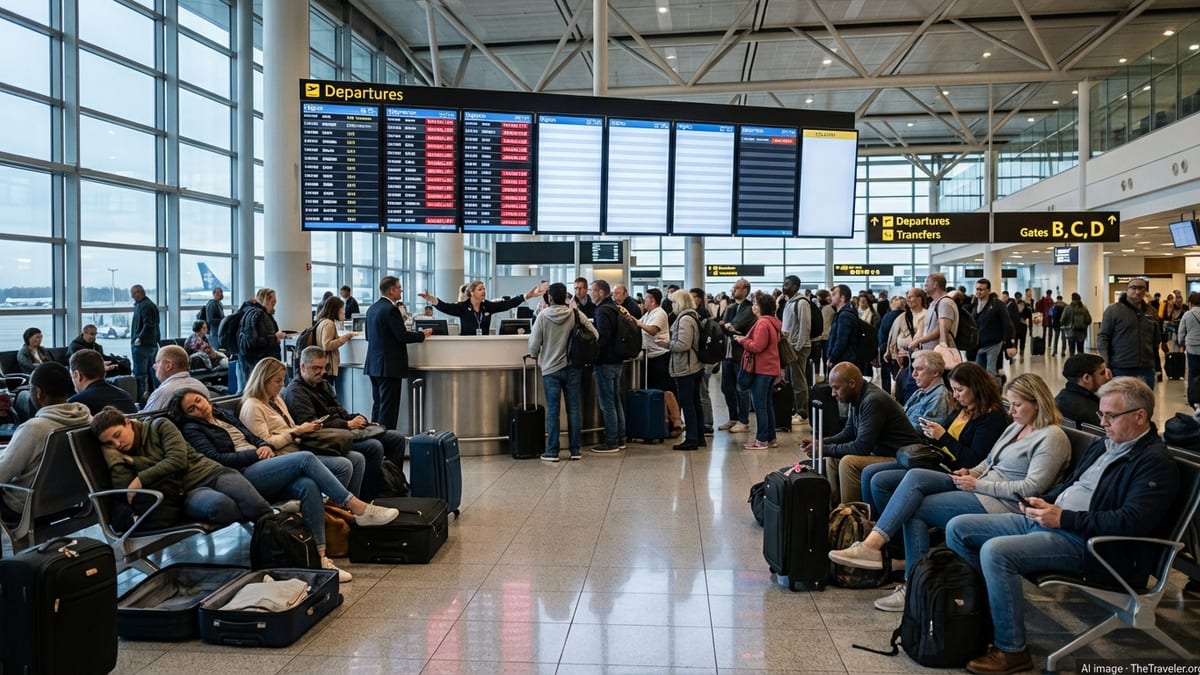
Advisory Raised as Regional Security Picture Shifts
According to the latest update from publicly available State Department information, Israel remains at Level 3, which urges U.S. citizens to reconsider travel. The advisory for Israel was reissued on August 26, 2026, and further updated on October 22, 2026, with new language reflecting evolving security risks and procedural changes such as the introduction of Israel’s Electronic Travel Authorization system for short-term visitors.
The revised wording draws more explicit links between travel risk and the wider Middle East security environment, including missile and drone capabilities held by non-state actors. Open-source analyses and recent government documents describe how the Houthis have extended their reach far beyond Yemen, targeting shipping lanes and at times launching long-range projectiles toward Israel and nearby waters, developments now reflected in the advisory’s emphasis on regional instability.
Public guidance for U.S. citizens in Israel continues to stress the possibility of rocket fire, armed unmanned aerial vehicles and sudden security incidents in urban centers. Travelers are directed to monitor local alert applications and to be ready to move quickly to hardened shelters when sirens sound, a precaution that has taken on added weight as cross-border threats in the broader region intensify.
The update comes alongside a standing worldwide caution that urges Americans to exercise increased vigilance when traveling internationally. That global notice, renewed in July 2026, highlights the risk that regional flashpoints can trigger rapid changes in local security conditions and transport operations, a pattern that recent Houthi activity has reinforced.
Houthi Reach From Yemen to the Red Sea and Beyond
Security assessments issued by U.S. maritime and aviation regulators describe the Houthis as a persistent risk to commercial shipping and aviation in and around the Red Sea, Bab el Mandeb Strait, Gulf of Aden and adjoining waters. A 2026 advisory from the U.S. Maritime Administration notes that, even during periods when no attacks are recorded, Houthi capabilities and intent leave commercial vessels at continuing risk, particularly those perceived to be linked to the United States, Israel or their partners.
Research compiled for the U.S. Congress and independent security think tanks traces a pattern of Houthi operations since late 2023, starting with attacks on ships believed to be bound for Israeli ports and later expanding to vessels flagged to or owned by a wide range of countries. These reports detail the use of anti-ship ballistic missiles, cruise missiles, drones and crewed small boats, tactics that have disrupted one of the world’s most important maritime corridors and driven many operators to divert around southern Africa.
International monitoring by the United Nations and specialist maritime-risk firms documents at least dozens of verified attacks on commercial vessels in the Red Sea and Gulf of Aden in recent years, with incidents involving both direct hits and near-miss missile falls close to shipping lanes. The resulting increase in insurance costs and voyage times has contributed to higher freight prices and periodic congestion at alternative routes.
The same assessments note that the Houthis have periodically announced their willingness to target Israeli-linked or Israel-bound ships and to strike targets inside Israel itself, particularly during spikes in regional tension. While successful long-range strikes on Israel have been limited, defense analysts argue that even attempted launches shape the risk calculus for airlines and cruise or ferry operators serving the eastern Mediterranean and Red Sea ports.
What the Advisory Means for Air Travelers to Israel
The updated Israel travel advisory underscores that security conditions can affect flights not only to and from Ben Gurion Airport near Tel Aviv but also across regional airspace. International coverage of recent Houthi attacks on airports in neighboring states, including strikes that temporarily closed major hubs on the Arabian Peninsula, illustrates how missile and drone activity in Yemen and surrounding waters can ripple through airline schedules far beyond the immediate conflict zone.
Airlines serving Israel have already experienced periods of rerouting and schedule changes in recent years in response to both local rocket fire and Red Sea threats. Public notices from diplomatic missions across the Middle East in October 2026 highlight the possibility of sudden airspace closures, flight diversions and extended layovers as carriers adjust routings to avoid perceived risk areas near Yemen and the southern Red Sea.
Travelers heading to Israel are advised in official public materials to remain in close contact with their airlines for the latest information on delays, cancellations and rebookings. The worldwide caution and regional alerts recommend maintaining flexible itineraries, allowing additional time for connections and keeping contingency funds available in case overnight stays or new tickets become necessary due to security-related disruptions.
In addition, the October 2026 update reiterates that U.S. government personnel in Israel may face movement restrictions related to rocket or drone activity. While those limitations apply specifically to official staff, they serve as a signal that certain areas or routes may be considered higher risk at particular times, a factor that private travelers and tour operators increasingly track through local news and embassy security messages.
Implications for Maritime Routes and Cruise Itineraries
For travelers reaching Israel by sea, the resurgence of concern over Houthi attacks has direct implications. Advisories from the U.S. Maritime Administration and allied governments describe a security environment in which ships transiting the Red Sea and Bab el Mandeb Strait are encouraged to coordinate with naval information centers, increase vigilance, and in some cases reroute entirely away from traditional passages toward Eilat or other eastern Mediterranean ports served via the Suez Canal.
The International Maritime Organization and other international bodies have highlighted deadly attacks on merchant vessels in the Red Sea during 2024, 2025 and 2026, prompting the creation and extension of multinational naval missions to protect shipping. While many cruise lines had already scaled back or suspended Red Sea itineraries during earlier phases of the crisis, industry reports indicate that renewed security advisories and higher insurance premiums continue to shape which Israel-bound voyages can operate economically and safely.
Some operators now favor eastern Mediterranean routes that approach Israeli ports from the west rather than through the Suez-Red Sea axis, reducing exposure to areas identified in public risk assessments as high-threat waters. Where Red Sea cruises continue, companies typically emphasize that itineraries may change at short notice in response to naval guidance, with port calls to Eilat or neighboring countries’ Red Sea resorts particularly sensitive to missile and drone alerts.
Travel guidance from several governments, including U.S. notices related to Yemen, explicitly warns against nonessential maritime travel in waters near Houthi-controlled territory and recommends that any remaining commercial movements adopt enhanced security procedures. For individual travelers, that combination of official caution and operational uncertainty has turned what was once a popular overland-and-sea routing to Israel into a more complex proposition that demands careful monitoring of developments.
How Travelers Can Respond to the New Risk Environment
For U.S. citizens considering travel to Israel, the tightened advisory does not amount to a prohibition but instead signals that the risk profile is higher and more fluid than for many other destinations. Publicly available State Department guidance urges would-be visitors to read the full country information page, register their trips through the online enrollment system, and closely follow security alerts issued by the embassy and consulates in Israel.
Security experts recommend that travelers planning Israel itineraries in the coming months pay particular attention to two sets of developments: local conditions inside Israel, such as flare-ups along the Gaza or Lebanese borders, and regional shifts related to Houthi activity, including reports of missile or drone launches into the Red Sea and Gulf of Aden and any resulting military responses. Changes in either arena can quickly affect the availability and reliability of flights and cruises.
Travel insurance has taken on renewed importance in this environment. Industry briefings note that not all policies cover war-related disruptions, and travelers are advised to examine policy language for exclusions related to terrorism, civil unrest or closure of airspace and ports. Products that explicitly include coverage for security-related cancellations or interruptions may carry higher premiums but can mitigate financial losses if itineraries must change suddenly.
Ultimately, the latest U.S. advisory positions Israel travel within a broader Middle East risk landscape shaped in part by the reach of the Houthi movement. For many visitors, especially those with family, business or religious ties, trips will continue, but the new guidance encourages a level of preparation that accounts for both in-country realities and the expanding radius of a conflict centered hundreds of miles away along the Red Sea and Yemeni coast.