


More news on this day
US air travelers are facing another day of widespread disruption as 129 flight cancellations and 1,794 delays ripple across the country, with Boston, Miami and several other major hubs reporting heavy operational strain, according to aggregated aviation tracking data.
Get the latest news straight to your inbox!
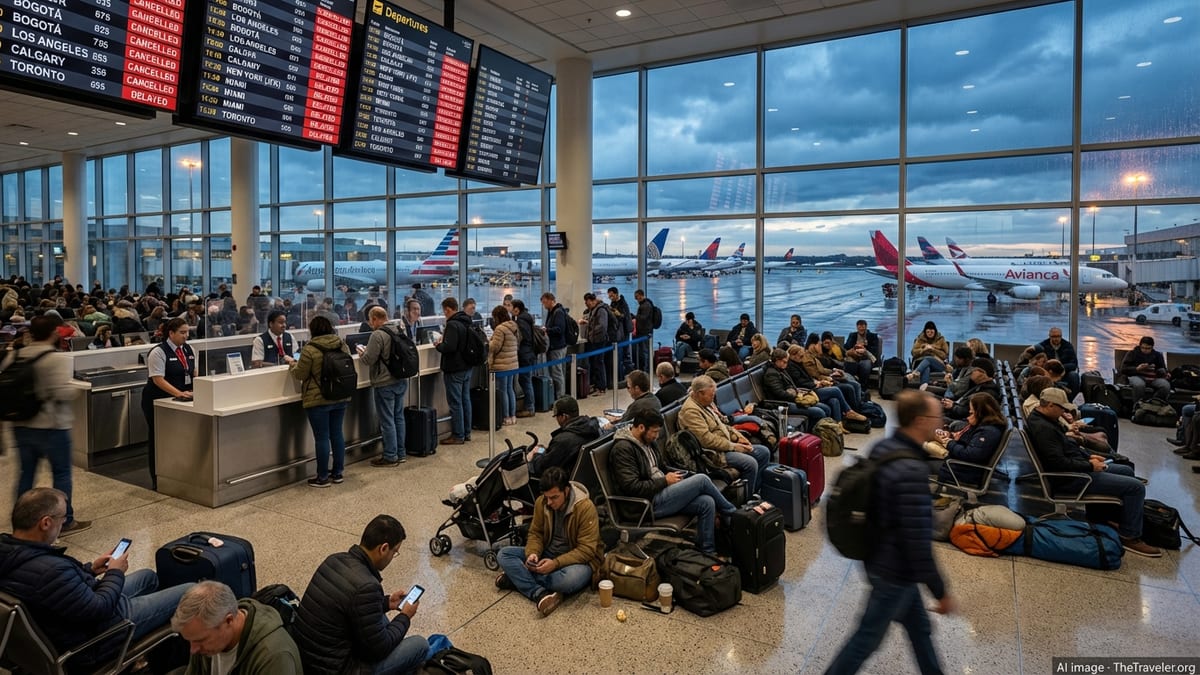
Nationwide Disruptions Concentrate Around Key Hubs
Publicly available FlightAware statistics and compiled aviation tracking data for Sunday, September 6, 2026, indicate that more than 1,700 flights within, into or out of the United States have been delayed, alongside 129 cancellations. While the numbers fluctuate through the day as schedules evolve, they point to a difficult operating environment for both airlines and passengers.
The pressure is concentrated at major connecting hubs and coastal gateways. Data reviewed by aviation analysts shows Boston Logan International Airport and Miami International Airport among the most affected, alongside other large facilities in the Northeast and Sunbelt. Delays are particularly disruptive at these locations because they are central nodes in national route networks, meaning a late departure or arrival often cascades into missed connections for onward journeys.
The pattern mirrors earlier disruption observed over the first weekend of September, when a FlightAware-based analysis cited more than 2,300 delays and nearly 150 cancellations across US airports including Boston, Dallas Fort Worth, Washington Reagan National and New York JFK. That prior wave of disruption underscores how quickly schedules can fray when several busy hubs encounter operational stress at the same time.
Boston Logan Sees Elevated Cancellations and Flow Controls
Boston Logan has again emerged as one of the hardest-hit airports. FlightAware’s live statistics for Sunday show hundreds of delayed flights and several dozen cancellations at Logan, with the precise totals varying by reporting snapshot as the day progresses. In some readings, more than 200 delayed movements have been recorded, along with dozens of flight cancellations affecting both domestic and transborder routes.
Federal Aviation Administration (FAA) airport status information lists a traffic management program in effect for Boston on September 6, citing staffing-related constraints. According to the FAA dashboard, arriving traffic into Logan has at times experienced average delays approaching two hours, with knock-on impacts to departures as aircraft and crews fall out of position. The status advisories emphasize that the postings describe general airport conditions rather than flight-specific information, and that travelers must rely on their airlines for exact status updates.
Recent weeks have already been challenging for Boston-area flyers. Local discussion forums and traveler accounts describing repeated late departures, diversions and same-day cancellations at Logan suggest that staffing, weather and traffic-flow limitations have contributed to an elevated baseline of disruption through much of the late summer period. The latest cancellation and delay totals reinforce the perception among many travelers that Boston remains one of the more volatile major airports in the current environment.
Miami Records Heavy Delays but Limited Cancellations
Miami International Airport has also seen intense schedule pressure, although the balance between delays and outright cancellations differs from Boston. FlightAware’s live cancellation and delay page for Miami on Sunday shows more than one hundred delayed flights but very few flights classified as canceled. In several snapshots during the afternoon and early evening, Miami registered well over 120 delays and no same-day cancellations.
This dynamic is significant for travelers connecting through South Florida. High delay volumes can create missed connections and extended layovers even when airlines keep most flights technically operating. For Miami in particular, where many itineraries rely on tight links between domestic feeder flights and long-haul services to Latin America and Europe, a cluster of late arrivals by just 30 to 60 minutes can have substantial knock-on effects.
The comparatively low cancellation count suggests that airlines operating at Miami are prioritizing completion of scheduled flights, even at the cost of punctuality. That strategy can help avoid the need to rebook large numbers of passengers, but it also raises the risk of extended days at the airport for travelers whose connection windows are not flexible.
Other Major Airports and Carriers Under Strain
Beyond Boston and Miami, disruption is distributed across a wide arc of US airports. A recent analysis drawing on FlightAware telemetry highlighted notable stress at Dallas Fort Worth, Washington Reagan National, Los Angeles International, New York JFK and several regional facilities in the Northeast. Boston and Dallas were identified as leading the country in total delay counts during that earlier period, while JFK and smaller airports such as Nantucket Memorial and Westchester County logged some of the highest cancellation tallies relative to their overall traffic.
On the airline side, the same analysis found that large network carriers with dense domestic schedules have experienced the greatest absolute number of delays. American Airlines and Southwest Airlines led in delay totals, while JetBlue Airways and regional operator PSA Airlines recorded comparatively high cancellation numbers despite smaller overall networks. The combination reflects both the scale of major carriers’ operations and the vulnerability of regional feeders that funnel passengers into large hubs where delays can propagate rapidly.
Although the precise mix of affected airlines shifts day by day, the current totals again show a broad spread of delays and cancellations across legacy, low-cost and regional operators. Industry observers note that even modest staffing shortfalls or localized weather issues can quickly expose the limited slack in today’s tightly wound schedules.
What Travelers Can Do if Their Flight Is Disrupted
With more than 1,700 delays and over a hundred cancellations affecting US flights today, many travelers are confronting last-minute changes to their plans. Passenger rights in these situations are shaped by both federal rules and individual airline policies, and understanding the distinction can be critical when negotiating alternatives at the airport or over customer service channels.
Guidance compiled from US Department of Transportation (DOT) policy summaries emphasizes that when an airline cancels a flight or makes a significant schedule change and the passenger chooses not to travel, the traveler is generally entitled to a prompt cash refund to the original form of payment. This applies even when the ticket was sold as nonrefundable. Airlines may offer vouchers or credits, but passengers typically have the option to insist on a refund instead.
For delays short of full cancellation, compensation and rebooking practices vary by carrier. Some airlines publish customer service commitments promising meal vouchers, hotel accommodations or rebooking on the next available flight in the event of long delays that are within the airline’s control. Because policies differ, consumer advocates recommend that travelers check their carrier’s published customer service plan and keep screenshots or copies available when negotiating at a gate or service desk.
Given the current pattern of rolling delays and scattered cancellations, aviation analysts advise travelers to monitor flight status frequently on both airline and tracking websites, allow additional connection time where possible, and consider early departures when traveling through known bottleneck airports such as Boston and major East Coast hubs.
FlightAware – Live US flight cancellations and delays today
FAA – Air Traffic Control System Command Center airport status
Nomad Lawyer – US flight delays and cancellations overview September 2026
US Department of Transportation – Fly Rights guidance for air travelers