


More news on this day
Surging demand from American visitors is colliding with a more volatile security landscape in and around Greece, as recent incidents in Athens, war-fueled threats to Mediterranean shipping routes and regional instability prompt new scrutiny of trips to the Aegean’s best-known island escapes.
Get the latest news straight to your inbox!
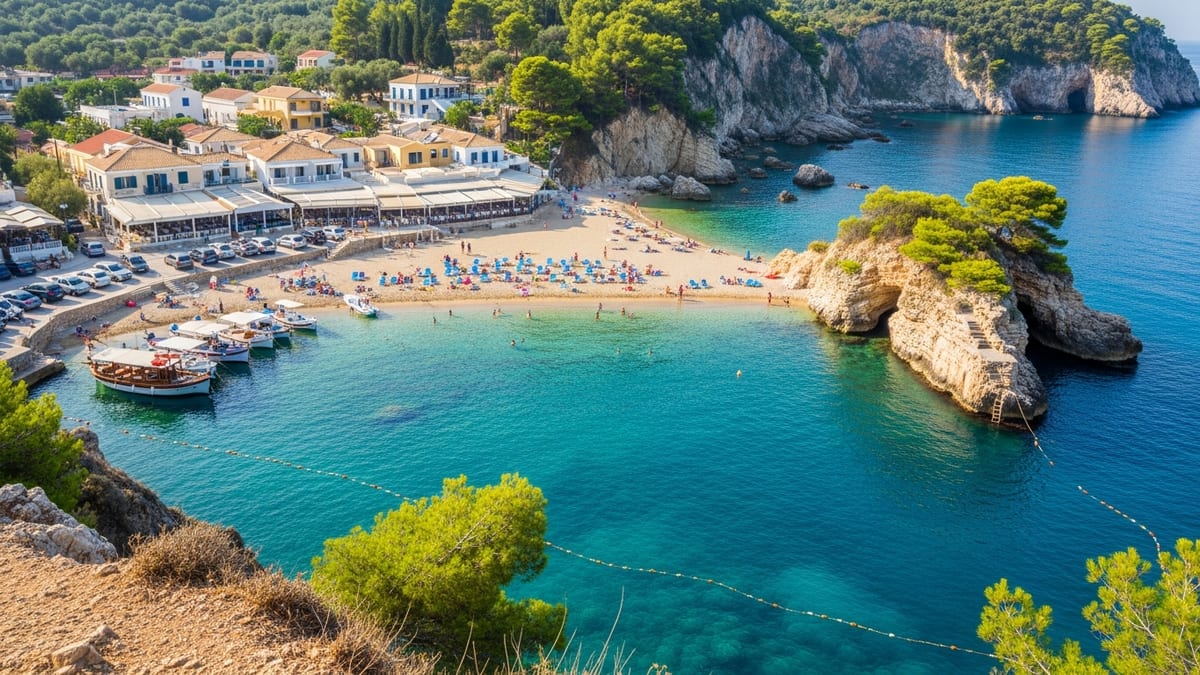
Tourism boom continues despite shifting risk map
Greece remains one of Europe’s most sought-after destinations for US travelers, with visitor numbers and spending still rising even as global security concerns grow. Recent data from Greek economic coverage indicate that receipts from US residents in the first half of 2026 climbed by around 11 percent year-on-year, with average per-visitor spending also higher compared with 2025.
Traffic through Athens International Airport has stayed strong, supported by expanded transatlantic capacity and new seasonal routes. Local reporting notes that more than 700,000 travelers passed through Greece’s main gateway in the first seven months of 2026, an increase on the same period last year, with Americans helping to drive that growth as they combine short city stays with onward trips to islands such as Mykonos and Santorini.
Industry-focused outlets describe US demand for Greece as resilient even during peak moments of tension in the Middle East, when rising fuel costs and rerouted flights pushed up fares across Europe. Carriers maintained or even increased scheduled capacity into Athens and key island airports for summer 2026, betting that travelers would continue to prioritize the Aegean despite higher prices and a complicated security backdrop.
That resilience, however, is now unfolding in parallel with a more complex set of risks for travelers to weigh, from isolated street attacks in Athens to the knock-on effects of maritime conflict hundreds of miles away.
Isolated Athens attacks heighten concern over urban safety
Security questions sharpened in July when two American tourists were stabbed on a pedestrian route near the entrance to the Acropolis and its museum, one of the country’s most heavily visited archaeological sites. International and Greek media report that the assailant, a Greek man, was quickly detained after the attack, which left one victim with a serious arm injury and the other with a lighter wound to the leg.
Coverage from multiple outlets describes the incident as unusual for an area that is typically crowded with visitors, tour groups and local families, underscoring how even heavily policed heritage zones are not fully insulated from opportunistic violence. The Acropolis complex continued to operate as normal after the attack, but the scene, captured in widely shared images of tourists queueing near police tape, fed into broader anxieties about visitor safety in major European cities.
The Athens stabbing followed other high-profile security and safety incidents this summer, including an emergency on a flight departing Greece in which a passenger was partially pulled toward a broken window before being helped back inside by fellow travelers. In separate domestic news, Greek police also announced arrests linked to politically motivated firebomb attacks that left one person dead and several others injured, highlighting an undercurrent of extremist violence largely directed at local targets.
Publicly available US travel guidance for Greece currently places the country at a moderate advisory level, citing the potential for terrorism incidents and occasional demonstrations that can turn confrontational, especially on politically sensitive anniversaries. While such notices stop short of warning against travel, they urge visitors to maintain awareness in crowded public areas and to monitor local media for developments in Athens and other large cities.
Regional conflict and Red Sea crisis cast a longer shadow
Beyond Greece’s borders, the wider security picture has grown more complicated as the war involving Iran, Israel and armed groups aligned with Yemen’s Houthi movement spills into key maritime corridors that underpin travel and trade. Since late 2023, Houthi forces have repeatedly targeted commercial vessels in the Red Sea and Bab el-Mandeb Strait, initially justifying the attacks as pressure on Israel. International monitoring by maritime agencies and the United Nations documents that the group later struck ships with limited or unclear links to the Gaza conflict.
In 2026, the crisis deepened when Houthi leaders publicly signaled a renewed campaign of attacks and threatened further disruption to shipping if fighting involving Iran and its allies intensified. Chronologies of the Red Sea crisis show that vessel traffic through the Suez Canal dropped sharply at several points, with many carriers opting to reroute around Africa. Analyses by central banks and shipping consultancies point to measurable declines in imports to Mediterranean economies, including Greece, during the early phases of the disruptions.
While Greece itself is far from the Red Sea and Bab el-Mandeb, the country’s tourism sector is indirectly exposed. Rerouted container and fuel shipments have contributed to higher operating costs for airlines, cruise lines and ferry operators across the eastern Mediterranean. Research on the impact of the Red Sea crisis notes that extended routes and elevated insurance premiums add days to transit times and increase freight rates, which can ultimately filter through to holiday prices and the availability of certain goods in island destinations.
US authorities have issued detailed maritime advisories for commercial shipping associated with the United States, the United Kingdom and Israel transiting the Red Sea and Gulf of Aden, describing an elevated risk of terrorism and other hostile acts in those specific waters. Although these notices are aimed primarily at ship operators rather than leisure travelers, they form part of the wider security environment that Americans heading to Greece now have to factor into their planning.
Wildfires and extreme heat complicate island travel plans
Climate-related hazards remain a more immediate concern for many visitors than geopolitical conflict. Greece has grappled with another intense wildfire season in summer 2026, with blazes reported near Athens and on islands close to the capital. Recent coverage from international agencies describes fires that prompted evacuations and advisories for tourists to leave affected zones, as local authorities opened shelters and diverted firefighting resources to priority fronts.
At least two people were reported dead in one incident on an island near Athens after fast-moving flames and strong winds complicated suppression efforts. In a separate case west of the capital, two firefighting helicopters collided while tackling a blaze, killing crew members and underscoring the strain on emergency services. A series of heatwaves has further tested power grids, transport links and popular outdoor sites, with high temperatures forcing authorities to temporarily restrict access to the Acropolis during the hottest hours on some days earlier in the season.
For US travelers bound for the Aegean, these hazards translate into practical challenges rather than blanket warnings against travel. Airlines and ferry operators have, in past seasons, altered schedules or diverted services due to smoke and high winds, while local officials on several islands have asked visitors to avoid hiking trails or forested areas during peak fire risk. Travel experts recommend that visitors monitor Greek Civil Protection updates, keep flexible itineraries and carry insurance that covers weather-related disruptions.
The pattern of longer, hotter summers has also sharpened debates inside Greece about the sustainability of peak-season tourism. Analysts warn that crowded islands with limited water supplies and infrastructure face growing stress when wildfires and heatwaves coincide with record visitor numbers, a scenario that has become more frequent around the Aegean and Ionian seas.
What US travelers should watch in the months ahead
Looking toward late 2026 and the 2027 booking cycle, the key question for US visitors is whether regional conflicts and domestic security incidents will materially alter the risk calculus for holidays in Greece. For now, published economic and aviation data underline that demand remains solid, with no large-scale cancellations reported comparable to those seen during the first months of the pandemic.
Travel advisories continue to emphasize familiar precautions: staying alert in busy tourist zones, avoiding demonstrations, and being prepared for short-notice transport or itinerary changes due to weather, industrial action or local security operations. Specialists in European security note that, across the continent, the terrorism risk is characterized less by organized mass-casualty plots than by low-tech attacks by individual assailants, similar to the Athens knife incident, which by definition are difficult to predict.
For many travelers, the practical effect of the Red Sea and Gulf tensions may be less about direct danger and more about rising costs and occasional routing changes. Longer shipping detours and higher jet fuel prices have already fed into elevated airfares on some transatlantic and intra-European routes, and cruise itineraries that once relied on Red Sea passages have been reworked to focus more heavily on central and western Mediterranean ports.
Against that backdrop, Greece’s Aegean islands remain what many US visitors view as an essential European experience, even as they are now framed by a more unsettled geopolitical horizon. Publicly available information suggests that those who stay informed, register with consular services, and build flexibility into their plans are still traveling in large numbers to the country’s beaches, archaeological sites and island villages, while watching regional developments more closely than in previous summers.
US Department of State – Greece Travel Advisory
eKathimerini – American travelers drive strong growth in Greek tourism
AP News – Man stabs and wounds tourists near the Acropolis in Athens
US Maritime Administration – Red Sea and Gulf of Aden security advisory