


More news on this day
Heightened tensions and shifting security conditions across the Middle East have prompted renewed United States guidance urging its citizens in the region to reconsider nonessential travel, review exit options, and be prepared to depart on short notice as airspace and commercial flights face growing disruption risks.
Get the latest news straight to your inbox!
Escalating Regional Tensions Prompt Fresh Warnings
Recent travel and security alerts focused on the Middle East reflect a period of sustained strain involving regional actors and U.S. partners, with concerns centered on armed conflict, protest activity, and targeted attacks. Publicly available advisories highlight particular risks in countries such as Iraq, Lebanon, Saudi Arabia, Jordan, and the United Arab Emirates, where ordered departures of some U.S. government personnel have already taken place in 2026.
Updated guidance follows months of strikes and cross-border attacks linked to the confrontation involving Israel, Iran, and various non-state groups, as well as direct threats to diplomatic facilities and critical infrastructure. According to published coverage from international news outlets, a broad U.S. call in early March urged Americans to immediately depart more than a dozen states across the region amid fears of further escalation.
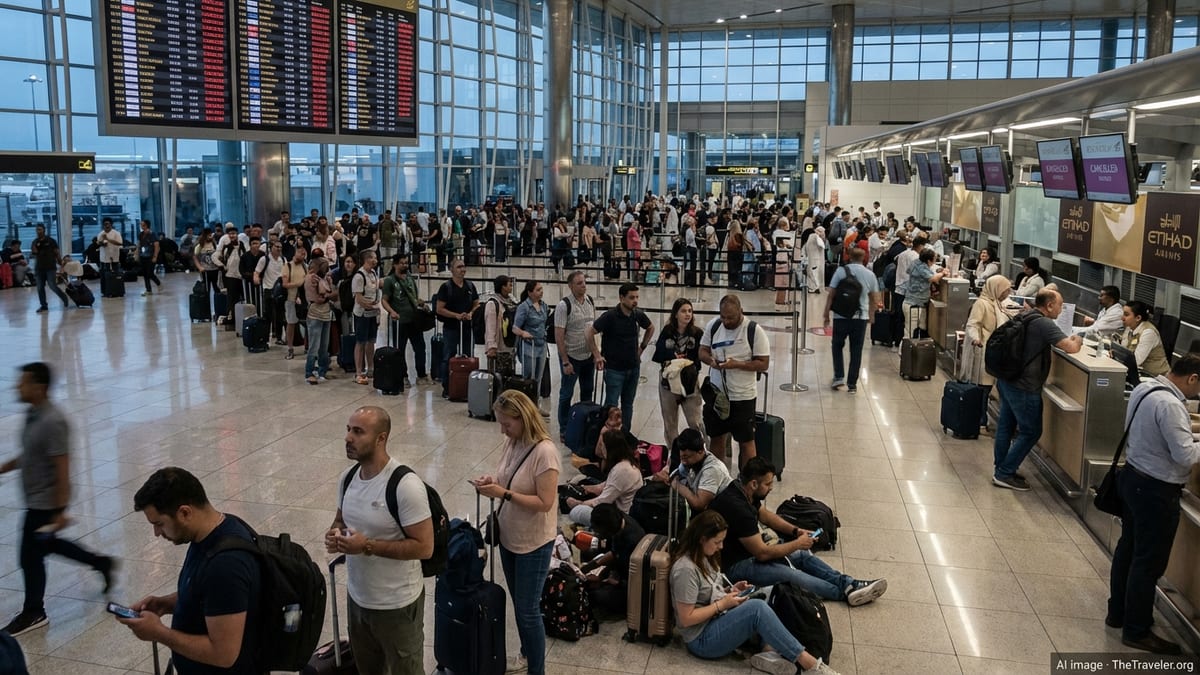
In parallel, the Federal Aviation Administration has issued cautionary notices for U.S. air carriers operating in parts of the Middle East, underscoring the risk that flight paths, schedules, and even airspace access can change with little warning. For travelers in transit hubs such as the Gulf states, this has translated into growing uncertainty over onward connections and last-minute rerouting.
Against this backdrop, the State Department’s global information pages now emphasize that Americans outside the region should carefully reconsider any new travel into or through the Middle East, particularly for tourism or other nonessential reasons.
Ordered Departures and Country-Specific Advisories
Country advisories across the Middle East have been steadily tightened during 2026. Iraq remains at the highest advisory level, with guidance not to travel due to terrorism, kidnapping, armed conflict, and what officials describe as a limited ability to provide emergency services to private U.S. citizens. Public information notes that nonemergency U.S. government staff were ordered to leave the country earlier in the year.
Similar patterns have emerged elsewhere. Lebanon’s advisory was updated after an ordered departure of nonessential personnel and family members in February, citing civil unrest, terrorism, and constrained health care capacity. In the Gulf, Saudi Arabia and the United Arab Emirates have both seen ordered departures of some U.S. government employees since March, even as they continue to function as major regional air and transit hubs.
Jordan also moved to a higher advisory level in 2026, with guidance to reconsider travel and specific warnings about areas near borders and in parts of the Ma’an governorate. Official travel for U.S. government personnel in certain zones is now restricted, signaling broader concern about localized instability and the potential for incidents to flare quickly.
These individual notices are layered on top of a broader Worldwide Caution that was refreshed in late July, which references the risk of terrorism, demonstrations, and possible reprisals against U.S. interests and travelers in multiple regions, with particular attention to the Middle East.
“Prepare To Depart”: What the Advisory Language Means for Travelers
Across several country pages, a recurring phrase urges U.S. citizens in the Middle East to have a plan to depart in an emergency that does not depend on U.S. government assistance. The wording reflects lessons from recent crises, where rapid deterioration left limited time to organize evacuations and commercial options were quickly exhausted.
For private travelers, “prepare to depart” is generally interpreted as a call to keep travel documents current, maintain financial flexibility for last-minute tickets, and understand multiple routes out of a country, including via third-country transit points. Publicly accessible security alerts referencing Baghdad and other capitals have recommended that Americans consider leaving as soon as they can safely do so, while also being ready to shelter in place temporarily if conditions around airports suddenly worsen.
The emphasis on self-reliance acknowledges that consular support can be constrained by security conditions, host-government restrictions, or airspace closures. Analytical briefs prepared for lawmakers in Washington have noted that in past crises, some Americans struggled to leave after broadly worded departure advisories were issued, finding that flights had already been canceled or prices had soared.
As a result, current messaging increasingly pairs calls to depart or prepare to depart with explicit reminders that travelers should not assume charter flights or government-organized convoys will be available.
Flight Disruptions, Airspace Closures, and Transit Risks
Travelers in the region now face a complex aviation environment. Public documentation from U.S. and international aviation authorities points to advisories affecting airspace over or near several conflict zones, with carriers periodically rerouting or canceling services. Embassies in Gulf countries have warned that Americans should be ready for sudden flight cancellations and intermittent airspace restrictions.
Airlines have some flexibility to adjust routes to avoid higher-risk areas, but when tensions spike, even major hubs can see cascading delays as aircraft and crew are repositioned. Reports from travelers, local media, and expatriate communities describe longer layovers, packed alternative flights, and difficulties rebooking itineraries when a corridor closes temporarily.
These disruptions have clear implications for tourism and business travel. Travelers who once treated cities such as Dubai, Doha, or Riyadh as seamless gateways between continents are increasingly building contingency time into their journeys, or choosing routings that bypass the region altogether when possible.
Insurance considerations add another layer of complexity. Some trip and medical policies contain exclusions or special conditions for countries under “Do Not Travel” or “Reconsider Travel” advisories, which can affect coverage if a traveler decides to remain in or newly enter affected areas despite the warnings.
Practical Steps for Americans Currently in the Region
While the latest alerts focus on heightened risk, they also emphasize planning and information. U.S. citizens in the Middle East are urged, through official channels, to enroll in notification programs that can deliver security updates via email or mobile messaging. This allows travelers and long-term residents to receive localized alerts about protests, airspace changes, or new restrictions affecting movement.
Public guidance consistently advises maintaining a low profile, avoiding large gatherings, and monitoring reliable local and international news for breaking developments. Travelers are encouraged to maintain regular contact with family or trusted contacts outside the region, sharing their locations, itineraries, and backup plans.
For those considering departure, the message is to act while commercial options remain relatively available. This can mean booking earlier return flights, shifting to less crowded routes, or leaving a country temporarily until the security outlook becomes clearer. Americans planning future trips are being urged to study advisory levels closely, weigh whether travel is essential, and understand that conditions can change faster than traditional vacation planning cycles allow.
For the global travel industry, the U.S. posture toward the Middle East serves as another reminder that geopolitics and tourism are closely intertwined. Carriers, hotels, and tour operators that rely on steady flows of American visitors may need to adjust expectations and offerings as long as the current advisory language, including the call to “prepare to depart,” remains in place.