


More news on this day
The United States has renewed warnings to its citizens about mounting security risks in the historic Middle East region, as a global caution alert and a string of updated country advisories underscore how quickly conditions are shifting for American travelers.
Get the latest news straight to your inbox!
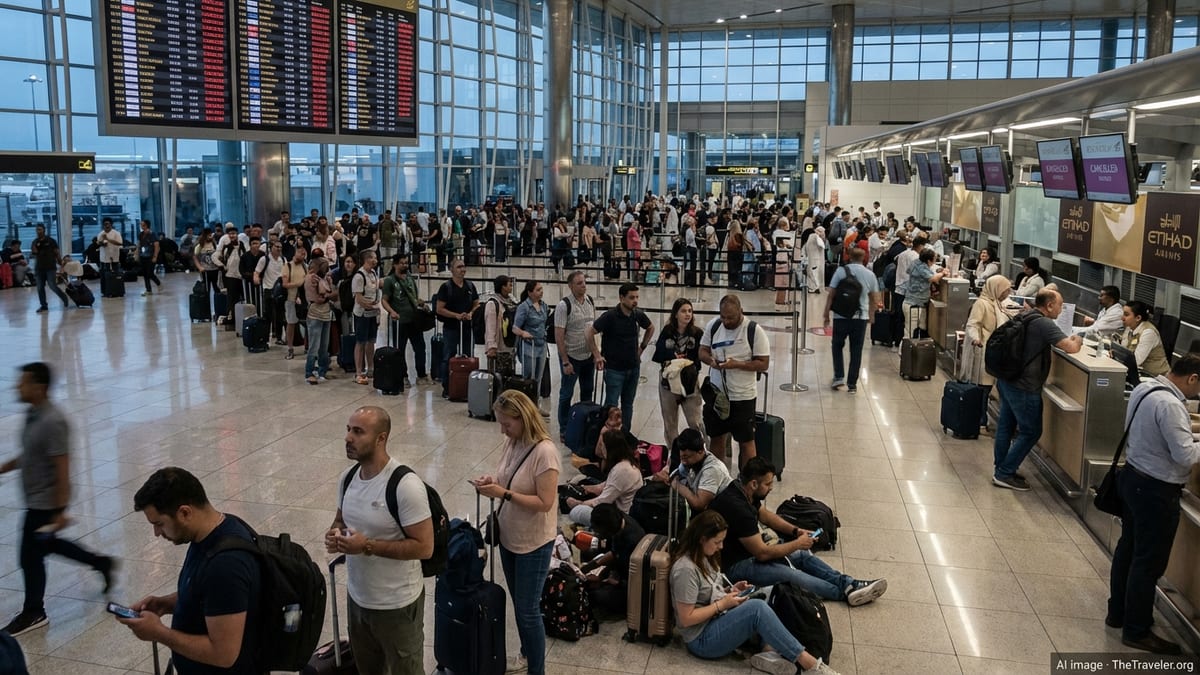
Worldwide caution highlights shifting global risk
Publicly available information from late March 2026 shows that the State Department issued a worldwide caution alert advising Americans everywhere to exercise increased vigilance in light of evolving security threats. The notification, summarized across multiple news and analysis outlets, pointed in particular to risks tied to the war involving the United States, Israel and Iran, and the potential for retaliation against US interests overseas.
The alert, which functions as a broad umbrella notice rather than a country specific advisory, urges US citizens abroad to stay closely informed through embassy security messages, remain aware of their surroundings and prepare for disruptions that could arise with little warning. Reports indicate that the caution specifically referenced the possibility of attacks on or near locations associated with the United States, including areas where American travelers commonly gather.
Coverage of the alert notes that it comes as global travel has largely rebounded, placing more US citizens in regions that are directly affected by geopolitical tensions or by groups that may see Americans as symbolic targets. The worldwide caution is not unprecedented, but its timing against the backdrop of an active regional conflict has drawn renewed attention from risk analysts and the travel industry.
For individual travelers, the global notice does not prohibit movement but reinforces that personal risk calculations should be updated, itineraries kept flexible and contingency plans in place in case commercial flights, border crossings or local transportation are suddenly curtailed.
Historic Middle East at the center of new warnings
The historic Middle East region, home to some of the world’s most significant religious and archaeological sites, features prominently in the latest alerts and advisories tracked by international media. According to published coverage, multiple countries in this area have seen their advisory levels raised or their detailed security guidance expanded in early 2026, reflecting concerns over spillover from the conflict with Iran and related militant activity.
Analysis from regional outlets and international wire services indicates that US missions have authorized or ordered the departure of some nonessential government personnel from posts such as Israel and Lebanon in recent months, citing elevated security risks and the possibility of attacks or unrest near diplomatic facilities and tourist areas. These internal steps, while targeted at official staff, often foreshadow broader caution for private travelers visiting the same cities and historic districts.
Travel risk specialists note that the Old City of Jerusalem, sections of the West Bank and parts of neighboring states have all been referenced in public advisories as locations where movement by US government employees may be restricted when tensions spike. The same areas are among the most visited by international tourists seeking religious and cultural experiences, underscoring the challenge of balancing the desire to visit heritage sites with the need for heightened situational awareness.
Several reports also highlight that nearby airspace has at times faced temporary closures or restrictions linked to regional hostilities, raising the prospect that itineraries including pilgrimage routes or multi country tours could be disrupted at short notice by flight diversions or cancellations.
Travel advisory system and new risk indicators
The State Department’s four level travel advisory system remains the primary public tool for conveying official assessments of country level risk. Educational resources that explain the system point out that nations are classified from Level 1, exercise normal precautions, to Level 4, do not travel, based on factors such as crime, terrorism, civil unrest, health conditions and other threats.
Reference materials on the advisory framework emphasize the use of standardized risk indicators, including letters such as T for terrorism, U for civil unrest and D for wrongful detention, which appear alongside each advisory. The wrongful detention indicator, in particular, has gained prominence in recent years as cases involving foreigners held amid political disputes or allegations of espionage have drawn global scrutiny.
Commentary aimed at security professionals stresses that the advisory system is grounded in statutory obligations to safeguard US nationals abroad and in a long standing policy requiring that serious threats shared with official personnel also be communicated to the general traveling public. While country advisories provide a baseline picture of chronic risks, separate security alerts issued by individual embassies can flag short term dangers such as protests, military operations or targeted threats in specific cities or regions.
Travel planners advise that Americans considering trips to the Middle East’s historic centers should review both the overall advisory level and any recent security alerts from the relevant embassies or consulates. In some cases, a country may remain at a moderate level while certain provinces, border zones or historic districts are treated as higher risk and subject to movement restrictions for official staff.
Regional flashpoints and implications for tourism
News reporting across 2026 portrays a Middle East landscape marked by multiple, overlapping flashpoints that complicate travel to its most storied locations. The active conflict involving Iran has raised concerns about missile or drone attacks, proxy militant activity and cyber incidents that can radiate across borders, affecting countries that host major hubs for religious tourism, cruise traffic and aviation.
International outlets describe how, alongside the military tensions, domestic political strains and localized unrest in several states can periodically flare into demonstrations, roadblocks or clashes that disrupt normal life in capital cities and provincial towns. Even when foreign tourists are not directly targeted, the presence of crowds, security forces and traffic disruptions near government buildings, religious sites or transportation hubs can create an unpredictable environment.
Tourism operators with a focus on biblical, Islamic and classical antiquity itineraries are monitoring the situation closely, according to industry commentary. Some have adjusted routing to avoid specific border crossings, night travel or certain pilgrimage stops when tensions are high, while others are building in additional buffer days in case flights are rerouted around temporarily restricted airspace.
Analysts point out that many historic sites remain open and continue to welcome visitors, but risk varies significantly not only between countries, but within them. Coastal resort areas, interior archaeological parks and dense urban quarters in ancient cities can each present distinct security profiles, making local intelligence and up to date guidance essential.
What American travelers are urged to do now
Across government notices, expert commentary and travel industry guidance, a common theme emerges: Americans contemplating travel to the Middle East’s historic region are being urged to take a more deliberate and informed approach to risk management. Publicly available recommendations highlight practical steps such as enrolling in traveler registration programs to receive real time security updates and ensuring that itineraries and contact information are shared with trusted contacts at home.
Risk advisers suggest that travelers pay close attention not only to headline advisory levels but also to the fine print describing restricted areas, curfews or transportation disruptions. Comprehensive travel insurance that includes medical evacuation and trip interruption coverage is increasingly framed as a necessary safeguard rather than a discretionary add on for long haul journeys to volatile regions.
Security analysts also encourage a flexible mindset: plans may need to change quickly if embassy alerts flag new threats, if airlines adjust routes around conflict zones, or if local authorities impose sudden restrictions around historic city centers, religious festivals or political events. Remaining prepared to postpone, reroute or cut short a trip is presented as a prudent response to a fluid environment rather than an overreaction.
While many Americans will continue to seek out the Middle East’s unparalleled historic and spiritual landmarks, the latest State Department caution and related advisories underline that such journeys now demand closer attention to evolving security dynamics than in more stable periods, with careful advance planning and on the ground vigilance forming an integral part of any itinerary.