

More news on this day
The United Kingdom’s Foreign, Commonwealth and Development Office has lifted its strict “do not travel” warning for the United Arab Emirates, signaling a shift in official risk assessments and paving the way for a renewed flow of visitors to one of the Gulf’s most important tourism and aviation hubs.
Get the latest news straight to your inbox!
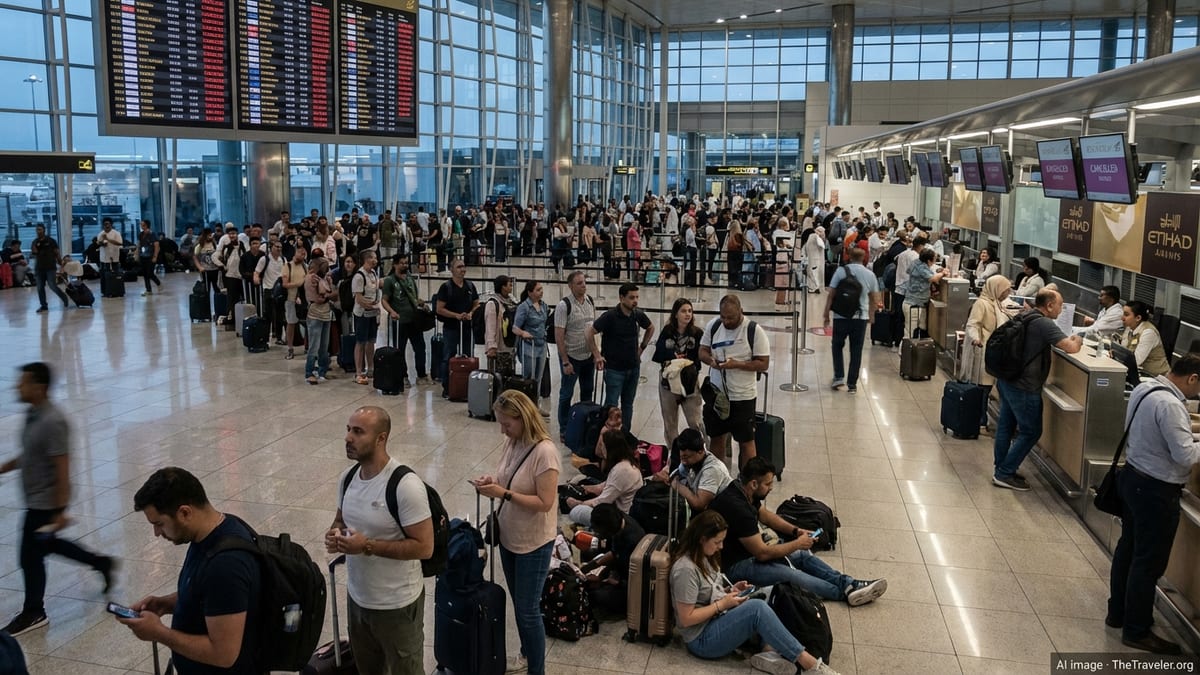
Change in UK Travel Advice Marks Turning Point
The adjustment in the UK’s travel advice for the United Arab Emirates follows a period in which parts of the wider region were subject to heightened alerts, including explicit “do not travel” language for some neighboring states and conflict zones. Publicly available government advisories indicate that risk levels for countries across the Middle East are being reviewed and recalibrated in light of evolving security and geopolitical conditions, with the UAE now assessed differently from the highest‑risk destinations.
Previously, broad warnings in Western travel advisories for the wider region had sparked uncertainty for travelers and insurers, particularly as “do not travel” classifications can affect policy validity and airline scheduling. Recent analysis of travel warnings shows that such designations remain in place for a number of countries experiencing active conflict or severe instability, while the UAE has been moved out of that bracket and is now treated more in line with other major, globally connected hubs.
The latest step does not remove all references to potential regional volatility, but it shifts the UAE away from blanket prohibitions. The move is being interpreted across the travel industry as a sign that key corridors through Dubai and Abu Dhabi are again viewed as manageable from a risk perspective, provided travelers follow routine safety guidance and stay informed about developments.
Boost for Tourism, Aviation and Business Travel
The easing of official advice is expected to provide a lift to the UAE’s tourism and aviation sectors, which rely heavily on long‑haul markets such as the United Kingdom. Industry reports already describe strong demand for flights transiting major UAE airports, and the removal of the most severe UK warning is likely to provide additional reassurance to travelers who had been postponing trips.
Travel and hospitality assessments produced in recent months point to robust performance in Gulf hubs despite regional tensions, with international chains reporting high occupancy rates and airlines maintaining extensive route networks through Dubai and Abu Dhabi. The formal shift in UK guidance reduces one of the remaining psychological barriers for more cautious leisure and business travelers weighing whether to return to the region.
Tour operators and airlines are expected to highlight the updated advisory in their communications, emphasizing both the restoration of confidence and the continued importance of standard precautions. Insurance providers typically review government guidance when assessing destination risk, so the change may also make it easier for travelers to secure comprehensive coverage for trips that include stays in or stopovers through the UAE.
Regional Context: Diverging Risk Levels Persist
The reassessment of the UAE sits against a backdrop of persistent “do not travel” warnings for several other countries. Open‑source compilations of UK and allied government advisories show that destinations experiencing ongoing armed conflict, high levels of terrorism or severe political instability remain subject to the strongest restrictions, often accompanied by explicit notes that consular assistance may be extremely limited.
Recent overviews of Western travel advice highlight that a number of states in the broader Middle East and adjoining regions continue to face top‑tier warnings, with some areas designated as no‑go zones due to threats such as cross‑border attacks, internal fighting and arbitrary detention. In contrast, the UAE, which positions itself as a logistical and commercial hub, is no longer grouped within those highest‑risk categories, even as officials still urge travelers to remain conscious of the wider regional environment.
This divergence underscores how governments are increasingly taking a more granular approach, distinguishing between individual states and specific areas rather than applying uniform advice across entire regions. For travelers, it means that itineraries which include multiple countries may be subject to sharply differing levels of official caution, with the UAE now emerging as one of the more accessible options on many Gulf‑focused routes.
What the Shift Means for UK Travelers
For British nationals, the removal of a categorical “do not travel” label typically means that visiting a country is no longer seen as inherently incompatible with normal risk tolerance, although it does not guarantee complete safety. Public information from travel‑risk experts notes that such changes can have practical implications, ranging from a broader availability of insurance policies to greater flexibility from employers who rely on government advisories when authorizing work‑related trips.
Travel planners point out that while the UAE’s status has improved, other guidance remains in place, including recommendations that travelers keep abreast of local developments, register for official updates where available and review any transit restrictions that may apply if their journeys pass through higher‑risk neighbors. Passengers are also encouraged to verify that their chosen airline and accommodation providers have clear contingency arrangements in case of sudden disruptions.
Consumer advocates frequently stress that even where “do not travel” warnings are lifted, travelers should pay close attention to policy wording. Some insurers still incorporate clauses linked to government advisories, meaning that coverage could be affected if itineraries include side trips into areas where strict warnings remain active. With the UAE now separated from the highest‑risk list, however, straightforward leisure stays in the country are expected to become easier to insure.
Industry Eyes Next Phase of Recovery
The latest UK decision on the UAE is being watched across the travel and tourism sector as a potential marker of a broader normalization in parts of the Middle East. Aviation analysts note that Gulf hubs play a central role in connecting Europe, Asia and Africa, and that regulatory signals from large outbound markets such as the UK can influence airline capacity planning and fare levels.
Travel trade publications describe how tour operators are gradually rebuilding programs in destinations where official advice permits, often starting with city‑break and stopover products before expanding to longer packages. The UAE, with its established infrastructure, diversified attractions and extensive air links, is regarded as a logical candidate for this staged recovery, provided that regional tensions do not escalate in ways that would prompt another tightening of advice.
For now, the shift in Foreign Office guidance marks a significant moment for travelers considering a return to the Gulf. It reflects a more differentiated approach to regional risk, opens the door to renewed tourism flows and underscores the importance for travelers of monitoring official advice as it evolves.