


More news on this day
The United Kingdom has eased its travel warning for the United Arab Emirates and several Gulf neighbours after the signing of a United States–Iran peace memorandum, signaling a tentative return to normality for one of the world’s most important travel and transit regions.
Get the latest news straight to your inbox!
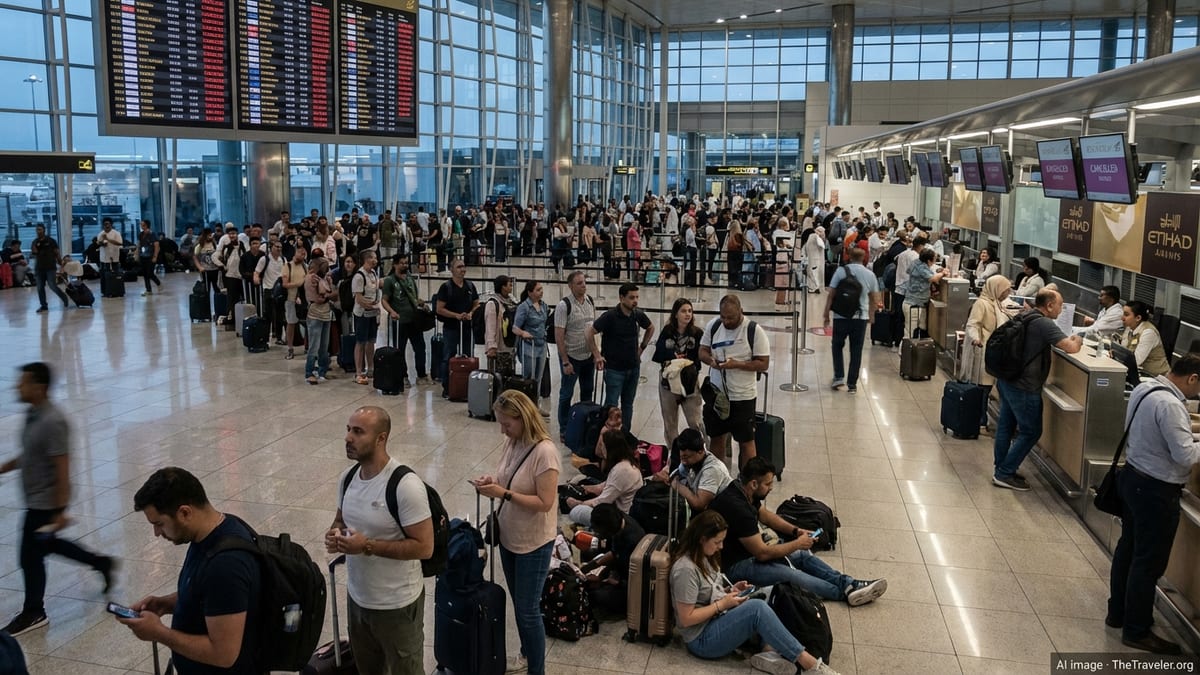
Shift in UK Guidance Follows Breakthrough US–Iran Agreement
According to publicly available Foreign, Commonwealth and Development Office updates, the United Kingdom has stepped back from its most restrictive language on travel to the United Arab Emirates and parts of the Gulf, shortly after Washington and Tehran formally signed a memorandum of understanding to end their recent conflict and reopen the Strait of Hormuz. The change moves UK guidance away from blanket warnings that had strongly discouraged non-essential visits during the height of the crisis.
Open-source reporting indicates that the US–Iran deal, finalised on June 18, 2026, provides for an immediate regional ceasefire, a phased reopening of the Strait of Hormuz and a framework for further talks on Iran’s nuclear activities and sanctions relief. The easing of UK advice appears to reflect an assessment that the short-term risk of spillover attacks and large-scale disruption to Gulf infrastructure has diminished, even as longer-term political questions remain unresolved.
Earlier briefings on the Middle East crisis had highlighted missile and drone incidents, airspace closures and government-assisted evacuations that affected British nationals across the region, including those transiting through Dubai and Abu Dhabi. By softening its wording for the UAE and some neighbouring states, the UK is signalling that immediate threats have reduced sufficiently for leisure and business travel to resume under heightened vigilance rather than near-blanket avoidance.
From ‘Do Not Travel’ Language to Targeted Caution
For much of the conflict, UK travel advice for the Gulf reflected severe security concerns. International risk assessments described a volatile environment marked by strikes on military sites, warnings about potential attacks on energy infrastructure and uncertainty around maritime security in and near the Strait of Hormuz. Insurance advisories and corporate risk bulletins repeatedly flagged the UAE and other Gulf states as exposed to incidental spillover from hostilities involving Iran and the United States.
Recent public commentary, including specialist travel-security digests, suggests that the Foreign Office has now withdrawn its most sweeping warnings for destinations such as the UAE, Bahrain and Qatar, while retaining stronger language for areas assessed as closer to the frontline or more vulnerable to direct attack. In practice, this means that guidance has shifted from broad discouragement of non-essential travel to more nuanced recommendations focused on situational awareness, registration with consular services and adherence to local security instructions.
The adjustment aligns with moves by other governments and industry bodies, which have started to differentiate more clearly between the combat zone around Iran and relatively stable hubs such as Dubai, Abu Dhabi and Doha. Analysts note that this type of calibrated advice is designed to support a gradual reopening of travel and trade routes while acknowledging that the regional security picture remains fluid.
Implications for Airlines, Tourism and Transit Passengers
The easing of UK guidance is likely to be welcomed by airlines, hotels and tour operators that rely heavily on Gulf traffic. Prior to the conflict, the UAE functioned as a major global aviation crossroads, with Dubai International and Abu Dhabi serving as key hubs for Europe–Asia and Europe–Africa connections. Prolonged airspace restrictions, cancellations and route diversions during the war had disrupted this role, adding hours to long-haul journeys and straining carrier schedules.
Industry assessments produced over recent weeks indicate that carriers have been preparing for a phased restoration of pre-crisis networks as ceasefire talks advanced. A more positive tone in UK government advice is expected to support that process by reassuring both point-to-point travellers heading to Gulf destinations and transit passengers considering routings via the region.
Hotels and tourism boards in the UAE and neighbouring countries are also positioning for a potential rebound. Public-facing statements from Gulf authorities have emphasised the resilience of local security measures, including missile defence systems and protective protocols at airports and ports. With the UK now easing its stance, marketing efforts aimed at British holidaymakers and business visitors are likely to intensify, even as operators maintain flexible booking policies in case conditions change again.
Continuing Risks and the Limits of the Easing
Despite the improved tone of official advice, travel-risk specialists caution that the region remains in a delicate phase. The memorandum between the United States and Iran is described in open reporting as an initial political framework rather than a comprehensive peace treaty, leaving issues such as long-term nuclear constraints, the role of proxy groups and the future of sanctions to follow-up negotiations.
Maritime security also remains under close watch. Recent naval-coordination bulletins show that a large multinational task force continues to patrol waters around the Strait of Hormuz, even after a downgrading of formal threat levels. While the reopening of critical sea lanes is expected to restore confidence for cruise operators and cargo shipping, analysts point out that any breakdown in talks could rapidly reintroduce risks to commercial vessels and, by extension, to itineraries that depend on Gulf ports.
Within the Gulf states themselves, authorities have maintained heightened alert levels around military bases, diplomatic facilities and locations considered sensitive, including certain religious and community sites. Updated UK guidance therefore continues to advise travellers to stay informed through local media, follow any security instructions issued by host governments and avoid protests or large public gatherings that could become flashpoints.
What UK Travellers Should Consider Now
For British nationals planning trips to the UAE and neighbouring Gulf countries, the latest changes mean that holidays, business visits and stopovers are, in many cases, once again considered broadly acceptable, provided that travellers remain attentive to developments. Travel-insurance documents issued in recent months have often contained clauses linked directly to “do not travel” designations; as those labels are relaxed, more policies may offer fuller coverage for trips to hubs such as Dubai and Abu Dhabi.
Experts in corporate travel management advise that organisations review their internal risk thresholds and duty-of-care policies in light of the new guidance. Companies that previously imposed blanket bans on staff travel to the region may move toward case-by-case approvals, factoring in city-specific conditions, the nature of planned activities and the availability of reliable evacuation options should the security situation deteriorate again.
Independent travellers, meanwhile, are being encouraged by publicly available advisories to adopt standard precautions for higher-risk regions. These include registering their presence with consular services where possible, sharing itineraries with family or employers, monitoring reputable news outlets for regional updates and allowing extra time for airport security and potential screening of itineraries that involve transits close to conflict zones.
While the UK’s decision to ease its warning marks a significant psychological step toward normalisation, specialists stress that the situation remains dynamic. Travellers are therefore being urged to treat the updated advice as a green light for cautious resumption rather than a guarantee that the underlying tensions that disrupted Gulf travel in early 2026 have been fully resolved.