

More news on this day
The United Kingdom has adjusted its travel advice for parts of the Eastern Mediterranean, including Cyprus, after a US–Iran diplomatic deal prompted several governments to reassess security risks and aviation routes across the wider region.
Get the latest news straight to your inbox!
Coordinated shift in Middle East and Eastern Med guidance
According to recent international coverage, the UK was among seven governments that moved almost in step this week to recalibrate travel advisories across the Middle East following an interim agreement between Washington and Tehran. Reports indicate that authorities in the United States, Canada, Australia, New Zealand, India and Japan also updated their guidance, with a particular focus on airspace and major transit hubs that link Europe with the Gulf.
Publicly available information on these updates suggests that the emphasis is now on differentiating between front-line conflict areas and neighbouring states that have experienced mainly indirect disruption, such as aviation rerouting or temporary insurance restrictions. The Eastern Mediterranean, sitting on the edge of the region but hosting important bases and overflight corridors, has been a key focus of this recalibration.
Travel industry commentary notes that the coordinated approach is intended to provide clearer, more predictable signals for airlines, insurers and travellers after several months of rapidly changing warnings tied to the Iran conflict. The latest changes are being interpreted by many observers as a cautious response to reduced immediate escalation risk, while still highlighting that conditions could shift again if the diplomatic process falters.
How UK advice for Cyprus has evolved
Cyprus has featured prominently in recent security assessments because of its position just south of Turkey and west of the Levant, as well as its role hosting British military facilities used in wider regional operations. Earlier in the year, Iran-linked drone activity and missile launches in the broader theatre led to heightened concern about the island’s strategic sites and overflight routes.
Coverage of the UK Foreign, Commonwealth and Development Office travel pages indicates that the core message for Cyprus remains that the destination is generally safe for holidaymakers, but with a stronger emphasis on staying aware of the potential for spillover incidents involving military infrastructure. Previous updates highlighted that attacks against Western interests in the region could not be ruled out, a point that remains reflected in current narrative guidance even as overall risk perceptions ease.
Parallel information from United States advisories classifies Cyprus at the lowest overall risk tier, while still flagging specific issues such as the UN buffer zone and the sensitivities around the island’s divided status. These allied assessments, read together, support the picture of Cyprus as a mainstream tourist destination operating normally, though framed within a more unsettled regional security environment than in recent pre-crisis years.
Eastern Mediterranean context after the US–Iran deal
The travel advice changes are unfolding against a wider strategic rebalancing in the Eastern Mediterranean. Public documents and parliamentary material from London and Washington over recent months have underscored how Cyprus, Greece and Israel are viewed as central to energy security, surveillance and logistics in the corridor between Europe and the Middle East.
Before the latest diplomatic breakthrough, the build-up of Western naval and air assets around Cyprus had drawn attention to the risk of miscalculation, particularly after reported drone strikes and attempted attacks on or near British bases on the island. Local tourism bodies in Cyprus previously voiced concern that images of military hardware and headlines about Iran-related tensions could weigh on visitor numbers from key markets such as the United Kingdom and Germany.
With the interim US–Iran agreement now in place, analysts quoted in regional media suggest that the probability of direct attacks spreading to EU territory has receded in the short term, although the Eastern Mediterranean remains a staging area for monitoring compliance and for any future crisis response. This balance between de-escalation and ongoing vigilance is reflected in the language of the revised advisories, which stop well short of declaring a full return to pre-crisis normality.
Implications for UK holidaymakers and transit passengers
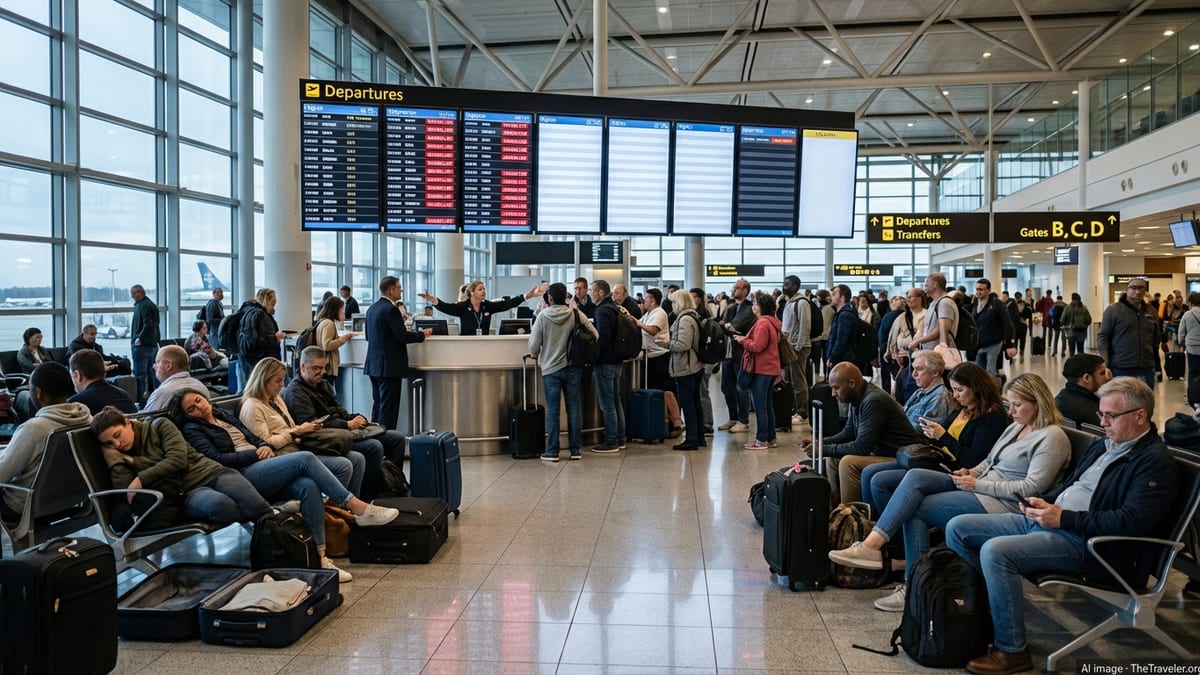
For UK travellers, the practical impact of the updated advice appears to be most visible in the restoration of confidence around flight paths and insurance coverage. Travel analysis pieces note that, at earlier stages of the Iran confrontation, some carriers rerouted services to avoid contentious airspace, and some insurers placed temporary restrictions on policies that involved transiting certain Gulf hubs.
Following the latest guidance changes, more insurers are reported to be treating routings via major Gulf and Eastern Mediterranean airports as routine again, provided there are no new flare-ups. For leisure travellers heading to Cyprus, Greece or neighbouring destinations, this reduces the risk of last-minute rebooking or unexpected premium surcharges tied to regional security developments.
Specialist travel risk consultants continue to advise that British travellers monitor government advice pages in the run-up to departure, particularly if itineraries include onward connections into higher-risk parts of the Middle East. The updated UK language for Cyprus and the broader Eastern Mediterranean generally points to a stable environment for beach and city breaks, while reminding visitors that indirect disruptions, such as airspace closures or changes in military posture, can occur with relatively short notice.
Tourism rebound prospects in Cyprus
Tourism operators in Cyprus are watching the latest travel advice closely, as the island’s visitor economy had already shown signs of strain when the Iran conflict was at its height. Regional media reports earlier in the season described a noticeable dip in bookings, with some coastal resorts reporting double-digit declines compared with previous years.
More recent reporting, however, has pointed to improving occupancy levels on flights from the UK and other European markets, suggesting that the worst of the downturn may have passed. Industry observers say that the combination of easing advisories, continued airline capacity and pent-up demand could help Cyprus salvage a respectable summer, provided the US–Iran deal holds and no further attacks occur near key infrastructure.
Travel analysts caution that even as bookings recover, Cyprus may need to invest further in messaging that distinguishes the reality on the ground for tourists from perceptions created by coverage of regional military activity. The latest UK advisory language, which stresses normal day-to-day conditions while noting the island’s proximity to ongoing geopolitical tensions, is likely to form a central reference point for that effort in the months ahead.