


More news on this day
Value Group intends to unveil an expanded version of its RUBIK IROPS disruption‑management platform at the 27th Annual GHI Conference, taking place at Olympia London from 1 to 3 December 2026, positioning the upgraded suite amid growing airline and ground‑handling demand for more integrated tools to manage irregular operations.
Get the latest news straight to your inbox!
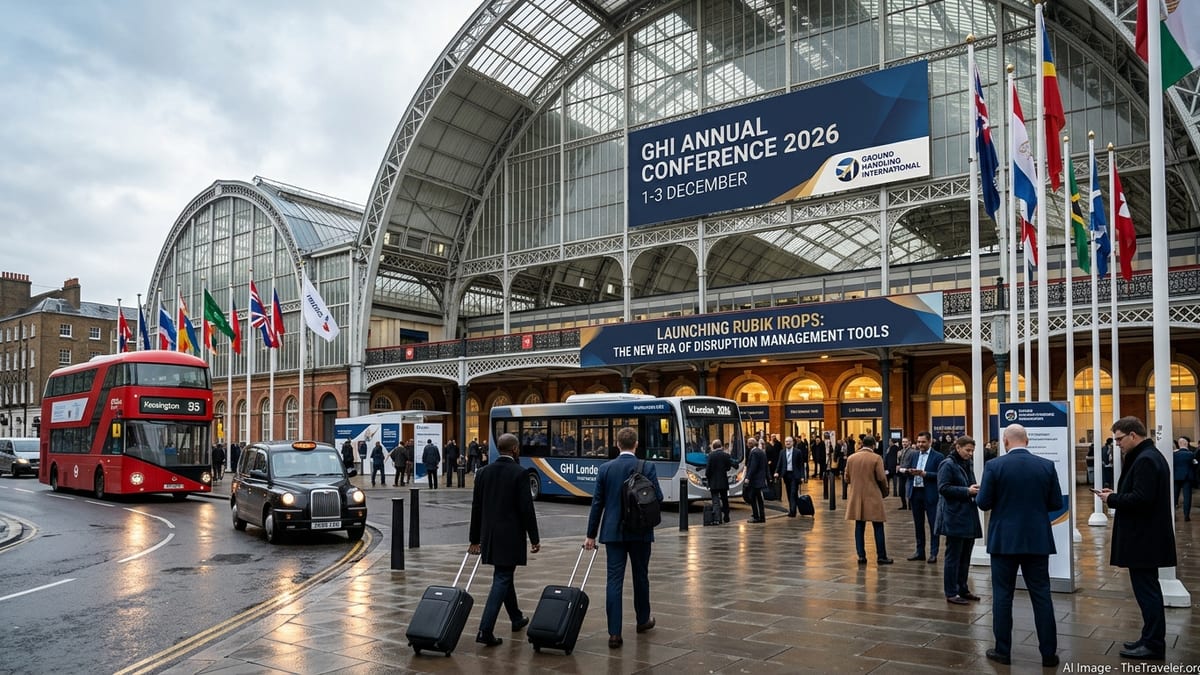
GHI London 2026 sets the stage for new disruption tools
The 27th Annual GHI Conference will bring airlines, ground handlers, airports and technology suppliers to Olympia London from 1 to 3 December 2026, providing Value Group with a concentrated audience of operational decision makers for the debut of its expanded RUBIK IROPS suite. Organised by Ground Handling International, the event is scheduled as a three‑day combination of conference programme, exhibition and structured one‑to‑one meetings aimed at ground handling and airport operations specialists.
Conference information published by the organiser indicates that around 1,100 stakeholders attended the 2025 edition, including more than 100 airline carriers and about 90 exhibiting ground support equipment and IT providers. The 2026 event is again marketed toward the same mix of delegates, with Olympia London’s National Hall set to host the exhibition and meetings area. The published agenda for 1 to 3 December 2026 includes keynote panels, safety and regulatory sessions and discussions around sustainability and workforce issues in ramp and passenger operations.
Delegate materials and partner websites describe the GHI Annual Conference as a venue where IT and ground service suppliers present new tools related to resource management, turnaround performance and disruption handling. Although Value Group’s own detailed schedule for London has not yet been widely published, positioning RUBIK IROPS at this event aligns the product with a broader programme that focuses on operational resilience and irregular operations management.
What RUBIK IROPS is designed to do
Available product information shows that RUBIK IROPS is part of a wider Value Group platform focused on managing airline and airport disruption scenarios, often referred to as irregular operations. These scenarios can include severe weather, air traffic control restrictions, technical aircraft issues or staffing shortages that result in delays, cancellations or missed connections for large groups of passengers. Value Group materials outline a dashboard‑driven environment that centralises data on affected flights, passenger volumes, disruption types and rebooking status so that operations teams can coordinate decisions more quickly.
In demonstrations and technical summaries, the RUBIK IROPS environment appears to consolidate flight schedules, passenger bookings and airline rules for care and compensation into a single workspace. It is described as supporting tasks such as rebooking disrupted passengers, arranging accommodation or ground transport and tracking the progress of recovery plans across stations. By drawing together information that would otherwise sit in multiple airline or ground‑handling systems, the software aims to shorten response times and provide a more consistent record of how each disruption is handled.
The suite is also presented as a tool for collaboration between airlines, handling agents and partner service providers. For example, a ground handler may be able to see which passengers require hotel rooms or welfare support while airline staff manage ticketing and reissue activities elsewhere in the system. The expanded version expected to be shown in London is understood to build on this collaborative model, although full technical specifications and live customer case studies have not yet been made publicly available ahead of the conference.
How the expanded suite fits current IROPS priorities
The GHI 2026 conference agenda underlines several themes that intersect directly with what an expanded RUBIK IROPS suite is intended to address, including human‑factors in operations, safety on the ramp, regulatory change and sustainability. Sessions on upcoming European ground handling regulations and safety culture highlight the growing oversight of how airlines and service partners manage disruption events, including the provision of care to stranded passengers and the communication of delays and cancellations.
Against that backdrop, disruption‑management systems are increasingly evaluated not only on the speed of rebooking but also on how clearly they document decisions, allocate responsibilities and generate audit trails. An integrated platform such as RUBIK IROPS is positioned to support compliance efforts by providing a single reference point for what support was offered to passengers and when, while also making it easier to apply airline‑specific policies consistently during extended disruption periods.
Another focus in the published conference programme is workforce and future skills in ground handling. Many handlers and airports continue to report staffing constraints, particularly for specialist roles that oversee irregular operations and large‑scale passenger reaccommodation. Tools that can automate routine checks, surface relevant passenger information and standardise workflows may help teams do more with limited resources during peak disruption periods. The expanded RUBIK IROPS suite is being presented to this audience as a way to reduce manual coordination between departments and to help less‑experienced staff follow structured processes when dealing with major delays or cancellations.
What is known so far about the London 2026 presentation
As of late November 2026, public information about Value Group’s specific timetable at the GHI London conference remains limited. The company has not yet issued a detailed session listing or stand number through widely indexed channels, and the core event programme currently highlights plenary discussions and sponsor sessions from a range of other providers. Within that framework, suppliers typically host demonstrations and private briefings from their exhibition stands and within the organised one‑to‑one meeting schedule rather than relying solely on main‑stage presentations.
GHI’s description of the 2026 event confirms that registered delegates are able to request and accept meetings, with sessions arranged around conference content and flight schedules. Exhibitors commonly use this infrastructure to organise tailored demonstrations of new software releases. It is therefore reasonable to expect that Value Group will use a combination of stand demonstrations and pre‑scheduled meetings to walk airline and handler teams through the expanded RUBIK IROPS capabilities, although confirmed timings should be checked directly on the delegate personal page or conference app once published.
Separately from the GHI event, Value Group has promoted RUBIK IROPS through industry presentations and association briefings focused on integrated IROPS management. These materials describe ongoing work to connect the platform with airline reservation systems, operations control tools and third‑party services such as hotels and transport providers. The expanded suite to be shown in London is expected to reflect that integration effort, but until detailed release notes or customer references are published, travellers and corporate travel managers should treat any performance or adoption claims as indicative rather than fully documented.
What airlines, handlers and travellers should look for next
For airline and ground‑handling delegates at GHI London 2026, the key practical step will be to confirm where and when Value Group is presenting RUBIK IROPS, either through the conference app, the delegate personal page or the exhibition floor plan at Olympia. Because the official programme highlights broader panel topics rather than product‑specific sessions, most technical deep dives are likely to be arranged through one‑to‑one meetings or small‑group demonstrations on the exhibition floor. Potential users interested in specific functions such as rebooking automation, multi‑station coordination or regulatory reporting may wish to prepare concrete operational scenarios to discuss during these sessions.
Corporate travel buyers and aviation partners who are not attending the London event can watch for post‑conference materials from Value Group and from participating airlines or handlers that trial the expanded suite. These may include case studies, implementation timelines or joint announcements outlining how RUBIK IROPS has been configured for particular networks or hub operations. Until such documentation is available, any impact figures or efficiency claims around the upgrade should be regarded as forward‑looking statements rather than verified outcomes.
Individual travellers are unlikely to interact directly with RUBIK IROPS or comparable IROPS platforms, but the way airlines and ground handlers deploy such tools can influence how disruption is experienced at the airport. If the expanded suite delivers on its aim of more integrated coordination, passengers caught up in severe delays or cancellations could see clearer communication and faster arrangements for rebooking or care. In the meantime, passengers flying around the conference dates of 1 to 3 December 2026 should continue to rely on their airline’s official channels for disruption updates and confirm any hotel or transport offers against those channels, since the underlying systems used to manage irregular operations may differ from one carrier to another.