


The Giza Plateau is where most visitors meet ancient Egypt for the first time: a sweep of desert on Cairo’s western edge, crowned by the pyramids of Khufu, Khafre and Menkaure and guarded by the Great Sphinx. As part of the wider “Memphis and its Necropolis” UNESCO World Heritage Site, it is both a world icon and a working archaeological zone. Planning your visit with current information on tickets, transport and on‑site logistics will make the difference between a rushed, confusing stop and a memorable day that does this extraordinary place justice.
Get the latest updates straight to your inbox!
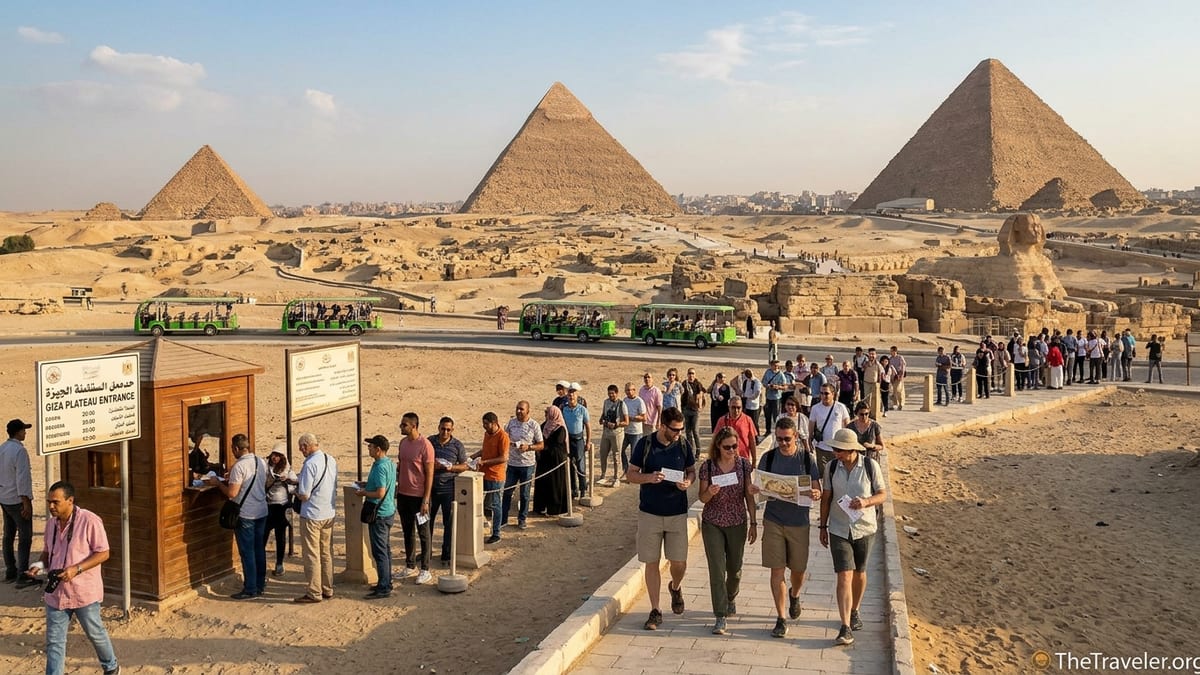
Understanding the Giza Plateau and Its Main Monuments
The Giza Plateau lies just beyond the dense neighborhoods of western Cairo, on the west bank of the Nile. It forms the northernmost section of the ancient Memphite necropolis, which once served as the burial ground for Egypt’s Old Kingdom elites. Today the plateau combines active excavations, tourist infrastructure and city encroachment, so visitors experience both ancient stone and very contemporary Cairo in a single visit.
The three large pyramids that define the skyline belong to Pharaohs Khufu, Khafre and Menkaure of the Fourth Dynasty. Khufu’s Great Pyramid was originally around 146 meters high and remained the tallest human‑built structure on earth for nearly four millennia. Slightly smaller, Khafre’s pyramid appears taller from many angles because it stands on higher ground and still retains casing stones near the top. Menkaure’s pyramid is smaller again, accompanied by three subsidiary “queens’ pyramids.”
At the eastern edge of the plateau sits the Great Sphinx, carved from the natural bedrock with the body of a lion and the head of a king, usually identified as Khafre. Around these headline monuments spread mastaba tombs, minor pyramids, temples and, on the opposite side of the plateau, modern facilities including the Grand Egyptian Museum. The entire zone falls within the broader UNESCO listing for “Memphis and its Necropolis: the Pyramid Fields from Giza to Dahshur,” which means that development and visitor management are subject to heritage protection rules.
For a typical visitor, “Giza” in practice means the fenced archaeological area that contains the pyramids, Sphinx and surrounding tombs, accessed through a limited number of gates with ticket checks. Inside, you move between viewpoints and monuments mostly on foot, with some regulated vehicle routes. Understanding where tickets are checked, what is included and what requires an extra ticket is essential before you arrive.
Tickets, Prices and What Each One Covers
Entry to the Giza Plateau is based on a general area ticket plus separate tickets for certain interiors. As of information checked in November 2026, the standard area entry ticket for foreign visitors is about 700 Egyptian pounds for adults, with a reduced rate of about 350 pounds for foreign students carrying valid ID. This ticket permits access to the plateau itself, the exterior of the pyramids, the Sphinx enclosure (when open) and general viewpoints. It does not include going inside any pyramid or tomb that is separately ticketed. Prices are periodically revised, so visitors should confirm the latest amounts on arrival; this article reflects rates checked in November 2026.
The Great Pyramid of Khufu requires its own ticket on top of the area fee. According to the Ministry of Tourism and Antiquities tariff and 2026–2027 price summaries, the current add‑on for foreign visitors is listed at about 1,500 Egyptian pounds for adults and about 750 pounds for students, checked in November 2026. Interior access is capacity‑controlled, and tickets may sell out on busy days. Other pyramid interiors at Giza, such as Khafre or Menkaure, also require separate, lower‑priced tickets that are sometimes rotated open or closed depending on conservation needs. Because the set of open interiors can change, travellers should ask at the ticket window which monuments are accessible on the day of their visit.
Tickets are typically bought on site at the main ticket offices near the primary entrances. For some visitors, particularly those holding passes like the Cairo Pass or booking through large tour operators, entry may be bundled or issued through separate desks, but the underlying requirement is the same: you must hold a valid area ticket and any relevant interior tickets before passing each check. Official communications for other major Egyptian attractions increasingly promote online booking, and some reputable operators report that certain Giza tickets can now be reserved through official digital platforms. However, practice on the ground still centers on the physical ticket windows, so plan to buy in person unless your tour operator or an official channel clearly confirms a prebooked ticket.
Foreign students often benefit from roughly 50 percent discounts on state‑run sites, including Giza, provided they are under a defined age limit and can show an international student card or university ID accepted by the ticket staff. The Ministry’s published rules state that student discounts apply only with appropriate proof and that tickets are non‑transferable. Visitors should keep all ticket stubs with them throughout the visit, as they can be checked not only at the main gate but again at individual pyramid entrances and sometimes when approaching the Sphinx enclosure.
Opening Hours, Daily Rhythm and When to Go
Giza’s official opening hours have changed in recent years, and online information often conflicts. Specialist resources that monitor the plateau against Ministry announcements report that, as of late October and November 2026, the general archaeological area is scheduled to open from 08:00 to 16:00 daily, with the ticket office stopping sales slightly before closing time. Some earlier Ministry tables and press releases mention extended hours such as 07:00 to 18:00 in earlier seasons, which adds to the confusion. In practice, the times physically posted at the entrance gate on the day of your visit prevail, and travellers should follow those even if they differ from web sources.
Interior monuments such as the Great Pyramid may follow slightly different daily rhythms. Historic Ministry tariffs list the Great Pyramid as open from 07:00 to 17:00 with a closure around midday, and recent on‑the‑ground reports still mention a midday break in certain seasons. This can catch visitors by surprise: you may be allowed to buy a ticket in the morning, only to find the interior temporarily closed for one hour or more. To reduce disappointment, aim to visit the most important interior you have paid for either soon after opening or in the early afternoon, and always ask the ticket clerk or monument guard to state the day’s interior timetable when you purchase.
Seasonal factors also shape the experience. In mid‑summer, temperatures on the plateau can be extreme by late morning, and the lack of shade makes mid‑day hours uncomfortable. In winter, daylight is shorter and afternoons can feel cool once the sun drops behind the plateau. For most travellers, the most pleasant visiting windows are from opening time until about 11:00, and then again from mid‑afternoon until closing. Fridays, local holidays and major tourism peaks see both heavier crowds and more group tours, so independent visitors who can time their visit to a regular weekday morning will often find a calmer atmosphere.
Because government decisions on hours and holiday closures can change with relatively short notice, it is wise to double‑check the latest times shortly before visiting. Hotel concierges, reputable local guides and updated specialist resources that track the plateau against official postings are usually better sources than outdated blog posts. If you arrive early and find the gate closed, staff typically gather before opening time, and posted boards near the ticket office usually list both area and monument hours for that day.
Getting to Giza and Navigating the Site
The Giza Plateau sits on the western edge of the Greater Cairo metropolitan area, adjacent to the district of Nazlet El‑Seman and not far from the newer Grand Egyptian Museum along the Alexandria Desert Road. From central Cairo neighborhoods such as Downtown, Zamalek or Garden City, most visitors reach Giza by taxi, app‑based ride‑hailing or private vehicle. In typical daytime traffic, the drive can take anywhere from 30 minutes in very light conditions to more than an hour during rush periods, especially morning and late‑afternoon peaks.
Ride‑hailing services are widely used by visitors to avoid haggling and to fix the route in advance. From central Cairo you can select “Giza Pyramids” or a nearby landmark in the app and be dropped near one of the main gates. Traditional white taxis are plentiful but may involve negotiating a price and sometimes encounters with “helpers” who appear upon arrival. Some travellers prefer hiring a licensed private driver or guide for half a day or a full day, which can also bundle transfers to the Grand Egyptian Museum or other city sites. Organized group tours typically include transport from hotels or designated city pick‑up points directly to the plateau.
Public transport is possible but less convenient. There is a Giza metro station on Cairo’s line 2, but it lies some distance from the plateau. From there, travellers must take a local taxi or microbus to the pyramids area, which can be confusing for a first‑time visitor and adds extra time. For travellers already comfortable with Cairo’s systems, this can be a low‑cost route, but for most short‑stay visitors the savings rarely justify the additional complexity, especially given the value of time in a one or two‑day Cairo itinerary.
Once at Giza, you will encounter more than one entry. The primary entrance for most visitors is the main gate near the modern visitor services area and ticket office, on the town side of the plateau. A separate gate near the Sphinx and some hotel access points serve specific flows, sometimes including group tours. Inside the fenced area, the pyramids sit along the eastern edge closest to town, with a “panorama” zone higher on the desert plateau to the southwest that offers classic skyline views. Walking between the Great Pyramid and the Sphinx involves moderate distances on paved and packed surfaces that most able visitors can manage, but those with limited mobility or visiting in peak heat may struggle without breaks.
On‑Site Transport, Layout and How Much Walking to Expect
The basic layout of the plateau is roughly triangular. After the ticket checks near the main gate, a broad path and road system leads up to the Great Pyramid of Khufu. From here, you can continue west toward Khafre and Menkaure and then further to the official “panorama” viewpoints on the high ground, or loop back around toward the Sphinx and its associated temple at the eastern edge. Distances add up quickly: a full circuit that includes the three pyramid bases, a trip to the panorama and a walk down to the Sphinx can easily reach several kilometers.
Because of these distances and the desert sun, on‑site transport options are important. In recent years, the authorities have rolled out more regulated vehicle services, including official plateau buses or shuttles that run marked circuits, and they have tried to restrict the free circulation of private cars in front of the main monuments. Visitors can also encounter camel and horse owners offering rides to viewpoints or short photo circuits. Regulation of animal services has tightened somewhat, but conditions and enforcement still vary, so travellers concerned about animal welfare or aggressive touting may prefer to stick to walking and any official motorized options.
The rules and availability for on‑site vehicles, including electric shuttles, can change with concession contracts and conservation policies. Before committing to walking the entire plateau, ask at the visitor information desk or ticket office about current shuttle routes, prices and stops, and whether there are any restrictions on private vehicles entering specific areas. Most visitors in reasonable health can manage the core area on foot in a few hours, but allowing time to reach the panorama viewpoints often makes the difference between a limited and a truly expansive sense of the site.
If you plan to combine the plateau with the Grand Egyptian Museum on the same day, think carefully about transport between them. The museum lies on the opposite side of the plateau along the Alexandria Desert Road and has its own security perimeter and ticketing system. As of late 2026, visitors generally need a vehicle transfer between the two sites; walking across the desert or along highways is neither practical nor permitted. Travel times between the museum and the plateau gates can range from 10 to 30 minutes depending on traffic at the interchanges.
How Long to Spend and Choosing Interiors
The time you should allocate to Giza depends on how deeply you want to explore. For a minimal visit focused on exterior views and photographs from one or two viewpoints, a traveller arriving by car, walking up to the Great Pyramid, continuing to a panorama stop and finishing at the Sphinx can technically complete the circuit in around two to three hours. This style suits those with very tight layovers or travelers who have already seen more of Egypt’s temples and tombs elsewhere.
For most first‑time visitors who want to enjoy the atmosphere without hurrying, half a day is more realistic. This allows time to walk around the bases of the pyramids, visit at least one interior, linger at the panorama area, view the Sphinx enclosure when open and take breaks for water, shade and photos without feeling rushed. Those who are keen photographers, history enthusiasts or combining Giza with the Grand Egyptian Museum in one packed day may want to devote most of a full day to the plateau and its surroundings.
Entering a pyramid or tomb is a highlight for many visitors, but it is also the most physically demanding part of the visit. The Great Pyramid interior involves steep, narrow and low passages where you must stoop or climb for extended stretches, in high heat and humidity with little ventilation. Those prone to claustrophobia, with knee or back problems or with respiratory concerns often find the experience uncomfortable. Smaller pyramids and certain tombs can offer a similar sense of ancient architecture with less crowding and often at lower ticket prices, so consider whether the prestige of the Great Pyramid specifically matters to you, or whether another interior might provide a better balance of experience and effort.
When planning interiors, remember that photography inside is often restricted or banned, and that crowding in peak seasons can extend waiting times in the narrowest sections. Guards inside may try to “help” for tips, adding to the sense of pressure in confined spaces. Build flexibility into your schedule so that, if an interior feels too crowded or temporarily closes, you can adjust and still enjoy the plateau’s open‑air spaces, mastaba tombs that might be accessible and wider views from the desert ridge.
Sound and Light Show: Status, Tickets and What to Expect
The evening sound and light show at Giza uses the Sphinx and pyramids as a backdrop for narrated stories about Khufu, Khafre and Menkaure projected with colored lighting. As of late 2026, specialist operators and concession documents indicate that a private company manages the show under agreement with the Egyptian authorities, and performances continue on selected evenings, though the schedule has seen adjustments during renovation and concession changes.
Typically, show times are grouped into one or two performances per night, often starting soon after sunset, with a rotating language schedule that may include Arabic, English and other major visitor languages. On some nights, the first show is in Arabic or another language and simultaneous translation headsets are offered for other visitors; on other nights, the primary narration is in English. Exact times and language rotations can change by season, and cancellations are possible for weather or low demand.
Tickets for the sound and light show are usually separate from the daytime area ticket and are sold either through dedicated booking channels, tour operators or at specific ticket desks associated with the show. Seating is in open‑air stands facing the Sphinx and pyramids, so visitors should bring an extra layer in cooler months and be prepared for desert breezes. Because the show is an optional, interpretive experience rather than essential site access, travellers should check very close to their travel date whether it is running, what days and what the language schedule is, and decide whether the style appeals to them.
Those planning to see the show on the same day as a plateau visit must also plan the gap between daytime closing and evening entry. In some seasons, security perimeters may require visitors to exit the archaeological area completely and re‑enter later in the evening with show tickets, rather than remaining inside continuously. Factoring in nearby restaurants or a rest stop between sessions can make for a more comfortable overall day.
Scams, Etiquette, Dress and Photography Rules
Visitors to Giza encounter a mix of official staff, licensed guides, police and informal touts. Common minor scams include unsolicited “help” taking photos, leading you to a supposedly better viewpoint or holding your camera, followed by insistent tipping demands. Other recurring situations involve touts claiming to be from the “official” ticket office or insisting that you must hire a guide or camel to proceed, even though independent visits are allowed. The safest approach is to buy tickets only at clearly signed official windows, decline services you do not want with a firm but polite “no,” and, if you choose to hire a camel, horse or guide on site, agree in detail on price, duration and route before moving.
Tipping is a normal part of Egyptian culture, but pressure tactics can leave visitors feeling uncomfortable. To keep control, carry small notes for tips you choose to give, and avoid pulling out large sums in front of touts. Where possible, use officially posted prices for on‑site transport or services as your reference and be ready to walk away from any interaction that feels dishonest. Tourist police and uniformed antiquities staff are present across the plateau, and you can gesture to them or move toward staffed areas if you feel harassed.
Dress expectations at Giza are relatively relaxed, but the combination of strong sun and local norms makes practical modesty advisable. Light, breathable clothing that covers shoulders and knees, along with a hat and sunglasses, suits both climate and cultural context. Footwear should be closed and sturdy enough for uneven stone and sandy paths. Inside pyramid interiors, temperatures can be hot and humid regardless of season, so layers you can easily carry help manage the shift between outdoor and interior conditions.
Photography rules vary by monument. On the open plateau, personal photography without tripods is generally permitted, although drones are prohibited. Inside pyramids and some tombs, photography may be banned or allowed only without flash, and guards can enforce restrictions strictly, sometimes confiscating or asking you to leave if you ignore signs. Tripods, large camera rigs and commercial shooting usually require special permits. To avoid misunderstandings and fines, read and follow the posted signs at each monument, and do not rely on what other visitors appear to be doing.
Key Things to Confirm Before Your Visit
Because conditions at the Giza Plateau combine long‑standing practices with evolving management, a small amount of pre‑trip checking goes a long way. Before the day of your visit, confirm the latest area opening hours and any seasonal changes, bearing in mind that the times posted at the gate will overrule older online information. Check whether the specific interiors you care about, such as the Great Pyramid, are currently open and whether there are known midday closures or capacity limits that affect your optimal visiting time.
It is also wise to clarify ticket prices and categories as close to your travel date as possible. While this article reflects official and specialist information checked in November 2026, exchange‑rate movements and Ministry decisions can lead to adjustments. If you are eligible for student discounts or are considering broader options like the Cairo Pass, verify the required identification, where those passes are sold and how they interact with Giza tickets so that you do not waste time queuing at the wrong window.
Transport planning deserves equal attention. Decide in advance whether you will rely on ride‑hailing, a prebooked driver, an organized tour or a combination involving the metro, and factor in Cairo traffic patterns when choosing your departure time. If you intend to visit both the Giza Plateau and the Grand Egyptian Museum in one day, sketch out the order that best matches ticket availability and your energy levels, and check how long transfers between them are currently taking.
Finally, review practical safety and etiquette considerations: bring water, sun protection and suitable footwear, be prepared for touts and tipping culture, understand basic photography restrictions and know that you can say no to unsolicited help. With accurate, up to date logistics and realistic expectations, your visit to the Pyramids of Giza can be focused on the wonder of the site instead of avoidable frustrations.