


More news on this day
A recent collision between a vehicle and a train left the vehicle badly damaged but the lone occupant with what reports describe as only minor injuries, underscoring both the ever-present risk around rail lines and the safety measures that can prevent a deadly outcome.
Get the latest news straight to your inbox!
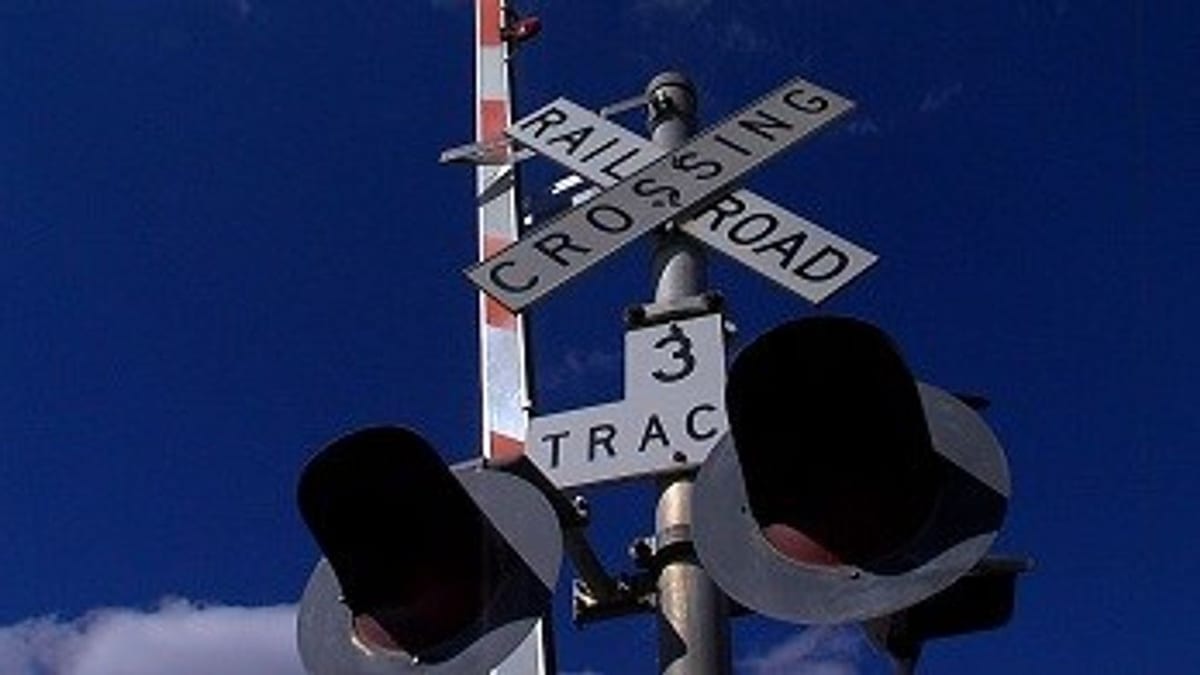
Collision Highlights Ongoing Risks at Level Crossings
Published coverage indicates the crash occurred at a rail crossing where a vehicle entered the path of an oncoming train, resulting in a forceful impact that significantly damaged the road vehicle while leaving the train itself able to remain on the rails. Initial reports describe emergency responders assessing the lone occupant, who was later reported to have suffered only minor injuries despite the severity of the collision.
In many similar incidents reported across North America and Europe this year, investigators have pointed to factors such as driver inattention, misjudged train speed or distance, and challenging weather or visibility conditions. Even at relatively low speeds, the mass of a train gives it far greater stopping distance than a road vehicle, making avoidance maneuvers difficult once a vehicle is already on the tracks.
Recent examples documented in public reporting range from crashes at rural crossings with limited protection to urban intersections where flashing lights, gates and audible warnings were all active. In a significant number of those cases, occupants survived with minor injuries, while in others the outcome was far more serious, highlighting how small differences in timing and impact angle can determine whether a crash is survivable.
Safety analysts often note that collisions in which an occupant walks away with limited injuries tend to involve slower train speeds, glancing impacts that push a vehicle aside rather than directly under the train, and newer vehicles with modern crumple zones and side-impact protection. The latest incident appears to share at least some of those characteristics, according to publicly available details on vehicle damage and the reported condition of the survivor.
Rail Safety Systems Designed to Reduce Harm
While every rail crash is unique, officials and safety researchers have consistently emphasized that modern signaling and crossing technology play a major role in limiting casualties when they do occur. Many crossings now combine flashing lights, bells and automatic gates with improved sightlines and road markings designed to warn drivers well before they reach the tracks.
National and regional rail agencies periodically update technical standards that govern how crossings are designed and when they require upgrades. Guidance from transportation regulators describes how even minor-injury events are reviewed for patterns, including whether warning systems operated as intended and whether the roadway layout might invite driver error. Those findings can lead to additional signage, new approach speeds, or, in high-risk locations, grade separation projects that physically separate road and rail traffic.
Trains themselves have benefited from additional safety features intended to protect both passengers and people outside the train. These include reinforced cab structures, improved braking systems and event recorders that capture speed and signal status before impact. When a crash results in only minor injuries to a person in a much smaller vehicle, investigators frequently study how train speed, braking and horn use factored into the outcome.
In the most recent case, publicly available information indicates that rail traffic on the line was delayed while crews inspected the track and vehicle debris was cleared. Such interruptions are a routine part of post-collision procedures, intended both to protect subsequent trains and to allow investigators to document conditions at the scene.
Minor Injuries Mask Potential for Severe Consequences
Though the occupant’s injuries were described as minor, collision data from transportation agencies shows that vehicle-train impacts remain among the most dangerous scenarios on the road network. Even at low to moderate speeds, the difference in size and weight between a passenger vehicle and a locomotive can lead to catastrophic outcomes, including rollovers, ejections and fires.
Safety summaries compiled over recent years show a wide range of results from seemingly similar collisions: in some, occupants are treated for minor cuts, bruises or whiplash and released; in others, nearly identical circumstances have led to life-changing trauma or fatalities. This variation is one reason regulators treat every train-vehicle collision as a serious event, regardless of the initial injury report.
Medical professionals also caution that early descriptions of “minor injuries” may not capture delayed symptoms such as concussion effects or soft-tissue damage that become apparent hours or days after a crash. As a result, even those who walk away from a vehicle-train impact are typically urged to undergo thorough evaluation and follow-up care.
In the latest incident, publicly reported information does not indicate any additional injuries among train crew or passengers, if any were on board. However, similar events in recent months have involved secondary injuries to rail staff or bystanders who responded quickly at the scene, adding another layer of risk when heavy equipment and damaged vehicles share a confined space.
Travel Disruption and Local Community Impact
Collisions of this kind frequently ripple through local travel networks, affecting both rail passengers and road users who may be far from the crash site. Standard practice in many jurisdictions is to halt train movements along the affected section of track until inspections confirm that rails, sleepers and signaling equipment are intact.
Those pauses can lead to delays or cancellations for intercity and commuter services, while road closures divert cars, buses and freight traffic to alternate routes. For travelers, the practical effect can be extended journey times, missed connections and congestion on nearby highways as traffic realigns around the blocked crossing.
Communities along busy corridors often experience repeated disruptions from even nonfatal rail incidents. Local reporting in several regions has documented how residents and businesses near crossings can face temporary access issues, restricted driveways or noise from emergency operations and cleanup crews. The latest crash fits into that broader pattern of localized upheaval, despite the relatively fortunate outcome for the vehicle occupant.
In some cases, repeated incidents along a particular stretch of track spur calls for additional safety investments, such as overpasses, underpasses or upgraded warning systems. Public discussions following collisions in which occupants escape with minor injuries often focus on whether the next crash in the same location might not end as well.
Renewed Attention on Driver Awareness Around Trains
The circumstances of the recent crash have renewed focus on driver behavior at rail crossings, a factor highlighted repeatedly in transportation safety campaigns. Educational materials distributed by governments, rail operators and advocacy groups stress that trains can appear farther away and slower than they actually are, encouraging drivers to assume there is more time to cross than is truly available.
Authorities routinely advise motorists to stop when warning lights begin flashing, never to drive around lowered gates, and to avoid stopping on the tracks under any circumstances. When a vehicle becomes stuck or stalls, recommended guidance is to exit immediately and move away at a diagonal angle from the tracks in the direction of oncoming trains, then contact emergency services.
Publicly available statistics indicate that the majority of collisions at protected crossings involve a road user entering the crossing after signals have activated. Cases where occupants escape with minor injuries, such as in the latest incident, are often cited in safety campaigns as examples of how close such events come to being far more serious.
For travelers planning journeys by road or rail, the episode serves as a reminder that rail lines intersect many common routes, from small-town streets to major highways. Extra vigilance at those intersections, combined with ongoing investment in safety infrastructure, remains central to reducing the number and severity of vehicle-train collisions worldwide.