


Vieques vs Culebra is one of Puerto Rico’s clearest travel decisions because the two island-municipalities deliver very different trips, even though they sit just off the east coast and share the same jump-off point in Ceiba. If you want multiple nights of exploring, beach-hopping inside a wildlife refuge, and a can’t-miss evening on Mosquito Bay’s bioluminescent water, Vieques is usually the stronger pick. If you want a shorter stay built around an iconic Caribbean beach day at Flamenco Beach plus easy, close-to-shore snorkeling, Culebra often feels simpler, faster, and more laser-focused.
Get the latest updates straight to your inbox!
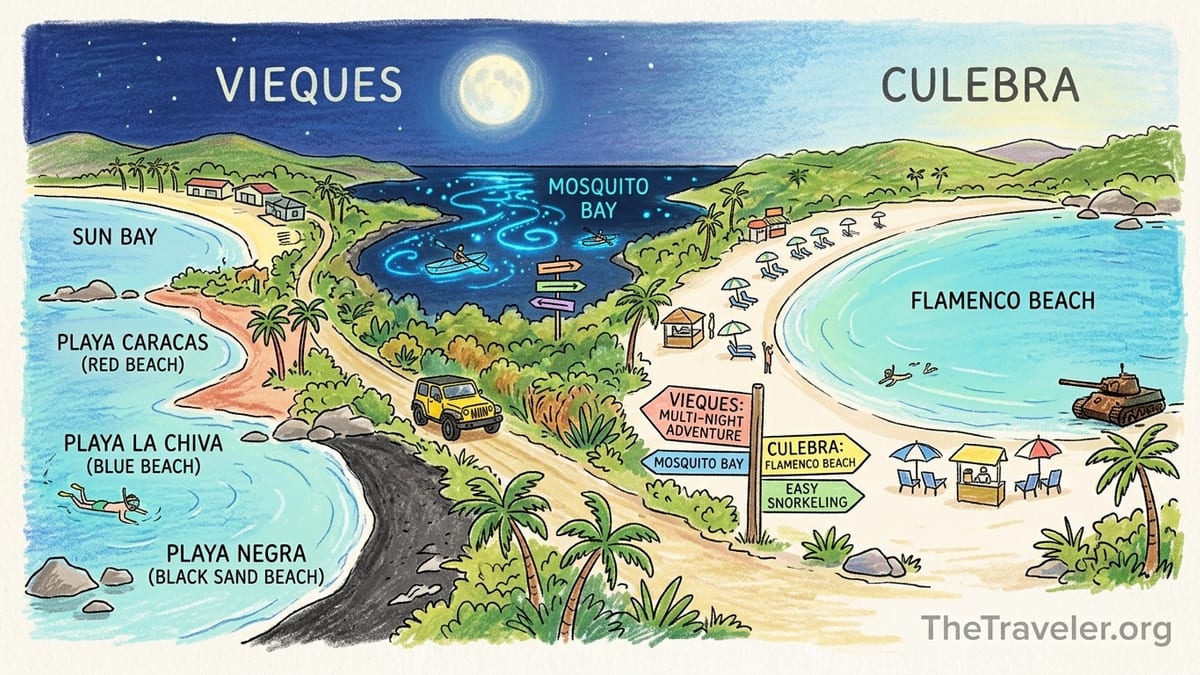
Beaches: Variety vs One Big Headliner
Vieques is the island you choose when you want options. You can spend one day on a wide, facility-backed beach like Sun Bay, then pivot to refuge beaches like Playa Caracas (often called Red Beach) and Playa La Chiva (Blue Beach) the next day. The appeal is not just that the beaches are beautiful. It is that they feel different from one another, with everything from calm coves to long, open stretches, plus a distinctive stop like Playa Negra (black sand) when you want something that does not look like another Caribbean postcard.
A real-world Vieques beach day often looks like this: you pick up a Jeep or SUV in the morning and drive into the Vieques National Wildlife Refuge, stopping at Playa Caracas first because it is relatively straightforward to reach, then continuing to La Chiva for clearer water and stronger snorkeling potential. You finish closer to Esperanza with a sunset swim at Sun Bay, where you can actually rinse off at showers and use bathrooms before heading to dinner.
Culebra is the island you choose when one legendary beach can anchor your entire trip. Flamenco Beach is the name most travelers come for, and it is set up for exactly that kind of stay. It is a long, sheltered horseshoe of pale sand with calmer water and a reliable “arrive, set up, stay all day” rhythm. Unlike most top-tier beaches, Flamenco also has functional day-trip infrastructure: bathrooms, showers, changing areas, food kiosks, and rentals for basics like chairs, umbrellas, and snorkel gear.
In practice, many first-time Culebra visitors do not even leave Flamenco on their first visit. They take a taxi from the ferry dock in Dewey straight to Flamenco, rent two chairs and an umbrella, snorkel along the rockier ends for the best visibility, and then rely on the kiosk row for a late lunch before heading back to town for the return ferry.
Snorkeling: Where It’s Easiest to Get in the Water
Culebra’s snorkeling reputation is partly about how easy it can be. At Flamenco, you can snorkel from shore without needing a tour boat, especially near the rocky edges where fish activity is often better. Tamarindo Beach is another commonly mentioned shore-snorkel option, and many travelers target it specifically hoping to spot sea turtles, then spend the rest of the day at Flamenco for swimming, photos, and comfort.
The big advantage for a short trip is that Culebra can be “one mask, one beach bag, one plan.” If you are traveling with kids who do not want to sit through a long drive or move from beach to beach, a Culebra day of simple, repetitive swimming and snorkeling can feel like a win. You can start with a quick snorkel session, take a break for snacks, and get right back in without the logistics of relocating.
Vieques can be excellent for snorkeling, but it is more dependent on where you go and what you drive. La Chiva is frequently highlighted for clear water and strong snorkeling potential, and Playa Caracas can also deliver good reef-side snorkeling along the rocks when conditions cooperate. The tradeoff is access. A lot of Vieques’ best beach-hopping requires high-clearance driving on unpaved roads, and you should expect a more “bring what you need” style day because many of the refuge beaches do not have the same on-site amenities as Flamenco.
If you want the easiest version of Vieques snorkeling, plan your day around beaches you can pair with comfort and timing. For example, do a morning snorkel window at La Chiva or Caracas, then finish at Sun Bay closer to Esperanza so you can clean up, grab something simple, and still make your Mosquito Bay tour check-in time without rushing.
Mosquito Bay and the Bio Bay Question: Why Vieques Often Wins
If bioluminescence is the headline experience you are traveling for, Vieques has a clear edge because Mosquito Bay is the island’s signature night. The practical reality is that you should plan to sleep on Vieques at least one night if you want to enjoy the bio bay without turning your trip into a high-stress logistics puzzle. Tours run after dark, and stacking a late tour on top of the last ferry back to the main island is a common mistake that turns a magical evening into a race against the clock.
Most travelers will choose between kayaking tours and electric boat tours depending on comfort and family needs. Current operator pricing for Mosquito Bay tours is often in the roughly $60 to $90 range for many standard departures, with some offerings going higher depending on what is included. A typical example is a clear or transparent kayak tour priced from about $65, while an electric boat option is often priced higher and can include a small cash park maintenance fee in addition to the ticket.
The most helpful way to think about the “best night” decision is not the brand name, but the moon. Many local guides push travelers toward new moon windows, when the sky is darker and the glow effect can feel stronger. If your dates are flexible, it can be worth building your Vieques nights around those darker evenings rather than treating the bio bay as an afterthought.
Culebra can be the better island for travelers who are not prioritizing bioluminescence or who are comfortable doing a bio bay elsewhere on the main island. But if Mosquito Bay is the experience you have been saving for, Vieques is the island that justifies staying longer because that night on the water becomes the core memory, and the beaches become the supporting cast.
Getting There: Ferry Schedules, Fares, and Flights (What’s Actually Simple)
Both islands are typically reached from the Ceiba ferry terminal on Puerto Rico’s east coast, and the pricing for passenger tickets is refreshingly low. Current published one-way passenger fares from Ceiba are about $2.00 for Vieques and about $2.25 for Culebra for standard adult tickets, with discounted or free categories for certain ages. The low fare is not the full story, though. What tends to shape your day is timing, availability, and how early you are willing to start.
Culebra is often the cleaner fit for a day trip or a single-night stay because the trip is commonly treated as a “get to Flamenco, stay there, return” itinerary. The crossing time is often described around an hour. For many travelers, the better strategy is simply to pick one beach plan, commit to it, and avoid over-scheduling. Puerto Rico Ferry also publishes official itinerary PDFs by date range, and the schedule can shift by season, so travelers should treat the posted timetable as required reading rather than background noise.
Vieques can still be done as a short trip, but the bio bay changes the pacing. If your tour check-in is after dark, you need a buffer for ferry delays, ground transportation on the island, and dinner. That is why Vieques is frequently better as a two-night plan: day one is arrival plus settling in, day two is refuge beaches plus the bio bay, and day three is a calmer departure without trying to squeeze everything into a single day.
Flights can shorten travel time, especially if your vacation is based in San Juan and you value predictability. Vieques (VQS) and Culebra (CPX) are served by small-plane operations, and many travelers use them when ferry tickets are inconvenient or when they want to avoid a long drive to Ceiba. The tradeoff is that small flights are often more expensive than the ferry and can be more restrictive on baggage, so they work best when you are traveling light and treating the island as a compact add-on to a larger Puerto Rico itinerary.
Getting Around Once You Arrive: Cars, Golf Carts, Taxis, and Reality
Culebra is generally easier to do without a rental car if your plan is Flamenco-centric. You arrive at the ferry dock in Dewey, then take a quick taxi ride to Flamenco Beach. Once you are there, you can rent chairs and an umbrella, snorkel from shore, and rely on the kiosks for food and drinks. If you want to explore more beaches in one day, a golf cart or Jeep rental can add flexibility, but it is not mandatory for a “Flamenco first” trip.
Vieques is the opposite: transportation is the experience. The island is larger and the best beach-hopping often depends on having your own wheels. Many travelers choose a Jeep or SUV specifically to reach beaches inside the refuge on rougher roads, especially if you want to combine La Chiva, Caracas, and a quieter stop like Punta Arenas in one loop. A golf cart can work for some travelers, particularly if you are staying near Esperanza and plan to keep your driving modest, but it can feel limiting when you start chasing the most remote beaches or when road conditions demand more clearance.
Families often feel the difference here the most. On Culebra, “taxi to Flamenco, stay put” keeps the day predictable. On Vieques, a family’s comfort can improve dramatically if you choose the right vehicle size and plan your beach day around nap schedules, snack stops, and a clean-up window before the bio bay tour. That might mean a morning beach with easier access and then a second beach closer to town, rather than a full day of refuge road bouncing with a stroller and cooler in tow.
Whichever island you choose, do not assume you will be able to improvise transportation on arrival during peak travel weeks. If your trip dates align with popular moon phases for Mosquito Bay or with major holiday travel, lock in lodging first, then transportation, then tours. The islands reward flexibility, but they punish last-minute planning when the small inventory of rentals and rooms fills up.
Where You’ll Sleep and Eat: The Multi-Night Advantage
Vieques has a stronger case for a multi-night stay because it supports a fuller “day-night-day” rhythm. You can build your trip around Esperanza’s waterfront dining and still get to beaches easily. A recognizable example is dinner at a place like Duffy’s in Esperanza, which operates on a first-come, first-served approach and works well for travelers who do not want their vacation dictated by reservation times. For a higher-end night out, El Quenepo is frequently cited as a refined option along the Esperanza waterfront, which is exactly the kind of “we’ll shower, dress up a little, and celebrate the trip” stop that makes sense on a two- or three-night island stay.
In other words, Vieques is not just beaches plus one tour. It has enough restaurant variety and enough distinct day trips that you can justify staying put instead of treating it like a checkbox. A common, satisfying itinerary is two nights in Esperanza: one daytime refuge beach loop, one bio bay night, and one slower beach day at Sun Bay before departure.
Culebra’s food scene can still be memorable, but it often feels more limited, which is why many travelers love it for a shorter stay. The island is known for casual, vacation-style meals where the goal is to eat well and get back to the water. Discover Puerto Rico highlights standouts like Dinghy Dock and Susie’s as recognizable dining names on the island, and those spots can be the difference between “we only ate kiosk food” and “we actually had a proper dinner in town” on a one-night trip.
Lodging follows the same pattern. Culebra has plenty of rentals, particularly around Dewey, but the island’s strongest argument is still efficiency: arrive, beach hard, sleep, beach again, leave. Vieques, with its broader spread of beaches and its bio bay timing, tends to feel more rewarding the longer you give it.
Trip Length, Families, and Overall Cost: Choosing the Better Fit
If you are planning a very short add-on to a main Puerto Rico itinerary, Culebra is often the better fit. It is easier to justify as a one-night trip or even a carefully planned day trip because Flamenco Beach can carry the experience. Costs on the beach are also easier to visualize. For example, Flamenco has a published entry fee of $2 per person and a parking fee of $5 per vehicle, plus you may spend around $10 to $15 per day on snorkel gear rentals and a similar range on chairs, with umbrellas often priced higher depending on demand and season. That kind of “known expense” helps families budget without surprises.
Vieques is usually the better value when you are staying longer because the island’s big-ticket moment is an evening tour, not an all-day guided excursion. Even when your Mosquito Bay tour is roughly in the $60 to $90 range for many standard options, the overall trip can still pencil out well if you stay two or three nights and spread transportation and rental costs across more beach days. The island’s free beaches and the ability to self-direct your itinerary can keep the daily spend under control once you are settled.
For families, the choice often comes down to stamina and schedule. If your kids are happiest with one beach, bathrooms nearby, and a predictable lunch plan, Culebra’s Flamenco setup is hard to beat. If your family can handle more movement and you want the wow factor of the bio bay, Vieques can be unforgettable, but it works best when you plan it as a multi-night island rather than a sprint.
The final budgeting note is that the ferry fare is not where the money goes. The ferry tickets are low, but your overall cost hinges on lodging inventory, transportation availability, and whether you fly instead of ferrying. If you want the least stressful version of either island, spend the money where it buys you time: the right nights on-island, the right vehicle for your beach goals, and a tour booking that matches the moon rather than fighting it.
The Takeaway
Vieques is the stronger multi-night island for travelers who want Puerto Rico’s most famous bio bay experience and the freedom to explore a wider range of beaches over several days. Mosquito Bay is not just an activity, it is an anchor that makes staying overnight feel logical, and the island’s beach variety rewards anyone who likes to wake up and decide between Sun Bay comfort and refuge-road adventure.
Culebra is particularly attractive for a shorter, beach-focused stay built around Flamenco Beach and easy snorkeling. It is the island that makes sense when your vacation time is limited and you want the simplest version of “arrive, swim, snorkel, eat, repeat” with the most iconic beach scene off Puerto Rico’s east coast.
If you can only pick one: choose Vieques for a trip where nights matter as much as days, and choose Culebra for a trip where a single perfect beach day is the entire point.
FAQ
Q1. Which island is better for a first-time visitor to Puerto Rico, Vieques or Culebra?
For a short, low-planning beach trip, Culebra is often easier. For a fuller island experience with Mosquito Bay and more beach variety, Vieques usually feels more complete.
Q2. Can I visit Flamenco Beach on a day trip?
Yes. Many travelers do Culebra as a day trip by ferry, go straight to Flamenco Beach, and return the same day, but you should plan your transportation and ferry timing carefully.
Q3. Is Vieques worth it if I can’t do the Mosquito Bay bio bay tour?
Yes, especially if you want to explore multiple beaches and the wildlife refuge. But if the bio bay is your main reason for going, missing it can make Culebra feel like the better “short trip” choice.
Q4. How much are the ferry tickets to Vieques and Culebra?
Current published one-way adult passenger fares from Ceiba are about $2.00 to Vieques and about $2.25 to Culebra, with certain age-based discounts or free categories.
Q5. Do I need a car on Culebra?
Not necessarily if your plan is mainly Flamenco Beach. Many visitors use taxis from the ferry dock to Flamenco. A golf cart or Jeep is helpful if you want to beach-hop.
Q6. Do I need a Jeep on Vieques?
It is strongly recommended if you want to explore refuge beaches like La Chiva and reach more remote areas comfortably, especially when roads are rough or unpaved.
Q7. What does Flamenco Beach cost?
Recent published guidance lists an entry fee of $2 per person and parking at $5 per vehicle, with optional rentals like chairs, umbrellas, and snorkel gear available on-site.
Q8. What’s a typical price range for a Mosquito Bay bio bay tour?
Many Mosquito Bay tours are commonly priced roughly in the $60 to $90 range for standard options, with higher prices for certain inclusions or formats. Availability is often best when booked ahead.
Q9. Which island is better for snorkeling without a boat tour?
Culebra is often easier for casual shore snorkeling, especially around Flamenco and other accessible beaches. Vieques can be excellent too, but it often requires more driving and beach selection.
Q10. How many nights should I stay on each island?
For Culebra, one night can be enough for Flamenco and a second beach. For Vieques, two to three nights is a sweet spot so you can do refuge beaches plus Mosquito Bay without rushing.