


More news on this day
Vietnam is moving to clarify when and how travelers must complete health declarations at its borders, as a new nationwide framework for medical screening comes into force and major gateways such as Ho Chi Minh City prepare updated procedures.
Get the latest news straight to your inbox!
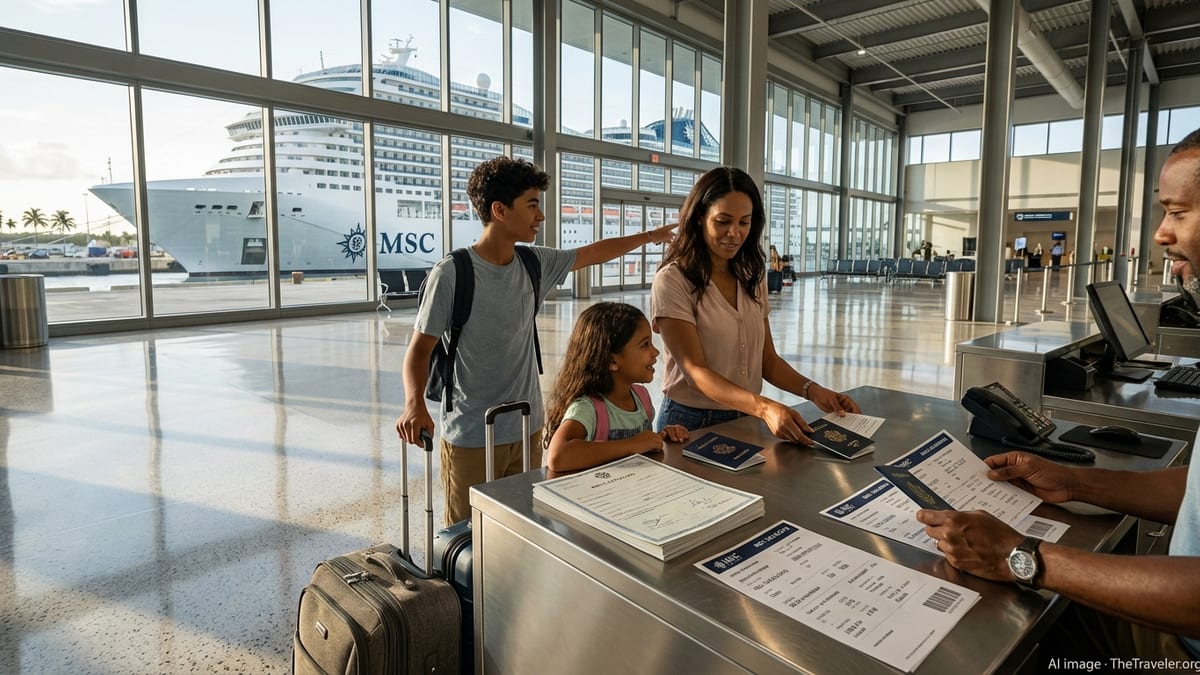
New Decree Sets National Health Declaration Framework
The country’s revised health quarantine rules, set out in a recent government decree, introduce a standardized medical declaration form and spell out when it may be required for people entering, leaving or transiting Vietnam. The regulation establishes a legal basis for health checks at all border gates and aligns procedures across air, land and sea entry points.
Under the framework, a bilingual health declaration form can be activated for travelers if public health conditions warrant additional screening. The form collects basic identity details, travel history in the previous 14 days, current contact information in Vietnam and recent symptoms or exposure risks related to communicable diseases. It is designed to support disease surveillance and rapid contact tracing in the event of an outbreak.
The decree specifies that, once required, the declaration must generally be completed within a set period before a traveler’s entry, exit or transit, and can be used alongside temperature checks, observation and follow up medical assessment where needed. It also allows health authorities to request proof of vaccination or other preventive measures if this is deemed necessary for disease control.
While the regulation has nationwide scope, implementation depends on the evolving epidemiological situation. This approach gives Vietnam a standing mechanism for swift deployment of health declarations at short notice without the need for ad hoc legal changes each time a new threat emerges.
Ho Chi Minh City Moves Ahead With Digital Pre‑Arrival Systems
Ho Chi Minh City, Vietnam’s busiest international gateway, has been at the center of recent procedural changes at the border. Earlier this year, immigration officials in the city introduced a mandatory digital arrival card for foreign travelers, requiring visitors to submit personal and travel details in advance of arrival and obtain a QR code for inspection at immigration counters.
The digital card operates separately from the health declaration regime but is part of a broader shift toward pre‑arrival screening and data collection at major Vietnamese airports. Travelers arriving in Ho Chi Minh City now routinely complete the electronic arrival card, even in periods when paper or electronic health declarations are not being actively checked.
Reports from recent travelers indicate that, since the health declaration framework took effect, Ho Chi Minh City’s main airport has focused on enforcing the digital arrival card while not systematically collecting separate health forms in the absence of a declared health emergency. This means many passengers are encountering new digital procedures without yet seeing an additional, dedicated health questionnaire at the border.
Officials in the city are expected to rely on the existing digital infrastructure to support any future rollout of compulsory health declarations, allowing authorities to toggle additional questions and requirements on and off in response to emerging risks.
Confusion Over July Rollout Prompts Clarifications
The entry into force of the new decree at the beginning of July prompted widespread confusion among travelers, many of whom believed that a health declaration form would become immediately mandatory for all arrivals. Online forums and travel communities quickly filled with questions about where to find the form, whether it was available in electronic format and if airlines would distribute paper copies on board.
Early social media posts and some commentary initially suggested that every inbound traveler, including those transiting Vietnam, would have to complete the new document from the first day of implementation. However, subsequent clarifications in publicly available information from health authorities and government communication channels underlined that the decree creates a legal framework and standard form rather than an automatic, blanket requirement.
Travelers arriving in Ho Chi Minh City and other major airports in early July reported mixed experiences. Several accounts describe passing through immigration with only the pre‑arrival or digital arrival card checked and no additional health declaration requested, while others noted that airport staff referred to the possibility of health forms being introduced at short notice if circumstances changed.
These differing experiences have contributed to lingering uncertainty but also highlight how the new rules are intended to be flexible. The decree enables rapid activation of health declaration obligations at selected border gates or nationwide, yet leaves day to day use contingent on the assessed risk of communicable diseases.
What the Clarified Policy Means for Travelers Now
For the moment, published guidance indicates that the health declaration requirement is not being applied across the board for every traveler entering Vietnam. Instead, the framework operates in the background, ready to be deployed if there is a significant outbreak or elevated risk associated with particular routes or countries.
In practical terms, this means that visitors landing in Ho Chi Minh City, Hanoi, Da Nang and other international gateways can generally expect to complete the digital or paper arrival card that has already been introduced, while monitoring for any updated instructions related to health declarations before departure. Airlines and tour operators may share new information with passengers if a specific health form becomes mandatory for certain flights or periods.
Travelers are being advised in public discussions to keep key health and itinerary details readily available, including recent travel history, local contact information and vaccination records, in case a declaration is requested at short notice. This preparation can help avoid delays at immigration checkpoints if authorities decide to activate the form in response to changing conditions.
As with many post‑pandemic border measures, the clarified Vietnamese policy attempts to balance predictable entry procedures for tourism and business with the ability to scale up health screening when needed. Visitors heading to Ho Chi Minh City and other hubs in the coming months are likely to see continued emphasis on digital pre‑arrival systems, with health declarations remaining a stand‑by tool that can be turned on quickly if regional or global health trends demand tighter controls.
Potential Expansion to More Cities and Border Points
The new decree applies to all Vietnamese border gates, suggesting that any activation of compulsory health declarations is likely to extend beyond Ho Chi Minh City to other key air, land and sea entry points. International airports such as Noi Bai in Hanoi and Da Nang, along with seaports receiving cruise ships and land crossings with neighboring countries, are covered by the same national framework.
Observers note that the digital systems first rolled out in Ho Chi Minh City could serve as templates for other locations, allowing the government to standardize procedures across multiple cities if circumstances require broader health screening. Over time, the combination of a national health declaration form and local digital platforms is expected to create a more integrated approach to traveler data and disease surveillance.
For travelers planning multi‑city itineraries within Vietnam, the clarified policy means that changes introduced initially at one major gateway may later appear at others. Published commentary on the decree suggests that authorities intend the rules to be scalable, enabling selective tightening or easing of requirements in line with local risk assessments while maintaining a consistent legal basis nationwide.
Vietnam’s decision to formalize health declaration rules while keeping their day to day use conditional reflects a broader regional trend toward maintaining permanent, but flexible, public health tools at the border. As the country continues to welcome rising numbers of international visitors, cities such as Ho Chi Minh City are expected to remain at the forefront of any future adjustments to entry procedures driven by global health developments.