

More news on this day
Vietnam has unveiled far-reaching aviation consumer protections that will force airlines to refund fares, pay advance compensation and provide extensive care to passengers hit by long flight delays, cancellations and schedule changes, placing the country among the world’s more assertive regulators on air passenger rights.
Get the latest news straight to your inbox!
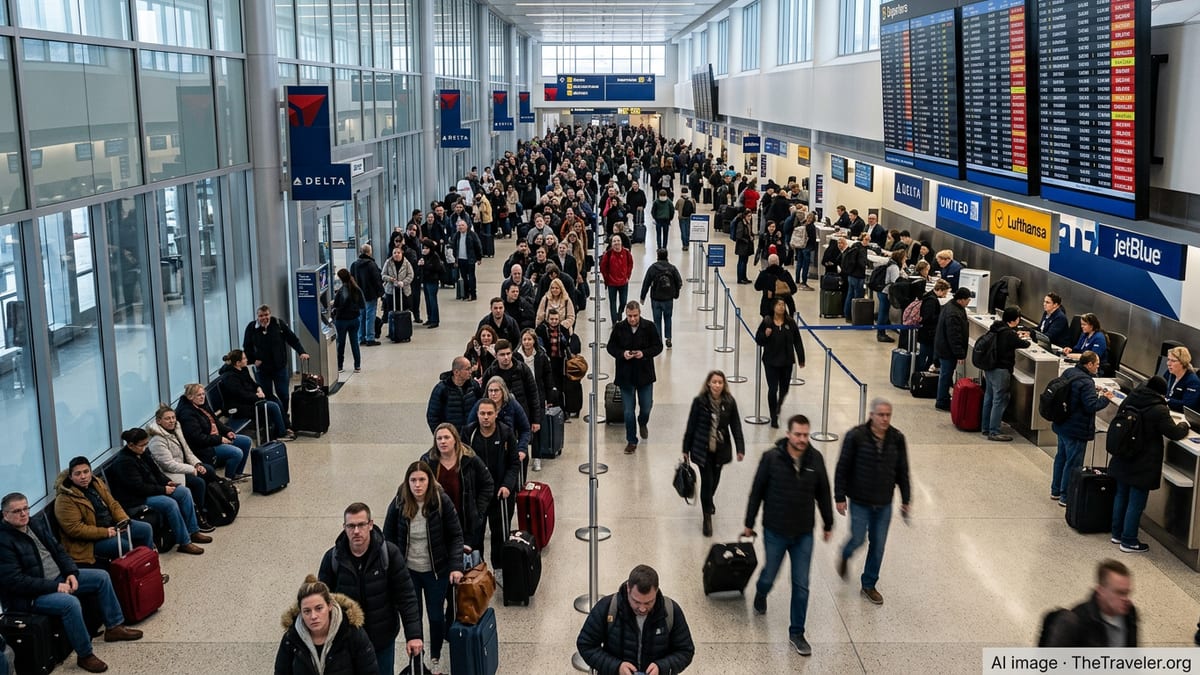
A Landmark Decree Reshapes Passenger Rights
Vietnam’s new framework for flight disruption rights is anchored in the recently issued Law on Civil Aviation of Vietnam 2025 and Government Decree No. 208/2026 on air transport. Publicly available information shows that the decree details carriers’ obligations when flights are delayed, cancelled, rescheduled or significantly altered, translating broad statutory principles into specific, enforceable duties.
The rules define a delayed flight as one that departs more than 15 minutes later than the published “base schedule,” with a “prolonged delay” starting from four hours. From that threshold, passengers gain strong rights to care, refunds and monetary compensation when disruptions are attributable to the airline. The decree sits alongside existing circulars from the Ministry of Transport and forthcoming guidance from the Civil Aviation Authority of Vietnam, which together form a new, more comprehensive consumer protection regime.
Vietnam’s approach reflects growing pressure from lawmakers and the traveling public after years of rising complaint volumes about delays and cancellations on busy domestic routes. Policy debate in recent National Assembly sessions focused heavily on airline accountability and transparency, with legislators calling for clearer obligations to inform passengers, cover basic needs during long waits and provide prompt cash payments where service falls short.
Industry analysts note that the reforms move Vietnam decisively closer to the more prescriptive passenger rights systems seen in the United States, European Union, United Kingdom, Brazil, China and India. For international travelers, the changes mean that flights touching Vietnam will increasingly be governed by a patchwork of overlapping protections that collectively limit airlines’ ability to leave passengers without remedies.
Refunds, Vouchers and Care for Long Delays
Under the decree, airlines must begin providing assistance once delays reach two hours. At that point, carriers are required to offer drinking water or equivalent vouchers and, where possible, to rebook passengers or reroute them to their final destination on alternative flights without additional surcharges when the disruption is the airline’s fault.
If a delay extends to three hours, the duty of care increases to include meals or food vouchers while maintaining the earlier rebooking rights. Once the four hour mark is reached on a delay caused by the airline, passengers gain a clear right to a refund of the full ticket price or the unused portion of the ticket if they opt not to travel on the revised schedule, along with non refundable advance compensation for those holding confirmed reservations and valid tickets.
For delays of six hours or more, carriers must add accommodation to the package of assistance, arranging suitable resting places during daytime delays and overnight lodging when disruptions run late into the night or early morning. Separate provisions govern delays with passengers already on board, requiring airlines to provide water, ventilation, restroom access and, for extended tarmac holds without a clear departure time, the opportunity to disembark.
The decree also addresses significant schedule changes made before travel day. When an airline moves a flight by several hours relative to the time shown on the ticket, passengers gain options to accept the new timing, switch to another available flight within a set window or request a refund for all or part of the journey, closing a gap that previously left many travelers bearing the full cost of major timetable shifts.
Alignment With Global Passenger Protection Trends
Vietnam’s reforms arrive amid a broader international wave of aviation consumer protection measures. In the United States, a recent final rule from the Department of Transportation clarified that passengers are entitled to automatic refunds when flights are cancelled or significantly changed and they choose not to travel, and set out quantitative benchmarks for what counts as a significant delay on domestic and international routes.
Across the Atlantic, the European Union’s long standing Regulation 261 framework already guarantees compensation and care for passengers facing long delays, cancellations or denied boarding on flights within, to or from the bloc. Council discussions in 2025 on refining these rules concentrate on sharpening definitions of delay thresholds and clarifying compensation levels for journeys of different lengths, signaling that European standards are likely to tighten further.
Other major markets have adopted or strengthened similar legislation. The United Kingdom maintains EU style rules following Brexit, Brazil’s National Civil Aviation Agency has detailed obligations for assistance, refunds and monetary compensation tied to carrier responsibility, India’s Directorate General of Civil Aviation sets compensation slabs for denial of boarding and cancellations, while China’s civil aviation provisions require airlines to provide food, accommodation and rebooking in certain disruption scenarios.
Against this backdrop, Vietnam’s decision to codify advance cash compensation, structured care obligations and refund rights for long delays places it in a rapidly expanding group of jurisdictions using law and regulation to rebalance the relationship between airlines and passengers. Travel law commentators suggest that Vietnam is effectively aligning with an emerging global norm that views air passenger rights as a core element of consumer protection policy.
Implications for Airlines and Travelers
The new obligations are expected to change how airlines plan operations in Vietnam, from schedule padding and crew rostering to contingency budgeting. Carriers face a clear incentive to minimize delays that fall within their control, since prolonged disruptions will now trigger automatic costs in the form of meals, hotels, refunds and cash compensation.
Low cost and full service airlines alike are likely to adjust their customer service playbooks, with emphasis on more proactive communication and rapid decision making when operational problems arise. Publicly available information from major Vietnamese carriers already outlines customer service plans that anticipate refund processing timelines, rebooking options and treatment of passengers during irregular operations, and these commitments will now sit under a stronger legal umbrella.
For passengers, the reforms promise a more predictable experience when things go wrong. Travelers will have clearer thresholds for when they can demand water, food, hotel rooms, rebooking without extra fees or a full refund. The requirement to provide non refundable advance compensation for long delays and for certain cancellations or denied boarding situations should also reduce the need for lengthy complaints or legal action in straightforward cases.
However, policy specialists caution that enforcement will be critical. Vietnam’s aviation authority is tasked with overseeing carriers’ compliance, investigating patterns of non payment or inadequate care and, where necessary, imposing sanctions. Consumer advocates argue that transparent reporting of airline performance on delays, cancellations and compensation handling will be essential if passengers are to make informed choices in a more demanding regulatory environment.
What International Passengers Should Know
For international travelers who connect through Vietnam or fly on Vietnamese carriers abroad, the interaction of multiple legal regimes will shape their rights. A passenger departing the United Kingdom or European Union on a Vietnamese airline may be covered by both EU rules at departure and Vietnamese rules at destination, while a flight between Vietnam and the United States can bring U.S. refund requirements into play if a significant schedule change occurs and the traveler decides not to fly.
Similarly, itineraries that include Brazil, India or China may trigger local compensation or care obligations in addition to the protections now available under Vietnamese law. Travel specialists indicate that in many cases, the most generous or clearly applicable rule will set the practical standard, since airlines frequently harmonize internal policies to avoid applying multiple conflicting thresholds on a single route.
Travelers booking complex multi segment trips are advised by consumer groups to keep clear records of booking confirmations, check in times, boarding passes and any written communications from airlines about delays or cancellations. Such documentation can be important when seeking refunds or compensation under overlapping national regimes, including Vietnam’s new framework.
As Vietnam’s aviation market continues to grow and attract new international routes, the country’s move to strengthen flight delay and cancellation protections signals to global travelers that robust legal standards are becoming part of its pitch as a modern air transport hub. The reforms also add to the momentum behind a de facto global baseline for passenger rights, in which extended delays increasingly trigger not only apologies and vouchers but concrete financial remedies and mandated care.