


More news on this day
Viking is accelerating its expansion on Egypt’s Nile River, adding new purpose-built ships and significantly increasing capacity for travelers seeking upscale, history-focused cruises through one of the world’s most storied destinations.
Get the latest news straight to your inbox!
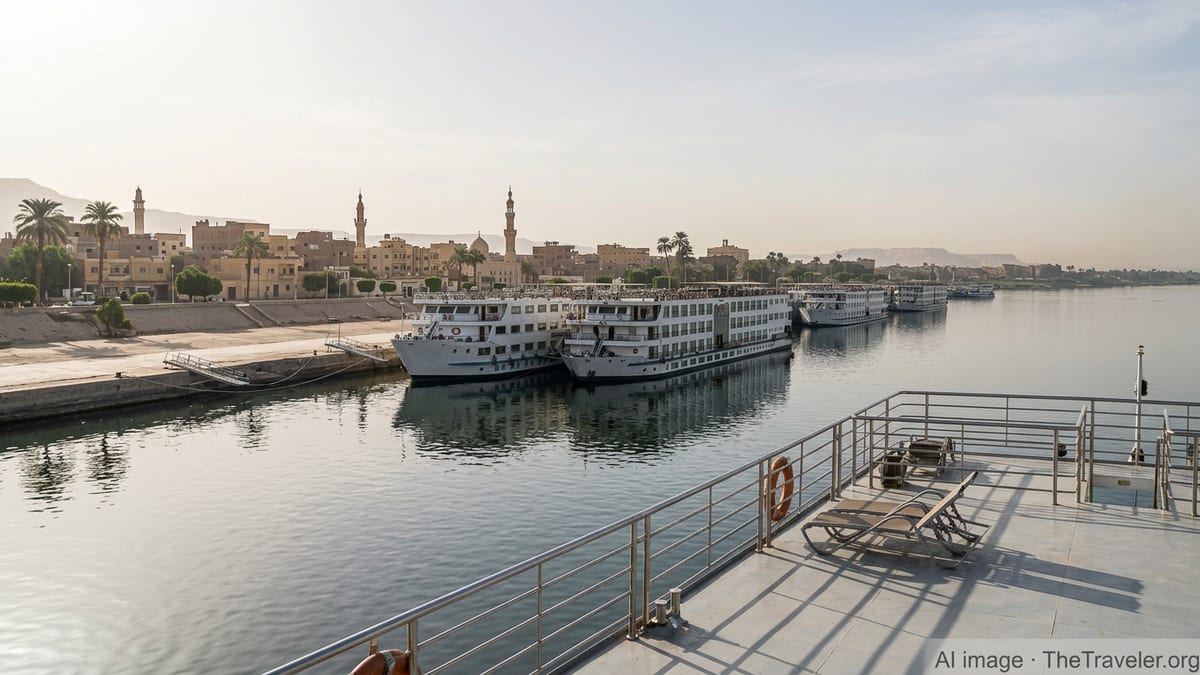
New Nile Ships Strengthen Viking’s Egypt Footprint
Viking has been steadily expanding its dedicated Nile River fleet, underscoring Egypt’s importance within the company’s global river cruise portfolio. Publicly available company filings and recent press materials indicate that the Viking Hathor, an 82-guest river vessel, was delivered in 2024 to sail the line’s popular Pharaohs & Pyramids itinerary between Cairo and key archaeological sites along the Nile.
The Viking Hathor is described as a sister ship to Viking Osiris and Viking Aton, which entered service in 2022 and 2023 respectively. Additional vessels, including Viking Sobek and other Egypt-specific ships, are scheduled for delivery between 2025 and 2027, reflecting a multi-year investment in the Nile. Industry documentation and fleet lists show that Viking is working with Cairo’s Massara shipyard to build a family of nearly identical Nile ships tailored to local sailing conditions while maintaining the brand’s recognizable Scandinavian-inspired design.
Beyond the newest deliveries, Viking’s Egypt fleet now spans both older, refitted vessels and a wave of newbuilds. Ships such as Viking Ra and MS Antares operate alongside the Osiris-class vessels, giving the line a mix of boutique and contemporary options and enabling it to scale up capacity as demand for Egyptian itineraries continues to recover and grow.
Luxury River Cruise Experience Focused on History
Viking’s expansion on the Nile is closely tied to its positioning as a destination-focused, culturally oriented cruise brand. The company’s flagship Egypt itinerary, Pharaohs & Pyramids, typically spans 12 days and combines time in Cairo with an eight-day roundtrip Nile cruise. According to published descriptions, guests begin with stays in high-end hotels in the capital before boarding a Viking river ship to visit temples, tombs, and riverside communities between Luxor and Aswan.
The onboard experience on Viking’s Nile ships mirrors features found on its European and American river fleets, including light-filled public spaces, a sun deck with pool on select vessels, and a strong emphasis on included tours. Public information indicates that shore excursions focus on headline sights such as the Pyramids of Giza, the Egyptian Museum collections, Luxor and Karnak temples, and the Valley of the Kings, as well as less-visited sites that require additional sailing time along the river.
While the ships are relatively small compared with ocean vessels, capacity is intentionally limited to around 80 guests on the newest Egypt builds. This allows Viking to emphasize a quieter onboard environment, curated dining, and structured daily programming centered on Egyptology, archaeology, and local culture. Independent traveler reports from recent seasons highlight the convenience of unpack-once river cruising paired with the intensity of temple visits, museum tours, and overland extensions to destinations such as Jordan.
Rising Demand for Nile Cruises Spurs Fleet Growth
The pace of new ship orders and deliveries on the Nile reflects a broader surge in interest in Egypt as a long-haul destination. Travel industry coverage notes that Nile river cruising has rebounded in recent years, with Viking joining established European and regional operators in adding capacity. Market analysis points to several drivers: pent-up demand for immersive international trips, a renewed focus on bucket-list experiences, and the appeal of bundled, logistically managed itineraries in a destination where independent travel can be complex.
According to recent corporate filings, Viking has committed significant capital to Egypt-specific river vessels scheduled through at least 2027. These documents reference multiple ships under construction or on order for Nile deployment, as well as recent reclassification of under-construction assets into the active fleet as vessels like Viking Hathor and Viking Sobek enter service. The move suggests long-term confidence in sustained demand for high-end, small-ship cruising along the river.
Travel forums and consumer commentary indicate that competition on the Nile is also intensifying, with other upscale lines introducing new or refurbished vessels. Viking’s strategy of building and branding its own ships for Egypt, rather than chartering existing local tonnage, positions the company to offer a more standardized product aligned with its river operations elsewhere, potentially strengthening loyalty among repeat guests who already know the brand from Europe or the Mississippi.
More Choice and Flexibility for Egypt-Bound Travelers
As Viking’s Nile fleet grows, travelers are gaining more choice in departure dates, cabin categories, and sailing seasons. Additional ships allow the company to stagger itineraries throughout the year, smoothing availability during traditionally busy months and adding departures in shoulder periods when temperatures and crowd levels can be more manageable. Expanded capacity also creates more options for pairing Egypt cruises with pre- or post-cruise extensions in other parts of the Middle East and Mediterranean.
The introduction of multiple near-identical sister ships means travelers can expect a consistent level of onboard comfort, regardless of which vessel is assigned to their sailing. At the same time, a mix of newer purpose-built ships and smaller, renovated vessels gives guests a range of atmospheres, from contemporary Scandinavian design to more intimate layouts. For many travelers comparing options, this differentiation is emerging as a factor alongside itinerary length, price, and added land components.
Industry observers note that the increasing number of high-end ships on the Nile is reshaping perceptions of Egypt cruising more broadly. What was once seen primarily as a niche or specialist tour segment is now entering the mainstream luxury market, with ships like Viking Osiris, Aton, Hathor, and forthcoming sister vessels serving as floating bases for in-depth historical exploration.
Implications for Egypt’s Tourism Landscape
Viking’s investment in new Nile ships also carries implications for Egypt’s tourism infrastructure and local economy. The building program at Massara shipyard highlights the role of domestic shipyards in supplying internationally marketed vessels, while the steady stream of river cruise guests supports hotels, guides, transportation providers, and heritage sites along the route.
As more luxury-focused ships enter service, expectations around service standards, safety practices, and environmental performance on the river are likely to rise. Industry commentary suggests that international operators, including Viking, are increasingly emphasizing vessel design features such as modern waste treatment systems and efficient propulsion tailored to shallow river conditions. While detailed technical specifications are not always disclosed, the trend aligns with broader efforts within cruising to modernize fleets and reduce local impacts.
For Egypt, the expansion of branded cruise capacity on the Nile reinforces the country’s positioning as a year-round cultural destination anchored by its Pharaonic heritage. With Viking and other river cruise companies adding ships and departures, travelers now face a wider array of options for experiencing the temples, tombs, and landscapes of the Nile in a controlled, comfort-oriented setting that blends river travel with access to some of the world’s most iconic archaeological sites.