


More news on this day
Thousands of Israelis have been left in limbo in Dubai after an attempted attack on a FlyDubai flight to Tel Aviv triggered a complex web of security reviews, landing-permit disputes and baggage-screening demands that are now slowing efforts to bring them home.
Get the latest news straight to your inbox!
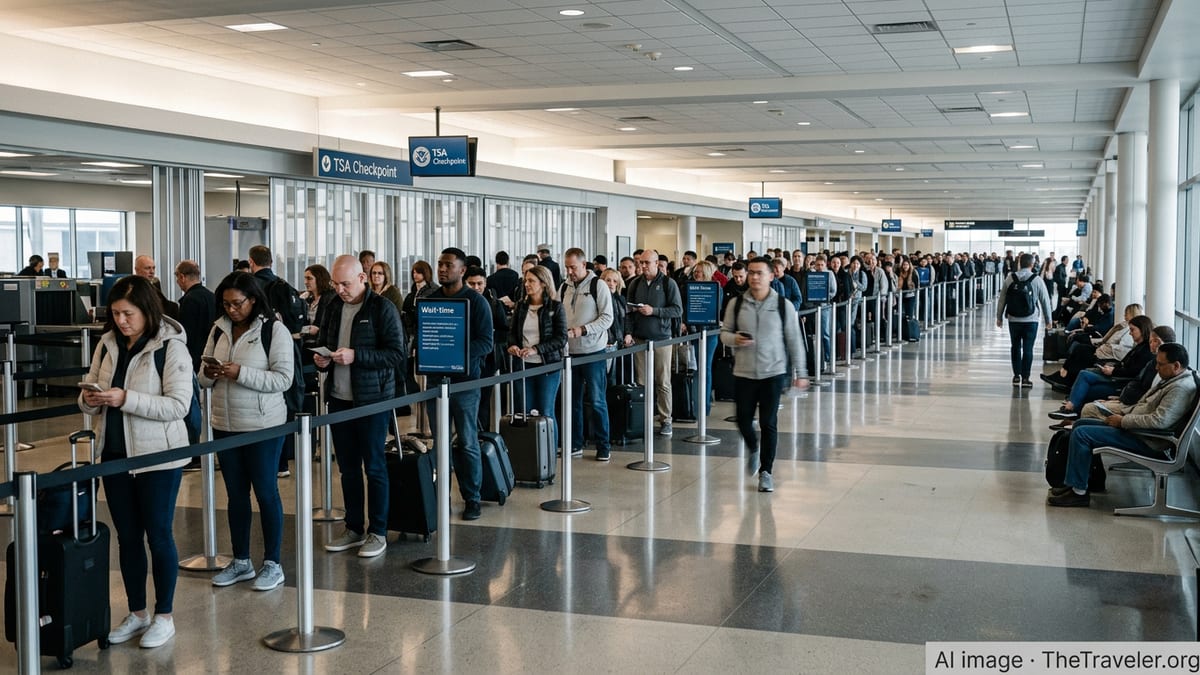
Repatriation plans collide with new security regime
The disruption began on September 30, 2026, when FlyDubai flight FZ1073 from Dubai to Tel Aviv made an emergency landing in Tabuk, Saudi Arabia, after the co-pilot allegedly attacked the captain in the cockpit. The incident, widely described in international coverage as a suspected terror attack, prompted immediate scrutiny of aviation security on routes serving Israel.
In the days that followed, FlyDubai suspended its Tel Aviv operations until at least mid-October while investigators in the United Arab Emirates, Saudi Arabia and Israel examined how an Omani co-pilot flagged for extremist views in his home country came to be rostered on an Israel-bound flight. With the main Gulf carrier on the route paused, attention turned to Israel’s three airlines, El Al, Israir and Arkia, to mount emergency services from Dubai.
Publicly available information indicates that Israel’s Transportation Ministry and security agencies moved quickly to authorize repatriation flights, announcing plans for special services once security preparations at Dubai International Airport could be completed. However, implementing those plans has proven far slower and more complicated than early statements suggested.
According to reports in Israeli business and general media, the Civil Aviation Authority asked local carriers to prepare to airlift several thousand Israelis who had either been on holiday in the United Arab Emirates or using Dubai as a connection point when the FlyDubai incident occurred.
Landing permits and last-minute cancellations
As airlines lined up aircraft and crews, landing-permit issues emerged as a major bottleneck. El Al’s initial rescue flights from Dubai to Ben Gurion Airport, scheduled for the first weekend after the incident, were canceled when landing permission for Israeli carriers at Dubai International was not finalized in time.
Israeli outlets report that Arkia managed to operate the first repatriation service from Dubai to Tel Aviv on the evening of October 2, describing it as the first landing by an Israeli aircraft in Dubai since February 26, 2026. The flight underscored the close coordination required between the airline, Israeli security services and Emirati authorities to reestablish the route even on a limited, emergency basis.
Yet that breakthrough proved fragile. On October 7, Arkia announced that further repatriation flights were being canceled after local authorities rescinded permissions for Israeli airlines operating from Dubai. The abrupt reversal left many passengers who had already rebooked on Israeli carriers scrambling once again for options.
Coverage in Israeli and international media suggests that the shifting permit landscape reflects a combination of ongoing security assessments and the political sensitivity of aviation ties between Israel and the UAE in the wake of the attempted cockpit attack.
Baggage screening and passenger vetting slow the flow
Even when aircraft are cleared to fly, additional security layers are limiting how quickly stranded travelers can be moved. Reports from Israeli news outlets indicate that Israel’s security agencies imposed tighter baggage screening requirements on flights departing Dubai for Tel Aviv after the FlyDubai incident, with particular attention to luggage that has remained in storage or been handled outside the direct supervision of Israeli-approved teams.
These measures, designed to prevent explosives or other prohibited items from being placed on board, have translated into lengthy processing times for checked baggage and in some cases forced airlines to operate flights with passengers only, sending luggage separately once it can be cleared.
Passenger vetting has also become more complex. Israel already requires detailed advance information on travelers and crew on flights bound for its territory. In the wake of the attack, publicly available information shows that authorities are subjecting crew lists and passenger manifests from the UAE to even more rigorous checks, adding hours or days to the approval cycle for each operation.
According to coverage from Israeli aviation and business publications, airlines have been asked to adjust check-in procedures and report earlier cut-off times so that security teams can complete interviews and profiling before departure, further constraining how many flights can realistically depart each day.
Stranded holidaymakers face uncertainty and rising costs
Israeli media estimates suggest that roughly ten thousand Israelis found themselves stuck in Dubai and in transit in the days following FlyDubai’s suspension of its Tel Aviv route. Many had planned to return home around Jewish holiday dates in early October and now face unexpected hotel bills and rebooking fees as they wait for space on limited rescue flights.
While some passengers with flexible schedules have opted to reroute through other hubs using non-Israeli airlines, others prefer to wait for El Al, Israir or Arkia services, which operate under Israel’s stringent security protocols. The reduced number of available seats and changing flight plans have pushed up prices on alternative routes, according to publicly available booking data and media reports, adding a financial strain to the uncertainty.
Several reports describe travelers being contacted at short notice when a new rescue rotation receives final clearance, forcing them to pack quickly, leave hotels and head to Dubai International Airport within tight time windows. When permits are pulled or flights are canceled, those same travelers often must reverse course, returning to accommodation that may already be fully booked for peak holiday periods.
Travel agents and tour operators serving the Israel–Dubai market are now spending hours on manual rebookings and schedule monitoring, as automated systems struggle to keep up with the wave of last-minute changes triggered by evolving security directives.
Future of Israel–Dubai air links under review
Before the incident, Dubai had become one of the most popular overseas destinations for Israeli travelers, with up to a million visits reported since the normalization of relations between Israel and the UAE. The FlyDubai midair attack and its aftermath are now prompting both sides to reassess how those air links are secured.
Published coverage from the UAE and Israel indicates that regulators are examining crew-vetting processes, data sharing and the division of responsibilities between Israeli and Emirati security services for flights operating in each direction. The focus includes both state-owned Gulf carriers and privately operated Israeli airlines.
Industry analysts quoted in international press note that any long-term solution is likely to involve more intrusive pre-clearance procedures for crew serving Israel-bound routes from Dubai, expanded sharing of background information on aviation staff, and perhaps a limited number of approved airlines and terminals for such flights. These changes could add time and cost to travel but may be deemed necessary to restore confidence.
For now, airlines and passengers are navigating an unsettled landscape in which each rescue flight from Dubai to Tel Aviv depends on a complex chain of security checks, diplomatic understandings and last-minute approvals. Until that chain becomes more predictable, thousands of Israelis will continue to experience one of the region’s busiest hubs not as a fast connection point, but as an unexpected waiting room on the way home.