


For transatlantic travelers, co-branded airline credit cards can unlock outsized value in the form of miles, upgrades and companion tickets. Two of the most popular options are the Virgin Atlantic Reward Credit Card issued in the UK and the British Airways Visa Signature Card issued in the United States. While they both aim to reward loyal flyers, they work very differently and suit different types of travelers. This comparison looks at how each card earns points, the key perks they unlock and how those benefits actually play out when you start booking real flights.
Get the latest updates straight to your inbox!
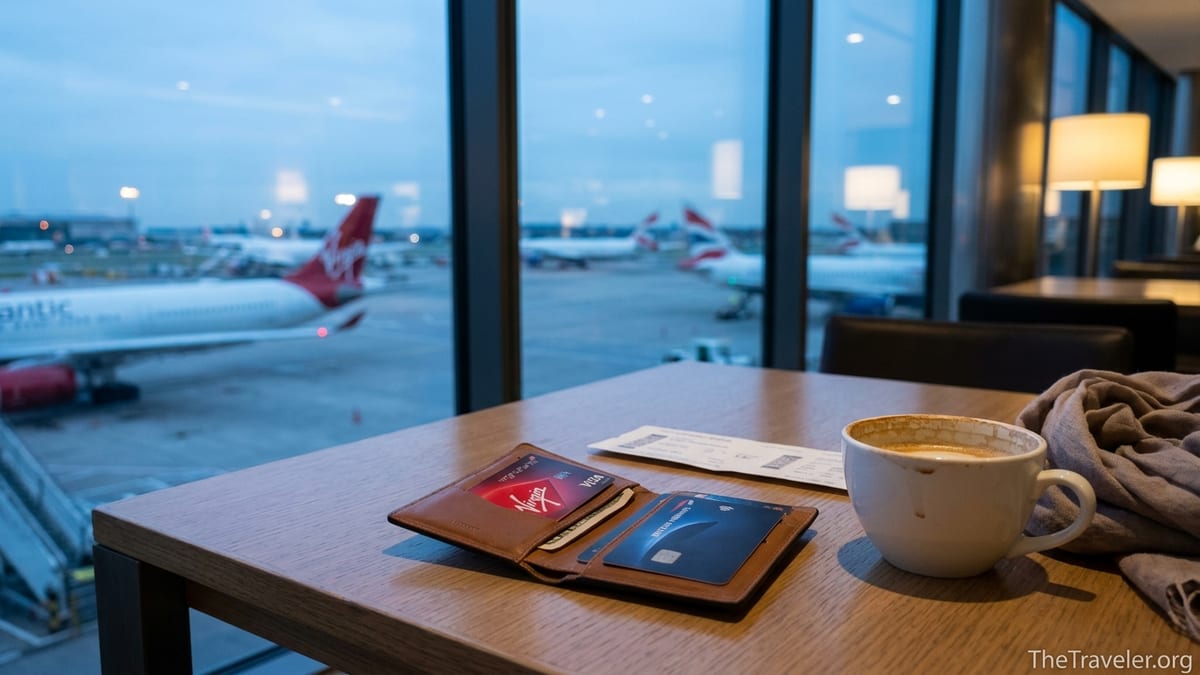
Card Basics and Who Each One Is For
The Virgin Atlantic Reward Credit Card is a UK-issued Mastercard from Virgin Money targeting UK residents who fly Virgin Atlantic at least occasionally. It charges no annual fee and earns Virgin Points in the Flying Club program. At the time of writing, public comparisons show the card earning around 0.75 Virgin Points per pound on everyday purchases and up to around 1.5 points per pound with Virgin Atlantic and Virgin Holidays, with a modest welcome bonus after your first purchase if made within 90 days of opening. This makes it a low-friction way for UK-based travelers to start or top up a balance of Virgin Points without paying a yearly fee.
The British Airways Visa Signature Credit Card, by contrast, is a US-issued Visa for American residents who want to earn Avios with British Airways and its Oneworld partners. It typically carries an annual fee, but in exchange often features a larger welcome bonus for new cardholders who meet an initial spending requirement in the first few months. For example, a recent public offer promoted earning tens of thousands of Avios after spending a few thousand dollars in three months. The card also includes a key perk called the Travel Together Ticket once you reach a specific annual spending threshold.
In practical terms, this means a UK-based traveler who regularly books Virgin Atlantic flights out of London Heathrow or Manchester is likely to find the Virgin Atlantic Reward Credit Card more natural to use. A US traveler based in New York, Boston, Chicago or Los Angeles who often flies British Airways to London, then on to Europe, will tend to see more value from the British Airways Visa Signature Card and its Avios ecosystem.
Both cards can be worth pairing with a broader travel strategy. For example, a London-based consultant flying monthly to New York on Virgin Atlantic could put daily spending and work expenses on the Virgin Atlantic Reward Credit Card to build enough points for an off-peak Premium cabin reward. A Boston-based tech worker who visits family in Spain each year might pair the British Airways Visa Signature Card with an Avios household account to help cover annual summer trips via London.
Earning Points on Everyday and Travel Spend
The core of any airline credit card is how efficiently it turns your spending into miles or points. The Virgin Atlantic Reward Credit Card is generally structured as a simple everyday earner. Public summaries show it earning around 0.75 Virgin Points per pound on most purchases and a higher rate, up to roughly 1.5 points per pound, on Virgin Atlantic and Virgin Holidays purchases. For a UK household that spends about £1,500 per month on groceries, fuel and general expenses, that could mean in the region of 13,500 to 18,000 Virgin Points per year, before any bonus categories or promotions.
On the British Airways Visa Signature Card, earning is typically expressed in Avios per dollar. While specific category multipliers can change over time, the general structure is that cardholders earn a base rate on everyday purchases and a higher rate when buying British Airways flights and sometimes other travel. A US family putting around 2,000 dollars a month of spending on the card, including occasional BA tickets from New York to London, might reasonably amass enough Avios each year for at least one off-peak economy return between the East Coast and London, plus some shorter European flights, depending on how they redeem.
One subtle but important difference is currency and spending pattern. A UK salary paid in pounds naturally flows through a UK-issued card like the Virgin Atlantic Reward Credit Card. That avoids foreign transaction fees on domestic purchases and aligns your spending with your primary airline. A US-based traveler who mainly spends in dollars at US merchants will find the British Airways Visa Signature Card better tailored to their financial life, particularly if the card waives foreign transaction fees on overseas purchases.
In both cases, the inflation of airfare prices matters. A traveler saving for a family trip from London to Orlando on Virgin Atlantic might target around 50,000 to 80,000 Virgin Points per ticket for economy redemptions depending on season and availability. A US traveler trying to fly from Los Angeles to London on British Airways during off-peak dates might be looking at roughly similar ranges in Avios for economy, but cabin choice and routes can shift the numbers significantly. The ability to concentrate spending on one airline card is what makes those targets achievable in a year or two.
Companion Tickets, Vouchers and Big-Value Perks
Where these two cards really distinguish themselves is in their high-value perks: Virgin’s Flying Club reward vouchers linked to the Virgin Atlantic Reward Credit Card and the Travel Together Ticket on the British Airways Visa Signature Card. These benefits are what can turn routine card use into a business class cabin that would normally be out of reach.
With the Virgin Atlantic Reward Credit Card, cardholders who hit an annual spending target can earn a Flying Club reward voucher. Public guidance mentions thresholds in the region of £20,000 per membership year for the no-fee version. This voucher can often be used either as a companion ticket or as an upgrade, subject to Virgin Atlantic’s evolving terms. A typical example might involve a London-based couple booking an off-peak economy or Premium reward from London Heathrow to New York. They could use one voucher to bring a companion on the same itinerary by paying only the additional taxes and fees, or to upgrade one traveler to a higher cabin when seats are available.
The British Airways Visa Signature Card focuses on the Travel Together Ticket. If a cardholder spends a specified amount in a calendar year, historically around 30,000 dollars, they receive a certificate valid for about two years. This allows them to book a reward flight using Avios and either bring a second passenger in the same cabin for no additional Avios or pay only 50 percent of the Avios if flying solo, still covering taxes, fees and carrier charges separately for each seat. A frequent real-world use case is a couple in Chicago saving up Avios for an off-peak business class redemption from Chicago to London. Instead of spending Avios for two business class tickets, they use the Travel Together Ticket and pay the Avios for one, plus the cash costs for both seats.
The travel style you prefer can influence which perk is more valuable. Virgin’s voucher is more flexible in that you can choose between upgrade or companion usages and may be able to deploy it on either points or paid tickets, depending on cabin and fare rules. British Airways’ Travel Together Ticket is specifically tied to reward bookings, but paired with a large Avios balance it can unlock an aspirational cabin like Club World or even First Class for two people on a peak travel date where cash prices are extremely high.
Route Networks, Partners and Redemption Flexibility
Another key consideration when choosing between these two cards is where each airline flies and how you can use your points beyond the main carrier. Virgin Atlantic’s long-haul network is focused heavily on North America and select destinations in the Caribbean, Africa and Asia, with hubs at London Heathrow and Manchester. Virgin Points can be used primarily on Virgin Atlantic flights, but also on partners such as Delta and other SkyTeam members, though the best value is often found on Virgin’s own metal and on specific routes with favorable award pricing.
British Airways, by comparison, serves a much larger global network out of London Heathrow and London Gatwick, and as a member of the Oneworld alliance it opens up redemption options with American Airlines, Iberia, Qatar Airways and others. This can be particularly powerful for US-based cardholders of the British Airways Visa Signature Card who want to use Avios not just for transatlantic flights, but also for shorter hops within Europe, domestic segments on American Airlines or regional flights in Asia and Australia operated by partners like Cathay Pacific or Qantas when available.
Consider two concrete examples. A UK family based near Manchester might find Virgin Atlantic’s seasonal flights to Orlando, Las Vegas or Barbados ideal, and can use their Virgin Atlantic Reward Credit Card points and voucher for those specific leisure routes, turning a peak school holiday trip into a more affordable reward flight. Meanwhile, a New York traveler with the British Airways Visa Signature Card could use Avios for a business trip from New York to London, then on to Frankfurt on British Airways or Iberia, and later redeem small amounts of leftover Avios for short-haul flights like Madrid to Lisbon or London to Dublin on partner airlines.
Availability can be the limiting factor. Both Virgin and British Airways control how many reward seats they release, and popular routes such as London to New York or London to Los Angeles can see limited premium cabin award inventory during peak school holidays or major events. Travelers serious about getting maximum value from a Virgin voucher or BA Travel Together Ticket need to monitor schedules early, be flexible on dates and sometimes split itineraries, for example flying out in Premium and returning in Economy if that is where award space exists.
Fees, Charges and Real Cash Costs on “Free” Flights
Although both cards generate points that can be used for reward flights, neither card eliminates all cash costs. Understanding fees and surcharges is essential for evaluating whether the Virgin Atlantic Reward Credit Card or the British Airways Visa Signature Card is the better fit for your budget.
The Virgin Atlantic Reward Credit Card itself carries no annual fee, which makes it relatively low risk to hold year after year even if your travel habits change. However, Virgin Atlantic reward flights often come with taxes, airport fees and carrier-imposed surcharges that can amount to a few hundred pounds per long-haul ticket in premium cabins. For example, a reward booking from London Heathrow to New York in Premium or Upper Class using a companion voucher may still involve paying significant cash charges per person, especially on routes departing the UK where Air Passenger Duty is high.
The British Airways Visa Signature Card typically charges an annual fee, which US cardholders need to factor into their calculations. On top of that, British Airways reward flights can carry substantial carrier charges, especially in Club World and First cabins on transatlantic routes. A couple using a Travel Together Ticket from San Francisco to London in business class might spend a large number of Avios but still face combined taxes, fees and charges that run into a four-figure amount in dollars for two tickets. For some travelers, that is still excellent value compared with buying two fully flexible business class tickets in cash; for others, especially those who primarily fly economy, cheaper cash fares on other airlines may be more appealing.
One way to assess value is to calculate the cents or pence per point you receive after including all charges. If using 100,000 Avios and a Travel Together Ticket saves you around 4,000 dollars off the cash price of two business class seats, your real-world value per Avios is high even after paying several hundred dollars in surcharges each way. Similarly, if a Virgin voucher plus 50,000 Virgin Points yields a premium cabin seat that normally sells for £1,500, your effective return on the points earned via daily spending on the Virgin Atlantic Reward Credit Card is compelling, particularly given there is no annual fee for holding the card.
Customer Experience, Service and Practical Use
Beyond the headline numbers, travelers should look at how easy each card is to use in everyday life. Virgin Money issues the Virgin Atlantic Reward Credit Card in the UK, and cardholders manage their account and transactions in pounds through Virgin’s online banking and app tools. That makes it convenient for paying UK utilities, council tax, supermarket shops and online purchases. Cardholders do need to be comfortable with Virgin’s digital systems and recognize that customer service, including any discussions about reward vouchers, may run through both Virgin Money and Virgin Atlantic channels.
The British Airways Visa Signature Card is managed through a major US bank, so US cardholders can link it with existing checking accounts, set up autopay in dollars and contact customer support during US business hours. Travel-related queries, such as applying the Travel Together Ticket to a British Airways reward booking, will involve working with British Airways’ own reservation teams, often by phone. Many travelers report that understanding the rules of the Travel Together Ticket, particularly around booking origin, cabin availability and date changes, is key to avoiding frustration.
Real-world use shows that planning makes the difference. A London couple using a Virgin voucher to fly to the Caribbean might start searching for reward seats right when they are released, roughly 11 months before departure, and be ready to call Virgin Atlantic to apply their voucher if online tools do not yet support all options. A US couple hoping to use a BA Travel Together Ticket for a summer business class trip to London might first choose flexible dates, build up an Avios balance through the British Airways Visa Signature Card and a partner currency such as a flexible bank points program, then pounce on award space as soon as it appears, accepting a departure from a different US city if that significantly improves availability.
Both cards are most rewarding for travelers willing to invest time in learning the quirks of each loyalty program and staying organized with annual spend tracking. Missing the spend threshold for a Virgin voucher by a few hundred pounds or falling short of the Travel Together Ticket requirement by a few hundred dollars can be the difference between an ordinary trip and an exceptional one.
The Takeaway
When comparing the Virgin Atlantic Reward Credit Card with the British Airways Visa Signature Card, the first question to ask is where you live and which airline network best serves your usual routes. UK-based travelers who favor Virgin Atlantic and want a no-fee way to build Virgin Points and potentially earn a flexible Flying Club reward voucher will naturally gravitate toward the Virgin Atlantic Reward Credit Card. Its absence of an annual fee makes it easier to keep long term, and the option to use the voucher as either an upgrade or a companion benefit suits both solo and couple travelers.
US-based travelers, especially those flying British Airways across the Atlantic and interested in Oneworld partners, are more likely to benefit from the British Airways Visa Signature Card. Its larger welcome bonus potential and the Travel Together Ticket can produce high-value redemptions, particularly in premium cabins on long-haul routes from cities like New York, Los Angeles, Chicago or Dallas to London. The trade-off is the annual fee and the reality of often-high surcharges on BA reward tickets, which must be weighed against the headline savings in Avios.
Ultimately, neither card is objectively better in all situations. A London family saving for annual holidays to Florida might derive more value from Virgin’s focused leisure network and voucher flexibility, while a frequent US business traveler crisscrossing the Atlantic in premium cabins might find the BA Travel Together Ticket unbeatable when used strategically. The best approach is to map your next few years of likely travel, estimate how many points you can realistically earn through spending, then choose the card whose rewards most closely match the flights you actually want to book.
FAQ
Q1. Is the Virgin Atlantic Reward Credit Card or the British Airways Visa Signature Card better for economy travelers?
The Virgin Atlantic Reward Credit Card can be attractive for economy travelers who want a no-fee card, but the British Airways Visa Signature Card can still offer strong value in economy if you use Avios efficiently on off-peak dates or short-haul partner flights. The right choice depends on whether you usually depart from the UK on Virgin routes or from the US on British Airways and its partners.
Q2. Which card makes it easier to earn a companion-style benefit?
The British Airways Visa Signature Card’s Travel Together Ticket is very powerful but usually requires a high annual spend in dollars. The Virgin Atlantic Reward Credit Card can earn a Flying Club reward voucher at a lower absolute spend level in pounds, especially for UK households with substantial everyday expenses. For many moderate spenders, the Virgin threshold may feel more achievable.
Q3. Do either of these cards make flights completely free?
No. Even when you redeem Virgin Points or Avios and use a voucher or Travel Together Ticket, you still pay taxes, airport fees and carrier-imposed surcharges. On long-haul premium cabins, those cash charges can be several hundred in the local currency per person, so it is important to budget for them and compare with cash fares.
Q4. Can I use Virgin Points or Avios earned from these cards on partner airlines?
Yes, in many cases. Virgin Points earned on the Virgin Atlantic Reward Credit Card can often be used on certain partners such as Delta and other SkyTeam airlines where reward agreements exist. Avios earned from the British Airways Visa Signature Card can be used across the Oneworld network on airlines like American Airlines, Iberia and Qatar Airways, subject to partner availability and each program’s rules.
Q5. How far in advance should I book to use a Virgin reward voucher or BA Travel Together Ticket?
Booking as early as possible is advisable, particularly for popular routes such as London to New York or leisure destinations during school holidays. Many travelers start searching around 10 to 11 months before departure when schedule changes and award seats are first opened, especially if they are targeting business or first class cabins.
Q6. Are these cards a good choice if I only travel once every few years?
Probably not. Both cards are most rewarding when you fly at least once or twice a year and are willing to plan redemptions. Infrequent travelers may find greater value in simple cash-back or flexible bank rewards cards, then paying for occasional flights outright when good sale fares appear, instead of managing airline-specific points and vouchers.
Q7. Can I hold both a Virgin Atlantic Reward Credit Card and a British Airways Visa Signature Card?
Yes, if you meet eligibility criteria in both countries and can manage your credit responsibly, some frequent transatlantic travelers do hold both. For example, a dual-resident or someone who spends significant time in both the UK and US might use the Virgin card for UK life and the BA Visa Signature for US expenses, building balances in both Virgin Points and Avios to match different trip types.
Q8. What happens if I do not reach the annual spending threshold for the voucher or Travel Together Ticket?
If you fall short of the required spending in a given period, you generally will not receive that year’s voucher or Travel Together Ticket, and your tracked spend resets for the following year. Because of this, many travelers monitor their progress in banking apps and may shift big purchases, such as insurance premiums or home improvements, onto the card late in the year to clear the line.
Q9. Are these cards suitable for small business owners?
They can be, even though they are personal rather than business-branded cards. A UK sole trader flying Virgin Atlantic to meet clients in North America could channel business expenses through the Virgin Atlantic Reward Credit Card to earn points and a voucher, while a US consultant regularly flying British Airways might use the BA Visa Signature Card for business travel and then enjoy a Travel Together Ticket for leisure trips. It is important, however, to keep personal and business records clearly separated for accounting and tax purposes.
Q10. How should I decide which card to apply for first?
Start by listing your next likely long-haul trip and the airline you would prefer to fly. If your next big journey is a Virgin Atlantic flight from London to the US or Caribbean and you live in the UK, the Virgin Atlantic Reward Credit Card is a natural starting point. If you are a US resident planning several British Airways trips to Europe over the next couple of years, beginning with the British Airways Visa Signature Card and aiming for a Travel Together Ticket can set you up for a high-value redemption down the road.