


More news on this day
Virginia is moving to insulate high-value business travel from mounting disruption at the Washington region’s big commercial hubs, advancing a $20 million aviation complex at Manassas Regional Airport that aims to give executives and corporate shuttle operators a more controlled, delay-resistant base.
Get the latest news straight to your inbox!
A Strategic Play in a Congested Capital Region
Located about 30 miles from downtown Washington, Manassas Regional Airport has long been one of Virginia’s busiest general aviation fields, serving corporate jets, charter flights and flight schools while remaining outside the spotlight of large commercial hubs. Publicly available planning documents and recent project announcements now point to a deliberate effort to reposition the airport as a fortified base of operations for business travelers seeking to avoid the chronic congestion and cascading delays associated with larger facilities in the Washington air system.
Regional transportation and aviation coverage indicates that the state and local partners are advancing a series of interconnected projects valued at roughly $20 million in combined hangar, apron and support infrastructure. These investments are tailored to business and general aviation rather than scheduled commercial airlines, signaling a focus on reliability, bespoke services and rapid turnarounds for time-sensitive travelers.
While Washington Dulles International and Reagan National continue to shoulder the bulk of scheduled airline traffic, Manassas is being positioned as a relief valve for corporate operators who want proximity to the capital without being exposed to the full brunt of weather-driven gridlock, air traffic control bottlenecks, or ground-transport logjams that frequently ripple through the larger hubs.
The new funding is being layered on top of an already active development pipeline at the airport, including terminal expansion plans, a potential name change to emphasize its Washington connection, and a recent federal commitment to replace the on-site air traffic control tower. Together, these projects are reshaping Manassas into an integrated, future-focused aviation campus.
Hangar Complex and “Fortress” Infrastructure for Business Jets
Recent industry reporting describes one of the centerpiece projects at Manassas as a sizable new hangar complex aimed squarely at business aviation. The development is intended to add much-needed aircraft shelter in a tight real estate market, expand maintenance and support capabilities, and create protected ramp space where operators can stage flights away from the crowded gate areas of commercial terminals.
Project summaries and local approvals frame the initiative as a multi-building complex with modern hangars, office space for aviation firms and enhanced security controls. The emphasis on consolidated operations, controlled access and weather-protected parking reflects a growing desire among corporate flight departments for “fortress-style” bases that shield aircraft and crews from both operational and logistical shocks elsewhere in the network.
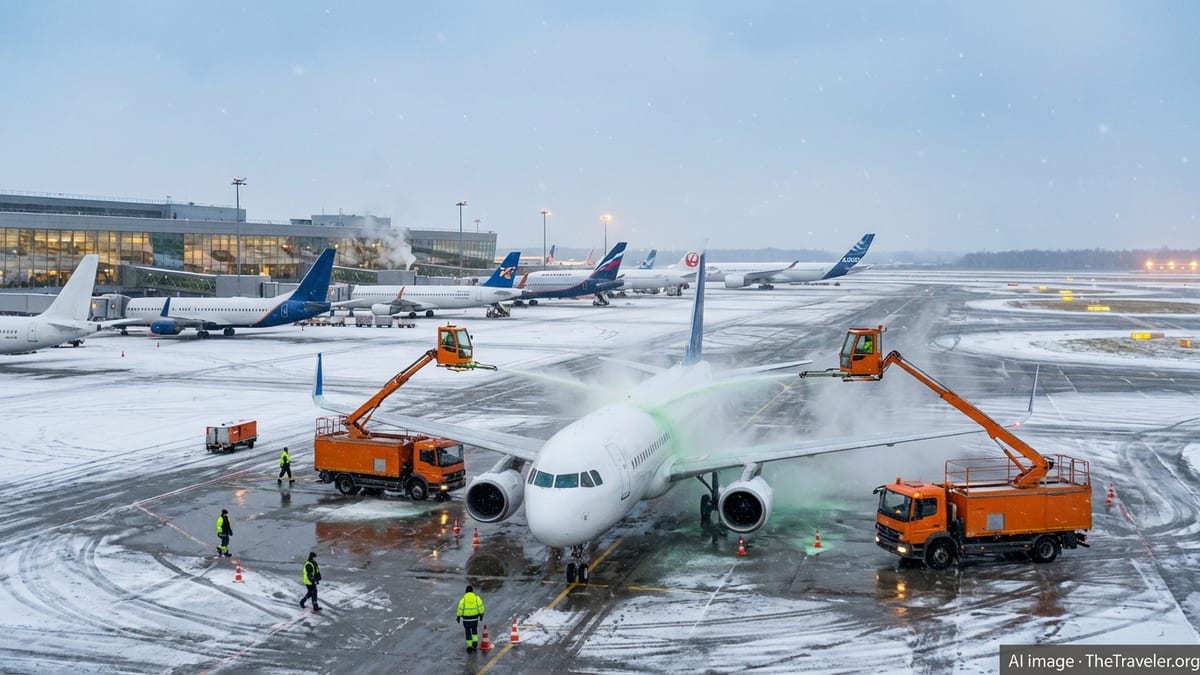
Fixed-base operators at Manassas are expected to play a central role in this transformation. Existing facilities already offer fueling, deicing, concierge services and crew amenities targeted at high-end travelers. The new investment is set to deepen that ecosystem, providing more indoor storage for larger jets, space for additional charter providers and room for specialized maintenance providers that can keep aircraft flying on tight schedules.
For business travelers, the practical benefits are clear: instead of jockeying for scarce slots and ramp space at primary hubs during peak disruption, flights can originate from a dedicated complex where the primary variables are weather and airspace, not gate availability or terminal congestion.
Shielding Business Travelers From Systemic Disruption
The Washington region’s major airports have faced repeated bouts of severe travel chaos in recent years, ranging from large-scale weather events to air traffic control staffing issues and regional ground stops that can quickly snarl departures and arrivals. Industry analyses show that during such episodes, general aviation users at primary commercial airports often find themselves competing with airlines for runway access, ramp crews and deicing resources.
By contrast, Manassas functions primarily as a general and business aviation facility, with traffic composed largely of private, charter and training flights. The new $20 million infrastructure push builds on that profile, effectively creating a parallel ecosystem for corporate travelers that sits alongside, but not inside, the most failure-prone parts of the airline system.
The airport’s development plans envision streamlined curb-to-aircraft movements, short taxi distances and rapid dispatch capability for operators that base at the new complex. This model can be especially attractive for companies that rely on shuttle-style flights to manufacturing plants, data centers or regional offices and cannot afford to have crews and executives stranded for hours due to disruptions at distant connecting hubs.
There is also an emerging resilience dimension. With new hangars, expanded apron space and an upgraded tower funded through federal programs, Manassas is better positioned to absorb diversions, stage recovery flights and host repositioned aircraft when severe weather or infrastructure failures ripple across the Northeast corridor’s commercial airports.
Integration With Broader Expansion and Renaming Efforts
The $20 million business aviation complex does not exist in isolation. It is converging with a broader modernization push that includes a proposed commercial terminal expansion, a potential renaming to highlight the airport’s Washington identity and alignment with state-level capital improvement plans for aviation infrastructure.
Regional planning documents and local media coverage describe a terminal expansion concept that would add gates, parking and passenger amenities in anticipation of limited commercial service later this decade. Although that project carries a much larger price tag, its design is being coordinated with existing business aviation operations, ensuring that the new corporate-focused hangars and support facilities fit within a long-term master plan rather than becoming a standalone enclave.
Debate over a possible name change, with references to adding “Washington” to the airport’s official title, underscores the strategic goal of raising the facility’s profile beyond Prince William County. For business travelers, that rebranding would signal that Manassas is not just a local reliever field but an integral piece of the capital region’s aviation network with ambitions to handle a greater share of premium and time-sensitive traffic.
At the same time, federal attention to the airport’s control tower, reflected in recent grant allocations for a replacement structure, reinforces the perception that Manassas is moving up the hierarchy of regional airfields. A modernized tower is expected to handle growing traffic volumes more safely and efficiently, which is critical if the new aviation complex draws additional corporate jets and charter activity.
Implications for Corporate Mobility and Regional Competition
The emergence of a $20 million “aviation fortress” at Manassas carries competitive implications for how corporate travelers and charter operators choose their Washington-area bases. While large hubs will remain dominant for scheduled airline traffic, a more capable Manassas offers an appealing alternative for companies that prioritize schedule control, privacy and door-to-door speed over lounge access and retail options.
Business aviation analysts point out that as major hubs embark on multi-billion-dollar terminal projects, smaller but highly focused investments at regional airports can deliver outsized benefits for a specific slice of travelers. By concentrating on hangars, ramp space, support facilities and airside efficiency, Manassas is targeting the parts of the travel experience that matter most to executives, technical teams and high-value cargo operators.
The strategy may also influence corporate site selection in Northern Virginia. Economic development materials already highlight the airport as a gateway for technology firms, defense contractors and data center operators clustered along the Route 28 and I-66 corridors. A more robust, disruption-resistant aviation base could strengthen that pitch at a time when companies are scrutinizing their supply chains and mobility options more closely than ever.
For travelers accustomed to battling long security lines and last-minute cancellations at larger hubs, the emerging Manassas complex represents a different proposition: a smaller, more controlled environment designed to keep business moving even when the broader system is under stress.