


Tennessee rewards travelers who like to connect the dots. In a single week you can crest 5,000-foot mountain passes, eat slow-smoked ribs at a roadside joint, hear world-class musicians in intimate rooms, and drive some of the South’s most storied byways. Planning a trip around four pillars – mountains, food, music and great road trip stops – lets you experience the state as a cohesive journey rather than a string of isolated sights.
Get the latest updates straight to your inbox!
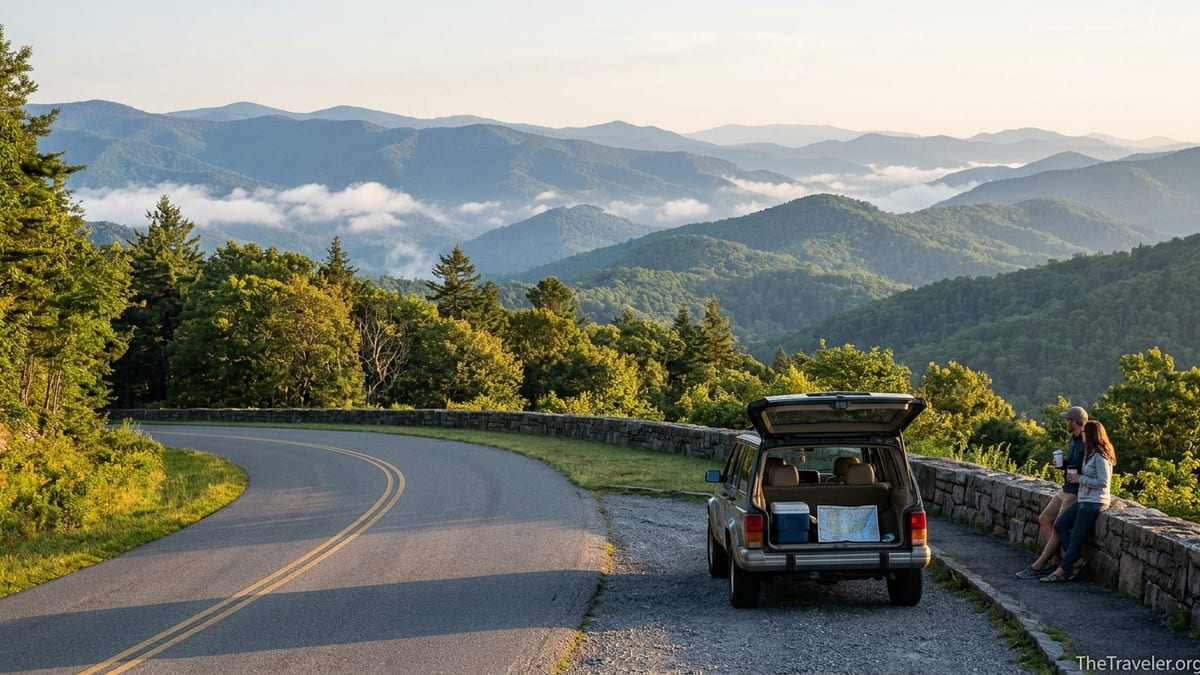
Start With a Big-Picture Route Through Tennessee
A smart Tennessee road trip usually runs west to east (or the reverse), using the state’s three grand themes: Memphis for blues and barbecue, Nashville for country music and hot chicken, and the Smoky Mountains for hiking and scenic drives. Many travelers fly into Memphis or Nashville, pick up a rental car, then drop it in Knoxville or Chattanooga at the end of the trip to avoid backtracking. One typical one-week loop is Memphis to Nashville to Chattanooga to Great Smoky Mountains National Park, finishing in Knoxville.
The driving distances are manageable but not trivial. Memphis to Nashville is roughly a three-hour drive, Nashville to Chattanooga is about two hours, and Chattanooga to Gatlinburg, the gateway to the Smokies, takes another two and a half hours depending on traffic. Allow at least two nights in each major stop, plus three nights in or near the mountains, so you have time for both iconic attractions and slower, unscripted detours along scenic byways.
Season strongly shapes the experience. Fall foliage in East Tennessee, particularly along the Cherohala Skyway and the Newfound Gap Road, typically peaks in late October and draws heavy traffic, while summer brings long days and family crowds to Pigeon Forge and Gatlinburg. Spring wildflower season in the Smokies and milder temperatures in Memphis and Nashville can make April and early May a sweet spot for this style of trip, with less congestion on the roads and better hotel availability.
Mountains First: Building Days Around the Smokies and Scenic Byways
For many travelers, the mountain anchor of a Tennessee trip is Great Smoky Mountains National Park, straddling the Tennessee–North Carolina line. From Gatlinburg or Townsend you can easily reach Newfound Gap Road, a national scenic byway that climbs through multiple forest zones to a high pass on the state line, with broad views and short trails right off the pavement. Recent park updates indicate Newfound Gap Road and the Foothills Parkway have remained open through winter 2026, but conditions can change quickly, so it is wise to verify road status a day or two prior to driving high routes.
If you want a quieter drive, plan for the Foothills Parkway, especially the section between Walland and Wears Valley, which strings together a series of overlooks with long views of the main Smokies crest. Traveling in shoulder seasons, you may find yourself nearly alone at some pullouts, with only hawks and the distant sound of motorcycles for company. It is an easy half-day outing from Knoxville or Maryville and pairs naturally with a picnic from a local deli or farm stand.
East of the park, the Cherohala Skyway connects Tellico Plains, Tennessee, with Robbinsville, North Carolina, climbing to more than 5,000 feet through Cherokee National Forest. Official scenic byway materials describe sweeping ridge-top views and multiple signed overlooks along its roughly 43 miles, with the road often rising above a sea of clouds on clear autumn mornings. Because fuel and services are limited once you are on the Skyway, treat it like a mini-expedition: start with a full tank in Tellico Plains, bring water and snacks, and expect the full out-and-back drive with photo stops to take most of a day.
Weaving Food Into Every Driving Day
Planning around food in Tennessee is as important as picking scenic roads. In nearly every town you will encounter a “meat-and-three” restaurant, where a plate might include fried chicken or country-fried steak and three sides such as collard greens, mac and cheese, and pinto beans. In Nashville, long-running cafeterias and lunch spots still serve this style of cooking to office workers and visitors alike, often with plates in the 12 to 18 dollar range for generous portions. Arrive early for lunch to avoid lines and to have the widest choice of daily specials.
Barbecue is another essential thread in any itinerary. Memphis-style pork ribs and pulled pork sandwiches are the headline acts in the west of the state, served in no-frills dining rooms plastered with local sports memorabilia. A typical plate with ribs, slaw and beans often lands in the 15 to 25 dollar range, depending on whether you choose a counter-service joint or a sit-down restaurant with table service and live music. In smaller towns, watch for smoke rising behind cinder-block buildings along rural highways, where locals queue for paper-lined trays on weekends.
In Nashville, hot chicken has moved from neighborhood staple to international calling card. Several of the city’s best-known spots sell bone-in pieces or sandwiches at a range of heat levels, from “mild” to eyebrow-singeing “extra hot,” with prices that generally run from about 9 to 15 dollars for a sandwich with a side. If you plan your day around a hot chicken lunch, consider a lighter dinner or a walk along the Cumberland River afterward, as the combination of spice and summer humidity can be intense.
Following the Soundtrack: Nashville, Memphis and Bristol
Tennessee’s music story is anchored in three cities widely recognized for their influence: Nashville, Memphis and Bristol. In Nashville, the Country Music Hall of Fame and Museum holds one of the world’s largest collections dedicated to the genre, with rotating exhibits on legendary performers and contemporary stars. Nearby, the Ryman Auditorium, officially recognized by the state as the birthplace of bluegrass, hosts concerts in a historic downtown venue that still feels intimate even when full. Pair a daytime museum visit with an evening show at the Ryman or the Grand Ole Opry for a full Music City immersion.
Walk a few blocks down to Lower Broadway and you enter a dense strip of honky-tonks where live bands play for tips from mid-morning until late at night. Most venues have no cover charge, so you can wander between floors and stages until you find your preferred mix of classic country, modern pop covers and Southern rock. Plan parking or rideshare ahead of time, as garages closest to Broadway can command premium evening rates, particularly on weekends and during major events.
Memphis tells a different chapter of American music. Beale Street, designated a National Historic Landmark and long celebrated as the heart of the city’s blues scene, now offers a concentrated dose of live music in its three-block entertainment district. Within walking distance you will find music-focused museums such as the Memphis Rock ‘n’ Soul Museum and other halls of fame dedicated to the city’s recording legacy, as well as venues like the New Daisy Theatre on Beale itself. Many travelers structure a full Memphis day around a morning tour of a major music attraction, an afternoon at Graceland or a recording studio, and an evening of club-hopping and barbecue.
For a deeper dive into country’s origins, consider detouring to Bristol, straddling the Tennessee–Virginia border. The Birthplace of Country Music Museum there commemorates the 1927 Bristol Sessions, widely cited as a pivotal moment in bringing country music to a national audience. The compact downtown core makes it easy to park once, walk between the museum, cafes and antique shops, and then rejoin the highway for the next leg of your road trip.
Designing Scenic Road Trip Days Around Signature Drives
With mountains, food and music as anchors, the art of this trip lies in how you connect them by road. Tennessee’s official scenic byways program highlights routes like the Newfound Gap National Scenic Byway, the Cherohala Skyway and historic corridors that trace paths once used by Indigenous peoples and early settlers. One practical approach is to designate several “slow days” with no more than three hours of actual drive time, leaving ample room for pullouts, roadside markets and unplanned photo stops.
For example, a day that starts in Knoxville might follow back roads to Townsend, cruise the Foothills Parkway with an hour of overlooks, then drop into Gatlinburg for an early dinner before continuing a short distance to an overnight cabin in Pigeon Forge. Another day could be devoted entirely to the Cherohala Skyway, starting with coffee in Tellico Plains, pausing at the visitor center for up-to-date road and weather information, then spending the afternoon drifting from overlook to overlook along the Tennessee and North Carolina sections.
In West and Middle Tennessee, the roads are gentler but still rich in character. The drive between Memphis and Nashville can be broken up with stops in small towns where courthouse squares, vintage signs and local diners tell stories of the region’s past. Many travelers choose to leave the interstate for stretches of older highway that run roughly parallel, trading a bit of speed for glimpses of cotton fields, river bottoms and family-run produce stands in summer and early fall.
Balancing Lodging, Budget and Timing
Unlike some destinations where lodging must be locked in months ahead, much of Tennessee still allows for a degree of spontaneity, though the Smokies and major festival weekends are clear exceptions. In Gatlinburg, Pigeon Forge and Sevierville, demand spikes during school holidays and peak foliage, driving up nightly rates for cabins, motels and campgrounds. Booking at least several weeks ahead for summer and fall weekends around Great Smoky Mountains National Park is wise, especially if you want a specific type of stay such as a riverfront campsite or a multi-bedroom cabin with a hot tub.
In Nashville and Memphis, downtown hotels and boutique properties near the main entertainment districts command higher nightly rates, but you can often save by staying a short drive away in neighborhoods with good interstate access. For example, a chain hotel by a beltway interchange will usually charge noticeably less than a comparable room adjacent to Lower Broadway or Beale Street. Parking fees also vary significantly: factor them into your budget if you plan to drive into the core each night for music and dining.
Daily expenses for this style of trip can vary, but many travelers find that mid-range choices land comfortably in a band that covers a basic hotel room, two restaurant meals and gas without feeling extravagant. Splurges might include a special dinner at a chef-driven restaurant in Nashville, a VIP tour at a major music museum, or a private cabin in the hills for a night or two. Build those into your plan at intervals, spacing more expensive days between simpler ones built around picnics and scenic drives.
The Takeaway
Planning a Tennessee trip around mountains, food, music and road trip stops is less about checking boxes and more about building a rhythm. Start by choosing your anchor cities and your mountain base, then connect them with scenic routes that offer room to breathe. Design days that alternate between immersive experiences like museum visits or long hikes and looser afternoons spent drifting along the Foothills Parkway or lingering over a plate of barbecue.
By giving equal weight to where you drive, what you listen to and what you eat, you will come away with a sense of how deeply those threads are woven into daily life in Tennessee. Whether your favorite memory ends up being a sunrise at a high overlook, a late-night set in a tiny club, or a roadside slice of chess pie, a thoughtfully planned itinerary will make space for all of them. In a state where mountain ridgelines, neon marquees and smoke-filled pits coexist within a day’s drive, the journey truly is the destination.
FAQ
Q1. How many days do I need for a Tennessee trip focused on mountains, food and music?
Most travelers find that 7 to 10 days allows enough time to visit Memphis and Nashville, spend several nights in or near the Smokies, and enjoy scenic drives without rushing.
Q2. When is the best time of year to drive the Cherohala Skyway and Newfound Gap Road?
Late spring through fall typically offers the most reliable conditions, with October being especially popular for foliage; in winter, check for temporary weather-related closures before you go.
Q3. Should I base in Gatlinburg, Pigeon Forge or Townsend for the Smoky Mountains portion?
Gatlinburg is closest to the park’s main entrances, Pigeon Forge offers the most entertainment and family attractions, and Townsend is smaller and quieter, appealing to travelers who prioritize easy access to nature.
Q4. Do I need to book music attractions like the Grand Ole Opry and Graceland in advance?
Advance booking is strongly recommended, especially for weekend Opry shows and peak-season visits to Graceland, as popular time slots and tour options can sell out days or weeks ahead.
Q5. Is it realistic to visit Nashville and Memphis in the same trip without too much driving?
Yes, the drive between Nashville and Memphis is roughly three hours, so including both is practical in a week-long itinerary if you allow at least two nights in each city.
Q6. How expensive is food on a Tennessee road trip built around local specialties?
Casual meals at meat-and-three restaurants, barbecue joints and diners often range from about 10 to 20 dollars per person, while more upscale chef-driven spots in Nashville and Memphis can cost significantly more.
Q7. Do I need a four-wheel-drive vehicle for mountain roads like the Foothills Parkway?
No, the main scenic routes such as Newfound Gap Road, the Foothills Parkway and the Cherohala Skyway are paved highways suitable for standard passenger cars driven with care.
Q8. Is it safe to drive and walk around the main music districts at night?
Areas like Lower Broadway in Nashville and Beale Street in Memphis are busy entertainment districts; normal big-city precautions apply, such as staying aware of your surroundings and using licensed taxis or rideshares late at night.
Q9. Can I do this trip without renting a car?
Public transit between Tennessee’s major cities and mountain gateways is limited, so renting a car or driving your own vehicle is the most practical way to link scenic routes, small towns and parks.
Q10. How far in advance should I book lodging near Great Smoky Mountains National Park?
For peak periods such as summer weekends and October foliage, booking several weeks to a few months in advance is wise, especially if you want specific locations, cabins or campgrounds near the park.