


More news on this day
Thunderstorms rolling through the Northeast have triggered hundreds of flight delays at Boston’s Logan International Airport, snarling operations at one of the region’s busiest hubs and stranding travelers across multiple airlines.
Get the latest news straight to your inbox!
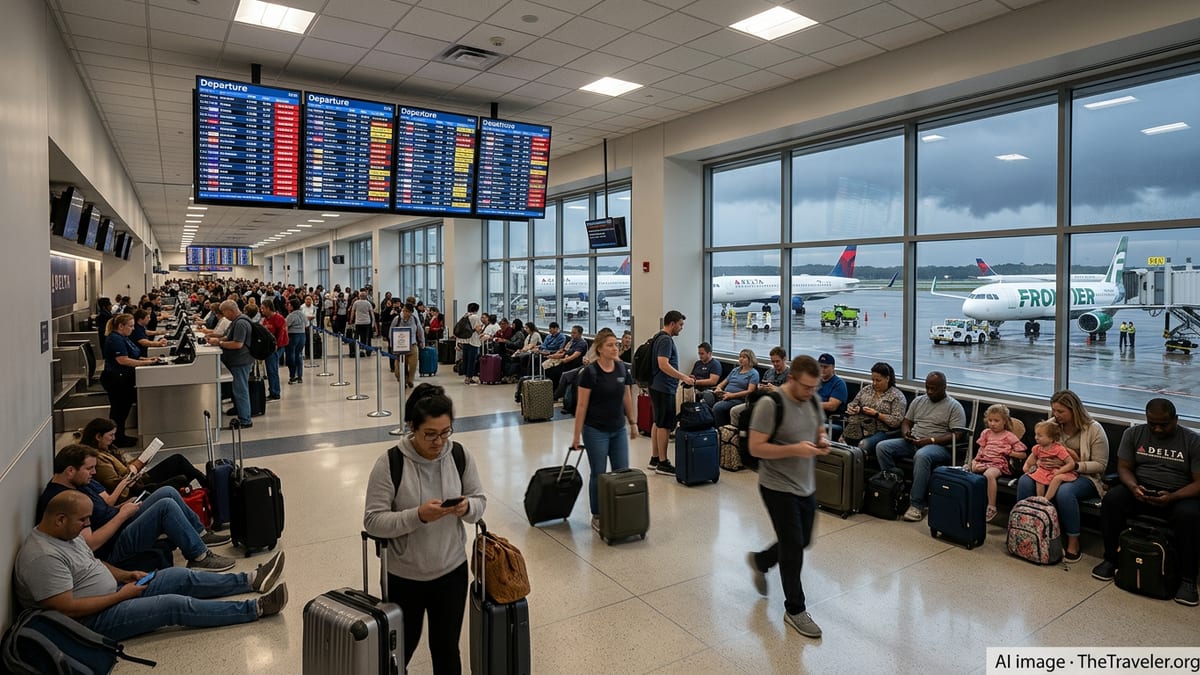
Storm System Stalls Departures and Arrivals Across Boston
Publicly available flight-tracking data for Thursday shows widespread disruption across Logan’s departure and arrival boards, with long lines forming at check-in counters and security as schedules slipped behind. A series of slow-moving storms over New England reduced visibility and limited the number of aircraft able to land and depart per hour, creating bottlenecks on the ground and in the air.
Thunderstorms and low clouds in particular constrain how many runways can safely operate at the same time, an issue that has historically contributed to Boston’s status as one of the more delay-prone major airports in periods of unstable weather. When convective storms build along the busy Northeast corridor, flights inbound to Logan often face holding patterns, diversions to alternate airports, or extended ground delays at their origin points.
According to published coverage of recent severe weather episodes at Logan, similar storm setups have previously led to hundreds of cancellations and delays in a single day, as airlines slow operations for safety while attempting to reset complex schedules. Those same patterns appeared again as the latest line of storms passed through, with passengers reporting hours-long waits and repeated gate changes.
The knock-on effects were not limited to Boston. As Logan serves as a critical connection point for domestic and transatlantic routes, delays there quickly rippled through airline networks, affecting flights as far away as the Midwest and Southeast that were scheduled to pass through the airport later in the day.
Airlines Struggle With Crews, Connections and Equipment
Published updates from airline operations and traveler reports indicate that carriers at Logan faced multiple layers of disruption once storms began impacting the schedule. Aircraft already in the air had to slow down or divert, while departures were pushed back to wait out passing cells of lightning and heavy rain. That created a mismatch between where planes and flight crews were supposed to be and where they actually ended up.
As flights arrived late into Boston, some pilots and flight attendants reached their federally regulated duty-time limits before they could operate onward legs, forcing airlines to cancel or significantly delay subsequent departures. In addition, tight turn times on busy routes left little margin to absorb the weather-related slowdowns, especially during the afternoon and evening peak.
Travelers described a familiar pattern seen during prior weather disruptions at Logan: aircraft parked on the tarmac awaiting new slots for departure, boarding processes started and then paused, and full flights repeatedly pushed back in 30- or 60-minute increments as airlines waited for improved conditions along their routes. The resulting congestion meant that even when the most intense cells moved offshore, it took hours for operations to stabilize.
Publicly available information about recent performance at Logan shows that major carriers operating out of terminals A through E have already been contending with a busy summer travel season. Storm-driven delays added further pressure on customer service desks and call centers, which worked through backlogs of rebooking requests as travelers sought alternative routes and next-day options.
Logan’s Vulnerability to Northeast Weather Patterns
Logan International Airport’s coastal location and runway layout have long made it sensitive to fast-changing New England weather. Historical data summarized in aviation analyses notes that low ceilings, crosswinds and coastal storms can limit runway configurations and force air traffic managers to meter arrivals and departures more aggressively than on clear days.
In winter, snow and ice have previously led to mass cancellations and delays at Logan when major Nor’easters reached Massachusetts, with some documented events canceling hundreds of flights in a single day. In summer, the main threat shifts toward thunderstorms and heavy downpours, which can arrive quickly and linger over the densely trafficked airspace between Washington, New York and Boston.
Recent reports on storm-related disruptions across the Northeast describe similar patterns at other hubs, but Logan’s role as both a key transatlantic gateway and a focus city for several domestic carriers means local disturbances can have outsize effects on national flight networks. When storms pass over Boston during peak travel windows, the combination of restricted airspace and high demand often leads to the kind of cascading delays seen during the latest event.
Weather-related slowdowns are compounded when other issues arise at the same time, such as earlier technical problems or refueling constraints that have periodically affected airport operations in recent weeks. Even after those difficulties are resolved, subsequent storms can expose remaining schedule fragilities, leading to another round of delays and cancellations.
Travelers Face Missed Connections and Overnight Stays
For travelers departing and arriving at Logan, the storms translated into missed connections, unexpected overnight stays and disrupted vacation plans. Accounts shared publicly by passengers reference hours spent in terminal seating areas as departure times shifted repeatedly, while some international travelers arriving in Boston reported missing onward domestic flights and being rebooked for the following day.
Families traveling with children, business travelers on tight timetables and visitors attempting to make cruise departures or special events were among those most affected by the sudden schedule changes. With many flights operating near full capacity during the height of summer, open seats on alternative departures were limited, especially on popular routes along the East Coast and to Florida.
Published coverage of recent weather-related disruptions at Logan highlights how quickly hotel availability around the airport can tighten when large numbers of passengers require last-minute rooms. Travelers who chose to leave the airport and return home or to the city often faced challenges securing ground transportation during periods of heavy rain and reduced visibility.
Airlines encouraged passengers through their official channels to monitor mobile apps and departure boards closely and to allow extra time at the airport, particularly for evening departures when thunderstorms tend to build in intensity. However, many travelers arriving at Logan after already experiencing delays at their origin airports still found themselves confronting additional waits once they reached Boston.
What Passengers Can Do During Ongoing Summer Storms
As the peak summer travel season continues, aviation analysts and consumer advocates point to several strategies that can help passengers navigate storm-related disruptions at weather-sensitive hubs such as Logan. Public advice often emphasizes booking earlier flights in the day when possible, as schedules generally deteriorate over time during unsettled weather patterns.
Travelers are also urged to keep airline apps and notification services enabled, since gate changes, rolling delays and rebooked itineraries are often processed digitally before they appear on terminal screens. For those with critical connecting flights in Boston, selecting longer layovers can provide a buffer when storms temporarily slow arrivals or force aircraft to hold.
Reports on recent disruption episodes at Logan underscore that weather remains one of the most significant and least predictable sources of delay in commercial aviation. While airlines, air traffic managers and airport operators can adjust schedules, add staff and improve infrastructure, convective storms will continue to pose challenges for tightly timed operations across the Northeast corridor.
With more unsettled weather expected across New England as summer progresses, travelers using Boston’s Logan International Airport are likely to see additional days marked by clusters of delays and occasional cancellations. For many passengers, planning ahead, maintaining flexibility and staying informed in real time will remain essential tools for coping with storm-disrupted travel.