


More news on this day
Rail passengers travelling through Waltham Abbey and Waltham Cross are facing significant disruption after a grass fire beside the tracks led to services being halted and delayed on routes into London and across Hertfordshire.
Get the latest news straight to your inbox!
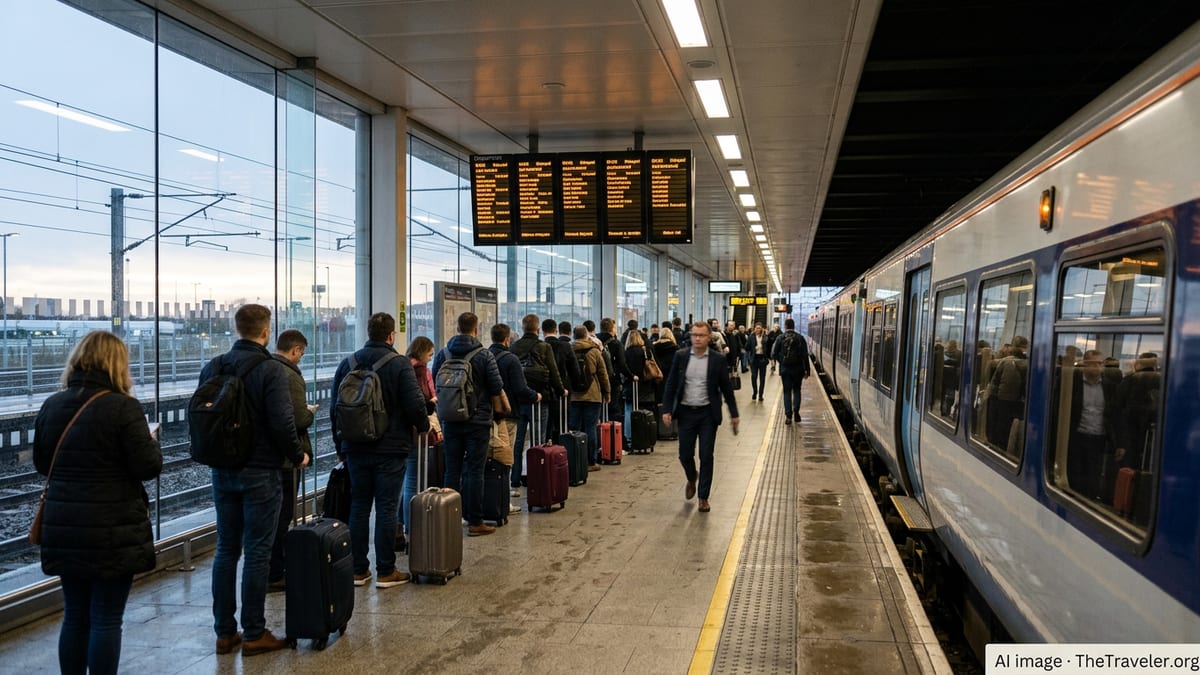
Grass fire sparks emergency response near rail line
Reports from the scene indicate that a fire broke out in grass and trackside vegetation close to the railway near Waltham Abbey, affecting services running through Waltham Cross. Images shared on social media show smoke rising from the embankment area and drifting across nearby lines.
Initial information from rail operators and passenger updates suggests that the fire started alongside one of the main routes linking Hertfordshire and Essex with London Liverpool Street. The incident appears to have been confined to the trackside, with no early indications of damage to passenger carriages.
Train movements were paused while rail staff and emergency crews assessed the extent of the blaze and the condition of signalling and cabling infrastructure in the affected section. Safety checks on overhead power equipment and lineside hardware are expected to continue until operators are confident that the route is safe to reopen.
While the precise cause of the fire has not yet been set out in formal updates, hot and dry late-summer conditions across the commuter belt have left embankments and lineside vegetation particularly vulnerable, increasing the likelihood that a small spark can quickly lead to a larger blaze.
Severe delays and cancellations for London-bound passengers
According to live updates from train operators, services running to and from London Liverpool Street were among the first to be affected as the grass fire developed near the tracks. Trains were initially held at signals outside the affected zone before movements were suspended through the Waltham Cross section.
Passengers have reported extended waits on platforms and on board trains, with some services terminated short of their destinations and others diverted where capacity allows. Real-time journey planners show a combination of cancellations, revised stopping patterns and extended journey times across parts of the Greater Anglia and London Overground network.
Commuters travelling between London and key local hubs including Cheshunt, Broxbourne and Hertford are being advised through operator channels to allow extra time, check live departure boards before leaving home and consider alternative routes where possible. Knock-on congestion at London termini and on connecting Underground and bus services is likely to continue until the affected section is fully reopened.
Past incidents on similar suburban corridors show that even a relatively small lineside fire can cause hours of disruption, as signalling systems, track circuits and power supplies must be inspected before normal timetables can safely resume.
Impact on local community and road network
The fire has also had a wider effect on the local community around Waltham Abbey and Waltham Cross. Residents have reported smoke drifting over nearby streets and properties, with a visible plume from surrounding neighbourhoods and main roads.
Publicly available traffic information shows that roads close to the rail corridor have experienced heavier congestion than usual, partly due to road users slowing near the scene and partly as rail passengers divert to cars, taxis and buses. Bus operators serving the Lea Valley corridor are experiencing increased demand as travellers seek to complete disrupted journeys.
Local businesses near stations along the affected stretch can see mixed effects during rail incidents of this type, with some outlets benefiting from stranded passengers while others experience staff and delivery delays. Early indications suggest that today’s fire has primarily created short term disruption, though the full picture will depend on how quickly the line can be returned to normal operation.
Residents in previous rail-side fire incidents in the region have expressed concerns about recurring trackside vegetation fires during warmer months, highlighting issues such as dry grass, litter accumulation and sparks from passing trains as potential contributing factors.
Ongoing checks on infrastructure and safety
Rail infrastructure managers are expected to carry out detailed inspections of the affected area once the fire is fully extinguished and temperatures along the embankment have cooled. These checks typically focus on sleepers, ballast, cabling, signal cabinets and any plastic trunking which can be vulnerable to heat and flames.
Where scorching or damage is identified, engineers may impose temporary speed restrictions or short term closures on particular tracks while repairs take place. Such measures, while disruptive, are standard practice in order to maintain safe operation for passenger and freight services.
Recent coverage of similar incidents around London has underlined how quickly a grass fire beside the tracks can threaten key components of the rail network, including power and signalling equipment. In some past cases, even after the fire itself was brought under control, services were limited for several hours while replacement parts were installed and systems tested.
Passengers are being encouraged through operator alerts to monitor live updates throughout the day, as the scale of disruption may shift from full suspensions to partial reopenings with altered timetables as engineers complete their assessments.
Travel advice for rail users heading through Waltham Abbey
For those planning journeys through Waltham Abbey, Waltham Cross and neighbouring stations, publicly available information points to a cautious approach. Travellers are being advised to check their journey status before setting out, particularly during peak commuting periods when reduced capacity can lead to crowding.
Alternative rail routes via other London terminals, including King’s Cross and St Pancras for some Hertfordshire destinations, may offer more reliable options while services through the affected corridor remain constrained. However, these alternatives can also become busier as passengers re-route, so additional journey time should be factored in.
Where possible, flexible workers are being encouraged by many employers to delay travel until later in the day or work remotely while the disruption continues. For visitors heading into London for leisure, current advice from travel planners is to consider off-peak journeys or different modes of transport until normal service is confirmed.
Further updates on the Waltham Abbey and Waltham Cross grass fire, as well as its impact on rail services, are expected to emerge through rail operator channels and regional news outlets as the situation develops and engineers complete safety inspections on the affected stretch of track.