


More news on this day
Rail services in and out of London on the busy Lea Valley corridor were severely disrupted after a trackside fire near Waltham Cross on Sunday afternoon forced all trains to be halted, according to early operational updates.
Get the latest news straight to your inbox!
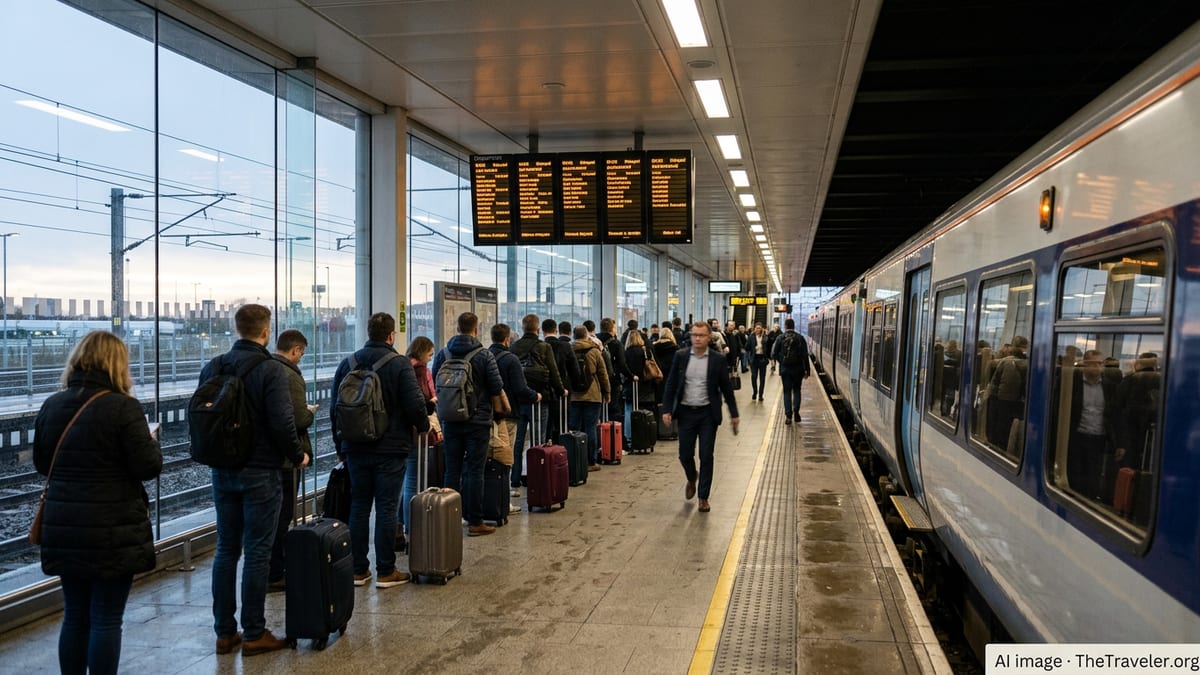
Fire near Waltham Cross brings services to an abrupt stop
Initial reports indicate that the incident began shortly before 15:00 local time, when a fire was reported close to the railway near Waltham Cross in Hertfordshire. The location lies on the Lea Valley Lines, a key commuter route linking London Liverpool Street with stations in north and east Hertfordshire and Essex.
Rail operators suspended movements through the affected section after emergency services were requested to attend multiple fires close to the tracks. Services on routes between London and destinations such as Cheshunt, Waltham Cross and stations further north were brought to a standstill while responders dealt with the situation and assessed damage in the rail corridor.
Operational updates described the stoppage as a safety measure to keep trains away from the affected area while visibility was reduced by smoke and while any potential impact on signalling and power equipment was examined. The fire occurred on a section of line that normally carries a mix of local stopping services and longer distance trains.
The timing of the disruption, early on a Sunday afternoon, meant that both leisure travellers and workers with weekend shifts were caught out, with services suspended in both directions for a period while the fire was brought under control.
Knock-on delays for London commuters and airport-bound passengers
The line through Waltham Cross forms part of a wider network feeding into London Liverpool Street, carrying commuters into the capital and connecting communities along the Lea Valley. When the line was blocked, trains already in service were held at various stations, contributing to delays that spread beyond the immediate area of the incident.
Published journey information showed that services were cancelled, turned short of their planned destinations or diverted where possible. Trains that did run were subject to significant delays as operators attempted to rebalance stock and crew after the sudden closure of the route.
The disruption affected not only regular commuters but also travellers using the line for onward connections in London. Passengers bound for central London, interchange hubs on the Underground and longer distance services from Liverpool Street faced extended journey times and, in some cases, the need to replan their routes entirely.
Rail passengers heading from Hertfordshire and Essex toward London were advised through operator channels to check live departure boards and to allow extra time for their journeys, with some services remaining subject to delay even after trains were permitted to move again.
Emergency response and impact on local infrastructure
According to published coverage, fire crews were called to deal with several blazes close to the trackside near Waltham Cross. The proximity of the flames to the railway meant that train movements had to be stopped until it was safe to resume operations and the risk of heat damage or smoke affecting the line was reduced.
The area around Waltham Cross station includes not only railway assets but also roads and bus routes serving the town and nearby Waltham Abbey. While the primary disruption was on the rail network, the concentration of transport infrastructure in a relatively narrow corridor meant that any restrictions or closures had the potential to spill over into the wider local network.
Network staff and contractors were deployed to inspect the track, signalling equipment and overhead line systems once fire crews had gained control of the situation. Only after those inspections could rail managers begin to reopen the line, initially with slower speeds and fewer services until normal safety margins were confirmed.
Publicly available information suggests that no passenger injuries were reported in connection with the incident, with the main impact felt through service suspensions, extended travel times and crowded replacement routes once trains began running again.
Alternative routes and advice for affected travellers
For travellers from stations north of Waltham Cross, including Cheshunt and Waltham Abbey, the sudden suspension of services toward London significantly narrowed options. Bus services linking the Lea Valley towns offered one of the few immediate alternatives, with several routes connecting to other rail heads and Underground stations beyond the affected section of line.
Journey planners showed that some passengers opted to travel by bus toward Enfield, Tottenham or other north London locations to pick up London Overground or Underground services. Others waited for partial restoration of the rail line once initial safety checks were completed and limited services were allowed to pass the site at reduced speed.
Travel advisories issued during the afternoon encouraged passengers to postpone nonessential journeys where possible or to consider alternative stations and routes into London. Those with time-sensitive connections, including onward trains or flights, were urged to seek different routes that avoided the Waltham Cross corridor altogether.
As services gradually resumed, operators warned that disruption would continue for some time because of displaced trains and crews, with residual delays and short-notice cancellations likely to affect evening and late afternoon departures.
Ongoing disruption and questions over network resilience
The Waltham Cross incident highlights the vulnerability of key commuter corridors into London when unexpected events occur near constrained infrastructure. A relatively localised fire was sufficient to halt all movements through a pinch point on a heavily used route, creating a ripple of delays across a wider area.
Regular travellers on the Lea Valley Lines are accustomed to occasional disruptions from infrastructure faults and planned engineering work, but sudden line closures caused by external events add an additional layer of uncertainty for anyone relying on the railway for work and leisure trips.
Transport commentators have previously noted that outer suburban stations such as Waltham Cross punch above their weight in terms of passenger numbers, serving as gateways to the capital for residents in nearby towns without direct rail links. When incidents occur on these sections of line, the lack of parallel rail routes can leave passengers heavily dependent on slower bus alternatives.
Further operational updates on Sunday evening were expected to clarify the extent of any lasting damage to the trackside environment and whether additional repair work would be required. Until then, travellers using the route into and out of London were advised to keep monitoring live service information for the latest picture.