


Washington, D.C. is compact enough to explore in a few days, but dense with neighborhoods, museums, and monuments that can quickly overwhelm first-time visitors. Knowing where things are, how to move between them, and what each area offers will make the difference between a rushed checklist trip and a relaxed, memorable visit to the U.S. capital.
Get the latest updates straight to your inbox!
Understanding the Layout of Washington, D.C.
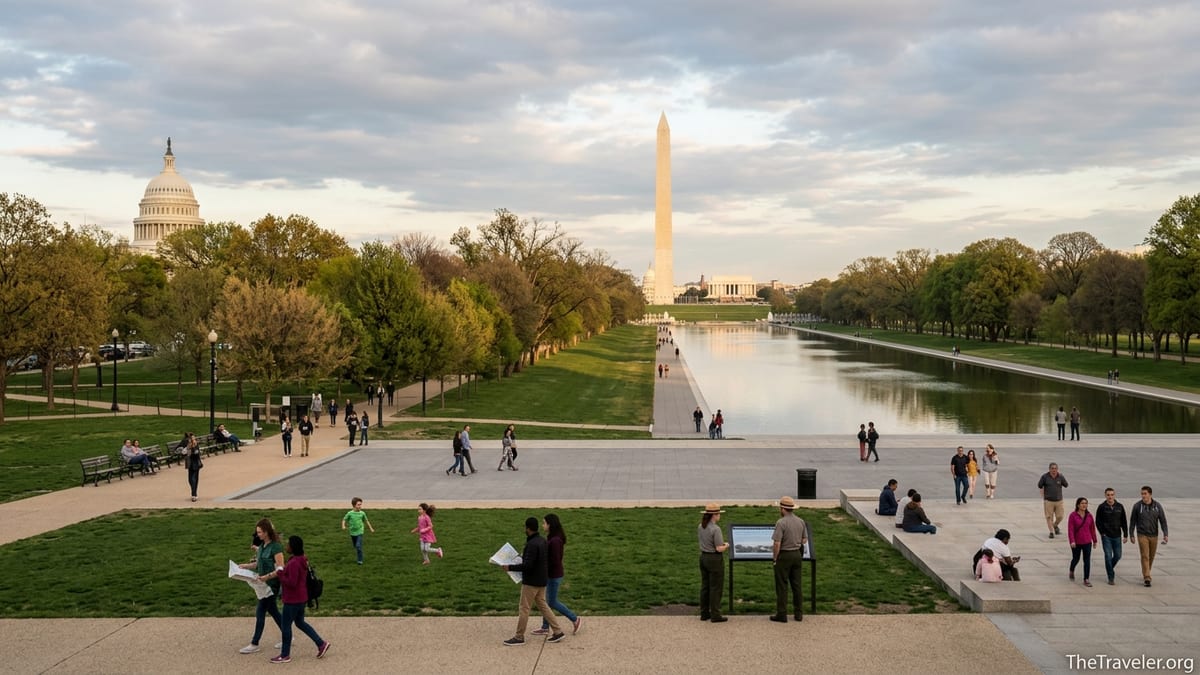
Despite its national profile, Washington, D.C. is a relatively small city by area, roughly 10 miles across, organized around an easy-to-read grid where streets run alphabetically east to west and numerically north to south. The Capitol sits at the center of that grid, and the National Mall stretches west toward the Lincoln Memorial, with most of the free, big-name Smithsonian museums lining each side. For visitors, thinking in terms of “the Mall and downtown” plus a handful of surrounding neighborhoods is the simplest way to plan days and avoid backtracking.
The Potomac River forms the city’s western and southern edge, separating D.C. from Virginia suburbs like Arlington and Alexandria. To the north and east of the Mall you will find residential and nightlife districts such as Dupont Circle, U Street, Shaw, and Capitol Hill, each with its own character and price range. Many first-timers are surprised how close these areas are: walking from the White House to the Smithsonian American Art Museum in Penn Quarter takes around 15 minutes, and a Metro ride from the Mall to the restaurants of U Street is typically under 20 minutes including a short walk.
Most of the iconic postcard sights cluster in a central band from the U.S. Capitol to the Lincoln Memorial, then north to the White House. Once you are in this core zone, you can comfortably walk between major attractions, although daily step counts often reach well over 10,000. It is common for visitors to focus one full day around the eastern Mall and Capitol, another around the western Mall and memorials, and then add separate days for Georgetown, Dupont and Logan Circle, or Southeast waterfront areas like The Wharf and Navy Yard.
The city is divided into four quadrants radiating from the Capitol: Northwest, Northeast, Southwest, and Southeast. Most hotels and tourist infrastructure sit in Northwest and the parts of Southwest nearest the Mall. When you see an address like “NW” or “SE,” it tells you which quadrant you are in. This helps you quickly understand whether, for example, a restaurant in “14th Street NW” is likely walkable from a museum you just visited on the Mall or whether you should plan to hop on the Metro.
National Mall and Monument Core
The National Mall is the heart of most first-time itineraries. This long green park runs roughly two miles from the U.S. Capitol at the eastern end to the Lincoln Memorial at the western end, with the Washington Monument rising at its center. Along its north and south sides are many of the free Smithsonian museums, including the National Museum of Natural History and the National Museum of American History, both of which can easily occupy half a day if you engage deeply with the exhibits.
On the Mall’s western end, the Lincoln Memorial, World War II Memorial, Korean War Veterans Memorial, and Vietnam Veterans Memorial form a powerful cluster of monuments. Many visitors choose to walk this area in the late afternoon and stay through sunset, when the memorials light up and the Reflecting Pool mirrors the sky. Evening visits are often less crowded, and the combination of lighting and relative quiet can make visits to the Lincoln steps or the Vietnam wall particularly moving.
The U.S. Capitol and its Capitol Visitor Center anchor the opposite end of the Mall. Tours of the building are free but require advance reservations or same-day passes, and security screening is similar to that at an airport, so you should allow extra time. Nearby, the Library of Congress and the Supreme Court offer additional free tours and exhibits, and many travelers combine a morning tour at the Capitol with an afternoon in one or two nearby museums such as the National Museum of the American Indian or the National Air and Space Museum when timed-entry passes are available.
Along the Mall, distances can be deceptive. Walking straight from the Capitol to the Lincoln Memorial can take 35 to 40 minutes without stopping, and that does not include detours inside museums. Packing too many Mall sights into a single day can lead to fatigue, especially in summer heat. A realistic approach is to pick two or three key venues, such as Natural History, Air and Space, and the Lincoln Memorial, and then leave room for unscheduled moments like picnicking on the grass, watching locals play softball, or catching a seasonal festival or concert that might be taking place on the Mall lawns.
Downtown, Penn Quarter, and Chinatown
Immediately north of the Mall is downtown, where many office towers, hotels, and theaters sit alongside historic attractions such as Ford’s Theatre and the National Portrait Gallery. The Penn Quarter and Chinatown area, roughly around Gallery Place and Judiciary Square, gives visitors a convenient base for mixing museums with restaurants and evening entertainment. In a single block you might find a modern food hall, an independent coffee shop, and an entrance to the Capital One Arena where major sports and concerts take place.
This zone is particularly attractive if you want to rely on walking and Metro. From Penn Quarter, you can walk to the National Archives, the International Spy Museum, or the National Gallery of Art in about 10 to 15 minutes. Many hotels here cater to both business travelers and tourists, so prices can spike during major conventions but drop on some summer weekends. Families often appreciate being able to return to the room during the afternoon heat, then head back out in the evening to a nearby restaurant or a performance at venues such as the Shakespeare Theatre Company or local comedy clubs.
Chinatown itself has evolved into more of a branding district than a dense Chinese neighborhood, but it still contains an ornate Friendship Archway and a scattering of Asian restaurants mixed with chain eateries. It is not the city’s primary destination for authentic regional Chinese food, yet the area remains lively, especially on game nights. Visitors staying elsewhere frequently end up here because multiple Metro lines converge at Gallery Place, making it an easy rendezvous point for groups coming from different parts of the city.
Because this part of downtown is active well into the evening, many first-time visitors feel comfortable walking between restaurants, theaters, and hotels after dark, especially along main corridors with bright lighting. As with any urban area, keeping an eye on your surroundings and avoiding secluded back streets late at night is common-sense practice, but the constant presence of commuters, diners, and arena crowds creates a generally reassuring atmosphere for tourists.
Georgetown, Foggy Bottom, and the Waterfronts
West of downtown, the historic neighborhood of Georgetown offers a different side of Washington with cobblestone streets, 18th- and 19th-century row houses, and a busy main drag along M Street and Wisconsin Avenue. There is no directly serving Metro station, which surprises many newcomers, but frequent buses and rideshares connect Georgetown to nearby stops such as Foggy Bottom and Dupont Circle. The neighborhood is popular for boutique shopping, waterfront dining, and simply strolling along the C&O Canal or the Georgetown Waterfront Park with views of the Kennedy Center and the Key Bridge.
Accommodation in Georgetown tends to be pricier and more boutique-oriented, with several upscale hotels and smaller inns tucked into historic buildings. Travelers who choose to stay here often prioritize character and walkable charm over being directly on a Metro line. A typical day in Georgetown might include coffee and pastries at a small bakery, an afternoon browsing independent shops or visiting the campus of Georgetown University, then dinner at a restaurant overlooking the Potomac, where outdoor seating fills quickly during warm months.
Just east of Georgetown, the Foggy Bottom neighborhood bridges the world of George Washington University, the Kennedy Center, and government offices. It has its own Metro station, which makes it an excellent compromise location if you want easy transit access to the Mall while being within walking distance of the riverfront and the southern edge of Georgetown. Hotels here range from business-style chains to extended-stay options with kitchenettes that appeal to families or longer visitors. From Foggy Bottom, you can walk to the Lincoln Memorial in around 20 minutes or ride the Circulator bus along a scenic route that skirts the Mall.
On the other side of downtown, new waterfront districts such as The Wharf in Southwest and Navy Yard along the Anacostia River have reshaped the city’s dining and nightlife scene. The Wharf is home to a concert hall, marina, and a mix of restaurants that spill out onto piers where locals and visitors linger over seafood and river views. Navy Yard, near Nationals Park, buzzes on baseball game days and weekends, with riverfront parks, breweries, and casual restaurants that welcome families. These areas are connected to the rest of the city by multiple Metro stations and frequent bus routes, making them convenient bases if you enjoy evening walks by the water.
Capitol Hill, Eastern Market, and Neighborhood Culture
Capitol Hill extends east from the Capitol building into a leafy residential district of row houses, small parks, and independent businesses. Many visitors only see the institutional side of the neighborhood around the Capitol and Supreme Court, but a short walk brings you into streets that feel more like a small town than a government hub. Here, classic corner markets, playgrounds, and local cafes line the blocks, and you will often see congressional staffers and families sharing the same sidewalks.
Eastern Market, a historic covered market several blocks east of the Capitol, is a natural introduction to neighborhood life for travelers. Inside the building, vendors sell produce, meats, and flowers, while the surrounding streets host weekend arts and crafts stalls and casual food options. Stopping here for breakfast or a simple lunch of a crab cake sandwich or homemade pastries can break up a morning of touring government sites and give you a chance to sit among residents rather than tour groups.
Capitol Hill’s side streets hold a growing number of small restaurants, wine bars, and coffee shops, particularly along Pennsylvania Avenue SE and Barracks Row near the Marine Barracks. Compared with denser nightlife areas like U Street, evenings here tend to feel quieter and more residential, which can be appealing for travelers who prefer early dinners and relaxed walks back to their lodgings. Many short-term rentals operate in this area, often housed in the upper floors or basements of row homes, but regulations and availability can change, so it is wise to confirm that any rental is properly licensed and well-reviewed before booking.
Exploring a neighborhood like Capitol Hill shows a side of the city that is easy to miss if you focus solely on monuments. You might watch a children’s soccer practice on a local field, overhear neighbors chatting on stoops, or stumble on a small bookstore hosting an author talk. These experiences cost little or nothing and are often what visitors remember when they talk about Washington as a living city rather than just a backdrop for national politics.
Dupont Circle, Logan Circle, U Street, and Nightlife Corridors
North of downtown, Dupont Circle serves as both a landmark traffic circle and a lively urban neighborhood. The surrounding streets are filled with embassies, historic mansions converted into institutions, bookstores, and an array of restaurants and bars. The central park within the circle itself is a popular place for picnics, people-watching, and impromptu chess games. With its own Metro station on the Red Line, Dupont provides easy access back to the Mall while giving visitors a distinctly local base, especially appealing to those interested in LGBTQ+ nightlife, cafe culture, and walkable tree-lined streets.
East of Dupont, the 14th Street and Logan Circle corridor has transformed in recent years into one of the city’s densest dining and shopping areas. Former auto showrooms and warehouses now house design stores, gastropubs, and contemporary restaurants offering everything from Mediterranean small plates to vegan tasting menus. Travelers staying downtown often walk or take a short rideshare up here for dinner, then make their way back to hotels via a late-night stroll or a quick bus or Metro ride from nearby stations like McPherson Square or U Street.
Farther east, the historic U Street corridor was once known as “Black Broadway,” home to jazz clubs and theaters that hosted legends. Today, it remains an important center of African American culture as well as a nightlife destination, with live music venues, soul food restaurants, rooftop bars, and street murals that tell stories of the neighborhood’s past. The famous Ben’s Chili Bowl, a casual landmark, still serves half-smokes and chili to a mix of tourists, locals, and late-night crowds.
These neighborhoods offer a different rhythm from the Mall. Morning might start with a quiet coffee in Dupont, afternoon could be spent exploring shops on 14th Street, and evening might end with a concert on U Street. They are generally busy and well-patrolled, especially along main commercial strips, but noise and crowds can be intense on weekend nights. When booking accommodations, consider your tolerance for late-night street activity; a boutique hotel on a side street can give you quick access to the scene without the soundtrack continuing outside your window.
Getting Around: Metro, Buses, Walking, and Bikes
Washington’s public transit system is one of the reasons many visitors choose to forgo renting a car. The Metrorail network connects the National Mall, downtown, and most major neighborhoods, and also links the city to both Reagan National Airport and Dulles International Airport. Fares are distance-based, with typical in-city rides for tourists falling in a moderate range during normal hours, and can be paid with a reloadable SmarTrip card or contactless bank cards and mobile wallets that tap at the fare gates.
Metrobus routes fill gaps between rail lines and reach areas such as Georgetown, Cathedral Heights, and parts of Capitol Hill that are less convenient by train. Standard bus fares are usually lower than rail fares, and many routes run late into the evening. For short central journeys, the DC Circulator offers simple, flat-fare routes that loop between Georgetown, the Mall, Union Station, and the waterfronts, making it popular with tourists who want a straightforward map and frequent service without figuring out complex route numbers.
Walking is often the most pleasant way to experience central Washington, but distances can be greater than they appear on a map, particularly on the Mall where wide lawns separate museums. Comfortable shoes, sunscreen, and a refillable water bottle are practical essentials, especially in humid summer months. The city has widely available bike-share stations, including options for electric-assist bikes that can make hills and longer stretches, such as between the Mall and the National Cathedral area, more manageable for casual riders.
Rideshare services and taxis are plentiful and can be useful at night or when traveling with luggage or young children. However, traffic around major event venues, the Mall during festivals, or the corridors near the White House can slow to a crawl. A common strategy is to combine transit modes: for example, take Metrorail from your hotel to the Smithsonian station in the morning, walk among museums during the day, then call a rideshare from a quieter side street a few blocks away in the evening rather than attempting pickup right next to the most crowded areas.
Practical Visitor Information: Costs, Seasons, and Safety
One of Washington’s major advantages for travelers is the concentration of free attractions. Many Smithsonian museums, the National Gallery of Art, and federal sites like the Capitol Visitor Center do not charge admission, though some require timed-entry passes that must be reserved in advance. This keeps daily sightseeing costs manageable even for families, though you should budget for meals, transportation, and any paid experiences such as private tours, special exhibitions, or boat cruises on the Potomac.
Hotel prices vary significantly by season and day of the week. Spring, particularly around the cherry blossom period from late March to early April, commands some of the highest rates, as does major-event season when conventions and political gatherings converge. Summer brings heavy tourist crowds but sometimes more moderate downtown hotel prices on weekends when business travel dips. Winter, apart from holiday spikes, can offer good value, with fewer visitors at major attractions and easier same-day access to tickets and reservations.
Weather can shape your experience as much as cost. Summers are hot and often humid, with common afternoon thunderstorms, while winters bring cold snaps and occasional snow that can lightly cover the Mall’s monuments. Spring and fall generally offer the most comfortable walking conditions. Packing layers, a light rain jacket, and shoes suitable for uneven paths around older monuments and parks will help you adapt to changing conditions without cutting days short.
In terms of safety, the core tourist areas around the Mall, downtown, Georgetown, and major transit hubs are generally regarded as safe for visitors, with a strong presence of local and federal law enforcement. That said, crime patterns can change by block and over time. Basic precautions go a long way: avoid displaying large amounts of cash, keep phones and bags secure on transit, stay in well-lit areas at night, and trust your instincts if a street feels unusually quiet or isolated. Many travelers report that the biggest nuisances they encounter are minor, such as aggressive street vending or occasional transit delays, rather than serious incidents.
The Takeaway
Visiting Washington, D.C. is less about racing through a checklist of monuments and more about understanding how its neighborhoods fit together. Once you grasp that the National Mall, downtown, and a ring of distinct districts like Georgetown, Capitol Hill, Dupont, and U Street all sit within a relatively compact area, planning becomes simpler and the city feels more approachable.
By pairing major sights with nearby local experiences, using the Metro and buses to bridge distances, and pacing yourself so that museum time balances with open-air walks or waterfront evenings, you can experience both the symbolic capital of the United States and the everyday city residents call home. Whether you are here for a quick weekend or a longer stay, a basic sense of the layout, transportation options, and neighborhood personalities will help you use your time well and leave with a fuller picture of Washington, D.C.
FAQ
Q1. How many days should I spend in Washington, D.C. for a first visit?
Most first-time visitors find that three full days allow enough time to see the Mall, a few key museums, and one or two neighborhoods. If you can stay five days, you will be able to slow the pace, include more specialized museums, and explore additional areas like Georgetown or the waterfronts without feeling rushed.
Q2. Do I need a car to visit Washington, D.C. attractions?
No, most visitors are better off without a car. The Metro, buses, and rideshares cover the main attractions, and parking near the Mall and downtown can be both expensive and difficult to find. A car is only useful if you plan day trips to the suburbs or beyond, such as Mount Vernon or Civil War battlefields in Virginia and Maryland.
Q3. What is the best neighborhood to stay in for sightseeing?
For easy access to the National Mall and multiple Metro lines, downtown and Penn Quarter are hard to beat. If you prefer a more residential feel with strong restaurant options, Dupont Circle or Capitol Hill can be excellent choices. Georgetown is charming but lacks its own Metro station, so it suits visitors comfortable using buses, walking, or rideshares.
Q4. Are the Smithsonian museums really free?
Yes, admission to the Smithsonian museums and the National Zoo is free, although some popular museums and exhibits may require advance timed-entry passes. You will still need to budget for transportation, food, and any special exhibitions or private tours that carry separate charges.
Q5. Is Washington, D.C. safe to walk around at night?
Central tourist areas such as the National Mall, downtown, Georgetown, and parts of Dupont Circle and Penn Quarter typically see steady foot traffic and a visible police presence in the evening. As in any major city, it is wise to stick to well-lit streets, avoid isolated areas late at night, and stay aware of your belongings, especially around busy transit hubs.
Q6. How far apart are the major monuments on the National Mall?
The distance from the U.S. Capitol to the Lincoln Memorial is roughly two miles, and many visitors underestimate how long it takes to walk, especially when stopping at museums and memorials along the way. Planning to focus on one half of the Mall per day, or breaking up walks with short bus or Metro rides, helps keep the day manageable.
Q7. What is the best time of year to visit Washington, D.C.?
Spring and fall generally offer the most comfortable weather and pleasant walking conditions. The cherry blossom period in late March or early April is particularly beautiful but can be crowded and expensive. Summer brings long daylight hours but also heat and humidity, while winter can be quieter and more affordable, with the trade-off of colder temperatures.
Q8. How do I get from the airports to downtown D.C.?
Reagan National Airport is connected directly to the Metro, making it one of the easiest U.S. airports for transit into the city. From Dulles International Airport, a combination of Metrorail and buses now links the terminals to downtown, and taxis and rideshares are widely available at both airports if you prefer door-to-door service or arrive with heavy luggage.
Q9. Are there good options for families with children?
Yes, Washington is very family-friendly. Children often enjoy hands-on exhibits at museums such as Natural History and Air and Space, wide lawns and playgrounds near the Mall and in Capitol Hill, and boat rides or casual dining along the waterfronts. Many hotels offer family rooms or suites, and the abundance of free attractions helps keep overall costs manageable.
Q10. What should I wear when visiting government buildings and monuments?
There is no strict dress code for most public areas, and comfortable, casual clothing is appropriate for museums and outdoor monuments. However, you should wear respectful, neat attire if you plan to tour government buildings such as the Capitol or attend formal events, and always choose shoes suitable for standing in security lines and walking significant distances on a typical sightseeing day.