


Planning a trip to Washington, D.C. for museums, history, and iconic landmarks is less about squeezing everything in and more about choosing the right neighborhoods, timing, and experiences. With world-class Smithsonian museums, the National Mall’s marble monuments, and working seats of government all packed into a walkable core, a well-structured plan can turn an overwhelming checklist into a memorable, manageable visit.
Get the latest updates straight to your inbox!
Choosing the Best Time to Visit Washington, D.C.
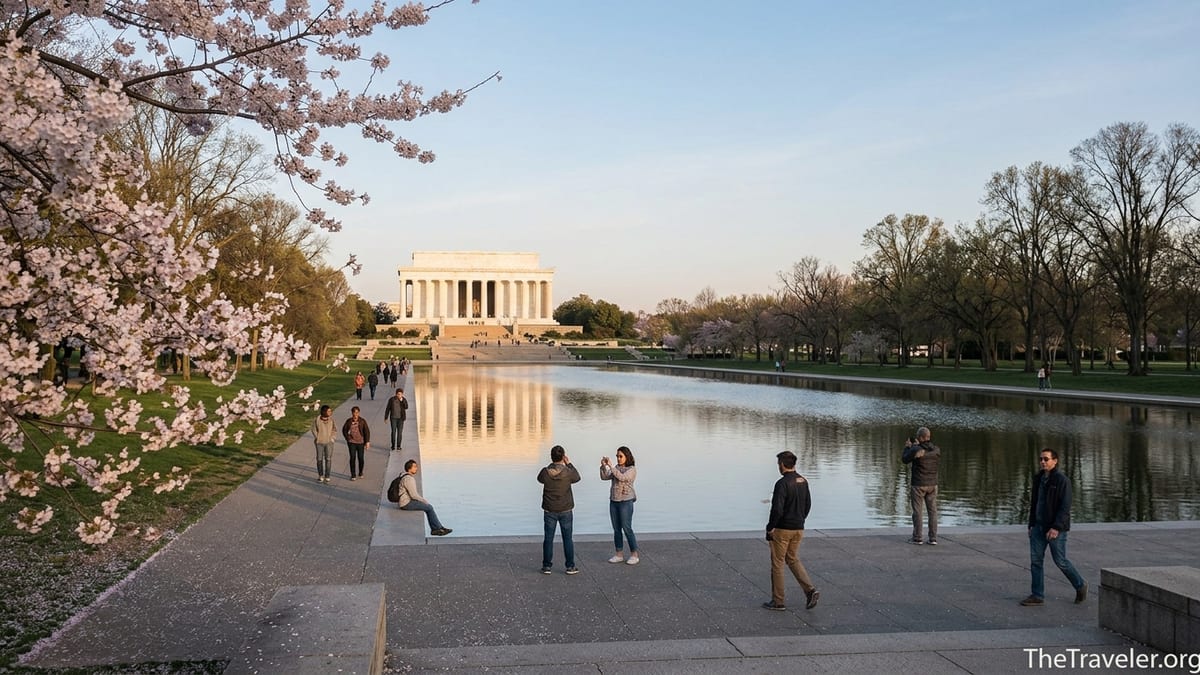
For museum and monument travelers, spring and fall are generally the sweet spots in Washington, D.C. Late March and early April often coincide with the National Cherry Blossom Festival, when thousands of cherry trees around the Tidal Basin and National Mall explode into pink and white blooms and effectively kick off the main tourist season. In 2026, for example, the National Park Service projected peak bloom between March 29 and April 1, and actual peak arrived around that window, quickly drawing large crowds to the Tidal Basin paths and Jefferson Memorial. If you time your trip around this period, be prepared for high hotel prices and packed sidewalks, but also some of the most photogenic views in the capital.
Outside cherry blossom season, late April to early June and late September to mid-November usually offer comfortable temperatures for long days on your feet, along with fewer school groups than in peak spring. In these shoulder seasons you can still enjoy long daylight hours for exploring the Lincoln Memorial and World War II Memorial at sunset, but with less congestion at museum security lines. Winter, especially January and February, is the quietest and cheapest period aside from inauguration or major political events. Many Smithsonian museums are delightfully calm then, though you will need to plan for shorter daylight hours, cold winds on the Mall, and the occasional snow or ice day that can close outdoor monuments temporarily.
Summer, roughly from mid-June through August, brings high humidity, afternoon thunderstorms, and the heaviest volume of families and school groups. If a July visit is your only option, plan early-morning walks to monuments, schedule indoor museums during midday heat, and book accommodations close to a Metro station so you are not adding long, hot walks after a full day of sightseeing. Whatever season you choose, check just before your trip for any special events, protests, or large festivals on the National Mall, as these can affect security screening, road closures, and access to certain memorials.
Where to Stay for Easy Access to Museums and Landmarks
If your main goal is museums and history, staying within or near the downtown core makes logistics much easier. The Pennsylvania Avenue corridor between the Capitol and the White House places you within a roughly 15 to 20 minute walk of the National Mall, the National Museum of American History, the National Museum of Natural History, and the National Gallery of Art. In this area you will find everything from business hotels with loyalty points to smaller boutique properties in historic buildings. For example, a typical mid-range chain hotel in early May might run around 250 to 350 dollars per night before taxes, while cherry blossom weekends and major holidays can push rates notably higher.
Another good base is the Penn Quarter and Chinatown area just north of the Mall, within walking distance of the National Portrait Gallery and Smithsonian American Art Museum. Here you have easier access to restaurants that stay open into the evening, plus direct connections to multiple Metro lines at Gallery Place and Judiciary Square stations. Travelers who prefer a more residential feel often choose Dupont Circle, about a 10 to 15 minute Metro ride from the Mall; it offers tree-lined streets, independent cafes, and mid-range boutique hotels where weekend rates can be lower than comparable properties closer to the Capitol.
Families or budget travelers might look across the Potomac River to Arlington neighborhoods such as Rosslyn or Crystal City in Virginia. These areas are served by the Blue, Orange, Silver, and Yellow Metro lines and can offer lower nightly rates while keeping you within a 10 to 20 minute train ride of the Smithsonian station on the Mall. When comparing options, factor in the cost and time of daily Metro travel for your whole group. A slightly more expensive hotel two blocks from the Mall can be worth it if it saves a family of four multiple daily Metro fares and 30 minutes of commuting each way.
Understanding the National Mall and Major Monuments
Most first-time visitors underestimate the size of the National Mall. From the U.S. Capitol on the east end to the Lincoln Memorial on the west, the core stretch is about two miles long, and many key sites sit just off that spine. The Washington Monument rises near the center, with clusters of Smithsonian museums flanking the Mall on both sides. To the west you will find the World War II Memorial, Reflecting Pool, Lincoln Memorial, and, slightly off the main axis, the Korean War Veterans Memorial, Vietnam Veterans Memorial, Martin Luther King Jr. Memorial, and Franklin Delano Roosevelt Memorial.
These monuments and memorials are generally open 24 hours a day, with National Park Service rangers on site and visitor contact stations operating during daytime and evening hours. Many visitors find that early morning or after dark are the most moving times to see them. For instance, the white marble of the Lincoln Memorial glows under floodlights at night, and the view across the illuminated Reflecting Pool to the Washington Monument is particularly striking. Because these are open public spaces, you do not need tickets to walk through them, though you will encounter security screening at buildings like the Capitol Visitor Center or the nearby U.S. Supreme Court.
Timely information is important because 2026 brings major infrastructure and anniversary preparations in the Mall area. The National Park Service is in the midst of a multi-year reconstruction of the Tidal Basin and West Potomac Park seawalls to address flooding and improve paths, which can mean temporary detours around parts of the Jefferson Memorial and nearby walkways. Large-scale events associated with the United States’ 250th anniversary also affect views and access, particularly near the Reflecting Pool and central lawn. Before your trip, check the National Park Service’s National Mall and Memorial Parks page for updated maps showing construction zones, closed paths, and any new security rules near the Washington Monument.
Planning Your Smithsonian and Museum Days
Washington’s Smithsonian museums are free to enter, which makes them a huge draw but also a planning challenge. The largest cluster on the Mall includes the National Museum of American History, National Museum of Natural History, National Air and Space Museum, National Museum of African American History and Culture, and several art and culture-focused institutions like the Hirshhorn Museum and the National Museum of the American Indian. Some of these, particularly the African American History and Culture museum, frequently require timed-entry passes that must be reserved in advance, often released on a rolling basis and sometimes supplemented by a limited number of same-day passes.
A practical approach is to plan no more than two major museums in a single day, especially if you are traveling with children. For example, you might start at the National Museum of American History when it opens, spend two to three hours exploring exhibits such as the Star-Spangled Banner and the American Presidency galleries, then take a lunch break on the Mall or at the museum cafe. In the afternoon, walk across to the National Museum of Natural History to see the dinosaur hall and geology exhibits. Even this modest-sounding itinerary will typically fill a full day once you account for security lines, time in galleries, and breaks.
Some museums are undergoing renovations or phased reopenings, so verify what is open on your dates. The historic Air and Space Museum on the Mall, for instance, has been reopening galleries in stages following a major renovation, and specific sections or entrances can change availability over time. When planning, look up each museum’s hours, any special evening openings, and whether backpacks must be checked, as that can influence how much you want to carry. For rainy or very hot days, consider spending more time at indoor sites like the National Gallery of Art or National Archives, where you can view the Declaration of Independence and Constitution without worrying about the weather.
Seeing Working Government: Capitol, White House, and Beyond
Beyond static exhibits and memorials, Washington, D.C. is also a functioning seat of government, and many travelers want to see that side of the city. Tours of the U.S. Capitol are typically free but require advance planning. You can request tickets through your member of Congress or book directly through the Capitol Visitor Center’s official system once you know your travel dates. A standard tour includes the Rotunda and historic chambers, with additional passes sometimes available to observe the House or Senate when in session from the public galleries.
White House tours require even more lead time and security clearance. U.S. citizens must request a tour through their congressional office, often weeks or months in advance, and international visitors usually work through their embassy in Washington. Tour slots are limited and can be canceled on short notice due to official events, so it is wise to plan these for early in your trip rather than the last day, in case you need to reschedule. Even if you do not secure an interior tour, walking along Pennsylvania Avenue near Lafayette Square offers good views of the White House exterior, especially in the early morning when crowds are lighter.
Other government sites worth building into a history-focused itinerary include the Library of Congress, with its ornate Great Hall and rotating exhibitions, and the Supreme Court, which offers public lectures in the courtroom when the Court is not in session. Many of these buildings have airport-style security screening and strict rules on water, food, and bag size. Reviewing those regulations on official sites before you arrive can save time and avoid having to discard items at the door.
Getting Around: Walking, Metro, and Tours
Washington, D.C. is a compact city, but days focused on museums and monuments can easily involve eight to ten miles of walking without careful planning. The Metro system is your best friend for longer hops. The Smithsonian station on the Blue, Orange, and Silver lines deposits you directly onto the Mall, within walking distance of many major museums. L’Enfant Plaza, Archives–Navy Memorial, and Federal Triangle stations also lie close to key sites. A rechargeable SmarTrip card or mobile payment setup simplifies fares, and off-peak and weekend pricing can help manage costs if your schedule is flexible.
For some visitors, a hop-on, hop-off bus tour on the first full day offers a helpful overview. These services typically loop past the Capitol, Lincoln Memorial, White House area, and several Smithsonian museums, letting you disembark where you like. While they are not always the fastest way around, they do save walking and can be particularly useful for travelers with limited mobility or those traveling with young children. Another option is to book a guided night monuments tour by bus or small van, which often includes short stops at the Lincoln Memorial, World War II Memorial, and Martin Luther King Jr. Memorial, all dramatically lit after dark.
If you prefer a more structured but self-paced experience, consider National Park Service ranger talks or self-guided walking tours of the National Mall. Official audio tours and mobile-friendly maps highlight themes such as presidential history, civil rights, or military memorials and give context that you might otherwise miss. Do not underestimate the summer sun: even on a breezy day, walking the open expanse of the Mall without shade can be draining. Carry water, wear a hat, and build in breaks at indoor museum cafes or shaded benches.
Sample Three-Day Itinerary for History and Museums
A realistic three-day plan strikes a balance between ambitious sightseeing and downtime. On Day 1, focus on the eastern half of the National Mall. Start at the U.S. Capitol for a morning tour, then walk down the Mall toward the Smithsonian Castle as an orientation landmark. Spend your afternoon at the National Museum of American History, pausing for lunch at its cafe or grabbing a quick meal from food trucks that cluster along the Mall in peak seasons. If you still have energy, end the day with a stroll to the Washington Monument area to get your bearings and enjoy open views of the Mall.
Day 2 can concentrate on museums and the central Mall. Begin at the National Air and Space Museum or the National Museum of Natural History, depending on your interests. After several hours indoors, take a midday break on the grass or in a nearby cafe, then pre-book a timed-entry visit to the National Museum of African American History and Culture in the later afternoon. Its exhibits are intense and emotionally powerful, so plan something lighter afterward, such as dinner in Penn Quarter and perhaps a quick walk past the illuminated FBI building or the facade of Ford’s Theatre.
Dedicate Day 3 to monuments and the Tidal Basin. Start early at the Lincoln Memorial to avoid the tour bus crowds, then continue along the Reflecting Pool to the World War II Memorial. From there, follow signs toward the Tidal Basin loop, visiting the Martin Luther King Jr. Memorial and Franklin Delano Roosevelt Memorial along the water. If you are visiting in late March or early April, this route also doubles as one of the best cherry blossom walks. In the evening, return to your favorite monuments for night views or take a short Metro ride to a neighborhood like Georgetown or Dupont Circle for a celebratory final dinner.
The Takeaway
Planning a museum and monument trip to Washington, D.C. is about more than checking off big names like the Smithsonian or Lincoln Memorial. It means matching your season, hotel choice, and daily routes to how you actually like to travel. By anchoring yourself near the National Mall, limiting each day to a few major sites, and weaving in both working government buildings and reflective memorials, you give yourself space to absorb the history rather than race past it.
Build flexibility into your schedule to adapt to weather, crowds, or construction, and do not hesitate to adjust plans on the ground based on how you feel each day. Some of the most memorable D.C. moments happen in between the headline attractions: a quiet morning on the steps of the Lincoln Memorial, a ranger’s impromptu story at the World War II Memorial, or a late-afternoon pause in a nearly empty gallery at the National Gallery of Art. With thoughtful preparation and realistic pacing, a trip centered on Washington’s museums, history, and iconic landmarks can feel less like a whirlwind and more like a deep, satisfying immersion in the story of the United States.
FAQ
Q1. How many days do I need in Washington, D.C. for museums and monuments?
For a first visit focused on history, three full days is a practical minimum to see highlights of the National Mall, two to four Smithsonian museums, and at least one government building such as the Capitol, without feeling completely rushed. If you want to add neighborhoods like Georgetown or Arlington Cemetery, plan four to five days.
Q2. Are Smithsonian museums really free, and do I need tickets?
Admission to Smithsonian museums is free, but a few popular sites use free timed-entry passes to manage crowds. In recent years, museums such as the National Museum of African American History and Culture and sometimes the Air and Space Museum have required advance reservations, especially on weekends and holidays. Always check each museum’s current policy before your trip.
Q3. What is the best way to get around Washington, D.C. without a car?
The combination of walking and Metro is usually the most efficient way to explore the Mall and museum areas. The Smithsonian, Archives, and Federal Triangle stations place you close to major sights, and a reusable Metro card or mobile payment makes rides simple. Many visitors avoid renting a car altogether because parking near the Mall is limited and expensive, and street closures around events are common.
Q4. When is the best time to see the cherry blossoms near the monuments?
Cherry blossom timing varies each year with the weather, but the peak bloom around the Tidal Basin typically falls in late March or early April. The National Park Service announces predicted peak dates a few weeks in advance. Even if you miss the exact peak, blossoms are often attractive for about a week on either side, and other varieties in places like the National Arboretum can extend the season into mid-April.
Q5. Do I need reservations to visit the U.S. Capitol or White House?
Yes, both usually require advance arrangements. Capitol tours can often be booked through the Capitol Visitor Center or your member of Congress, sometimes just a few weeks ahead. White House tours require submitting a request through your congressional office or embassy much earlier, often several months in advance, and are subject to security review and potential last-minute schedule changes.
Q6. Is it safe to walk around the National Mall at night?
The National Mall and major monuments are popular in the evening and generally feel safe for travelers who use normal big-city precautions. The area is patrolled by Park Police and often filled with tour groups, runners, and photographers. Stay in well-lit areas, keep valuables secure, and consider a guided night tour if you prefer to be with a group after dark.
Q7. How should I budget for a D.C. museum trip?
While many museums and monuments are free, you will still need to budget for lodging, food, and transportation. Mid-range hotel rooms in central areas often run a few hundred dollars per night, with higher prices during peak events. Meals can range from quick-counter lunches near the Mall to sit-down dinners in neighborhoods like Penn Quarter or Dupont Circle. Metro fares are generally modest, and you can keep costs lower by walking whenever possible.
Q8. Are there good options for visitors with limited mobility?
Yes. Most major museums and monuments offer ramps, elevators, accessible restrooms, and loaner wheelchairs. The Metro system has elevators at many stations, and some sightseeing buses are equipped with lifts. Because distances on the Mall can be long, visitors with mobility concerns often benefit from combining short walks with Metro rides, taxis, or rideshares, and scheduling rest breaks at indoor museums or cafes.
Q9. Can I bring food and backpacks into museums?
Policies vary by institution, but most major museums allow small backpacks and sealed water bottles, although they must pass through security screening and may need to be checked in certain galleries. Large bags, coolers, and open food or drinks are often prohibited past security. Many visitors eat at museum cafes or on designated outdoor lawns to avoid carrying full meals through security lines.
Q10. What should I do if there is construction or a special event on the National Mall?
Construction and large events can temporarily block views or close parts of the Mall, particularly near the Reflecting Pool, Tidal Basin, or central lawn. If you find fencing or detours, follow posted signs to alternate routes and shift your schedule to focus on nearby museums or less affected memorials that day. Checking official National Park Service updates shortly before and during your trip will help you adapt quickly and still make the most of your visit.