


Washington, D.C. is one of those places many travelers feel they should see at least once in their lives. It is where presidents are inaugurated, marches fill the National Mall, and school buses unload in front of marble monuments. Yet when you compare it to beach towns or iconic European capitals, you might wonder: is Washington, D.C. actually worth visiting, especially now? The answer depends on what you value in a trip. In 2026, the city offers an unusually rich mix of free world-class museums, walkable neighborhoods, and evolving food and waterfront scenes, along with some real trade-offs in cost, crowds, and politics that are important to understand before you book.
Get the latest updates straight to your inbox!
Why Washington, D.C. Still Draws Millions of Visitors
Washington, D.C. is not a niche destination. Destination DC reports that more than 27 million people visited the city in 2025, with visitor spending reaching close to 12 billion dollars. That is a strong sign that, despite shifting global travel patterns, the U.S. capital remains firmly on the map for both American and international travelers seeking a mix of history, culture, and big-city convenience.
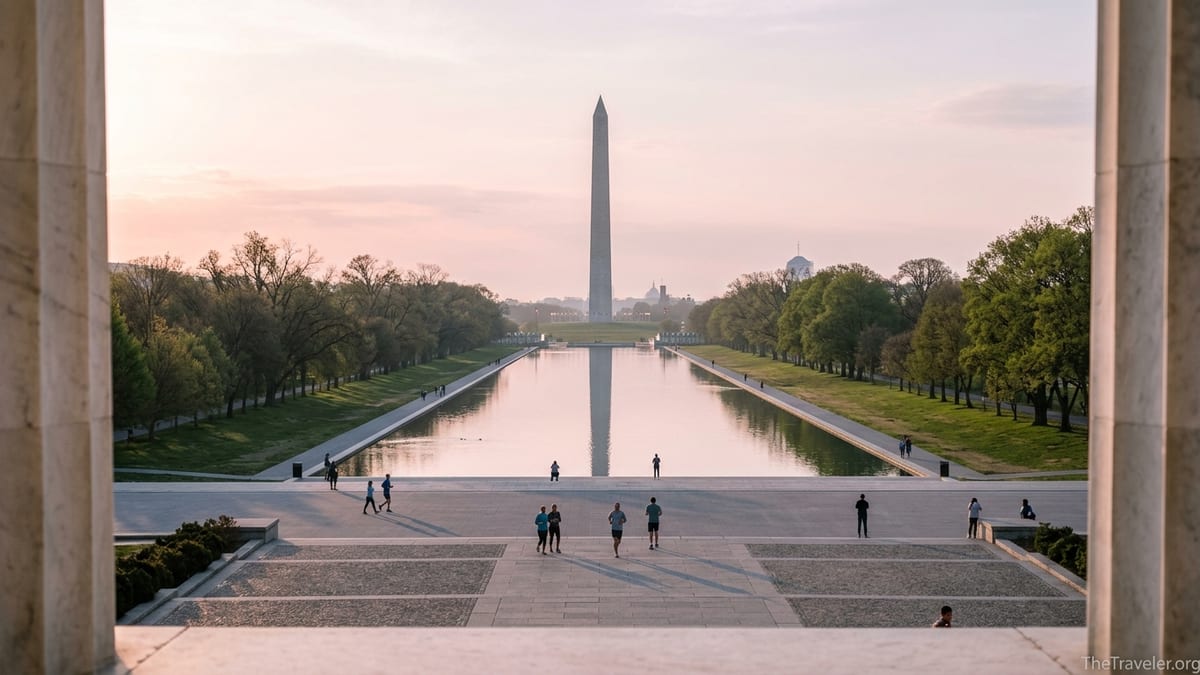
For many, D.C. is about ticking off bucket-list landmarks that feel familiar from news footage and films. Standing on the steps of the Lincoln Memorial at sunrise, when joggers and a smattering of photographers replace the daytime crowds, is an experience that often exceeds expectations. Looking back along the Reflecting Pool to the Washington Monument and the dome of the U.S. Capitol beyond, visitors get a sense of the symbolic axis that defines the city. It is hard to replicate that in any other American destination.
The city also offers unusual depth for repeat trips. Travelers who first came as teenagers on school trips are now returning with their own children or partners and discovering how much they missed the first time, from the Library of Congress reading room to niche museums like the National Museum of Women in the Arts or Planet Word. Washington, D.C. rewards those who slow down, wander into side galleries, and let curiosity dictate their days rather than rushing between photo stops.
Another reason D.C. remains appealing is practicality. The compact core, reliable public transit by U.S. standards, and abundance of English-language signage make it less intimidating than many large cities. With three major airports in the metro region and frequent train links along the East Coast corridor, it often fits naturally into broader itineraries that include New York, Philadelphia, or Baltimore.
The Unmatched Value of Free Museums and Monuments
One of the strongest arguments for visiting Washington, D.C. is financial: so much of what you come to see is free. The Smithsonian Institution, which includes the National Museum of Natural History, National Air and Space Museum, National Museum of American History, the National Museum of African American History and Culture, the National Zoo, and several art museums, does not charge admission. Official guides and recent visitor documents indicate that almost all Smithsonian museums in D.C. are open daily from around 10 a.m. to 5:30 p.m., closed only on December 25, which gives visitors dependable access most of the year.
To put that in context, a family of four visiting several major museums in cities like New York or Chicago might easily spend 100 to 150 dollars per day on admission alone. In D.C., you can walk into the National Museum of Natural History to see the Hope Diamond, spend a couple of hours with the Wright brothers’ plane and Apollo 11 command module at the Air and Space Museum, and then tour the American Presidency exhibits at the Museum of American History without pulling out your wallet. Some special timed-entry passes, such as those often required for the African American History and Culture Museum or the National Zoo on busy days, must be reserved online in advance, but they are still free of charge.
The monuments and memorials offer a similar combination of impact and value. The Lincoln Memorial, Martin Luther King Jr. Memorial, Vietnam Veterans Memorial, Korean War Veterans Memorial, and World War II Memorial can all be visited on foot in a single afternoon or evening, and there is no entrance fee. Many travelers join pay-what-you-wish walking tours at sunset, when the white marble glows in golden light and the city’s humidity eases. Others simply rent a Capital Bikeshare bike and create their own loop, pausing to read inscriptions or watch the Reflecting Pool shift colors at dusk.
Even beyond the Smithsonians, D.C. has a strong roster of free or low-cost cultural institutions. The National Gallery of Art, which is not technically part of the Smithsonian, welcomes visitors at no charge and includes everything from Italian Renaissance paintings to modern sculptures in its sculpture garden. Smaller university-affiliated museums, like the galleries at George Washington University or American University, often host contemporary or experimental shows that are free and relatively uncrowded, giving culture lovers even more options on a budget.
Neighborhood Charm, Food, and Nightlife Travelers Often Underrate
When people picture Washington, D.C., they tend to think of white-domed buildings and motorcades rather than neighborhoods. On the ground, though, the city’s appeal often lies as much in its local districts as in its federal core. Travelers who base themselves only on the National Mall sometimes leave thinking D.C. is sterile, when a short Metro ride would have changed their impression entirely.
Take Georgetown, with its cobblestone side streets, brick townhouses, and waterfront park along the Potomac. On a spring afternoon, residents and visitors crowd the riverside steps eating ice cream from local standouts, kayakers paddle past Roosevelt Island, and runners weave along the path toward the Key Bridge. Side streets off M Street hide independent bookshops, long-running cafes, and small design boutiques that help the neighborhood feel more European than governmental.
Over the last decade, several former industrial or underused areas have transformed into dining and nightlife hubs. The Wharf, a large waterfront development on the Southwest Waterfront whose second and final phase opened in 2022, now packs restaurants, hotels, a concert venue, marinas, and public piers into a walkable stretch of boardwalk. On a Friday night in summer, you might see office workers unwinding at outdoor bars, families sharing steamed crabs, and concertgoers lining up outside The Anthem music venue, all with views of sailboats and water taxis.
Other neighborhoods, like the Navy Yard around Nationals Park or Union Market in Northeast, showcase the city’s growing food scene. Instead of a single restaurant street, you get clusters of options: a Venezuelan arepa stand next to a natural wine bar, or a ramen shop a few doors down from a plant-filled coffee roastery. Prices are not cheap, often comparable to New York or Boston, but lunch specials, happy hours, and fast-casual spots make it possible to eat well without overspending if you choose your meals carefully.
Costs, Crowds, and Politics: What May Surprise You
For all its strengths, Washington, D.C. is not an easy win for every traveler. One of the first surprises for visitors is cost. While museum and monument admission is often free, hotel rates in central areas can be high, especially during major conferences, cherry blossom season in late March and early April, and school-trip heavy weeks in April and May. A midrange hotel near the National Mall might run 250 to 400 dollars per night during peak periods, though prices tend to soften on summer weekends and in parts of the city slightly removed from the core.
Crowds are another factor. Inside the National Museum of Natural History or Air and Space Museum on a rainy Saturday, the crush of families and tour groups can feel overwhelming. Timed-entry systems for some museums help spread demand, but you will still find lines for security screening and popular exhibits like the dinosaur halls or the Apollo artifacts. During peak school-trip season, it is common to see lines of yellow buses and groups in matching T-shirts shuttling between the Capitol Visitor Center, the White House, and the memorials. If you are sensitive to crowds, planning for early arrivals, weekday visits, or travel outside the spring peak can make a significant difference.
A third surprise is how visible politics can feel. D.C. is a working government town, and that reality shapes the atmosphere. You might emerge from the Metro at Archives to find a protest marching down Pennsylvania Avenue, or discover that an area around the White House or Capitol is temporarily blocked due to a security event or motorcade. Major Supreme Court decisions or legislative debates can draw large demonstrations to the Mall. For some travelers, this proximity to live politics is part of the appeal. Others may find it stressful or prefer to steer clear of the city during particularly charged moments in the U.S. political calendar.
Finally, recent and ongoing changes in public transport can catch visitors by surprise. The Metrorail system is still the backbone of tourist movement, but schedules and reliability can vary from line to line, especially during maintenance projects. The DC Circulator, a low-cost bus service that long served popular tourist routes, has begun phasing out some late-night routes and planning an eventual end to operations, with Metrobus routes expanding in response. For practical purposes, that means paying closer attention to bus maps and considering ride-hail or walking for shorter hops where you might previously have counted on the Circulator.
Getting Around: Metro, Walking, and Visitor Logistics
Navigating Washington, D.C. is generally more straightforward than many first-time visitors expect. The core tourist zone between the Capitol, the Lincoln Memorial, and the neighborhoods of Downtown, Penn Quarter, and Capitol Hill is fairly compact. On a mild day, many travelers end up walking more than they use transit, covering six to eight miles without fully realizing it as they weave between museums and memorials.
The Metrorail system, with color-coded lines such as Red, Blue, Orange, Silver, Green, and Yellow, connects most major visitor areas. A single ride within the central zone typically costs a few dollars, varying by distance and time of day, and fares are paid using a reloadable SmarTrip card or contactless payment. Stations like Smithsonian, Archives, and Federal Triangle position you within a short walk of the Mall’s museums; Capitol South is handy for the U.S. Capitol and Library of Congress; and Gallery Place serves as a hub for Chinatown, Capital One Arena, and nearby restaurants.
Buses can fill in the gaps, but routes change periodically, and service levels differ by time and day. In 2024 and 2025, the city began shifting away from its separate Circulator brand toward enhanced Metrobus service, so older guidebooks describing a simple one-dollar tourist shuttle that loops around Mall attractions may be out of date. Checking a current transit app shortly before travel is advisable to avoid relying on discontinued routes or times. Ride-hail services such as Uber and Lyft are widely available and often cost-effective for groups, especially at night when train frequencies drop.
For short distances, shared bikes and scooters have become a popular way to move between monuments or neighborhoods. Capital Bikeshare stations are common near the Mall, the Tidal Basin, and major Metro stations. Helmets are rarely enforced but strongly recommended, and riders should remember that D.C. drivers are used to sharing the road with cyclists but traffic can still be intense at peak times. Walking remains the simplest and most atmospheric option for many visitors, particularly when tracing the line of monuments from the Washington Monument to the Lincoln Memorial at sunrise or strolling the Tidal Basin during cherry blossom season.
Seasonality, Safety, and How Long to Stay
Timing your trip to Washington, D.C. can dramatically influence your experience. Spring, particularly late March and early April, draws large crowds for the cherry blossoms around the Tidal Basin. On peak bloom days, the narrow path can become shoulder-to-shoulder by mid-morning, with photographers vying for tripod space and food trucks lining nearby streets. Hotel prices climb correspondingly. Autumn, from late September through early November, offers milder weather, fall foliage in Rock Creek Park and along the Potomac, and generally fewer school groups, making it a favorite season for many repeat visitors.
Summer in D.C. is hot and humid, with July and August often bringing temperatures in the 90s Fahrenheit and high humidity. That does not stop visitors, but it changes the rhythm of the day. Savvy travelers take advantage of early mornings and evenings for outdoor sights and retreat to air-conditioned museums in the heat of the afternoon. Winter can be cold and occasionally snowy, but it is also when you are more likely to find lower hotel rates and quieter museums, aside from the holiday period.
On safety, Washington, D.C. is similar to many large American cities: there are neighborhoods where tourists have little reason to go that experience higher crime rates, and areas where you will mostly feel surrounded by office workers, families, and fellow visitors. Around the Mall, major museums, and central neighborhoods like Dupont Circle or Capitol Hill, petty crime such as pickpocketing and phone theft is usually the main concern. Using common-sense precautions, such as avoiding deserted parks late at night, keeping valuables zipped away, and being cautious on empty Metro platforms after hours, is generally sufficient for most travelers.
As for how long to stay, many first-time visitors underestimate how much there is to see. A whirlwind two-day visit can cover one or two Smithsonians, a set of monuments, and perhaps a Capitol or White House exterior view. Three to four days allows for a more relaxed pace, a neighborhood-focused afternoon, or a day trip to nearby Mount Vernon or Old Town Alexandria in Virginia. Travelers particularly interested in U.S. history, politics, or museums could easily fill a week without exhausting major sights.
Who Washington, D.C. Is Best For (and Who Might Skip It)
Ultimately, whether Washington, D.C. is “worth it” depends largely on what you want from your travels. If you are fascinated by history, politics, space, science, or art, D.C. is arguably one of the best-value major cities in the United States. You can spend days immersed in the story of the Civil Rights Movement at the African American History and Culture Museum, contemplate presidential power at exhibits in the American History Museum, or watch school groups gaze up at dinosaur skeletons at Natural History, all without paying for entry.
Families often find D.C. particularly rewarding. The combination of interactive museum exhibits, spacious outdoor areas on the Mall, and easy access to casual dining along Pennsylvania Avenue or near Gallery Place means kids can burn off energy between cultural stops. The National Zoo, with its free admission and hilly, park-like grounds, is a welcome change of pace from indoor galleries. Many hotels cater to family needs with larger rooms or suites, though it is worth booking early in peak seasons to secure the best options.
On the other hand, if your ideal vacation centers on beaches, resort pools, or nightlife that runs until dawn, D.C. may not be your best fit. While neighborhoods like U Street, Adams Morgan, and Shaw offer busy bar and music scenes, they skew more toward live jazz clubs, intimate venues, and local bars than megaclubs. The city has riverfronts and parks but no oceanfront, and summers can feel sweltering without the relief of a sea breeze. Travelers who want primarily to unwind rather than explore or learn might prefer pairing a shorter D.C. visit with another destination more focused on relaxation.
Travelers from abroad should consider D.C. if they are interested in understanding contemporary American culture beyond clichés. Between the Smithsonian’s social history exhibits, the diversity of local neighborhoods, and the chance to observe real-time politics, the city can function as an immersive crash course in the United States. At the same time, they should factor in current U.S. entry rules, public debates, and potential visa or immigration frictions when planning, especially as global perceptions of the United States and its policies continue to shift.
The Takeaway
Washington, D.C. is worth visiting for many travelers, but not for every kind of trip. Its greatest strengths are the depth and affordability of its cultural offerings, the concentration of world-famous landmarks in a relatively compact area, and increasingly vibrant neighborhoods along redeveloped waterfronts and historic corridors. A traveler who loves museums, monuments, and the feeling of walking through the backdrop of major world events will likely find D.C. not just worthwhile, but unforgettable.
At the same time, D.C. comes with trade-offs: hotel rates that can rival New York during peak weeks, dense crowds at headline attractions, summer humidity that can sap your energy, and an inescapably political atmosphere that some travelers find intense. Recent tweaks to bus networks and ongoing transit maintenance projects mean you need slightly more up-to-date planning than older guidebooks might suggest.
If you can give the city at least three days, visit outside the most crowded spring weeks, and pair marquee sights with neighborhood wandering in places like Georgetown, Navy Yard, or The Wharf, Washington, D.C. offers one of the most educational and surprisingly enjoyable city breaks in the United States. For travelers willing to engage with history, ideas, and civic life as part of their vacation, the U.S. capital more than earns its place on a must-see list.
FAQ
Q1. How many days do I really need in Washington, D.C. for a first visit?
Most first-time visitors should plan at least three full days. That allows time for the major monuments, two or three Smithsonian museums, and at least one neighborhood beyond the National Mall.
Q2. Is Washington, D.C. safe for solo travelers and families?
Yes, with normal big-city precautions. The areas where most visitors stay and sightsee are busy and well policed, though you should avoid poorly lit or deserted areas late at night and keep valuables secure.
Q3. Are the Smithsonian museums really free, and do I need tickets?
General admission to Smithsonian museums and the National Zoo is free. Some popular sites, like the African American History and Culture Museum or the Zoo on busy days, often require free timed-entry passes reserved in advance.
Q4. What is the best time of year to visit Washington, D.C.?
Spring and fall offer the best mix of weather and atmosphere. Cherry blossom season in late March or early April is beautiful but very crowded and expensive. Late September through early November is usually milder and less busy.
Q5. Do I need a car to get around Washington, D.C.?
No. Most visitors rely on the Metro, buses, ride-hail services, bikes, and walking. Parking can be expensive and stressful in central areas, so a car is usually more hassle than help for typical sightseeing stays.
Q6. How expensive is Washington, D.C. compared to other U.S. cities?
Accommodation and dining costs are comparable to other major East Coast cities, though you save significantly on attractions because so many museums and monuments are free. Budget travelers can keep costs down by choosing less central hotels and using public transit.
Q7. Can I visit the White House and U.S. Capitol as a tourist?
You can walk around and photograph both from public areas at any time. Interior tours are possible but require advance planning, often through a member of Congress or an embassy for foreign visitors, and security rules can change with little notice.
Q8. Is Washington, D.C. a good destination for kids?
Yes. Interactive exhibits at museums like Natural History and Air and Space, the wide lawns of the National Mall, and the National Zoo make it especially appealing for school-age children, provided you build in breaks and outdoor time.
Q9. What should I wear for a day of sightseeing in D.C.?
Comfortable walking shoes are essential, as you will likely cover several miles. Dress in layers to adapt to changing indoor and outdoor temperatures, and in summer prioritize breathable fabrics, sunscreen, and a hat to cope with heat and humidity.
Q10. Is Washington, D.C. worth visiting if I am not very interested in politics?
Yes, provided you enjoy history, art, or culture in general. You can focus on museums, monuments, neighborhoods, food, and riverfront areas and mostly sidestep live political events, though the symbols and institutions of U.S. government will still be a prominent part of the backdrop.