


More news on this day
Air travel across Europe faced a fresh bout of disruption as more than 320 flights were reportedly cancelled and over 3,600 delayed in a single day, snarling operations for British Airways, Lufthansa, Air France, ITA Airways and other major carriers at key hubs including London, Paris, Frankfurt and Rome.
Get the latest news straight to your inbox!
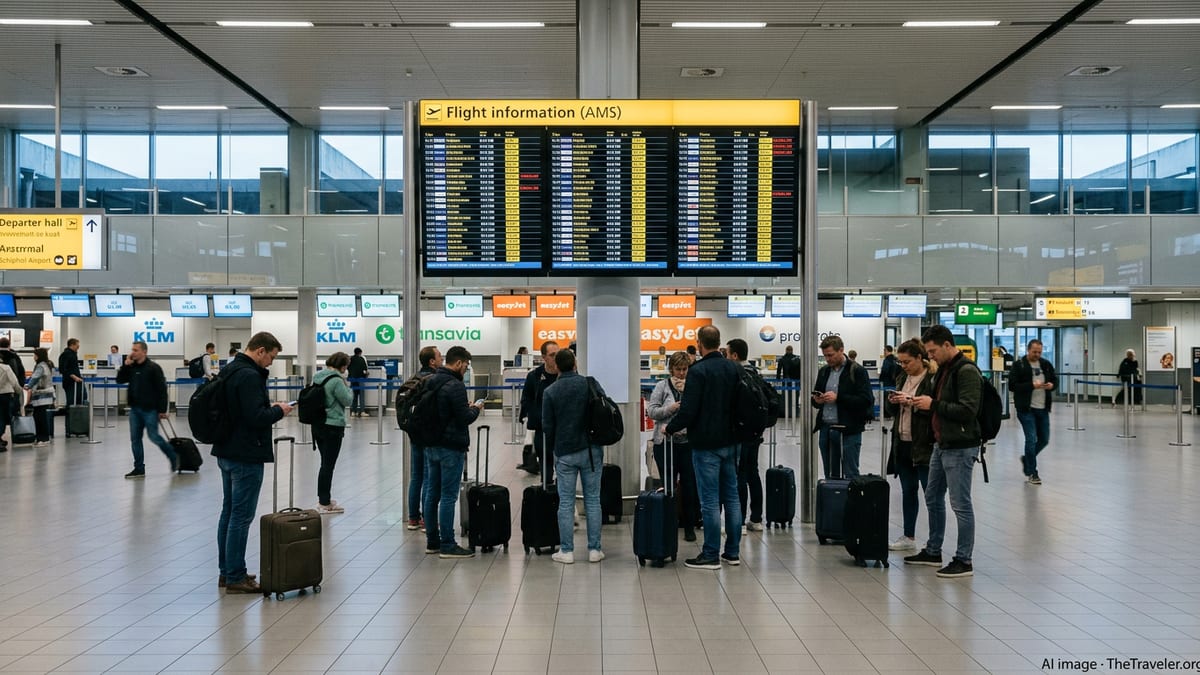
Widespread Disruption Across Key European Gateways
Operational data from flight tracking platforms and airport performance dashboards indicates that hundreds of cancellations and several thousand delays have rippled across major European airports, notably London Heathrow, Paris Charles de Gaulle, Frankfurt, Rome Fiumicino, Amsterdam Schiphol, Vienna and Zurich. The combined impact is being felt most sharply on short and medium haul routes connecting the United Kingdom, Germany, France, Italy, Austria and the Netherlands.
European network statistics and airline schedules show that British Airways, Lufthansa, Air France and ITA Airways, along with partner and codeshare airlines, have all experienced service disruption. While the total number of affected flights represents a fraction of daily European traffic, the concentration of irregular operations at a handful of hubs has amplified knock on effects across the region’s tightly timed flight banks.
Reports from passenger forums and aviation monitoring sites describe missed connections, last minute rebookings and extended airport waits as delays early in the operating day cascaded into subsequent rotations. With many services operating near capacity at the start of the summer holiday period, options for same day reaccommodation have been limited on some routes.
Publicly available airport movement figures show that the largest European hubs already handle more than a thousand flights per day in late spring and early summer, meaning that even a relatively small percentage of cancellations and severe delays can disrupt travel plans for tens of thousands of passengers.
Weather, Congested Skies And Operational Strain
Analysis of recent network operations reports and aviation agency updates points to a familiar mix of causes behind the latest disruption. Periods of unsettled weather in parts of Western and Central Europe have required temporary airspace restrictions and runway flow limits, particularly during peak morning waves around London and Paris.
At the same time, European air traffic management summaries highlight capacity and staffing issues within air traffic control as a major driver of airborne and ground holding across sections of the continent. In recent weeks, constraint notices have frequently cited limited sector capacity in French and German airspace, which can quickly translate into knock on delays for flights that neither depart from nor arrive in those countries but must transit their skies.
Operational pressures within individual airlines are adding another layer of complexity. Industry coverage has noted that the Lufthansa Group is already restructuring its summer schedule, including targeted cuts to short haul services, in response to cost pressures such as elevated fuel prices. When combined with weather related disruption or flow restrictions, a leaner schedule can reduce an airline’s flexibility to swap aircraft and crews to recover from early day irregularities.
Observers also note that continued tight staffing across ground handling, security and airport operations at several hubs limits the margin for absorbing unexpected surges of delayed traffic. As aircraft and passengers arrive off schedule, bottlenecks can appear in boarding, baggage delivery and connection processing, further slowing recovery.
Flag Carriers And Hubs Under Particular Pressure
The latest wave of irregular operations has been most visible at the home bases of Europe’s largest legacy airlines. British Airways services through London Heathrow and London Gatwick have reported clusters of cancellations and late running departures, while Lufthansa flights through Frankfurt and Munich have faced rolling delays as aircraft turnarounds and crew duties are squeezed by earlier disruptions.
In France and Italy, publicly available flight status boards show Air France and ITA Airways dealing with similar patterns at Paris Charles de Gaulle and Rome Fiumicino. As both carriers rely heavily on hub and spoke structures to feed long haul networks, delays on short haul feeder flights from destinations such as London, Amsterdam, Vienna or smaller regional airports can threaten onward connections to North America, Africa and Asia.
Secondary hubs and alliance partners are being drawn into the turbulence. Swiss in Zurich, Austrian Airlines in Vienna, Brussels Airlines in Brussels and KLM in Amsterdam have each absorbed additional rebooked passengers where alliance agreements and interline deals make space available. While this helps some travelers reach their destinations sooner, it can also fill aircraft that might otherwise have provided a buffer for later disruption.
For airlines, protecting long haul operations often becomes the priority when irregularities mount, since these flights carry large numbers of passengers over great distances and are expensive to reposition or cancel. That can result in upstream cancellations concentrated on shorter European sectors, which is consistent with the pattern of more than 300 cancelled flights across the continent while most intercontinental departures continue to operate, albeit sometimes behind schedule.
Knock On Effects For Passengers Across Europe
The immediate impact for travelers has been a familiar mix of long queues at airline service desks, congested customer service phone lines and rebooking challenges on popular routes. Travel discussion boards and social media posts from recent days describe passengers being offered alternative itineraries that route them through different hubs, switch them to partner airlines or delay arrival by a full day when same day options are not available.
With some carriers already running near full loads at the start of the peak holiday season, disruption at a few major airports can quickly ripple outward, affecting passengers starting their journeys in smaller cities such as Glasgow, Bordeaux or Naples who rely on a single daily connection through a hub like Frankfurt, Paris or London. When that feeder flight is cancelled or heavily delayed, the entire trip can unravel.
Overnight delays, missed cruises or tours and disrupted business trips are among the reported consequences. Travelers connecting between non European regions through European hubs, for example between North America and Africa or Asia via London, Paris or Frankfurt, are also being swept up in the irregularities when their transatlantic or intra European connections misalign.
Airports have urged passengers, through public advisories and travel updates, to arrive early, monitor flight status closely and be prepared for extended dwell times in terminals during periods of significant disruption. Some hubs have also temporarily relaxed certain cut off times for baggage drop or check in on days when queues are particularly long.
What Travelers Can Do As Disruption Continues
Given the likelihood of further localized waves of disruption triggered by weather, congestion or industrial actions over the summer, travel experts advise passengers to build extra resilience into their itineraries. Publicly available guidance from passenger advocacy groups recommends avoiding tight connections, especially when transferring between airlines or between separate tickets, and considering earlier departures on the same day when onward connections are important.
European and United Kingdom air passenger rights frameworks, commonly referenced as EU261 and UK261, continue to provide a baseline of protection in many cases of cancellation and long delay. These regulations can entitle travelers departing from European Union and UK airports, or flying into them on qualifying carriers, to care such as meals and accommodation and, in some circumstances, fixed sum financial compensation when disruption is within an airline’s control.
Travelers are encouraged by consumer organizations to keep detailed records when disruption occurs, including boarding passes, written confirmations of cancellations or delays and receipts for any out of pocket expenses. Such documentation can be important when pursuing claims with airlines or, if necessary, with alternative dispute resolution bodies and national enforcement agencies.
As Europe heads deeper into the 2026 summer travel season, industry data suggests that air traffic volumes will remain high while systemic constraints in air traffic management and airport staffing persist. That combination means that even on days when only a few hundred of the thousands of scheduled flights are cancelled, the aggregate effect on travelers of thousands of delays across the continent is likely to remain significant.