


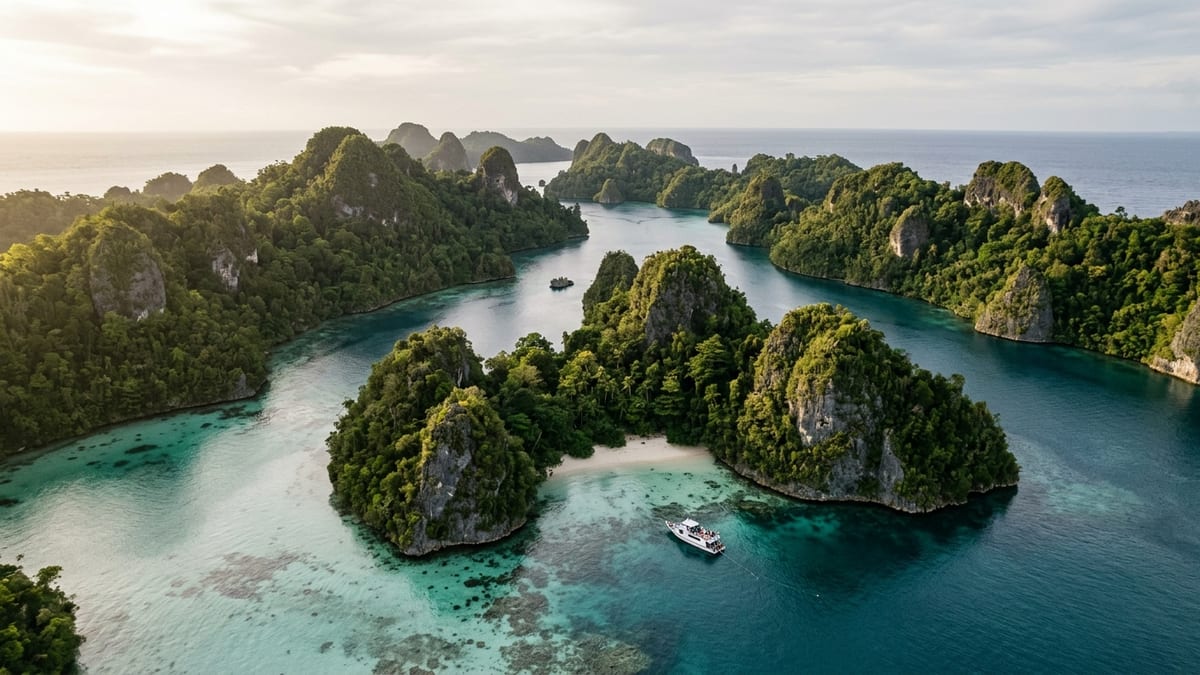
From the air, the Wayag Islands look almost unreal: a maze of limestone pinnacles rising from electric-blue water at the far northern edge of Indonesia’s Raja Ampat. Up close, the scene feels less like a fantasy postcard and more like a remote, very real seascape that takes time, money and patience to reach. This is not an easy tropical escape, but for travelers willing to work through the logistics, Wayag offers one of the most distinctive coastal landscapes on earth.
Where Wayag Islands Are And Why They Look Unreal
Wayag sits in the far northwest of Raja Ampat, off the northern tip of Waigeo Island in West Papua Province. When people picture Raja Ampat’s signature view, they are usually thinking of Wayag: clusters of steep, jungle-clad limestone islets rising straight out of clear turquoise water in a sheltered lagoon system. The islands sit near deep ocean channels that help keep the water vividly clear and give the coastline a sharp, sculpted appearance rather than the long, flat beaches many travelers associate with Indonesia.
Geologically, Wayag is made up of karst limestone that has been eroded over time into steep cones and knuckles, some only a few dozen meters across. Between these formations lie narrow channels, shallow sand-bottom bays and pockets of mangrove, all threaded by shifting patterns of current. From sea level, the eye is often at the same height as the lower peaks, which creates a feeling of being surrounded on all sides by small, forested mountains. On still mornings the rock faces reflect almost perfectly in the water and the entire lagoon feels like a contained basin.
Unlike the Fam or Piaynemo viewpoints in central Raja Ampat, Wayag’s landscape is more fragmented and enclosed. There are fewer wide sandbars and more sheer rock faces meeting the sea at abrupt angles. Many visitors notice that the water color changes quickly from milky turquoise in shallow sand patches to dark blue where the bottom drops away into channels that connect to the open ocean. That constant interplay between shallow and deep gives the area its striking color palette and also shapes how boats can move through the maze of islands.
What It Actually Feels Like To Be There
Arriving in Wayag is usually a slow, sensory shift rather than a dramatic reveal. Boats approach through open sea where long swells roll in from the Pacific, then the water gradually calms as you pass low headlands and small green islets. Once inside the main lagoon, the surface can feel almost glassy, with only the wake of your boat disturbing reflections of limestone towers and overhanging jungle. The engine noise echoes off the cliffs, so even at a moderate cruising speed the soundscape feels contained and surprisingly quiet once the boat throttles back.
At the ranger station jetty, visitors often notice how clear and shallow the water is near shore. On many days you can see juvenile blacktip reef sharks circling below the wooden walkways, along with giant clams and the occasional turtle gliding through the shallows. Guides sometimes invite guests to step down into knee-deep water, where sand feels soft underfoot and small fish dart around ankles. It is an intimate, almost domestic introduction to a place that looks intimidating from far away.
The viewpoints themselves feel more physical than most travelers expect from photographs. Access usually involves a short but steep hike up rough limestone, often in hot, humid conditions. There are sections where you need to use hands as well as feet, and the rock can be sharp. At the top, though, the world opens up into a 360-degree spread of green humps floating in turquoise water, with distant surf breaking on outer reefs. The air up here often carries a faint salt haze, and in the late afternoon the light softens enough that the entire lagoon seems to glow rather than sparkle.
Despite the global reputation of Raja Ampat, the overall pace in Wayag is slow and unhurried. There are no bars, no restaurants, no souvenir shops lining the water. Most of the day is spent either on the boat, in the water or on a single stretch of sand near the ranger station, usually shared with only a handful of other visitors. Phone signal is often absent or patchy. Conversations drift toward the practical details of the sea and sky: how clear the water is compared to yesterday, whether the swell is rising, what time to start the hike to avoid the harshest sun.
How Travelers Reach Wayag Islands
Reaching Wayag requires several stages, which is part of why the islands remain relatively quiet despite their photogenic appeal. Most travelers start in Jakarta, Bali or Makassar and fly to Sorong in West Papua, often arriving early in the morning after an overnight or pre-dawn connection. From Sorong, boats and ferries fan out across Raja Ampat, but Wayag lies so far to the north that it is not reachable as a quick day trip from town for independent travelers.
The most common route involves traveling from Sorong to Waisai, the main town on Waigeo and the administrative hub for Raja Ampat. This leg is usually done by public fast ferry, which takes roughly two hours across open water. In Waisai, visitors either meet a liveaboard vessel, connect with a resort transfer boat or join a pre-arranged speedboat charter heading north. It is technically possible to charter a private speedboat from Sorong directly to Wayag, but the distances are long, fuel costs are high and operators are cautious about sea conditions, so such trips are usually arranged by high-end resorts or expedition operators rather than on a casual basis.
For many travelers, a liveaboard is the most practical way to include Wayag in an itinerary. Boats that run 9 to 12 night routes in northern Raja Ampat often depart Sorong, spend a few days in the Dampier Strait and around central Waigeo, then push north toward Kawe and Wayag when weather conditions look favorable. This allows the captain to wait for calmer seas before attempting the open-water crossing. On these trips, guests might wake to find themselves already anchored inside Wayag’s lagoon after an overnight steam, with breakfast served on deck while the first light hits the karst peaks.
Travelers based at northern Raja Ampat resorts and homestays sometimes visit Wayag on full-day speedboat excursions. For example, some eco-resorts located on Yeben or other small islands north of Waigeo advertise dedicated Wayag trips that start just after sunrise. Guests typically face two to three hours in a speedboat each way, depending on sea state, with fuel drums stacked at the stern and spray occasionally blowing across the bow. The return leg can feel long after a hot day of climbing and snorkeling, which is why many operators insist on minimum fitness levels and a willingness to accept weather-related changes or cancellations.
What You Can Do Once You Arrive
A visit to Wayag usually revolves around three core experiences: the viewpoints, time in the water and time on the sand near the ranger station. Most itineraries start with a check-in at the ranger post, where staff note boat details and verify that marine park permits are in order. After that, guides often time activities to match the tide and sun, since steep climbs are more comfortable in early morning or late afternoon and certain snorkeling sites are calmer at particular stages of the tide.
Climbing to the famous viewpoints is the highlight for many visitors. The route is short in distance but involves a sustained scramble over jagged limestone, often without handrails. Guides typically suggest sturdy sandals or light hiking shoes rather than flip-flops, and some travelers wear thin gloves to protect their hands on the rock. At the summit, there are usually several natural ledges where small groups can sit and take in the landscape without crowding each other. The experience feels less like a single photo stop and more like an extended pause, with most people staying for 20 to 40 minutes as guideboats and kayaks trace small wakes across the lagoon below.
Down at sea level, snorkeling reveals a different side of Wayag. While it is not known for the dense, high-energy reef walls of central Raja Ampat, the lagoons host healthy coral gardens in shallow, often sheltered water. Many visitors first slip into the water from the beach near the ranger station, where seagrass beds transition into coral patches and juvenile blacktip reef sharks patrol the shallows. On calm days guides may take guests by tender to outer reefs where visibility commonly reaches 15 to 25 meters, with schools of reef fish, giant clams and occasional turtles cruising past. Currents here can be variable, so competent swimming and comfort with snorkeling in open water are important.
There is also value in simpler moments: walking along a small arc of white sand as the tide recedes, watching crabs retreat into holes, or sitting in the shade of coastal trees while the crew prepares coffee on the boat. In between activities, visitors often find themselves just watching the shifting light on the rock faces and the way small cumulus clouds cast moving shadows across the lagoon. On liveaboards, evenings in Wayag can be particularly atmospheric, with anchor lights from only one or two other vessels glimmering in the distance and the sound of insects from the forested slopes carrying clearly across the water.
Why This Trip Requires Planning
Wayag is both logistically and financially demanding compared to many other Indonesian destinations. The cost structure starts before you even leave port, with mandatory marine park entry fees for Raja Ampat that support conservation and management of the protected area. Visitors then need at least one domestic flight to Sorong, plus ferry tickets, resort or homestay stays in other parts of Raja Ampat and the cost of the actual Wayag visit, which is usually packaged with accommodation or liveaboard rates.
As a very rough guideline, travelers commonly spend several hundred US dollars per person just to reach Raja Ampat from other parts of Indonesia, depending on origin and season. Liveaboards that include Wayag on their itineraries often fall into the mid to high price brackets, with multi-day trips priced accordingly. Northern resorts that run full-day speedboat trips to Wayag must factor in fuel, staff wages and long hours on the water, so day excursions are rarely cheap add-ons. Some homestays and budget guesthouses cannot offer Wayag at all because the economics simply do not work with small groups and low nightly rates.
Time is another important element. Most visitors who successfully reach Wayag give themselves at least one full week in Raja Ampat, often longer, to allow for weather-related changes and the long travel chain. Flights into Sorong can be delayed or rescheduled, ferries may shift departure times and rough seas occasionally force liveaboards to rearrange routes. Travelers who try to squeeze Wayag into a very tight schedule risk missing the window when seas and winds are favorable, which is why operators often advise building in an extra day in Sorong or Waisai at the start or end of the trip.
Permits and permissions also factor into planning. All tourists entering Raja Ampat’s marine park must obtain a valid entry card, usually arranged by resorts, liveaboards or tour operators before departure. Boats operating in the area require their own permits, and visits to Wayag pass through zones with specific rules around anchoring, fishing and wildlife interaction. Because regulations evolve in response to conservation needs and visitor numbers, it is important to work with operators who stay current with local requirements rather than relying on second-hand reports from older guidebooks or blog posts.
What Makes Wayag Different From Other Tropical Destinations
Many travelers compare Wayag with other well-known limestone seascapes in Southeast Asia, such as El Nido in the Philippines or parts of Thailand. The immediate difference is the sense of scale and emptiness. There are no townships tucked behind the cliffs, no chains of beach bars lining long bays, and no constant shuttle traffic of small tour boats. Instead, Wayag feels like a high-relief seascape with only a few anchor points of human presence, mainly the ranger station and the occasional liveaboard or expedition yacht.
The underwater environment also carries a particular character. Raja Ampat sits within the Coral Triangle, an area regarded by marine scientists as one of the richest zones of biodiversity in the ocean. In and around Wayag, snorkelers and divers can see a mix of hard and soft corals, dense schools of reef fish and emblematic species like giant clams and reef sharks in relatively shallow water. While other parts of Raja Ampat, such as Misool in the south, may offer even more intense reef density, Wayag’s appeal is the pairing of this marine life with a topside panorama that feels completely singular.
Another distinction is the way Wayag is woven into multi-day journeys rather than standing alone as a self-contained destination. Few people come here for a week of sunbathing in one place. Instead, Wayag usually appears as a highlight on an itinerary that also includes central Dampier Strait dive sites, village homestays on islands like Kri or Gam, or birdwatching for red birds of paradise in the forests of Waigeo. That broader journey means visitors tend to be more self-selecting: they have already committed to a more complex and sometimes physically demanding style of travel.
Finally, expectations around comfort are different. Accommodation in the immediate vicinity of Wayag is limited to boats and a small number of remote stays elsewhere in northern Raja Ampat, many of which offer simple rooms, intermittent electricity and set meal times rather than full resort amenities. Travelers who need constant connectivity, a wide choice of restaurants or spa facilities will likely be happier in Bali or other more developed islands. Wayag is a destination for people who value scenery, quiet and time in or on the water over conventional holiday infrastructure.
Environmental Considerations And Visitor Impact
The Wayag Islands sit within a network of marine protected areas that cover much of Raja Ampat. Fees collected from visitors help fund patrols, reef monitoring and community programs that support sustainable fishing and tourism. Over the past decade, local authorities and conservation groups have tightened regulations on activities such as anchoring on coral, fishing in no-take zones and handling marine life. Travelers who come to Wayag become temporary guests in a carefully managed ecosystem, and their choices have real consequences for reefs and wildlife.
On a practical level, this means accepting certain restrictions without viewing them as inconveniences. Boats are asked to use mooring buoys where available instead of dropping anchors, even if that means waiting for space or adjusting schedules. Some bays are closed to fishing or require special permission for scientific activities, and snorkeling briefings often stress the importance of not standing on coral, not chasing turtles or sharks and keeping a respectful distance from giant clams. These guidelines may feel familiar to experienced divers and snorkelers, but in Wayag they are part of a broader strategy to keep a fragile environment intact under increasing pressure.
On land, visitor footprints are most visible at the viewpoints. The steep limestone slopes are vulnerable to erosion where many people follow the same path, particularly in wet weather. Rangers and guides now encourage guests to stick to established routes, avoid trampling vegetation and descend carefully to reduce rockfall. Simple choices, such as wearing proper footwear to reduce slips and falls, also help limit the need for emergency interventions that can strain limited local resources.
Waste management is another ongoing concern. Liveaboards and tour boats operating in Raja Ampat are expected to manage their own trash, store it onboard and dispose of it properly back in Sorong or other ports with basic facilities. Visitors can support this by minimizing single-use plastics before they arrive, using refillable bottles and carrying small personal trash bags for snack wrappers or used sunscreen sachets. None of these steps are complicated, but in a remote setting like Wayag, each small decision contributes to the overall health of the ecosystem.
Who Wayag Is Best Suited For
Given the effort and cost involved, Wayag suits travelers who enjoy journeys as much as destinations. People who already feel comfortable on boats, who do not mind variable weather and who can adapt to changing daily plans tend to get the most from the experience. This might include divers who have long dreamed of Raja Ampat, photographers with a particular interest in coastal landscapes, or adventurous couples willing to trade convenience for distinctive scenery and quiet.
Physical readiness matters more here than in many city breaks or resort holidays. The climbs to the viewpoints are short but steep, the sun can be intense even on cloudy days and time in the water usually involves swimming against light current at some point. Travelers who can manage uneven stairs, walk on rocky surfaces and climb for 15 to 30 minutes at a moderate pace will find the experience more enjoyable. Those with mobility issues or medical conditions that make balance and heat exposure challenging should discuss options carefully with operators before booking and consider whether simply viewing Wayag from sea level is sufficient.
Budget-conscious travelers who are used to stretching money in Southeast Asia should recalibrate expectations. Raja Ampat in general, and Wayag in particular, are outliers in terms of cost within Indonesia. While it is possible to reduce expenses by staying in homestays instead of high-end resorts and focusing on central regions rather than remote northern outposts, a trip that specifically targets Wayag will almost always involve higher per-day spending than more accessible islands such as Lombok, Flores or even parts of the Banda Sea.
Families can and do visit Wayag, especially via liveaboards or private boat charters, but the experience is better suited to older children and teenagers than very young kids. Long boat rides, limited shade on limestone peaks and the absence of structured onshore activities mean that patience and self-entertainment skills are useful. Parents should also be honest about everyone’s swimming abilities, as time in the water is one of the most rewarding parts of any visit.
The Takeaway
Wayag is one of those places where iconic photographs only tell part of the story. The reality on the water includes early departures, long boat rides, damp clothing, steep climbs and a constant need to adapt to weather, currents and changing plans. Yet for travelers who accept those variables, the reward is a landscape that feels both improbable and absolutely grounded in the natural forces that created it.
Standing on a jagged limestone ridge with the lagoon spread out below, it becomes clear why this corner of Raja Ampat has become a symbol for the wider archipelago. The combination of karst peaks, clear water and living coral reef is not just visually striking; it is also a reminder of how geology, ocean currents and careful human management can align to create something rare. Wayag will never be a quick or inexpensive side trip, but for those willing to invest time, planning and respect, it offers a travel experience that lingers long after the boat returns to port and the last signal bar disappears from a phone screen.
FAQ
Q1. Where exactly are the Wayag Islands within Raja Ampat?
Wayag lies off the northwest tip of Waigeo Island in the northern part of Raja Ampat, in Indonesia’s West Papua Province. It is one of the most remote clusters within the marine park, sitting closer to open Pacific waters than to the more frequently visited central islands around the Dampier Strait.
Q2. How many days do I need to include Wayag in a Raja Ampat itinerary?
Most travelers should plan at least a week in Raja Ampat if they hope to include Wayag, with 9 to 12 days offering more flexibility. This allows time to reach Sorong, transfer to Waisai or a liveaboard, navigate the long sea journey north and still enjoy central sites like Kri, Gam or Arborek without rushing.
Q3. Is it possible to visit Wayag on a day trip from Sorong?
In practice, a same-day return from Sorong is extremely difficult and rarely offered to independent travelers because of the long distances and open-water conditions. Most visits are organized through liveaboards or resorts and homestays that are already located further north in Raja Ampat. If an operator advertises a direct day trip from Sorong, expect high costs, a very early start and strict weather-dependent conditions.
Q4. Do I need to be an experienced diver to enjoy Wayag?
You do not need to dive at all to appreciate Wayag, and many visitors simply snorkel or stay at the surface. However, comfortable swimming and basic snorkeling skills are important, as currents in Raja Ampat can be stronger than in many other tropical destinations. Divers who join liveaboards that include Wayag often already have some experience with current and drift dives, but the landscape and viewpoints alone make the journey worthwhile for non-divers.
Q5. What kind of physical condition is required for the Wayag viewpoints?
The hikes are short but steep, with rough, sometimes sharp limestone underfoot and limited shade. Travelers should be able to climb steadily for 15 to 30 minutes, balance on uneven surfaces and handle hot, humid conditions. Those with knee, ankle or balance issues should discuss alternatives with guides, such as enjoying the lagoon views from lower vantage points or remaining at sea level.
Q6. How much does a Wayag visit typically cost?
Costs vary widely, but travelers often combine marine park permits, domestic flights, accommodation and boat transport into a single overall budget rather than isolating the price of Wayag alone. As a very general indication, a multi-day Raja Ampat trip that includes Wayag on a mid-range liveaboard or from a remote eco-resort will usually be significantly more expensive than a comparable-length holiday in Bali or Komodo, reflecting fuel prices, logistics and the area’s remoteness.
Q7. When is the best time of year to visit Wayag?
Raja Ampat is a year-round destination, but many trips that include Wayag run between roughly October and April, when seas are often calmer in the north. Conditions vary by year, and liveaboard operators update routes according to real-time weather forecasts, so it is wise to discuss timing and expectations with your chosen company rather than relying solely on fixed “best month” lists.
Q8. Are there any accommodations on Wayag itself?
There are no conventional hotels or large resorts built directly on Wayag’s main islands. Visitors usually sleep on liveaboard dive boats or stay at remote resorts and homestays on other islands further south, then join long day trips to Wayag. This lack of permanent tourism infrastructure is one reason the area still feels quiet compared to more developed archipelagos.
Q9. What permits or fees do I need before visiting?
All visitors to Raja Ampat must obtain a marine park entry card, often arranged through resorts, homestays or liveaboard operators before arrival or on check-in. Boat operators also need their own permits to operate inside the marine protected area. Regulations and fees are reviewed periodically, so travelers should confirm current requirements with their booked operator well before departure.
Q10. How can I reduce my environmental impact when visiting Wayag?
Simple steps go a long way: travel with reef-safe sunscreen, avoid touching or standing on coral, follow ranger and guide instructions, and pack out all personal trash. Choosing reputable operators who respect no-take zones, use moorings instead of anchoring on reefs and support local communities also helps ensure that the Wayag Islands remain healthy for future visitors and for the people who call Raja Ampat home.