


More news on this day
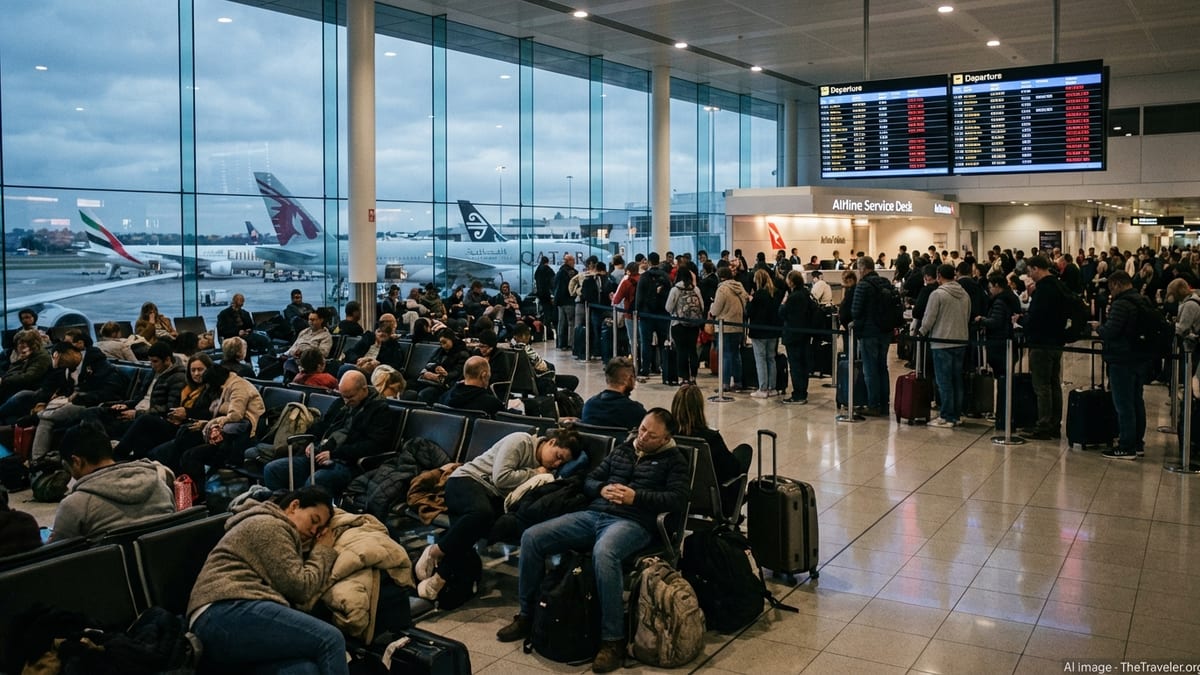
Thousands of travelers across Australia and New Zealand are facing fresh disruption as a combination of winter storms, strong winds and staffing constraints triggers widespread flight cancellations and delays from Sydney and Melbourne to Auckland and key regional gateways.
Get the latest news straight to your inbox!
Severe Weather Systems Bear Down on Key Hubs
Winter weather has intensified over the first weekend of July, with forecasters pointing to a deep low over New Zealand’s South Island and active warnings across parts of eastern Australia. Publicly available information from regional meteorological services shows heavy rain, strong wind and snow alerts in place from July 5 to July 7, affecting air corridors feeding major hubs such as Auckland, Christchurch and Wellington, as well as routes linking New Zealand with Australia.
These conditions are adding pressure to already busy school holiday traffic. Strong crosswinds, low cloud and turbulence around New Zealand’s main trunk routes are prompting precautionary schedule changes, particularly at times when runway operations are constrained. Aviation weather charts published for the Australia and New Zealand flight information regions also highlight bands of significant weather across the Tasman Sea, increasing the risk of flow‑on delays for services connecting Sydney and Melbourne with Auckland, Wellington and Christchurch.
Regional gateways are feeling the impact as aircraft and crews are repositioned. Routes between Auckland and tourist destinations such as Queenstown and regional centers are vulnerable to low visibility and challenging terrain, which often results in conservative operating thresholds during winter storms. When those flights are delayed or diverted, aircraft can be out of position for onward legs back to Australia, amplifying disruption at larger airports.
Industry observers note that although airlines routinely build weather buffers into winter schedules, the combination of a deep low over New Zealand and unsettled systems over southeastern Australia is testing resilience just as demand peaks, leaving limited spare capacity to recover when multiple sectors are affected on the same day.
Sydney and Melbourne Confront Capacity Strains
In Australia, reports from local business and aviation outlets indicate that Sydney Kingsford Smith Airport experienced renewed disruption on July 5 following staffing gaps at the air traffic control tower. The government‑owned air navigation provider has faced intermittent shortages this year, and recent coverage suggests this latest episode has again forced temporary ground stops and reduced arrival and departure rates at the country’s busiest airport.
Lower runway acceptance rates typically lead to knock‑on delays for domestic flights to and from Melbourne, Brisbane and regional New South Wales, while international services to New Zealand can be held on the ground waiting for departure slots. With many carriers operating tight turnarounds, a late‑running arrival into Sydney or Melbourne can quickly cascade into downstream cancellations as duty hour limits for flight and cabin crews are reached.
Melbourne Airport has also reported weather‑related operational constraints in recent days, with low cloud and gusty winds periodically slowing movements. When combined with congestion originating in Sydney, these conditions have produced rolling delays for flights bound for New Zealand, including Auckland and Christchurch, as well as for popular Australian leisure gateways that rely on aircraft cycling through the major hubs.
Airlines for Australia and New Zealand, an industry group, has previously cautioned that repeated disruption episodes at Sydney indicate that staffing resilience has become a structural challenge. Public commentary from the group points to limited backup capacity during peaks, leaving little margin when unexpected sick leave or adverse weather coincides with busy travel periods.
Air New Zealand, Qantas and Jetstar Adjust Operations
Air New Zealand, Qantas and Jetstar are all navigating the latest bout of disruption while operating largely restored trans‑Tasman and domestic networks. Data services tracking individual flights show selected services between New Zealand cities and Australian gateways experiencing revised departure times across the weekend, with some evening and late‑night rotations particularly exposed when delays accumulate.
Recent incident reporting around Air New Zealand includes a precautionary diversion on a Christchurch service earlier in July, illustrating how conservative safety responses can remove an aircraft from its planned pattern for part of the day. When such events occur during a period of unsettled weather, the airline’s ability to recover schedules on trunk and regional routes can be constrained, further affecting connectivity for travelers transiting between domestic and international legs.
For Qantas and its low‑cost subsidiary Jetstar, publicly released on‑time performance statistics from government sources show that cancellations remain a small percentage of total sectors, but delays are still a regular feature of the network. While Jetstar’s New Zealand reliability has improved compared with earlier years, the carrier operates a high‑utilization model that leaves limited slack when inbound aircraft arrive late due to weather or air traffic restrictions at Sydney, Melbourne or Auckland.
Consumer discussions on aviation forums and social media indicate growing frustration with same‑day schedule changes, especially where passengers feel information is incomplete or slow to update in airline apps. However, the same discussions also highlight that disruption is being felt across major brands, with no single carrier immune when the wider system is strained by weather and staffing limitations.
Regional Airports and Tourism Routes Hit Hard
Beyond the major capitals, regional airports in both countries are experiencing secondary impacts as aircraft and crews are shuffled to protect key trunk and international services. Routes linking Sydney and Melbourne with destinations such as Hobart, the Gold Coast and smaller New Zealand cities are seeing increased risk of short‑notice schedule changes when operational planners prioritize capacity on high‑demand corridors.
In New Zealand, regional gateways that depend on turboprop connections to Auckland, Wellington and Christchurch are particularly vulnerable when strong winds or low cloud restrict operations. If early‑morning flights are cancelled or delayed, passengers can miss long‑haul departures to Australia and beyond, often requiring overnight accommodation or rebooking on flights the following day. Travel advisories from airports and airlines are urging passengers on these routes to allow extra connection time and to monitor status updates closely.
Tourism operators in ski and coastal regions are watching the situation closely as winter holiday bookings ramp up. Weather‑related closures at airports serving alpine resorts or island destinations can quickly translate into lost nights of accommodation and missed activities. Industry groups in both countries have in recent years called for more transparent reporting of disruption metrics and clearer compensation frameworks to help travelers and businesses plan for increasingly volatile conditions.
Analysts note that as climate variability drives more frequent episodes of intense wind, rain and snow across Australasia, traditional seasonal planning assumptions may no longer be sufficient to protect regional routes. Airlines are being pushed to consider additional spare capacity, more flexible crew rostering and closer coordination with airport operators to safeguard connectivity for smaller communities.
Travelers Face Longer Queues and Complex Rebookings
For passengers, the immediate effects of the current wave of cancellations and delays are manifesting in longer queues at check‑in, security and customer service desks across Sydney, Melbourne and Auckland. When multiple flights are disrupted at once, airport terminals can quickly become congested as travelers seek rebooking options or information about overnight accommodation and meal support.
Reports from traveler forums suggest that those with flexible itineraries and direct bookings through airline websites are faring better when it comes to being moved onto alternative services. Third‑party bookings or complex multi‑airline itineraries appear more difficult to re‑accommodate during peak disruption, often requiring additional calls or visits to service counters once passengers reach the airport.
Consumer advocates in Australia and New Zealand continue to draw attention to the gap between passenger expectations and the compensation regimes that apply in each country. While there are established rules around refunds and rebooking when flights are cancelled, assistance for consequential losses such as missed events or prepaid accommodation can vary significantly depending on the cause of disruption and the fare type purchased.
With meteorological agencies indicating that unsettled conditions are likely to persist into the early part of the week, airlines are advising customers to check flight status regularly on the day of travel, arrive early at the airport and consider travel insurance that specifically addresses weather and operational disruption on trans‑Tasman and domestic routes.