


More news on this day
Passengers at Montreal-Pierre Elliott Trudeau International Airport faced a difficult travel day as 92 delays and 15 cancellations disrupted flights operated by Air Canada, WestJet, Air France, Lufthansa and other carriers on Monday, affecting connections to Toronto, New York, Paris, London and several other major hubs.
Get the latest news straight to your inbox!
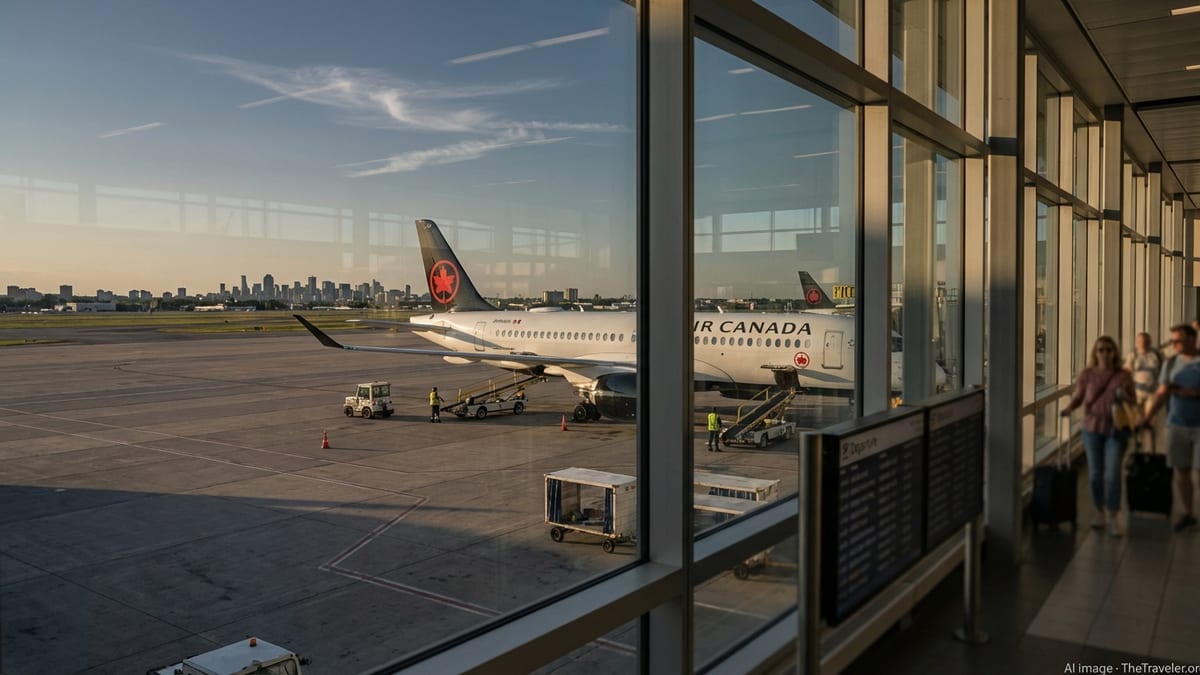
Knock-on Disruptions Hit Key North American and European Routes
Publicly available flight-tracking boards for Montreal-Trudeau on Monday showed a broad pattern of disruption affecting both domestic and international services. Morning and midday bank departures to Toronto and New York experienced rolling delays, with some services pushed back by more than an hour. A smaller number of flights were ultimately cancelled, removing key options for travelers attempting to make connections at larger hubs.
Long-haul routes were not spared. Services to major European gateways, including Paris and London, saw a combination of late departures and altered schedules. Air Canada, Air France and Lufthansa all appeared among the affected operators, alongside WestJet and several smaller international carriers with transatlantic and transborder links out of Montreal.
The wave of schedule changes resulted in missed onward connections for some passengers and forced others to seek last-minute rebookings. With Montreal-Trudeau acting as a critical connection point for eastern Canada, interruptions on routes to Toronto Pearson, LaGuardia, Newark and major European hubs quickly cascaded across wider networks.
While the total of 92 delayed flights significantly outnumbered the 15 outright cancellations, even short pushbacks of 30 to 60 minutes added strain to gate operations and baggage handling, compounding the sense of congestion in terminal areas.
Weather, Staffing and Congested Airspace Among Likely Factors
Available meteorological data for Montreal-Trudeau on Monday indicated periods of low cloud and light rain around peak travel times. Although conditions were far from severe, even moderate shifts in visibility and wind can trigger minor flow-control measures, particularly during busy departure and arrival waves. Such adjustments often translate into incremental delays that accumulate throughout the day.
Industry analysts have repeatedly highlighted the sensitivity of Canadian hubs to what are often described as cascading delays, where a single late inbound aircraft or short disruption in air traffic control programs can ripple across dozens of departures. Montreal-Trudeau, while smaller than Toronto Pearson, still handles several hundred daily flights operated by nearly 40 airlines, making it vulnerable when schedules are tightly packed.
Operational challenges extend beyond weather and airspace. Airlines serving Montreal have been adjusting schedules and capacity in response to higher fuel costs, evolving demand patterns and staffing pressures in key roles such as pilots, cabin crew and maintenance personnel. Any imbalance between resources and scheduled flying can reduce the margin for absorbing disruptions, especially during peak travel periods.
Recent performance updates on Canadian air transport have shown generally strong on-time rates, but also underline how quickly indicators soften when multiple stressors converge. A single day of intensified delays and cancellations, such as those recorded on Monday, fits within a broader pattern of uneven recovery and ongoing operational fragility across the sector.
Air Canada, WestJet, Air France and Lufthansa Under Scrutiny
Major carriers with a strong presence at Montreal-Trudeau, including Air Canada and WestJet, drew particular attention from travelers monitoring airport departure boards. Air Canada operates the largest share of routes from the airport, so any systemic disruption tends to be most visible across its domestic and international network. WestJet, while smaller at Montreal than at some western hubs, also features prominently on routes to Toronto and key leisure and business destinations.
European flag carriers such as Air France and Lufthansa, which link Montreal directly to Paris and Frankfurt and connect on to London and other European cities, were among those whose schedules showed delays or timing adjustments. For passengers with tight connection windows in Europe, even relatively modest late departures from Montreal increased the risk of missed onward flights.
Observers note that high-profile disruptions can intensify debate about airline reliability and customer service standards. Recent public discussion in Canada has focused on how carriers classify delays, whether issues are within their control and what level of assistance passengers should expect for rebooking, accommodation and meal support when flights do not operate as planned.
The events at Montreal-Trudeau on Monday are likely to sustain scrutiny of how airlines communicate with their customers during irregular operations. Long queues at service desks and busy call centers can add to the stress of disrupted travel, particularly when multiple carriers are affected at the same time.
Passenger Rights and Compensation Rules in Focus
The cluster of delays and cancellations at Montreal-Trudeau has also renewed attention on Canada’s Air Passenger Protection Regulations. These rules outline obligations for airlines when flights are delayed or cancelled, including standards for communication, minimum levels of care and, in some cases, financial compensation. The level of responsibility depends on whether a disruption is considered within the airline’s control, within its control but required for safety, or outside its control.
Travel rights specialists point out that weather-related and air traffic control restrictions are typically categorized as outside an airline’s control, which limits eligibility for compensation but does not remove requirements to keep passengers informed and to complete itineraries as soon as possible. Mechanical issues, crew scheduling problems and certain operational decisions, by contrast, may fall within the carrier’s responsibility under the framework.
With multiple carriers impacted at Montreal-Trudeau on the same day, the situation provides a real-time test of how consistently these rules are applied in practice and how clearly they are communicated. Passengers navigating disrupted journeys are often advised to keep boarding passes, receipts and written records of delays to support any future claims.
Publicly available resources emphasize that compensation schemes vary depending on the airport of departure and the jurisdiction whose rules apply. Flights from Canada are generally covered by domestic regulations, while services departing the European Union may trigger protections under European rules for eligible itineraries, including those operated by non-European airlines.
What Travelers Can Do When Schedules Unravel
For those caught up in Monday’s delays and cancellations at Montreal-Trudeau, practical steps can help reduce the impact of disruptions. Travel advisories frequently recommend checking flight status repeatedly in the hours before departure through airline channels and airport information boards, as schedules can change several times before boarding.
Travel planning guidance also suggests building extra time into itineraries that rely on tight connections at major hubs such as Toronto, New York or European gateways. When possible, selecting slightly longer layovers or earlier departures can create a buffer against knock-on delays from inbound aircraft and congested airspace.
Travel insurance policies with trip interruption and delay coverage may provide additional protection, though terms and conditions vary widely. Passengers are encouraged to review policy language in advance, paying close attention to coverage for weather, air traffic control restrictions and operational decisions made by airlines or airports.
Following the day of disruption at Montreal-Trudeau, many carriers will work through backlogs of rebooked passengers and reposition aircraft to restore normal schedules. For travelers, monitoring their bookings closely over the next travel days and remaining flexible with rerouting options will be key as airlines attempt to stabilize operations after a challenging day at one of Canada’s busiest international gateways.