


More news on this day
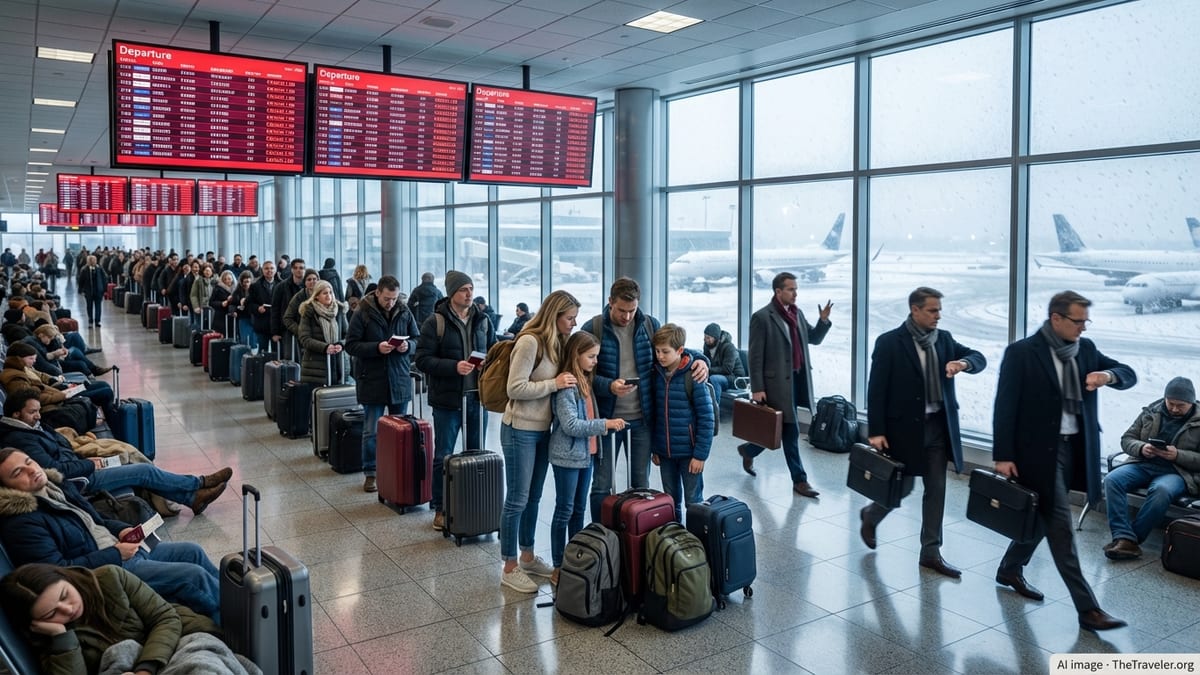
Passengers faced long waits and crowded departure halls at Ninoy Aquino International Airport (NAIA) Terminal 3 in Pasay City on Thursday as adverse weather linked to an enhanced southwest monsoon disrupted both domestic and international flight schedules.
Get the latest news straight to your inbox!
Monsoon Rains Trigger Widespread Delays and Cancellations
According to published coverage and airline advisories, strong rains and low visibility around Metro Manila forced carriers to slow operations at NAIA on Thursday, with takeoffs and landings limited during periods of heavy downpour. Reports indicate that the enhanced southwest monsoon, locally known as the habagat, brought persistent showers and thunderstorms that affected approach and departure paths into the country’s busiest airport.
Publicly available information shows that several flights were delayed on the ground at Terminal 3 while others were diverted to alternative airports when conditions around Manila Bay temporarily fell below safe landing thresholds. Some services were ultimately canceled when turnaround times and crew duty limits made it difficult for aircraft to be reinserted into the day’s schedule.
Philippine aviation advisories in recent years have repeatedly highlighted how intense monsoon bursts can disrupt flight operations in and out of NAIA. The combination of heavy cloud cover, wind shear, and waterlogged runways can require additional spacing between aircraft, reducing hourly capacity and quickly triggering knock-on delays across airline networks.
Data from previous weather systems in the country suggest that such disruptions are often concentrated over a short period, but the operational impact can last throughout the day as airlines reposition aircraft and crew. For passengers, this translates into multi-hour waits, missed connections, and last-minute changes to itineraries.
Terminal 3 Crowds Test Airport’s Capacity
As schedules unraveled, Terminal 3’s departure area became a focal point of the disruption, with images shared on local media showing travelers clustered around check-in counters and boarding gates. Manila’s main international gateway has been operating near or at capacity for years, and the latest bout of bad weather again exposed how quickly its terminals can become congested when flight flows are interrupted.
Terminal 3 handles a mix of domestic and international services, making it particularly vulnerable when weather affects both short-haul and regional routes. Passengers connecting from provincial cities to onward international flights found themselves juggling rebookings, baggage transfers, and immigration formalities under tight and shifting timelines.
Recent infrastructure works and temporary traffic changes around Terminal 3, including adjustments to curbside drop-off areas and access lanes, have been aimed at improving passenger circulation during peak hours. However, monsoon-related disruptions tend to bunch departures and arrivals into narrow windows when conditions improve, pushing terminal facilities to their limits even when longer-term upgrades are underway.
For travelers, the practical impact is visible in crowded security queues, limited seating in departure lounges, and competition for power outlets and food outlets as waits stretch beyond scheduled departure times. Some passengers opted to wait landside until their flights were clearly confirmed, further shifting congestion between check-in halls and the controlled airside area.
Weather and Regulatory Context for Philippine Air Travel
Public data from Philippine weather and disaster agencies show that the southwest monsoon regularly intensifies between June and September, often enhanced by nearby low-pressure areas or tropical cyclones. These systems can drench Luzon and the Visayas, including the Manila metropolitan area, for days at a time, with aviation among the sectors most sensitive to rapidly changing conditions.
In previous monsoon seasons, advisories from civil aviation and transportation regulators have reminded airlines of their obligations to notify travelers promptly of cancellations and long delays, particularly when caused by severe weather. Guidance has highlighted the need for timely text messages, app notifications, and updated departure boards so passengers are not left guessing about their options.
Historical records from earlier weather events in the Philippines indicate that intense rainfall around NAIA has led not only to flight delays but also to periodic runway restrictions and diversions, especially when storm cells sit directly over Manila Bay. While terminal flooding has been less frequent in recent years due to drainage improvements, ramp operations remain highly sensitive to lightning and surface water.
Analyses of global aviation data underscore that weather remains one of the main external drivers of departure and arrival delays. In complex airspace such as that around Manila, where multiple airports, military areas, and dense urban development converge, controllers often have limited scope to reroute aircraft around storm cells without creating additional congestion.
What Stranded Travelers Can Do at NAIA Terminal 3
For passengers caught up in Thursday’s disruption, practical steps centered on staying informed and preserving flexibility. Travel experts commonly advise monitoring both airline channels and airport departure boards, since schedule changes can cascade rapidly once weather improves and carriers attempt to recover operations.
Many airlines serving NAIA now offer same-day booking management through mobile apps and websites, allowing travelers on affected services to rebook onto later flights or alternative routes where seats are available. During weather-related disruption, change fees are sometimes relaxed or waived, although fare differences may still apply depending on the route and cabin.
Passengers with onward international connections are generally encouraged to alert their carriers as soon as a significant delay is known, particularly when separate tickets or low-cost carriers are involved. This can help airline staff prioritize re-accommodation options and clarify whether baggage will be automatically transferred to a new flight or needs to be reclaimed.
For those facing extended waits, NAIA Terminal 3 offers a range of restaurants, shops, and paid lounge options, though capacity can be strained during large-scale disruptions. Travelers are often advised to keep essential medications, chargers, and basic toiletries in their carry-on luggage in case of unplanned overnight stays in Manila or diversion to another Philippine city.
Implications for Future Travelers During Monsoon Season
The latest episode of disruption at NAIA Terminal 3 is a reminder for visitors to the Philippines to factor seasonal weather into their plans, especially from mid-year into the later months when the southwest monsoon and typhoons are most active. For international visitors unfamiliar with the local climate, it can be easy to underestimate the impact of heavy tropical downpours on flight operations and ground transport.
Travel planners often recommend building additional buffers into itineraries during this period, such as avoiding extremely tight connections, particularly across separate tickets, and arriving in Manila at least a day before time-critical events like cruises, weddings, or business meetings. Flexible hotel bookings and comprehensive travel insurance can also help soften the financial and logistical effects of sudden cancellations.
For the aviation sector, each weather-driven disruption provides new data on how the Manila hub copes under stress, informing future investments in infrastructure, procedures, and technology. Improvements in forecasting, air traffic management tools, and real-time passenger information systems all have the potential to reduce the impact of similar events on travelers in the years ahead.
As the monsoon season continues, passengers heading through NAIA are likely to see more reminders to keep contact details updated with airlines, monitor advisories before leaving for the airport, and prepare for possible timetable changes. While adverse weather cannot be controlled, better preparation and communication can help ensure that the experience inside crowded terminals like NAIA’s Terminal 3 is at least more predictable for those waiting to fly.