

More news on this day
West Africa is emerging as one of aviation’s most dynamic frontiers as Nigeria’s Air Peace accelerates a regional expansion that is redrawing tourist itineraries, softening the impact of disruption-prone hub connections and giving leisure travelers more direct access to the subregion’s cities and beach destinations.
Get the latest news straight to your inbox!
New Nonstop Links Redraw the Regional Tourism Map
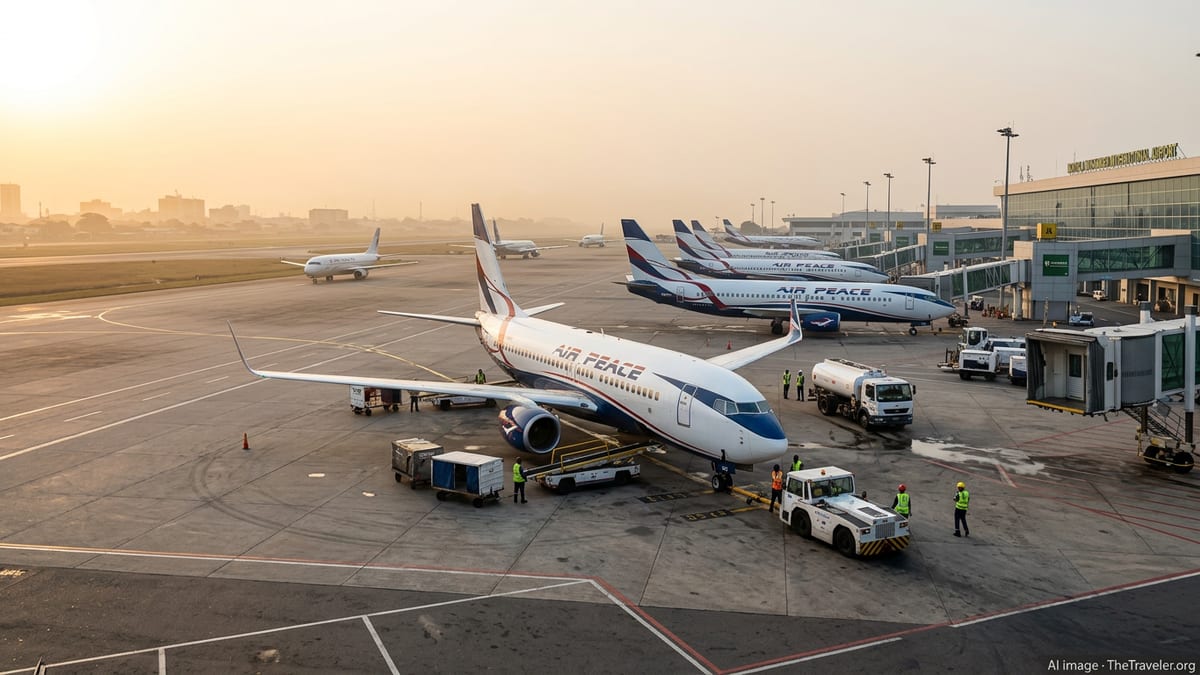
Air Peace, already Nigeria’s largest carrier by network size, has in 2025 and 2026 pushed deeper into West Africa with an expanded mesh of short and medium haul routes radiating from Lagos and Abuja. Publicly available schedules and route maps show nonstop or one stop links from Nigeria into key tourism and business centers including Accra, Freetown, Monrovia, Banjul, Dakar and Abidjan, building on earlier services to cities such as Lome and Douala.
The airline’s latest schedule updates for 2026 highlight enhanced regional operations effective from April, with Lagos positioned as the primary gateway for multi leg itineraries. The pattern is evident in published route diagrams that funnel traffic from secondary Nigerian cities into Lagos before distributing it around the subregion, reducing the need for travelers to route through more distant intercontinental hubs.
For holidaymakers, the growing network is particularly significant on coastal routes. Cities like Accra, Banjul and Freetown serve as launchpads for beach, heritage and eco tourism products that previously depended heavily on connections via European or Middle Eastern hubs. With more direct or near direct options from Nigeria and neighboring markets, destination marketers report that short break packages and multi country tours are becoming easier to sell to both regional and long haul visitors.
Industry analysts tracking booking patterns note that the shift is gradually boosting intra African leisure travel, historically constrained by circuitous routing and higher costs. The ability to move from, for example, Lagos to Freetown or Monrovia on a single regional ticket without an overnight in a distant hub is beginning to change how operators stitch together itineraries around West Africa’s coastline.
Bypassing Legacy Hubs to Reduce Travel Chaos
The expansion comes at a time when travelers across Africa and beyond have become more sensitive to disruption, after years of pandemic era schedule volatility and episodic bottlenecks at major intercontinental hubs. Reports over the last two seasons have highlighted congestion, weather related backlogs and staffing challenges at large European and Gulf airports that feed traffic into West Africa’s coastal capitals.
Against that backdrop, regional itineraries that bypass legacy chokepoints are gaining traction. Air Peace’s point to point links within West Africa, supported by a growing domestic feeder network in Nigeria, allow passengers headed to destinations such as Sierra Leone or Liberia to cut out at least one long haul leg and an associated transfer, lowering exposure to missed connections and mass cancellations.
Operational incidents still occur within the region, and West African airports are not immune to equipment issues or ground handling delays. However, for travelers whose primary objective is to reach a nearby coastal city from within the subregion, the trade off between a relatively simple regional hop and a complex intercontinental connection is increasingly visible in favor of the former.
Travel advisors in markets such as Nigeria, Ghana and Sierra Leone are responding by promoting itineraries that combine regional carriers and local ground arrangements, rather than defaulting to long haul operators via European or Middle Eastern hubs. The result is a gradual recalibration of how “chaos” is defined: away from a lack of options, toward a preference for shorter, more controllable journeys.
Lagos Rises as a Tourism Gateway, Not Just a Transit Point
Lagos’s Murtala Muhammed International Airport is central to this reshaping of West African tourism flows. Historically perceived mainly as a business gateway, it is increasingly being marketed as both a destination city and a springboard to nearby beach and heritage attractions within Nigeria and the wider Gulf of Guinea.
Air Peace’s regional strategy positions Lagos as a primary connecting node between Nigerian secondary cities and coastal neighbors. As more travelers choose to connect within the subregion instead of in Europe or the Gulf, stopovers in Lagos are translating into hotel stays, nightlife spending and visits to cultural and culinary districts that tourism promoters have been trying to spotlight for years.
Nigerian travel trade groups, drawing on emerging booking and arrival data, indicate that a portion of passengers using new or upgraded regional services are extending their time in the city before continuing to holiday destinations such as Accra’s beaches, Gambia’s resort strip or Sierra Leone’s island retreats. This pattern mirrors earlier shifts seen in East Africa, where regional aviation growth helped Nairobi and Addis Ababa move from pure transit hubs to short break city destinations in their own right.
The rise of Lagos as a regional gateway also has implications for competition among West African airports. Accra, Dakar and Abidjan have made considerable gains in attracting intercontinental services over the last decade, but the strengthening of a Nigeria based carrier with an extensive regional footprint introduces a more balanced landscape in which multiple cities vie to anchor tour circuits and group itineraries.
Tourism Demand Rebounds Across West Africa
The regional aviation reshuffle is taking place against a broader recovery in African tourism. International organizations tracking travel flows report that visitor numbers to the continent in 2024 moved close to or above pre pandemic levels, with West Africa participating in the overall rebound through a mix of diaspora travel, business tourism and growing interest in culture and nature based experiences.
Countries such as Ghana, Senegal, Cape Verde and Gambia have reported multi year growth in leisure arrivals, supported by targeted campaigns around heritage tourism, music festivals and beach resorts. As connectivity improves, smaller destinations including Sierra Leone and Liberia are seeking to position their coastline, islands and historical sites as lower density alternatives to more established resort markets.
Airlines are responding by adjusting capacity and schedules to better match tourism peaks, particularly around December and Easter, when West African beaches and cities attract both regional and long haul visitors. Expanded regional connectivity allows operators to package cross border trips that link several countries on one air and land itinerary, something that was far more complex when most traffic was funneled through a handful of distant hubs.
Observers note that the interplay between aviation recovery and tourism growth is mutually reinforcing. As carriers such as Air Peace open or densify routes among West African capitals, local tourism boards gain a stronger case for investing in product development, visitor services and marketing, knowing that there is a realistic prospect of reliable air access to match demand.
Challenges Remain as Capacity and Reliability Scale Up
Despite the upbeat narrative, West Africa’s aviation based tourism boom is not without constraints. Capacity remains tight on peak dates, aircraft and crew utilization must be carefully managed, and infrastructure at several regional airports is still catching up with the needs of larger, more frequent jet operations.
Recent disruptions at Lagos involving ground handling equipment and occasional technical issues on busy aircraft types have underlined how quickly schedules can unravel in a high utilization environment. When a single aircraft is programmed to operate multiple regional sectors in a day, any delay or unplanned maintenance can cascade across several cities, affecting both business travelers and holidaymakers.
Regulators and industry groups have emphasized the importance of safety oversight, ground handling standards and contingency planning as more carriers, including Nigerian operators, pursue ambitious regional growth. For tourism stakeholders, reliability is as critical as route breadth. A sudden spike in cancellations or extended delays can undermine confidence in newly promoted itineraries and send travelers back toward the perceived security of long established intercontinental hubs.
Even so, the general direction of travel appears clear. With each additional nonstop or one stop connection that trims hours from journey times between West African cities, the region becomes more accessible to its own residents and to overseas visitors combining multiple destinations. That shift is steadily turning Air Peace’s regional strategy, and similar moves by rival carriers, into a powerful catalyst for tourism across one of Africa’s most diverse and under explored coastal corridors.