

More news on this day
Severe travel chaos gripped Hartsfield-Jackson Atlanta International Airport on June 17 as Delta Air Lines and Southwest Airlines suffered a wave of delays and cancellations, disrupting hundreds of journeys and leaving passengers facing hours-long waits across the sprawling hub.
Get the latest news straight to your inbox!
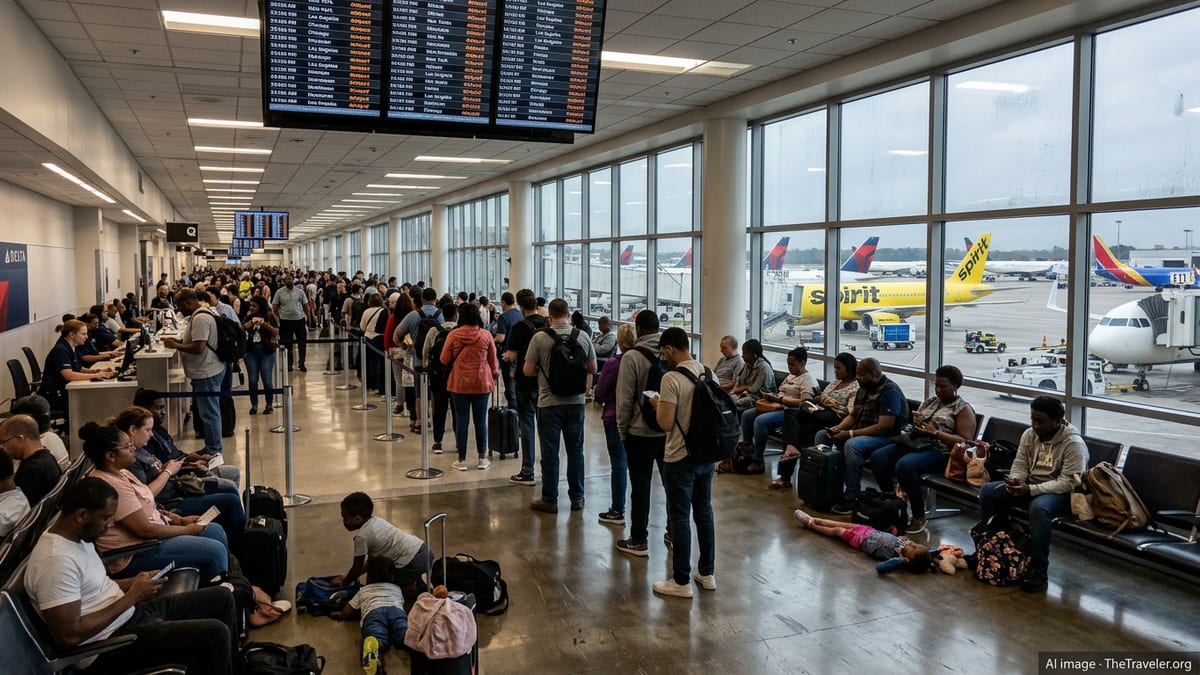
Delta and Southwest Operations Buckle Under Strain
Tracking data and industry reporting for June 17 indicate that Delta Air Lines and Southwest Airlines collectively logged around 180 delayed flights and at least 13 cancellations tied to Atlanta operations, amplifying disruption across one of the world’s busiest hubs. Delta, which uses Atlanta as its primary global gateway, accounted for the largest share of delayed departures and arrivals, while Southwest saw mounting hold-ups on key domestic routes feeding into and out of the city.
The disruption follows a series of operational challenges in recent months in which Atlanta flight schedules have proven highly sensitive to regional weather systems and airspace congestion. Publicly available operational bulletins show that Delta introduced a Southeast severe weather waiver effective for travel on June 17 and June 18, signaling expectations of instability across several airports including Atlanta and other regional gateways.
Southwest’s schedule was also hit as congestion and earlier weather-related slowdowns cascaded through its point-to-point network. References in recent consumer-facing summaries of Southwest’s 2026 disruptions highlight more than one hundred delays at Atlanta alone on some days, illustrating how quickly irregular operations at the airport can ripple through the carrier’s national system.
While the exact breakdown of delays by carrier fluctuated throughout the day, the combined impact for Delta and Southwest on June 17 was a heavily constrained operation, with rolling pushbacks, gate holds and a small but consequential cluster of outright cancellations that stranded travelers both at Atlanta and at outstations across the United States.
Passengers Face Long Lines, Missed Connections and Overnight Stays
As delays accumulated at Hartsfield-Jackson, reports from passengers on social platforms and travel forums described crowded concourses, long customer-service queues and difficulty securing rebooked itineraries. References from earlier disruption episodes at the same airport in March 2026, when tracking services recorded more than 300 delays and over 200 cancellations in a single day, provide a sense of the scale of congestion that can develop when Atlanta’s tightly timed hub operations unravel.
Travelers connecting through Atlanta on June 17 were especially vulnerable. Delta’s hub structure relies on closely scheduled banks of arrivals and departures, meaning that a weather-related ground stop, air traffic flow program or ramp restriction can quickly strand passengers mid-journey. Missed onward connections then feed into later flights, which in turn become oversold as stranded travelers compete for limited seats.
Accounts from previous disruption days at Atlanta describe security lines exceeding an hour, crowded gate areas and overnight stays in terminals or nearby hotels when no same-day alternatives were available. Early indications from June 17 suggest a similar pattern, with passengers reporting multi-hour delays and rapidly disappearing options for rerouting as the day wore on.
Families, international travelers and those with tight onward ground connections were among the hardest hit, according to anecdotal reports. With some flights experiencing rolling delays before ultimately canceling, passengers also described the familiar dilemma of whether to remain at the gate in hopes of departure or abandon plans and seek refunds or future travel credits.
Weather, Congested Airspace and Tight Schedules Drive Disruption
While a detailed post-event analysis will take time, early information points toward a combination of adverse Southeast weather patterns and already congested airspace as key drivers of the June 17 disruption. Delta’s active weather waiver for the region on that date underscores how thunderstorms, low visibility and convective activity can force ground stops, reroutes and reduced arrival rates into key hubs.
At the same time, consumer advocacy guides and airline operations primers emphasize that modern airline schedules leave little slack for irregular operations. High aircraft utilization, crew duty-time limits and tight turnaround times mean that a single extended delay early in the day can cascade across multiple flights. For a hub as central as Atlanta, operational constraints can reverberate through Delta’s domestic and long-haul network as well as Southwest’s point-to-point services.
Regulatory data from the U.S. Department of Transportation’s Air Travel Consumer Reports for prior years show that extended tarmac waits and lengthy gate holds are not unusual at Atlanta during periods of thunderstorms and peak summer travel. Frontier, Delta and Southwest all appear in past statistics for multi-hour tarmac delays linked to Atlanta operations, illustrating how multiple carriers can be affected when the airport’s capacity is sharply reduced.
Analysts also point to the knock-on effect of previous days’ disruptions, which can leave aircraft and crews out of position. When combined with new weather cells or air traffic restrictions, this can turn what might otherwise be a routine delay day into a major operational event affecting hundreds of flights.
How the June 17 Disruptions Compare With Other Recent Events
In the context of recent months, the June 17 travel chaos fits into a broader pattern of volatility at Atlanta and other major U.S. hubs. In March 2026, local and national coverage described the airport as a “disaster” on multiple consecutive days, as severe weather and congestion pushed cancellations into the hundreds and generated complaints of multi-hour waits throughout the terminals.
More recently, travel commentary has highlighted Delta’s susceptibility to Southeast storms because of its reliance on Atlanta as a central connecting point. Even when conditions in Atlanta improve, lingering crew and aircraft disruptions can lead to delays on routes far from the Southeast, including transatlantic services that route through the hub.
Southwest has faced similar scrutiny following past nationwide disruption episodes during winter storms, with consumer reports frequently referencing Atlanta among the hardest-hit airports during those events. Although the June 17 issues appear tied primarily to regional weather and capacity constraints rather than a system-wide breakdown, the resulting passenger experience in Atlanta mirrored earlier crises: crowded terminals, scarce information and rolling schedule changes that were difficult to track in real time.
Compared with those prior events, the June 17 figures for approximately 180 delays and 13 cancellations across Delta and Southwest suggest a severe but not unprecedented disruption. For affected individuals, however, the practical impact was significant, ranging from missed vacations and business meetings to unexpected overnight stays and additional out-of-pocket expenses.
What Travelers Can Do When Atlanta Meltdowns Hit
Consumer advocates and travel experts often recommend proactive strategies for navigating days like June 17, particularly at vulnerable hubs such as Atlanta. When airlines issue weather waivers, travelers are typically allowed to change flights without additional fees within specific date and route parameters, which can provide a valuable opportunity to move to earlier or later services before disruption peaks.
Publicly available guidance also suggests monitoring flight status through multiple channels, including airline apps, airport displays and independent tracking services, since schedule changes do not always propagate simultaneously across all systems. During previous disruption waves at Atlanta, passengers have reported learning of cancellations first through third-party trackers before updates appeared in airline notifications.
Rebooking options can evaporate rapidly once a disruption becomes widespread. Experts therefore urge travelers to consider alternative routings, nearby airports and even ground transportation where practical. For those already at the airport, in-terminal service desks and self-service options may be supplemented by phone or online chat channels, although these too can become overwhelmed during peak events.
With the peak summer travel season approaching, the June 17 chaos at Hartsfield-Jackson serves as another reminder that weather-sensitive hubs like Atlanta can experience swift and far-reaching disruption. For many Delta and Southwest passengers, preparation, flexible planning and close monitoring of operational bulletins remain essential tools for navigating an increasingly volatile air travel environment.