


More news on this day
Western Railway has announced plans to operate 42 special train trips from Mumbai to cater to the heavy passenger rush expected during this year’s Ganesh Chaturthi festival, adding targeted capacity on key routes popular with devotees heading toward Konkan and coastal Maharashtra.
Get the latest news straight to your inbox!
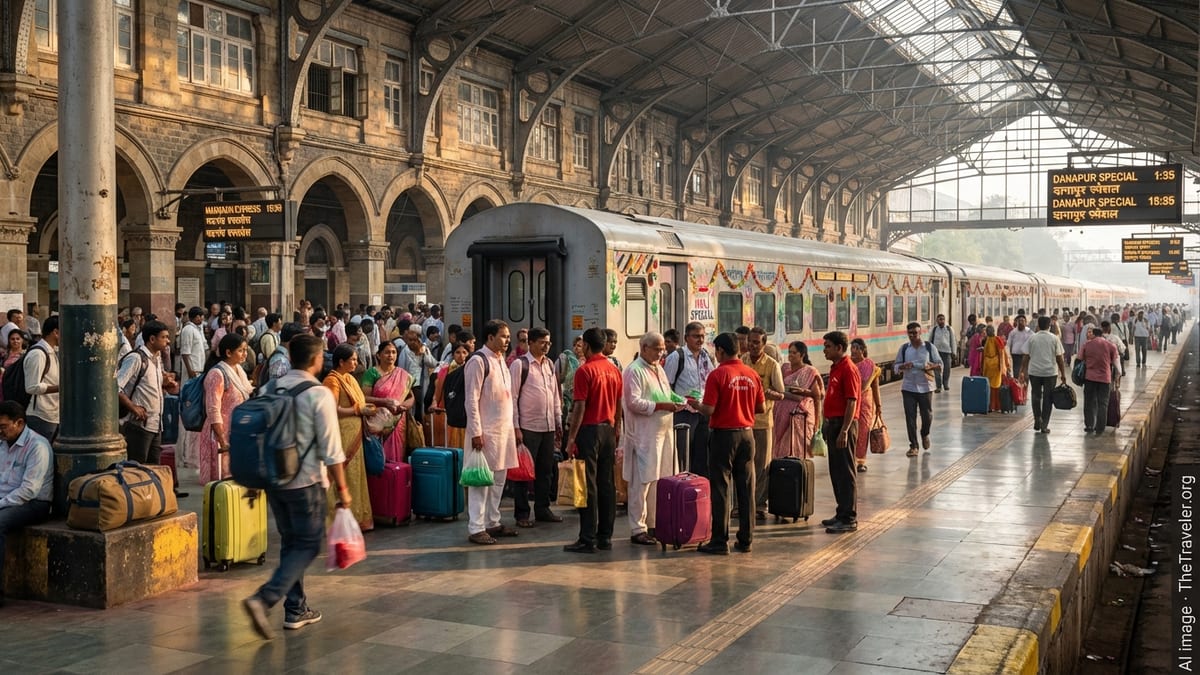
Additional Festive Capacity Focused on Konkan-Bound Routes
Ganesh Chaturthi is one of Maharashtra’s busiest travel periods, with tens of thousands of residents leaving Mumbai for their hometowns in the Konkan region and other coastal districts. Publicly available notices and media coverage indicate that Western Railway’s latest operation plan includes 42 special trips designed to absorb a significant part of this seasonal surge from the Mumbai area.
The specials are expected to primarily connect major Mumbai terminals such as Mumbai Central and Bandra Terminus with destinations including Sawantwadi Road, Ratnagiri and other Konkan corridor stations. These are among the most in-demand routes around the festival period, when regular services often operate near or at full capacity days in advance.
Operational documents and railway announcements for recent Ganesh Chaturthi seasons show that Western Railway typically adjusts rakes, paths and halt patterns on the Konkan side to improve connectivity for smaller stations. A similar approach is anticipated this year, with select trains likely to receive additional halts at intermediate locations where demand from returning village-bound travellers is strongest.
Industry observers note that Western Railway’s measures complement separate Ganpati festival trains normally announced by Konkan Railway and Central Railway, creating a multi-operator network of special services from the wider Mumbai metropolitan region toward the Konkan belt.
Staggered Schedule Across Peak Outbound and Return Days
The 42 special trips are expected to be staggered around peak outbound days before Ganesh Chaturthi and peak return days after the main festivities, a pattern reflected in earlier timetables for festival specials on Western Railway. Previous press releases for Ganpati services have shown departures beginning roughly 7 to 10 days before the first day of the festival, with return specials concentrated in the week following the immersion of idols.
According to recent scheduling trends, outbound services from Mumbai to Konkan and coastal Maharashtra are often timed in the late evening or overnight, allowing passengers to arrive at their hometowns by morning. Return trips are frequently scheduled in reverse overnight patterns, balancing rake utilization and main-line capacity while attempting to offer convenient arrival times in Mumbai for working commuters.
Operational information from earlier years suggests that some of the Ganpati specials run on a weekly or multiple-times-per-week basis, while others are configured as one-time or limited-trip services linked to specific high-demand days. The 42 trips now planned for the upcoming season are likely to be distributed across both types, combining fixed-pattern services with a smaller number of single-day operations.
Rail planning experts point out that Western Railway also has to integrate these additional services into an already dense suburban and long-distance timetable on the Mumbai division. This typically involves selective pathing via Vasai Road, Panvel and Roha, as seen in past Ganpati special notifications, to avoid excessive congestion on the core trunk sections near Mumbai.
Ticketing, Booking Windows and Expected Demand Patterns
Based on previous festival seasons, bookings for Ganesh Chaturthi special trains usually open several weeks before the first departure date through standard reservation channels such as passenger reservation system counters and online ticketing platforms. Public information for other recently announced exam and festival specials on Western Railway indicates that similar booking procedures are expected to apply to these 42 trips.
In recent years, demand patterns for Ganpati travel from Mumbai have shown that sleeper and AC classes on Konkan-bound trains often move quickly into high waitlist numbers, particularly on weekends and on the two to three days immediately preceding the festival. Observers expect a comparable booking rush this year as families secure travel to their hometowns for the installation and first aarti of Ganesh idols.
Return journeys to Mumbai generally see concentrated demand around the days following the main visarjan dates, when workers, students and business travellers head back to the city. Railway data and past coverage suggest that some of the special trains may record high occupancy in both directions, with particularly heavy loadings in general and second-class reserved coaches.
Travel planners recommend that passengers monitor official railway enquiry and status platforms for updates on reservation availability, coach composition and any changes to departure timings, as festival specials can be subject to operational adjustments closer to the travel dates.
Operational Challenges on a Congested Corridor
Integrating 42 additional special trips into the Western Railway network around Mumbai presents a significant operational challenge. The corridor already handles intense suburban traffic, multiple long-distance services toward Gujarat and Rajasthan, and an evolving mix of premium offerings such as Vande Bharat services, which all compete for paths and platform slots.
Railway operations research published in recent years highlights how dense networks around metropolitan hubs such as Mumbai require precise timetable planning, speed regulation and buffer allowances to prevent cascading delays. The introduction of a block of seasonal specials around Ganesh Chaturthi adds another layer of complexity, especially during periods when maintenance blocks or infrastructure works are also scheduled.
Past experiences with festival trains show that Western Railway typically relies on fine-tuning sectional speeds, adjusting intermediate halts and carefully sequencing crossings with other services to maintain overall punctuality. Additional measures can include deploying extra operating staff and enhancing real-time monitoring of train movements in the days of maximum festival traffic.
Despite these challenges, the sustained use of Ganpati specials over multiple years suggests that the strategy has become an integral part of how Western Railway manages seasonal surges on the Mumbai–Konkan axis without heavily curtailing regular services.
What the Expanded Services Mean for Ganesh Devotees
For travellers, the announcement of 42 Western Railway special trips offers additional options at a time when regular trains toward the Konkan region are often sold out weeks in advance. The extra capacity is particularly significant for families carrying luggage, decorations and offerings for community Ganesh celebrations in their native towns and villages.
The specials are also expected to benefit smaller communities along the route. In earlier years, Ganpati trains have added temporary halts at intermediate stations that do not always receive regular long-distance services, providing more direct access for local residents returning from Mumbai.
From a broader perspective, the planned services underline the continuing role of rail as the primary long-distance mode for festival travel out of Mumbai. While road transport options such as buses and private vehicles remain important, the scale of passenger volumes during Ganesh Chaturthi makes rail-borne capacity, including special trains, a central element of the city’s festive mobility pattern.
With the Ganesh Chaturthi season approaching, prospective passengers are expected to watch closely for detailed timetables, coach layouts and booking opening dates for each of the announced specials as they plan journeys between Mumbai and the Konkan heartland.