


More news on this day
A recent cruise on Royal Caribbean’s Legend of the Seas illustrates how a vacation advertised at a headline fare can ultimately add up to a $4,359 trip once cabin upgrades, onboard spending and shore excursions are tallied.
Get the latest news straight to your inbox!
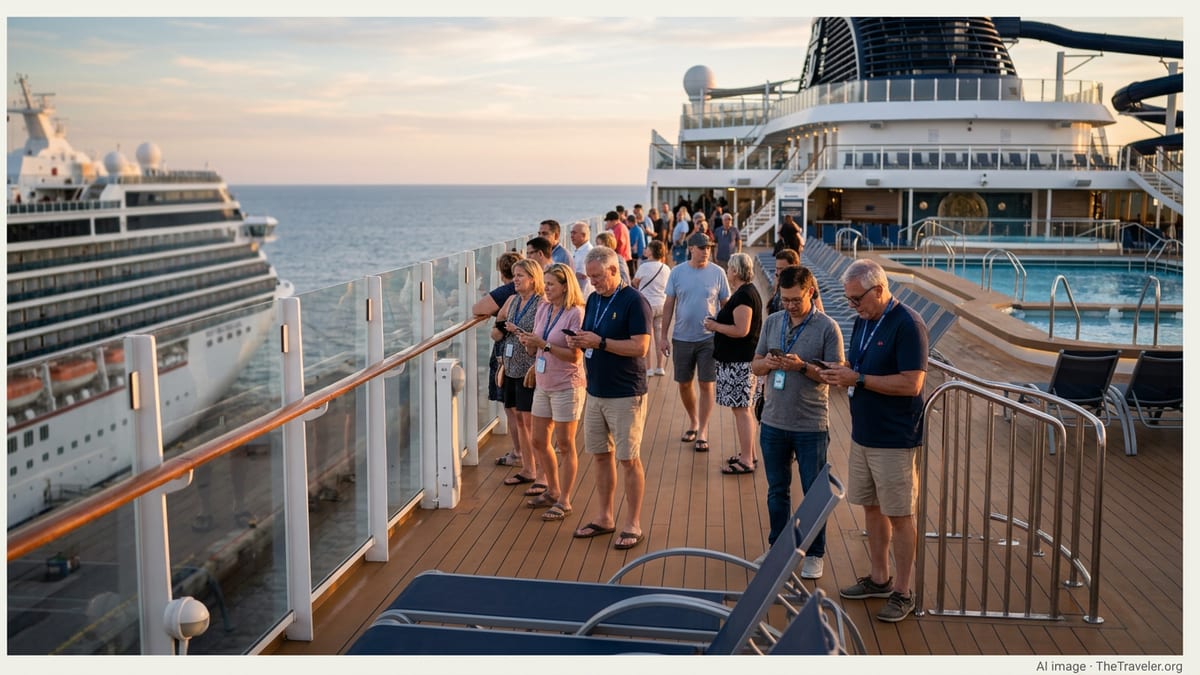
From Base Fare to a $2,225 Cabin
Publicly available itineraries and archived pricing for Legend of the Seas show that standard inside cabins often advertise at significantly lower rates than balcony or outside staterooms. In this case, the traveler selected a midrange cabin priced at $2,225, opting for more space and natural light over the least expensive categories. That single choice set the foundation for the overall bill, more than doubling what a rock bottom fare might have cost on select sailings.
Industry comparisons indicate that oceanview cabins on similar older ships frequently sit in the middle of the pricing ladder, below premium balcony and suite categories but well above interior rooms. Travelers who prioritize having a window or slightly better location often accept this middle tier, reasoning that they will spend a meaningful amount of time in the cabin and want a more comfortable environment.
The $2,225 fare would typically cover the basics associated with mainstream cruising: accommodation, transportation between ports, most main dining room and buffet meals, and entertainment such as production shows and live music. It does not usually include taxes, port fees, gratuities or most onboard extras, all of which contribute to the final $4,359 total.
Taxes, Fees and Required Gratuities
Beyond the quoted cabin price, cruise passengers commonly encounter mandatory charges that are not always obvious in early marketing material. Port taxes and government fees are added per person and vary by itinerary and region, reflecting charges imposed for using specific terminals and sailing through certain jurisdictions. For a multi port Legend of the Seas itinerary, these costs can add several hundred dollars to a couple’s booking.
Automatic service charges, often referred to as daily gratuities, represent another substantial line item. Published policies across the large cruise brands show that guests are routinely charged a fixed amount per person per day to cover dining and stateroom staff. Over the course of a weeklong cruise, these charges for two adults frequently approach or exceed a few hundred dollars, depending on the line’s current rate structure.
While some travelers choose to prepay gratuities before sailing, others allow them to be billed daily to the onboard account. Either way, by the end of the trip these built in costs push the overall spend well beyond the initial $2,225 cabin fare, even before the first cocktail, specialty meal or spa visit is purchased.
Onboard Spending on Food, Drinks and Amenities
The jump from baseline cruise fare to a $4,359 total also reflects the way onboard spending can accumulate. Legendary class ships such as Legend of the Seas typically feature multiple bars, a specialty restaurant or two, coffee venues and a spa, all designed to encourage discretionary purchases. Beverage packages, in particular, can add hundreds of dollars to a couple’s cruise if bought for the full sailing.
Passengers who do not purchase packages may still see their accounts climb through individual drink orders, premium coffees or smoothies, and bottled water. Industry reports indicate that onboard revenue from beverages remains one of the largest ancillary income streams for cruise operators, highlighting how common this type of spending has become.
Food related extras also contribute. While the main dining room and buffet are included in the fare, many ships now charge for specialty restaurants, certain room service items and premium snacks. A few dinners at higher end venues, combined with casual charges for desserts or late night bites, can move the final bill appreciably higher without necessarily feeling extravagant at the time.
Beyond food and drinks, guests frequently spend on Wi Fi access, spa treatments, fitness classes and shopping in onboard boutiques. Even modest participation in these offerings across several sea days can nudge a vacation’s cost from a mid range price point toward the upper end of a traveler’s original budget.
The $256 Excursion and the Cost of Exploring Ashore
The single biggest discretionary item in this account is a $256 shore excursion, a figure that aligns with published ranges for organized tours operated through major cruise lines. Prices for such excursions depend on the destination, activity level and group size, with more immersive experiences like scuba trips, helicopter tours or private guides commanding higher fees.
Booking directly with the cruise line remains popular because tours are coordinated with ship schedules and typically include transportation and a guide. However, that convenience frequently carries a premium compared with arranging independent tours ashore. In this case, spending $256 on one organized outing significantly increased the trip’s overall cost, especially if other ports were spent exploring independently or staying on board.
Travel observers note that passengers sometimes underestimate how quickly shore activities add to a vacation budget. A single top tier tour, a few lower priced outings and incidental costs such as meals or taxis in port can rival the amount spent on pre cruise airfare or hotels. For Legend of the Seas, which traditionally operated in varied regions over its service life, the temptation to sample signature excursions in marquee ports has often been part of the ship’s appeal.
How a $4,359 Total Compares With Typical Cruise Budgets
When all charges are counted, the $4,359 Legend of the Seas vacation appears broadly consistent with what travel analysts describe as a mid to upper midrange spend for two adults on a weeklong mainstream cruise, especially once upgraded cabins and several extras are included. The per person cost aligns with published averages that factor in both the fare and onboard expenditure for passengers who participate in popular add ons but do not necessarily pursue the most luxurious options.
Industry data suggests that while some cruisers keep their onboard accounts relatively low, many end up spending a notable percentage of their fare again on drinks, specialty dining, excursions and services. The Legend of the Seas example fits this pattern, with the original $2,225 cabin forming just over half of the final $4,359 outlay after taxes, fees, gratuities, onboard purchases and a $256 excursion are added.
For travelers planning future sailings, the breakdown underscores the importance of accounting for more than the headline fare when setting a budget. Separating core costs such as cabin, taxes and gratuities from discretionary categories like beverage packages and excursions can help passengers decide where to splurge and where to hold back, whether on a classic vessel like Legend of the Seas or on newer ships entering service today.