


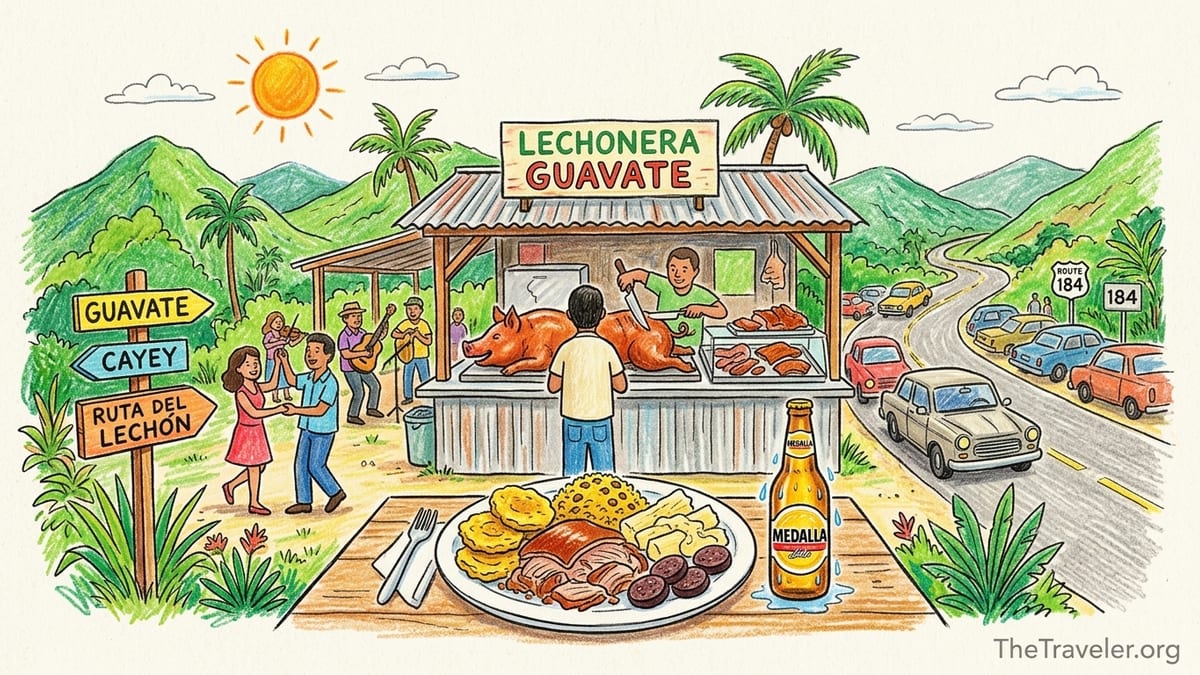
On a recent Sunday, I joined the slow procession of cars climbing Route 184 into the hills of Cayey, better known as Puerto Rico’s Ruta del Lechón. Music spilled out of open-air pavilions, smoke drifted from concrete pits, and every few meters another whole pig turned slowly on a spit. I was not here to collect restaurant names. I was here to eat: lechón with crackling cuerito, rice studded with gandules, garlicky yuca, and the sides that locals pile on when they make the same pilgrimage. Over one long, pork-heavy afternoon, I worked my way through the plate most visitors order, the bolder cuts regulars request, and a few bites I was not entirely sure I could finish.
Get the latest updates straight to your inbox!
Finding My First Plate on the Pork Highway
The heart of the Ruta del Lechón is a short, crowded stretch of Route 184 in Guavate, a mountain community in Cayey where a dozen or more lechoneras line the road. By late morning, the parking lots were already packed with families from San Juan and the southern coast, coolers in hand, kids dancing to salsa and reggaetón. Ordering here is not a leisurely, menu-studying affair. You step into a cafeteria-style line, shuffle forward past trays of glistening pork, shout your order over the music, and make quick decisions while regulars behind you know exactly what they want.
At the carving station, the star is the whole roasted pig, or lechón asado. The server hacked through shoulder and ribs with a cleaver, then chopped in a few shards of blistered skin, the coveted cuerito, before weighing my portion. Signs at several lechoneras listed lechón by the pound between about 10 and 16 dollars, right in line with what the island’s tourism board now cites for Guavate, with combination plates of pork and two sides generally around 10 to 20 dollars depending on portion size and venue. I pointed to a medium mound of meat and asked for a “plato combinado” big enough to share, knowing more plates were coming.
That first tray looked simple: a generous slab of lechón with plenty of cuerito, a scoop of arroz con gandules, and a tangle of yuca al mojo pooled in garlicky oil. On the side, I added separate small portions of tostones and amarillos, promising myself I would pace things. In reality, this opening round could easily have fed two very hungry people. By the time I carried the tray to a plastic table under a corrugated roof, with a cold Medalla beer sweating beside it, I had already underestimated how heavy this style of eating can be.
Lechón and Cuerito: Juicy Meat, Shattering Skin
Lechón in Guavate is a whole pig, usually marinated overnight with garlic, oregano, salt, pepper, and sometimes sour orange, then roasted low and slow for hours over charcoal. When it is done right, the meat is deeply seasoned and still moist, and the outer layer of fat and skin transforms into crackling. On my plate, the first bite of shoulder meat was almost silky, with the fibers so tender they barely needed a knife. The flavor leaned toward garlic and oregano, with just enough salt to make the edges taste almost smoky.
The cuerito was a different experience entirely. Good crackling is not just crisp; it is glassy and loud. Here, the top was burnished bronze, with little bubbles puffed up along the surface. When I bit in, it shattered in sharp, thin layers before giving way to a slightly chewy, fatty underlayer that melted as I kept chewing. It was intensely rich and salty, almost like eating the concentrated essence of roast pork. After two pieces, I realized why locals often ask for only a few shards; a large pile of cuerito can overwhelm even a serious pork lover.
Portion-wise, a half-pound of lechón with some cuerito was realistically my limit if I wanted to keep tasting sides. One pound could fill a very hungry diner, but it would crowd out nearly everything else. For me, the sweet spot was a mix of leaner slices from the leg and some fattier shoulder, plus three or four crisp chunks of skin. That combination delivered all the texture contrasts without turning the meal into a one-note wall of fat and salt.
What surprised me most was how much the lechón changed as it cooled. Early in the day, when the pigs had just come off the spit, the meat stayed juicy and the cuerito remained crackling. Later, as the line grew longer and the trays sat a bit, some pieces of skin softened. If you care about texture, it is worth arriving before mid-afternoon, when turnover is fastest and the crackling is at its best.
Arroz con Gandules and Yuca al Mojo: The Essential Base
No Guavate plate feels complete without arroz con gandules, the pigeon pea and rice dish many Puerto Ricans call their unofficial national rice. On my tray, the rice arrived molded into a dome, each grain tinted golden from the sofrito and seasoning packets used in the pot. Mixed through were tender pigeon peas, tiny cubes of pork, and the occasional green olive. The texture sat between fluffy and sticky, with the grains clinging together just enough to catch juices from the pork.
Flavor-wise, this arroz con gandules leaned savory more than smoky. I could taste the garlic and onions from the sofrito, a gentle sweetness from peppers, and a faint herbal note from bay leaf. As a partner to lechón, it worked because it absorbed drippings and salt without competing. It also stretched the meal economically; one scoop of rice, part of a 10 to 15 dollar combination plate, made a half-pound portion of pork feel like a full lunch instead of just a protein binge.
The yuca al mojo, though, turned out to be the most important balancing act on the plate. Thick batons of boiled cassava sat under a pool of oil infused with sliced garlic and a hint of vinegar. Yuca can easily be too fibrous or dry, but here it was dense and slightly creamy in the center, with a satisfying heft. The surface of each piece gleamed with garlicky oil, so one bite delivered starch, fat, and acid all at once.
After a few mouthfuls of rich pork and crisp skin, I found myself alternating between yuca and lechón almost bite for bite. The mildness of the root vegetable gave my palate a reset, while the vinegar and raw garlic in the mojo cut through lingering fat. In practical terms, this meant I could keep eating longer without feeling weighed down. If your goal is to sample multiple sides and still walk comfortably back to your car, yuca al mojo should sit high on your list.
Plantains Two Ways: Tostones and Amarillos
Plantains show up on Guavate tables in at least two distinct personalities. Tostones start with green, unripe plantains sliced, fried once, smashed flat, then fried again. On my plate, they arrived as wide, golden rounds, edges craggy from the second fry. The exterior was aggressively crisp, almost chip-like in spots, while the interior stayed starchy and chewy. Lightly sprinkled with salt and served with a tiny cup of garlicky dipping sauce, they tasted clean and savory, like a plantain version of a thick-cut fry.
Amarillos, by contrast, are ripe plantains sliced and fried once until deep caramel brown at the tips. The ones I ordered were plump wedges, almost custardy in the center. Each piece tasted intensely sweet, with notes of caramel and overripe banana, and only the thinnest layer of exterior chew. With lechón, the amarillos acted like dessert sneaking onto the main plate, especially when a bit of pork juice pooled underneath and seasoned the sweetness with salt.
As part of a large pork-heavy meal, tostones proved more versatile. Their firm texture and salted surface helped break up the richness of the meat, and they stayed crisp longer than cuerito. I found myself nibbling on them between bites of morcilla and cuajito, using them as edible utensils to scoop rice or mojo. Amarillos were wonderful, but a few wedges went a long way, and a full portion tipped my plate into sugar overload before I reached actual dessert.
If you are building a plate to share, I would recommend ordering one small portion of each instead of two full sides. For a solo eater, tostones pair better with the lechón feast, while amarillos shine either at the end of the meal or on a separate plate to be passed around the table.
Morcilla and Cuajito: The Intense Favorites
Morcilla, Puerto Rican blood sausage, sits in the category of foods that regulars order without hesitation and many first-time visitors eye nervously. In Guavate, it usually appears as plump, dark links laid out near the carving station. The version I tried was sliced into thick rounds, griddled so the exterior had a faint crust. Inside, the filling was a mix of rice, finely ground pork, onions, spices, and blood, packed densely but still moist.
The first bite of morcilla delivered a rush of seasoning: black pepper, cumin, and a subtle sweetness from the rice, followed by a deep minerality from the blood. The texture reminded me of a soft rice stuffing, with grains barely holding together in a rich, almost pâté-like matrix. I enjoyed the first two pieces, especially when eaten with a bit of tostone or rice to stretch the intensity. After that, the flavor became heavy, and I understood why locals often share a single link across the table. For my palate, morcilla was enjoyable in small quantities, but too intense to anchor a plate.
Cuajito, a stew of pig stomach cut into small pieces, takes intensity to another level. Served in a shallow styrofoam bowl, the version I ordered came in a light, slightly oily broth with bits of red pepper and onion. The aroma was unmistakably offal-driven, though not unpleasant once I leaned into it. Texturally, the pieces of stomach were chewy with some bounce, not unlike very firm mushrooms or thick squid.
Taste-wise, cuajito carried a concentrated pork flavor with a slight bitterness at the end, the kind of dish that rewards slow, curious eating rather than big spoonfuls. I managed several bites, pairing them with plain yuca and tostones to soften the edges, but I could not finish the portion on my own. For adventurous eaters, it is worth ordering once to understand why it remains a holiday and weekend staple. For many visitors, a shared bowl for the table is probably the right amount.
Between the two, I found morcilla more accessible, especially with a squeeze of hot sauce. Cuajito felt more like a dish to try respectfully and then decide whether it belongs in your personal rotation. On my next visit, I would gladly split a link of morcilla again, but I would likely skip ordering my own order of cuajito.
Guineítos en Escabeche and the Sides That Save You
Among all the heavy, protein-rich sides along the Ruta del Lechón, guineítos en escabeche quietly became my favorite discovery. These are small green bananas, boiled until tender but still slightly firm, then marinated in a vinegar and oil dressing with onions, garlic, bay leaf, and peppercorns. In Guavate, they usually appear in a big metal pan, pale green and glossy under a layer of sliced onions.
On my plate, the guineítos had a texture close to a firm potato, but with a faint hint of banana flavor in the background. The escabeche marinade brought bright acidity and gentle heat, and the onions turned soft and silky. After a run of lechón, rice, and sausage, a forkful of these marinated bananas reset everything. The vinegar cut through fat, the cool temperature contrasted nicely with the hot items on the tray, and the portion size made it easy to keep going back for small bites.
Alongside guineítos, a simple mixed salad and basic boiled root vegetables also did important work. A few lechoneras near the center of the strip were offering salad scoops of lettuce, tomato, and onion dressed with a sharp vinaigrette, plus trays of boiled yuca, ñame, and batata that could be ordered without extra pork broth. While less flashy than morcilla or cuerito, these “lighter” touches kept our group from giving up halfway through the afternoon.
By early afternoon, I realized that the sides that matter most are not the ones that add richness, but the ones that strategically interrupt it. Guineítos en escabeche, simple salad, and plain yuca with a restrained drizzle of mojo all extended my reasonable eating limit by at least a third. They let me taste more dishes without feeling uncomfortably full before the music really got going.
Drinks, Coffee, and a Bite of Sweet to Finish
Pork and sides are only part of the Ruta del Lechón experience. Drinks flow constantly, from domestic lagers to Puerto Rican rums. I started with a cold Medalla beer, the default choice at most lechoneras, served in a can or small bottle for a few dollars. Its light, crisp profile did exactly what it needed to do: cleanse the palate between bites, cut some of the salt, and keep the mood easy as the sun warmed the open dining area.
Later, I switched to a simple rum and Coke made with local white rum. The sweetness of the soda paired well with the saltier bites of cuerito and morcilla, though it did nudge the meal into heavier territory overall. For anyone planning an extended afternoon of eating and dancing, alternating between water and alcohol is more necessary than it might sound. The combination of rich food, strong sun, and loud music can sneak up on you fast.
Espresso-style coffee appeared at a small kiosk attached to one of the lechoneras. After the main eating was done, I ordered a cortadito: strong, slightly bitter espresso cut with a splash of steamed milk and just enough sugar. Sipped slowly while watching a band set up on the main stage, it helped settle the fullness of the meal and signaled a shift from eating to lingering.
Dessert in Guavate is not always front and center, but a few stands offered classics like flan and tembleque, the coconut milk pudding. I opted for a small square of flan. It was silky, pleasantly eggy, and bathed in a modest pool of caramel. Sharing one portion among three people felt right. After so much meat and starch, it was more about the ritual of something sweet than the need for another full serving.
The Takeaway
By the time music from three different lechoneras blended together and families started packing leftovers into foil containers, I had a clear sense of what worked best on my Ruta del Lechón table. The most successful bites combined contrast: tender pork against shattering cuerito, rich meat followed by sharp vinegar or cool escabeche, sweet plantain after a salty sausage. The least successful moments came when my plate skewed too far toward intensity, whether from a pile of extra skin or a generous bowl of cuajito I could not realistically finish.
For a first-time visitor, I would build one ideal plate as follows. Start with about half a pound of lechón, making sure to ask specifically for some cuerito but limiting it to three or four small pieces. Add a moderate scoop of arroz con gandules to catch the pork juices, then a good serving of yuca al mojo for its starchy comfort and garlicky brightness. On the side, order a small portion of tostones, a spoonful of guineítos en escabeche, and one link of morcilla to share with at least one other person.
I would still recommend trying cuajito once, but as a shared side among a group, not as a core part of your personal plate. Similarly, I would choose either amarillos or dessert, but not both at full size. On my next trip, I will skip a second helping of cuerito, keep morcilla to two or three bites, and prioritize the acidic and starchy sides that make the meal feel balanced rather than punishing. With that strategy, the Ruta del Lechón becomes less a single heavy lunch and more an afternoon of tasting that you can actually enjoy from the first bite of lechón to the last sip of coffee.
FAQ
Q1. How much should I expect to pay for lechón and sides in Guavate?
Most lechoneras along the Ruta del Lechón price lechón by the pound, generally around 10 to 16 dollars per pound, with combination plates that include pork and two or three sides usually falling in the 10 to 20 dollar range depending on portion size and venue. Ordering a half pound of meat with sides is typically enough for one hungry person.
Q2. What is the difference between lechón and cuerito?
Lechón refers to the whole roasted pig, including both meat and skin. The term cuerito specifically means the crisp, crackling skin. On your plate, the meat will be tender and juicy, while the cuerito comes in thin, shattering pieces that are very rich and salty.
Q3. Which sides best balance a heavy pork meal on the Ruta del Lechón?
The most helpful sides for balance are yuca al mojo, guineítos en escabeche, and simple salad. Yuca provides a mild, starchy base with garlicky acidity; guineítos bring cool, vinegary brightness; and salad adds fresh crunch. Together, they cut through fat and keep the meal from feeling overwhelming.
Q4. Is morcilla too intense for first-time visitors?
Morcilla can be strong, but many first-timers find it enjoyable in small amounts. The sausage is rich and well seasoned, with a soft, rice-based texture and a noticeable mineral flavor from the blood. Ordering one link to share allows you to taste it without committing to a full portion.
Q5. What does cuajito taste like, and is it worth trying?
Cuajito is stewed pig stomach in a light broth. The flavor is deeply porky with a slight bitterness, and the texture is chewy and bouncy. It is worth trying once if you are curious and comfortable with offal, but most visitors will be happier sharing a small order rather than making it the focus of their plate.
Q6. Are tostones or amarillos a better choice with lechón?
Tostones, the twice-fried green plantains, pair better with lechón because their firm, salty crunch helps offset the meat’s richness. Amarillos, the fried sweet plantains, are delicious but quite sweet, so they work best as a smaller side or as a bridge to dessert rather than as the main starch on the plate.
Q7. How much food can one person realistically eat at a lechonera?
Most people will be comfortable with about half a pound of lechón, one or two sides, and a small portion of cuerito. Adding morcilla, cuajito, and multiple plantain dishes quickly turns the meal into a feast better shared with others. If you want to sample widely, go with a group and divide everything.
Q8. What should I drink with a Ruta del Lechón meal?
Light local beer like Medalla is a classic choice and pairs well with salty, fatty pork. Simple rum drinks also work, but alternating with water helps you avoid feeling sluggish in the heat. After the meal, a small coffee such as an espresso or cortadito is a pleasant way to finish.
Q9. When is the best time of day to visit Guavate for lechón?
Late morning to early afternoon on weekends is ideal. At that time, pigs are fresh off the spit, so the meat stays juicy and the cuerito remains crisp. Later in the afternoon, some pieces of skin can soften as trays sit, and crowds grow heavier.
Q10. If I only have room for one dessert after lechón, what should I order?
A small portion of flan is a good choice to end the meal without overdoing it. It offers a smooth, caramel sweetness that contrasts nicely with the savory dishes, and sharing one serving among two or three people provides just enough indulgence after a rich plate of pork and sides.