


Few places in Puerto Rico inspire the kind of weekend pilgrimage that Guavate does. This mountain neighborhood in Cayey, about 40 to 60 minutes south of San Juan under normal conditions, turns into a slow-moving parade of cars every Saturday and Sunday as families head for the famous “pork highway,” a stretch of PR-184 lined with lechoneras serving slow-roasted whole pig, music, and beer. It sounds irresistible, but if you only have a few days on the island, you need to decide whether Guavate deserves one of them.
Get the latest updates straight to your inbox!
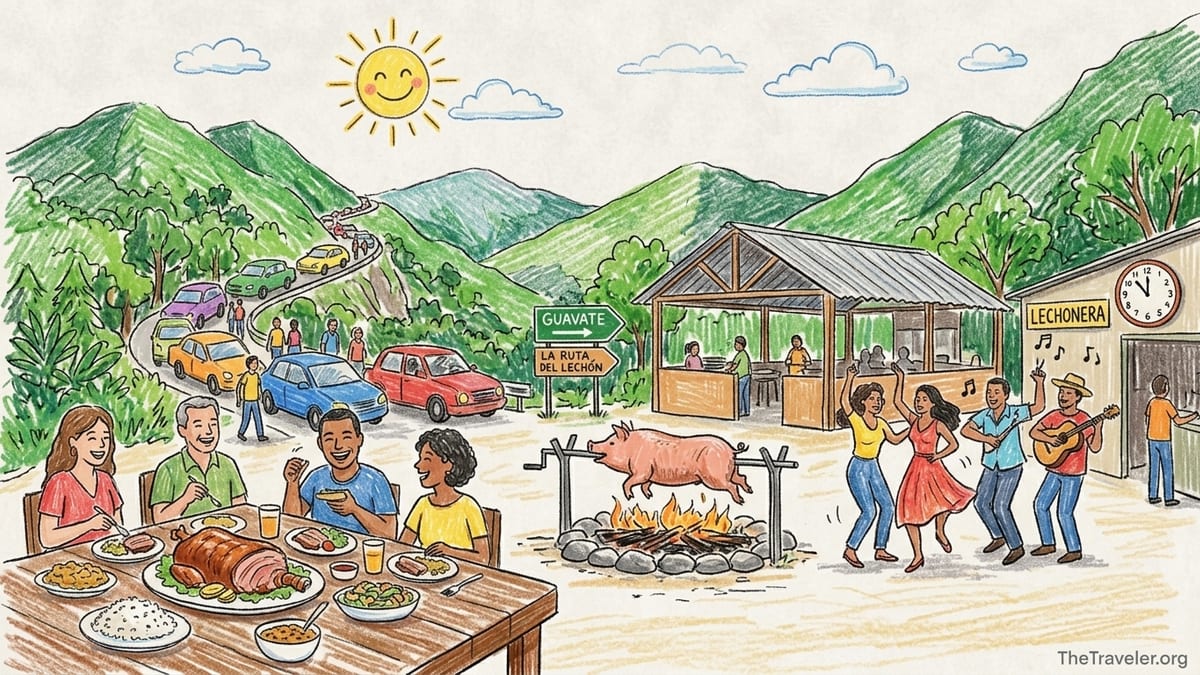
What Guavate Actually Is (And What It Is Not)
Guavate is not a single restaurant or a tidy food court. It is a hillside neighborhood straddling a few miles of PR-184, officially the road up to Carite State Forest and unofficially known as La Ruta del Lechón. Along this curvy mountain road sit a cluster of open-air lechoneras, from small mom-and-pop counters to sprawling pavilions like El Rancho Original and Los Pinos, where whole pigs turn slowly over charcoal and salsa spills from the speakers. On weekends, especially Sundays, it feels less like a meal stop and more like a roving block party.
From central San Juan, most drivers take Highway PR-52 south toward Cayey and exit near Guavate to connect with PR-184. Under light traffic, tourism officials describe the drive as roughly 40 minutes. In practice, travelers report about 45 minutes to an hour from Condado or Old San Juan to the first lechoneras, with the final uphill stretch often slowing as people hunt for parking or simply roll their windows down to scout the scene. There is no convenient public transport; this is a self-drive or private-driver destination.
Crucially, Guavate is about atmosphere and abundance, not a formal tasting tour. You will not find carefully portioned flights of pork. Plates are generous, beers are cold, and tables fill with families who plan to linger for hours. That matters when you are trying to figure out how much you can realistically eat, drink, and do in a single day.
What Guavate is not: it is not a quick roadside stop where you can efficiently tick off multiple attractions. The road is narrow, weekend traffic can crawl at walking speed, and lechoneras are spread out enough that hopping between many of them involves repeated parking battles. If your ideal day trip is tightly scheduled and museum-heavy, Guavate will feel loose, improvised, and proudly unpolished.
Getting There, Weekend Traffic, and How Much Time You Really Need
The most straightforward route from San Juan is PR-52 south toward Cayey, exiting near Guavate and following signs for PR-184. Discover Puerto Rico and local tourism materials describe Guavate as about 40 minutes from San Juan in normal conditions, which aligns with midweek daytime drives when traffic is light. Weekend reality, especially on Sundays and holidays, is different. Drivers often report an extra 20 to 40 minutes in slow-moving lines as they approach the heart of the lechonera strip and then creep along looking for a parking space on the shoulder.
Tourism officials and local guides consistently recommend arriving before noon on weekends if you want a smoother experience. That advice is not about the pork “running out” early so much as about parking and crowd levels. Show up at 10:30 or 11:00 a.m. on a Sunday and you may find a spot reasonably close to your chosen lechonera, music already starting up, and lines manageable. Arrive at 2:00 p.m. and you are more likely to inch forward in near-gridlock, park far up or down the road, and queue behind big family orders at the carving station.
For planning, think in blocks of time rather than quick in-and-out. A food-focused half day from San Juan typically looks like four to five hours total: about 45 to 60 minutes each way plus two to three hours eating and soaking up the vibe at one main lechonera, with perhaps a short stroll to another spot for a drink or dessert. That works well if you want the taste and atmosphere without sacrificing an entire day of your trip.
If you want to fold Guavate into a wider mountain day involving multiple lechoneras and an outdoor stop in Carite State Forest near Charco Azul, you will realistically need most of a day. Once you factor in morning drive time, a hike or scenic walk, a long lunch, live music, and slow weekend traffic back toward San Juan, it is easy for the outing to run eight hours or more. Treat it like a full-day excursion, not a side errand between beach time and Old San Juan.
Half-Day vs Full-Day: What You Can Realistically Combine
Guavate works best when you are honest about how much you can comfortably eat and how much time you are truly willing to spend in the car. A food-focused half-day trip is the most straightforward option if you are staying in San Juan and want to keep your schedule flexible. In that scenario, you leave the city around 10:00 a.m., arrive by late morning, choose one anchor lechonera such as El Rancho Original by the river or Los Pinos higher up the hill, and commit to having your main meal there. Plan on a hefty plate of lechón with sides like arroz con gandules, yuca, or tostones, plus perhaps a shared order of morcilla or pasteles if they are available.
In a half-day, you might add a brief second stop on the way back down the road: perhaps a coffee at a smaller stand, a mojito at a bar-style spot, or a quick walk through a different lechonera just to see another setup. But expect that your appetite will cap meaningful food sampling at two, maybe three small plates at most, especially if you care about not wasting food. A single mixed platter at one of the big lechoneras can easily feed two light eaters, and it is common to see locals leaving with foil containers of leftovers rather than forcing down a second full meal.
A full-day version often pairs Guavate with the Carite area rather than with distant attractions. Some travelers like to drive past the main cluster of lechoneras in the morning and continue up toward Carite State Forest, where the Charco Azul area offers a short walk to a natural pool when conditions allow access. That gentle walk, often described as about 20 minutes each way from the parking area, can be a pleasant appetite-builder before lunch. You then return downhill to your chosen lechonera for a mid-afternoon feast and perhaps a bit of dancing if a live band is playing.
What does not work well is the fantasy itinerary that squeezes in six restaurants, a full swim at Charco Azul, and a detailed tour of Cayey town all in one afternoon. The road, the lines at the carving counters, the generous portions, and the social nature of the day all conspire against that kind of checklist approach. At most, a realistic full-day Guavate and Carite outing might include an early forest walk, one major lunch stop, and a brief second stop for a drink or small bites, with unhurried time in between to people-watch and listen to music.
Eating Strategy: Portions, Prices, Alcohol, and Designated Drivers
Understanding portions and pricing will keep your Guavate day from turning into expensive food waste. At many lechoneras, the classic ordering method is by weight: you point to the cut of pork you want and the carver slices it, weighs it, and quotes a price per pound. Pork prices can vary, but recent on-the-ground reporting suggests that a generous serving for one person often comes out to a modest bill compared to a sit-down restaurant in San Juan, especially when you share plates among two or three people. Sides like rice with pigeon peas, yuca al mojo, and pastel-like dishes round out the meal.
As a solo traveler, plan to order smaller quantities and ask staff for help in not overdoing it. Ordering a half-pound mix of lean meat and crispy skin, plus one or two sides, is usually plenty for one hungry person. If you are in a group, shared platters are the way to taste a bit more without doubling your intake. It is entirely acceptable to ask for leftovers packed to go, but remember you will be driving and then likely back in a hotel without a full kitchen, so bring only what you can eat later the same day.
Alcohol is part of the scene. Many lechoneras serve cold beer, local rum drinks, and cocktails like mojitos. On busy weekends some spots feel like open-air bars with a dance floor. If anyone in your party is drinking, agree on a strict designated driver in advance or hire a private driver so everyone can participate safely. The combination of narrow mountain curves, parked cars hugging both sides of the road, pedestrians weaving between vehicles, and sudden tropical downpours means this is not a place to “have just one” and then navigate back to the highway. If you prefer to skip alcohol, you will still find fresh juices, soft drinks, and coffee.
Parking is another practical consideration. Expect to park on the shoulder of PR-184 or in small improvised lots. Surfaces can be uneven and muddy after rain, so closed-toe shoes are more practical than flimsy sandals. Bring cash, as some lechoneras and informal parking attendants may not accept cards. Card acceptance has improved, but signal in the mountains can be patchy, and relying entirely on mobile payments is risky. Give yourself extra time when returning to the car; traffic jams often form as vehicles pull in and out of tight roadside spaces.
Is Guavate Worth It If You Do Not Eat Pork?
Guavate is built around lechón. That fact matters if you or someone in your group is vegetarian, avoids pork for religious reasons, or simply does not care about roasted meat. Almost every lechonera offers side dishes that can form a meal: rice and beans, boiled root vegetables like yuca and yautía, tostones, green salads, and sometimes seafood or chicken. With some care, a non-pork eater can put together a plate and still enjoy live music, mountain air, and the social energy.
However, the depth of the experience for non-pork eaters depends on expectations. The visual centerpiece at each lechonera is the spit-roasted pig. The smell of roasting meat hangs over the road. Many local specialties on the buffet line, like certain stews or rice dishes, are cooked with pork fat or bits of meat even if they do not list pork in the name. Vegetarians who are flexible about cross-contact will have an easier time than strict vegans who need entirely plant-based kitchens.
If you are traveling with a group, Guavate can still be worthwhile when only some members are excited about pork, as long as everyone understands that the day is anchored around a carnivorous tradition. A vegetarian traveling with meat-loving friends might treat the outing as a cultural and musical excursion: listen to live salsa, sip fresh juice, focus on sides and dessert, and enjoy the mountain setting. But for a couple where both travelers are uninterested in meat and not particularly drawn to noisy, crowded food halls, Guavate may feel like a detour that does not align with their values or tastes.
For travelers who avoid alcohol-heavy environments, it helps to know that not every lechonera has a party vibe all day. Earlier hours, especially before noon, tend to be more about families eating and less about dancing and drinking. Choosing a quieter spot near the beginning of the strip and visiting earlier can soften the intensity. Still, this is fundamentally a food and drink pilgrimage, not a contemplative nature outing.
Guavate vs Old San Juan, El Yunque, and Other Day-Trip Options
When you only have a few days in Puerto Rico, the real question is not whether Guavate is “good” but whether it is better than your alternatives. From San Juan, classic day trips include wandering the blue cobblestone streets of Old San Juan, hiking and waterfall stops in El Yunque National Forest, or beach time around Piñones or Luquillo. Each offers a different mix of culture, scenery, and logistics.
Old San Juan delivers layered history, colonial architecture, and fortresses such as Castillo San Felipe del Morro and Castillo San Cristóbal, all without needing a car if you are already staying nearby. You can spend a day here moving between museums, cafes, and plazas, with plenty of flexibility to duck into the shade during hot hours. For architecture buffs, history lovers, or first-timers to Puerto Rico, dedicating a full day to Old San Juan often feels essential. Compared with Guavate, it is more walkable, more varied in activities, and lighter on heavy food unless you seek it out.
El Yunque, roughly an hour east of San Juan by car depending on trailhead and traffic, offers lush rainforest hikes, river pools, and mountain viewpoints. Reservations and trail access rules can change, so it requires a bit of advance planning, but many visitors describe it as the natural highlight of their trip. Guavate has mountain scenery and, via Carite, access to forest walks, but it is fundamentally a food and music day; El Yunque is about waterfalls, birdsong, and misty ridges. If you are someone who feels restored by long hikes and swimming in rivers, El Yunque may be a better fit for your limited time.
There are also urban food alternatives closer to San Juan. Neighborhoods such as Santurce and Miramar have modern Puerto Rican restaurants, food trucks, and cocktail bars where you can taste lechón or other local dishes without renting a car or navigating mountain curves. A traveler who is curious about Puerto Rican cuisine but anxious about driving might prioritize these instead. In that context, Guavate becomes a niche excursion for those who specifically want the traditional roadside lechonera experience, not simply good pork.
Who Guavate Suits Best (And When To Skip It)
Guavate shines for travelers who see food as a window into local life and who enjoy unstructured, sensory-heavy days. If your idea of a memorable trip is joining Puerto Rican families at long plastic tables, watching carvers break down whole pigs, and dancing to a live salsa band under a tin roof, then the Pork Highway is more than just lunch. It is a cultural immersion where you are one of many locals out for a weekend celebration rather than a tourist in a curated space.
It is particularly compelling for groups of friends or multigenerational families who can share large plates, sample different cuts of pork, and take turns watching the kids near the river or dance floor. Renting a car for the day or hiring a private driver from San Juan makes the trip smoother, and the cost of food itself can compare favorably to a big meal back in the city. For repeat visitors who have already walked Old San Juan’s main streets and perhaps visited El Yunque once, Guavate offers a fresh slice of island life.
On the other hand, Guavate is a weaker fit for tightly scheduled first trips, especially short weekends when you are trying to see the forts, the rainforest, and the beaches in just a few days. If crowds make you anxious, if heavy meat dishes sit poorly in the heat, or if your group includes strict vegetarians who will not be comfortable surrounded by whole roasted pigs, the trade-off starts to look less attractive. The drive is not technically difficult, but it demands focus, especially on busy afternoons when cars park along both sides of the road and pedestrians weave between them.
It also matters how comfortable you are with informal infrastructure. Guavate is not about polished design or extensive signage. Music can be loud, bathrooms can be basic, and weather can shift quickly in the mountains, sending afternoon rain across open-air seating. If you are at ease in that kind of environment and see it as part of the experience, you are more likely to come home talking about Guavate as the surprise highlight of your trip. If you prefer carefully designed spaces and tight service standards, you might appreciate Guavate more as a brief stop during a longer drive than as the centerpiece of a precious vacation day.
The Takeaway: Worth It If / Skip It If
Guavate is worth the day trip from San Juan if you are genuinely excited about roasted pork, local weekend culture, and do not mind trading some time in traffic for an immersive, communal meal in the mountains. For most visitors, a half-day visit anchored on one main lechonera, with departure from San Juan around mid-morning and return by late afternoon, offers the best balance of effort and reward. A full-day version that folds in a short visit to the Carite area works well for those who enjoy pairing hearty food with a bit of light outdoor time.
In practical terms, Guavate is worth it if you prioritize food and cultural atmosphere over sightseeing checklists, are comfortable driving curvy mountain roads or paying for a driver, can arrive before noon on a weekend to beat the worst crowds, and travel with at least one person who truly appreciates slow-roasted pork. It is also a strong option for repeat visitors who have already covered Old San Juan and are looking for a more local-feeling day.
Consider skipping or postponing Guavate if your trip to Puerto Rico is very short and you have not yet explored Old San Juan or El Yunque; if you or your companion are strict vegetarians or vegans who will not enjoy several hours centered on pork; if you dislike loud music, crowds, and informal roadside parking; or if no one in your group is prepared to stay sober and focused for the drive back. In those cases, you will likely get more from your limited time by staying closer to San Juan and choosing food and culture experiences that match your comfort zone.
If you read all of this and still picture yourself happily standing at a carving counter, pointing to a glistening strip of crispy skin while a band warms up in the background, Guavate’s Pork Highway is probably worth at least one long, lazy afternoon of your Puerto Rico trip.
FAQ
Q1. How long does it take to drive from San Juan to Guavate?
Under light traffic, the drive from central San Juan to the first lechoneras near Guavate is often around 40 to 60 minutes each way. On busy weekends and holidays, expect the final stretch along PR-184 to slow significantly, potentially adding 20 to 40 minutes as cars queue and search for parking.
Q2. Do I need a car to visit Guavate’s Pork Highway?
Yes, in practical terms you do. There is no convenient public transport directly to the lechoneras along PR-184, and they are spread out over several kilometers. Most visitors either rent a car in San Juan or hire a private driver or tour service for the day so they can enjoy food and drinks without worrying about the drive back.
Q3. When is the best time of day and week to visit Guavate?
Weekends are when Guavate is most lively, with more lechoneras open, live music, and a festive atmosphere. To avoid the worst of the traffic and secure easier parking, aim to arrive before noon, especially on Sundays and during holiday periods. Earlier hours also tend to be more family-focused and slightly quieter.
Q4. How many lechoneras can I realistically visit in one trip?
Most travelers find that one main lechonera plus a quick second stop for a drink or small snack is realistic in a half-day visit. Portions are large, appetite is finite, and repeated parking along a busy mountain road can be tiring. Trying to seriously eat at four or five different places in a single afternoon is likely to feel rushed and wasteful.
Q5. Is Guavate suitable for vegetarians or non-pork eaters?
Guavate can work for flexible vegetarians or travelers who avoid pork but still enjoy lively food spaces. Many lechoneras offer side dishes like rice, beans, yuca, and tostones that can be combined into a meal. However, the experience is centered on roasted pig, and many dishes are cooked with pork fat, so strict vegetarians or vegans may feel limited and uncomfortable.
Q6. Can I combine Guavate with a visit to Charco Azul or Carite State Forest?
Yes, some travelers drive past the lechoneras in the morning to reach the Charco Azul area of Carite State Forest, enjoy a short walk or time by the river, then return downhill to Guavate for a late lunch. This combination usually fills most of a day once you factor in driving, hiking or walking, eating, and weekend traffic.
Q7. How much cash should I bring, and do lechoneras take credit cards?
Card acceptance has improved, but not every lechonera or roadside vendor reliably takes cards, especially if mobile signal is weak. Bringing a reasonable amount of cash for food, drinks, and informal parking is wise. For two people planning a hearty lunch with drinks, carrying enough cash for a generous restaurant meal back in San Juan is usually sufficient.
Q8. Is it safe to drink alcohol if I plan to drive back to San Juan?
Given the narrow, curvy mountain road and busy weekend traffic, the safest approach is to have a designated driver who does not drink at all, or to hire a private driver so everyone can enjoy alcoholic drinks. Even small amounts of alcohol can affect judgment on roads with parked cars, pedestrians, and changing weather conditions.
Q9. What should I wear for a day trip to Guavate?
Dress for warm, humid mountain weather with the possibility of sudden rain. Lightweight clothing, a hat, and comfortable closed-toe shoes work best, especially as you may park on uneven or muddy shoulders along the road. If you plan to visit the Carite or Charco Azul area, bring footwear suitable for short walks on damp or rocky paths.
Q10. Is Guavate a better use of a day than Old San Juan or El Yunque?
It depends on your priorities. Old San Juan suits travelers who value history, architecture, and walkable neighborhoods. El Yunque appeals to those who want rainforest hikes and waterfalls. Guavate is ideal if your main goal is a lively, food-centered cultural experience focused on traditional lechón and live music. For first-time visitors with very limited time, Old San Juan or El Yunque often come first, with Guavate as a strong option for an additional or return-day trip.