


Private aviation brands love to talk about freedom and flexibility. What many travelers really want to know, though, is simple: what does it actually cost to fly? Nicholas Air, a U.S.-based private aviation company with its own fleet and several different programs, is no exception. Its marketing leans into refinement and member experience, but if you are considering a jet card, lease, or fractional share, you need to understand the full picture of costs before signing anything. Here is a grounded, example-driven look at what it really costs to fly with Nicholas Air in 2026, and how those costs compare with other ways of flying private.
Get the latest updates straight to your inbox!
Understanding How Nicholas Air Sells Access to Its Fleet
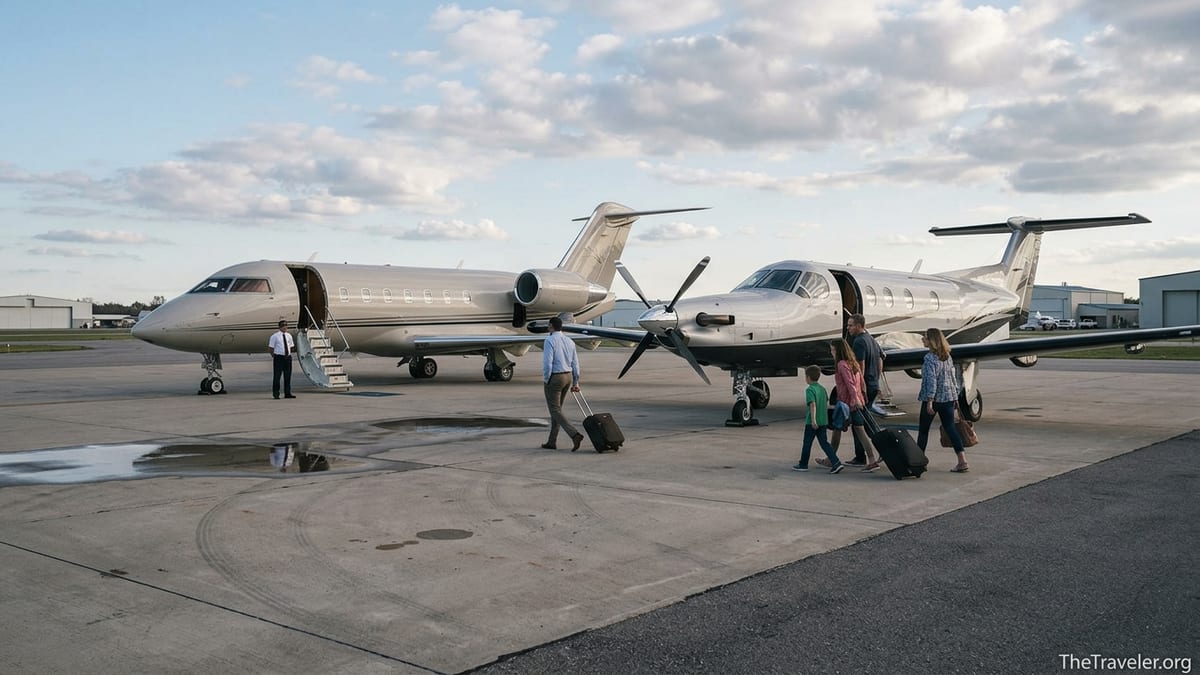
Nicholas Air is not a charter broker. It owns and operates its fleet, which typically includes aircraft such as the Pilatus PC-12, Embraer Phenom 100 and 300, Cessna Citation CJ3 and Latitude, and the Bombardier Challenger 300. Rather than offering one simple pay-as-you-go product, the company packages access through structured programs, each with a different cost profile. For a prospective member, that is where the complexity begins.
At a high level, Nicholas Air markets four core options: jet cards (branded Blue, Rise, and Smart), a Jet Lease program, fractional ownership shares, and aircraft management for current owners. The first three are the ones most individual travelers and small companies compare when they are moving up from charter or are trying to avoid the commitment of buying a whole aircraft outright. Each option spreads costs differently across upfront capital, monthly fixed fees, and per-hour flight charges.
Because Nicholas Air does not publish a simple, public rate sheet the way some competitors do, you will not find a menu of hourly prices on its website. Instead, prospects are typically walked through pricing one-on-one. That makes independent, apples-to-apples comparisons harder, but you can still estimate true costs by combining what Nicholas Air discloses in its brochures with typical industry ranges for similar aircraft and program structures.
Think of Nicholas Air less as a single price tag and more as a set of cost levers. Jet cards minimize commitment but charge more per hour. Leases reduce hourly cost but require a multi-year contract. Fractional ownership demands the most capital upfront but can deliver lower long-term hourly economics if you fly enough. The key is matching your flying pattern to the right structure.
Jet Cards: Blue, Rise, and Smart in Real Numbers
Nicholas Air’s jet card programs are its most visible product and the easiest on-ramp for new flyers. All three cards are pre-arranged agreements that buy you access to the fleet without you owning an aircraft. They share several traits: fixed hourly pricing within each aircraft category, no repositioning fees within the primary service area, a one-hour daily minimum, and guaranteed availability with appropriate notice. Where they differ is how you commit and how flexible your aircraft choice is.
The Blue Jet Card is aircraft-specific. You pre-purchase a block of hours – typically 15, 30, 60, or 100 – on a particular aircraft type, such as a Pilatus PC-12 for short hops or a Phenom 300 if you often fly three to six passengers on routes like New York to Miami. Industry observers and card holders report that for a light jet equivalent, such as a CJ3, fixed hourly rates in 2026 often land somewhere in the neighborhood of 8,000 to 9,500 dollars per occupied hour, inclusive of standard operating costs but before federal excise tax and airport fees. On a 25,000-dollar New York to Miami charter quote for a midsize jet, for example, a Blue Card member might see that same trip priced closer to 18,000 to 20,000 dollars, depending on card level and aircraft.
The Rise Jet Card is deposit-based rather than hour-based. Instead of buying a set number of hours on one aircraft, you place a larger refundable deposit and draw down against it at fixed hourly rates on any aircraft in the fleet. A member might wire 250,000 to 500,000 dollars, then choose a PC-12 for a short Dallas to Austin run at a lower hourly rate, and a Citation Latitude for a family vacation from Chicago to Cabo at a higher rate. This flexibility is what many mixed-mission travelers pay for: they can reduce cost on some flights by using turboprops or smaller jets without losing access to larger cabins when needed.
The Smart Jet Card is the most transactional of the three. Nicholas Air’s brochure describes it as a pay-as-you-fly option with a relatively small nonrefundable deposit, historically around 10,000 dollars, designed for those who want fleet access but are cautious about a large upfront commitment. You still get fixed hourly pricing and the protections of the Nicholas Air fleet, but you will generally pay a bit more per hour than on larger deposit or hour-based cards. For an occasional flyer doing 10 to 20 hours per year, that trade-off can make sense, especially if you value the ability to scale your flying up or down without a six-figure balance sitting idle.
What You Actually Pay Per Flight Hour
Across private aviation, the true cost of an hour in the air is a blend of the headline hourly rate, taxes, surcharges, and any program-specific fees. Nicholas Air is no different. The simplest way to think about it is to separate the cost you pay only when you fly from the cost that sits there whether you fly or not.
On Nicholas Air jet cards, the main per-use charge is the occupied hourly rate. For a Pilatus PC-12 or similar turboprop, contemporary card programs across the market often price in the rough range of 4,000 to 6,000 dollars per hour. For very light and light jets, such as a Phenom 100 or CJ3, realistic 2026 jet card pricing usually falls somewhere between 7,000 and 9,500 dollars per hour. Super midsize aircraft like the Citation Latitude may run closer to 10,000 to 13,000 dollars per hour on fixed-rate programs, with larger cabin jets like a Challenger 300 sometimes higher still.
To turn those broad ranges into something more concrete, imagine a Nicholas Air member with a Blue Card on a light jet class. A two-hour hop from Atlanta to New York might be billed as 2.3 occupied hours after taxi time and standard rounding. At an all-in hourly rate in the 8,500-dollar range, that single trip could cost roughly 19,500 dollars before federal excise tax. Add 7.5 percent U.S. federal excise tax and modest airport fees, and you might be closer to 21,000 dollars door to door.
Shorter sectors are where the one-hour daily minimum matters. A 35-minute Dallas to Houston leg will still be billed as one full hour. If you run that trip regularly on a turboprop at a notional 5,000 dollars per hour, you are effectively paying 5,000 dollars for a sub-one-hour hop. Stretch that same aircraft across a 2.0-hour Dallas to Denver trip and your per-mile cost drops sharply. For frequent flyers, optimizing aircraft type and trip length is one of the easiest ways to bring down cost per seat-mile within Nicholas Air’s system.
On top of the hourly rate, you should budget for extras that may not be obvious at first glance: de-icing in winter, international handling when you cross into Canada, Mexico, or the Caribbean, and surcharges for peak days when the fleet is busiest, such as the December holidays. Nicholas Air, like its peers, tends to publish peak day calendars and associated surcharges in its member documents, so ask to see them as you model your total cost.
Lease vs Fractional Ownership: When the Math Starts to Shift
Once your annual flying gets above about 75 to 100 hours, Nicholas Air begins steering many prospects toward its Jet Lease or fractional ownership programs. The logic is simple: at a certain point, paying top-of-market jet card hourly rates every time you fly becomes less efficient than trading some flexibility and liquidity for lower long-term hourly economics.
In the Jet Lease program, you do not buy a piece of the airplane. Instead, you sign a contract, often for 24 to 60 months, and pay a fixed monthly lease payment plus a lower occupied hourly rate every time you fly. Think of it like leasing a car: you get guaranteed access to a specific aircraft category, predictable costs, and no responsibility for residual value when the term ends. A regional business that sends executives on two to three trips per week might find that a lease on a PC-12 or light jet brings their effective hourly cost down by 10 to 20 percent compared with flying exclusively on a jet card.
Fractional ownership, sometimes marketed by Nicholas Air as Jet Share, involves buying a legal share of a specific aircraft model. In the wider market, a one-sixteenth share of a light jet like a Citation Latitude might cost upward of several hundred thousand dollars, entitling the owner to about 50 hours of flying per year. Owners then pay a monthly management fee to cover crew, hangar, insurance, and administration, plus a reduced occupied hourly rate that covers fuel and maintenance. Nicholas Air’s own fractional materials emphasize similar mechanics, stressing predictable costs over the contract term and benefits such as tax depreciation for qualifying buyers.
To see how the economics can shift, consider a hypothetical traveler who flies 150 hours per year on a super midsize aircraft. On a traditional jet card at an illustrative 12,000 dollars per hour, they might spend 1.8 million dollars per year on flight time alone. Under a fractional model with Nicholas Air, they might instead invest a low-seven-figure sum in a share, pay a five-figure monthly management fee, and see the occupied hourly cost drop into the high single-digit thousands. Over a five-year term, that difference in hourly spend can outstrip the opportunity cost of the capital tied up in the share, especially for companies that can utilize available depreciation and have consistent, non-discretionary travel.
What fractional ownership does not do is make private flying cheap. It shifts the mix of costs. For a law firm that must move partners between regional offices every week regardless of airline schedules, that shift can be attractive. For a family that flies to the mountains twice each winter and to the beach once in summer, it is unlikely to pencil out compared with Nicholas Air’s more flexible jet card options or with on-demand charter across multiple providers.
Comparing Nicholas Air to Other Ways of Flying Private
For travelers trying to decode Nicholas Air pricing, the real question is rarely “Is it expensive?” Private aviation is always expensive. The more practical question is whether Nicholas Air’s programs deliver good value relative to alternatives like on-demand charter, other jet cards, or newer membership-based operators that use floating fleets without ownership. The answer depends heavily on your flying profile and your tolerance for variability.
If you fly sporadically and are highly flexible on aircraft type and provider, you may find that shopping each trip with charter brokers and online marketplaces produces lower one-off quotes than a Nicholas Air jet card, particularly on simple, point-to-point itineraries with lean positioning requirements. A New York to Miami one-way on a light jet may appear online for 14,000 to 18,000 dollars on a competitive day, while a fixed-rate Nicholas Air card trip for the same routing could marginally exceed that figure but offer guaranteed availability, consistency of crew and aircraft, and the backing of a single operator.
For travelers who prize certainty, those trade-offs look different. Nicholas Air’s vertical integration, where the company owns and operates its fleet rather than subcontracting to a patchwork of third parties, appeals to clients who are nervous about last-minute aircraft swaps or changes in quality. Executives who cannot afford a canceled departure on the morning of a critical board meeting may be willing to pay a modest premium to sit on a Nicholas Air membership rather than chasing the absolute lowest marginal rate on each flight through open market charter.
Compared with large national players with big marketing budgets, Nicholas Air often positions itself as more boutique and less crowded. That can translate into better access to specific aircraft models during peak periods, but it can also mean fewer fleet options if you want an ultra-long-range aircraft or a very large cabin. For transcontinental and Caribbean travel up to around five hours, its focus mix of turboprops, light jets, and super midsize aircraft is often sufficient. For globe-spanning trips to Europe or Asia, travelers commonly supplement Nicholas Air with ad hoc charter or simply fly commercial in premium cabins.
Hidden and Opportunity Costs Travelers Should Not Ignore
When you evaluate what it truly costs to fly with Nicholas Air, it is easy to focus just on the visible line items: hourly rate, taxes, and fees. Yet some of the most important costs are less obvious. One is the opportunity cost of capital tied up in deposits or fractional shares. If you wire 250,000 dollars into a Rise Jet Card or lock seven figures into a fractional ownership stake, that money is no longer working elsewhere in your portfolio. For high-net-worth individuals and companies, that opportunity cost may be acceptable, but it should still appear on the mental balance sheet.
Another quiet cost is seat factor. A four-passenger family that consistently charters a super midsize jet is paying for eight or nine seats they never use. Nicholas Air’s fleet mix gives members some ability to right-size aircraft, but the temptation to upsize “just in case” is strong. A cost-conscious member might run a scenario where half of their annual hours move to a Pilatus PC-12 or Phenom 100 for shorter trips while reserving the Phenom 300 or Latitude for longer legs. That blend can shave tens of thousands of dollars per year off the total bill without a noticeable reduction in comfort on sub-two-hour flights.
There is also the cost of complexity. Nicholas Air’s programs involve peak-day calendars, interchange rules, and contract terms that can materially affect your effective hourly rate. For example, flying predominantly on peak dates, making frequent last-minute changes, or canceling close to departure can incur penalties or surcharges that quietly push your real cost per hour higher than the nominal rate. Travelers who take the time to understand and work with these rules often fare better than those who treat a jet card like a blank check.
Finally, consider service and reliability as part of cost. An operator that consistently departs on time, provides modern aircraft interiors, and handles irregular operations smoothly saves you the expensive and intangible cost of missed connections, delayed meetings, and lost business opportunities. For many Nicholas Air members, that reliability premium is the reason they stay even when they know they could occasionally find a cheaper one-off charter elsewhere.
The Takeaway
Flying with Nicholas Air in 2026 is expensive, just as flying private with any serious operator is expensive. The true cost per flight hour typically lands in the mid four figures for turboprops and can climb into the low to mid five figures for light, midsize, and super midsize jets once hourly rates, taxes, and incidentals are factored in. At lower annual usage levels, Nicholas Air’s Blue, Rise, and Smart jet cards offer structured, predictable pricing in exchange for upfront deposits and membership-style rules. As your flying climbs past 100 hours per year, lease and fractional options start to look more compelling, bringing down occupied hourly costs at the price of capital commitment and contractual complexity.
The right question is not whether Nicholas Air is the cheapest way to fly private, but whether it fits your specific travel pattern and risk tolerance better than the alternatives. If you value a privately owned fleet, consistent service standards, and a single point of accountability more than you value squeezing every last dollar out of each trip, Nicholas Air’s programs can make sense. If you are more opportunistic, fly on irregular schedules, or are extremely price-sensitive per flight, a mix of on-demand charter and lighter membership models may serve you better.
Ultimately, the best way to understand what it really costs to fly with Nicholas Air is to run detailed scenarios using your own travel history: actual routes, trip frequencies, and passenger counts. Ask the company for complete program terms, including peak-day policies and ancillary fees, and compare those figures with quotes from at least one other jet card provider and a reputable charter broker. Armed with those real-world numbers, you can decide whether Nicholas Air’s version of private travel offers enough value, predictability, and peace of mind to justify its very real cost.
FAQ
Q1. How much does a Nicholas Air jet card really cost per hour?
For most travelers, realistic all-in hourly costs on Nicholas Air jet cards often range from the mid four figures on a turboprop to the low or mid five figures on light, midsize, and super midsize jets, once taxes and typical fees are included.
Q2. What is the minimum buy-in for Nicholas Air’s jet card programs?
Buy-ins vary by card type. Aircraft-specific Blue Cards typically require purchasing at least a small block of hours, while deposit-style cards such as Rise involve a larger upfront deposit. Smart Cards historically have required a comparatively modest nonrefundable deposit designed for infrequent flyers.
Q3. Are Nicholas Air’s hourly rates cheaper than on-demand charter?
Nicholas Air can be cheaper, similar, or slightly more expensive than charter depending on route, aircraft type, and timing. You may occasionally find lower one-off charter quotes, but Nicholas Air’s fixed-rate structure and guaranteed availability appeal to travelers who value certainty over chasing the lowest marginal price.
Q4. When does it make sense to consider Nicholas Air’s lease or fractional programs?
Lease and fractional programs start to make financial sense when you consistently fly somewhere around 75 to 100 or more hours per year, particularly if your trips are business-critical and relatively predictable and you want to lower your long-term occupied hourly cost.
Q5. Do Nicholas Air members pay extra fees on top of the hourly rate?
Yes. In addition to the base hourly rate, you should expect U.S. federal excise tax where applicable, airport and handling fees, and occasional extras such as de-icing, international handling, and peak-day surcharges, all of which raise your true cost per trip.
Q6. Can I choose different aircraft types on Nicholas Air without paying more?
If you hold a deposit-based program that allows fleetwide access, you can choose different aircraft types, but each category has its own fixed hourly rate. Upsizing to a larger jet will increase your hourly cost, while moving to a turboprop or very light jet can reduce it.
Q7. How does Nicholas Air handle very short flights?
Nicholas Air typically applies at least a one-hour daily minimum, so a very short hop under an hour in the air will still be billed as one full hour. For frequent short sectors, this makes aircraft choice and scheduling especially important to control cost.
Q8. Is my deposit with Nicholas Air refundable?
Refundability depends on the specific program and contract language. Some larger deposit cards are designed to be refundable under defined conditions, while smaller deposits or certain fees may be nonrefundable. Always review the membership agreement carefully before committing funds.
Q9. How does Nicholas Air compare to big national brands for reliability and service?
Nicholas Air positions itself as a boutique, owner-operator with a tightly controlled fleet and an emphasis on consistency. Many members value this approach, though travelers who need ultra-long-range aircraft or worldwide coverage may still supplement it with other operators.
Q10. What is the best way to decide if Nicholas Air is a good value for me?
The most practical approach is to map one year of your actual or planned trips, ask Nicholas Air for detailed proposals across its relevant programs, and compare those side by side with quotes from at least one competing jet card and an on-demand charter broker to see which option delivers the best blend of cost, flexibility, and reliability.