


More news on this day
A Russian drone incursion into Moldovan airspace forced a temporary shutdown of flights and delayed Ukrainian President Volodymyr Zelensky’s departure for Norway this week, underlining how Russia’s war in Ukraine continues to disrupt civilian and VIP air travel across the region.
Get the latest news straight to your inbox!
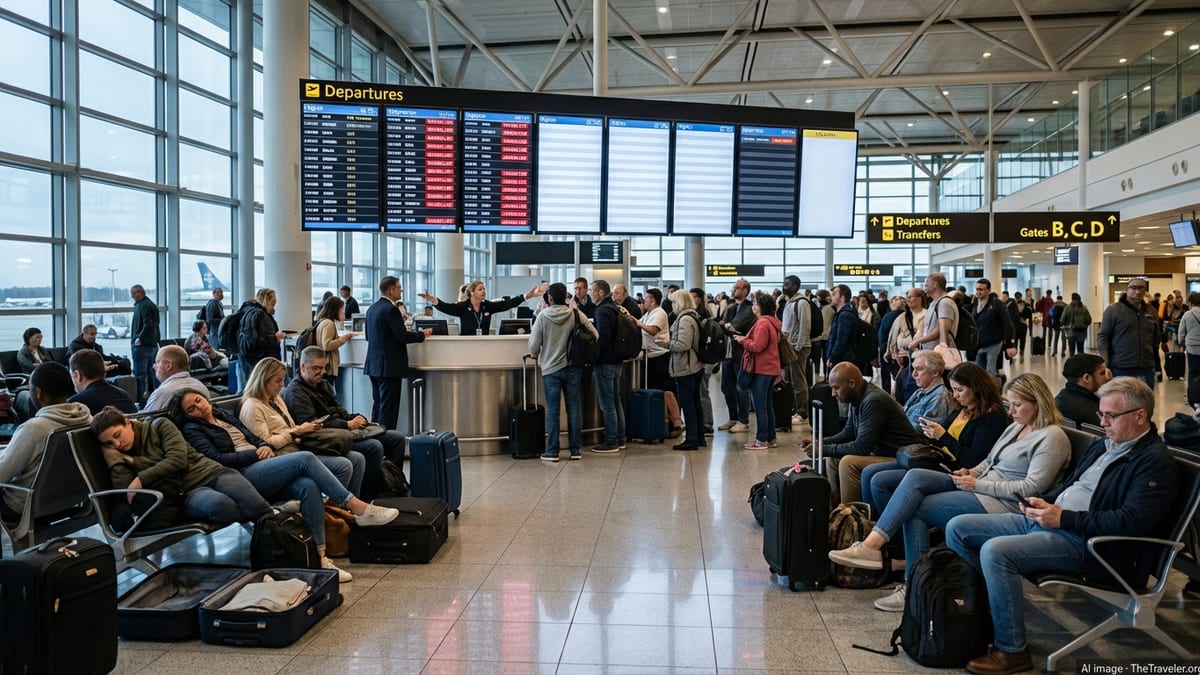
Airspace Closure in Moldova Disrupts Presidential Flight
Publicly available reports indicate that Moldova briefly closed its airspace on Tuesday, September 8, after radar systems detected a Russian drone entering from the direction of Ukraine. The restrictions halted departures from Chișinău International Airport, including the aircraft scheduled to carry Zelensky to Oslo ahead of events linked to the funeral of Norway’s King Harald V.
Coverage from multiple outlets notes that at least three outbound flights and several arrivals were delayed while air navigation authorities assessed the threat and tracked the drone’s trajectory. The presidential aircraft reportedly remained on the ground until officials confirmed that the airspace over central Moldova was clear.
Once the temporary restrictions were lifted, Zelensky’s flight departed later than planned and continued on to Norway without further incident. Subsequent reports from Canada and Norway confirm that the Ukrainian leader’s onward travel schedule proceeded, although with a knock-on delay following the Moldovan disruption.
Drone’s Route Spans Moldova and NATO Airspace
According to published coverage citing Moldovan police and defense statements, the drone at the center of the incident followed a complex route that underscored the cross-border nature of aerial risks in the region. Surveillance data described in regional media suggests the unmanned aircraft entered Moldovan airspace in the afternoon and then crossed into neighboring Romania, a NATO member state, before later reentering Moldova.
Investigators said the drone eventually came down in a rural area of northern Moldova, in Rîșcani district, where it reportedly crashed in or near agricultural land and triggered multiple small fires. Local accounts state that no injuries were reported, but images shared in news reports show a sizable crater and scattered debris.
Moldovan authorities have indicated that recovered fragments appear consistent with so-called Geran or Shahed-type loitering munitions, a class of Iranian-designed drones that Russia has used extensively in its full-scale invasion of Ukraine. Technical analysis of the wreckage is ongoing, with specialists working to clarify the exact model and explosive payload.
Regional Air Travel Faces Ongoing Drone-Related Disruptions
The delay to Zelensky’s flight is the latest example of how Russia’s drone campaign in and around Ukraine affects air travel in adjacent countries. Since the invasion began in February 2022, both Moldova and Romania have reported multiple instances of suspected Russian drones crossing their airspace, occasionally prompting airport restrictions and air-defense alerts.
In this latest incident, Moldova’s decision to halt flights aligned with a wider European trend in which drone sightings and incursions near airports have led to temporary closures or diversions as a precaution. Aviation-focused outlets note that while the drone in question ultimately exploded roughly 160 kilometers from Chișinău’s main airport, the uncertainty during its flight path led authorities to prioritize risk reduction for aircraft on the ground and in the vicinity.
The episode also highlights the operational challenges for airlines and state flight planners coordinating VIP movements in a conflict-adjacent environment. Even with carefully planned routes and security protocols, uncrewed aerial systems operating unpredictably near borders complicate scheduling and can introduce last-minute changes to takeoff slots, ground handling, and onward connections.
Moldova Balances Security Concerns and Aviation Continuity
Moldova, a small country wedged between Ukraine and Romania, has faced repeated spillover effects from the war next door, from energy shocks to periodic airspace infringements. Government representatives quoted in regional and international coverage have emphasized that airspace restrictions imposed during the Zelensky delay were time-limited and specifically targeted at ensuring safe separation between civilian aircraft and the intruding drone.
According to analyses in European press reports, the authorities allowed flights to resume once tracking data and on-the-ground checks confirmed that no active aerial threat remained over central Moldova. The incident nonetheless contributed to a growing body of evidence that uncrewed systems launched from or near the Ukrainian border can traverse Moldovan territory with little warning.
For the country’s main gateway, Chișinău International Airport, these recurring alerts pose practical questions about contingency planning. Airport and air traffic management teams across the region are increasingly refining procedures for rapid shutdowns, reroutings, and restarts when drones are detected along flight corridors used by commercial and government aircraft.
Implications for Travelers and Future VIP Movements
For most passengers, the latest drone-related disruption in Moldova translated into modest schedule changes rather than cancellations, but it points to a travel environment where sudden airspace closures may remain a recurring feature. Travel-news monitoring shows that in this case, delayed departures, including Zelensky’s flight, eventually left the airport, and arrivals were staggered to manage congestion once restrictions were lifted.
Aviation observers suggest that similar incidents could influence how carriers and governments plan flights that pass near active conflict zones, particularly when transporting heads of state or large delegations. Additional buffers in timetables, alternative routings through more distant airspace, and closer coordination with NATO and regional air-defense networks are among the measures being discussed in public analysis.
For leisure and business travelers transiting hubs close to Ukraine, the Moldovan case serves as a reminder that Russia’s ongoing use of drones can have knock-on effects far beyond the immediate front line. While safety protocols are designed to keep passengers and aircraft out of harm’s way, those measures may at times come at the cost of unexpected delays and altered itineraries.
Associated Press coverage of the Moldova drone airspace closure
India Today report on the delayed Zelensky flight