


More news on this day
Recent air traffic control failures and operational disruption have left thousands of airline passengers stranded at airports, facing last-minute cancellations while being warned they may not receive compensation for their ruined trips.
Get the latest news straight to your inbox!
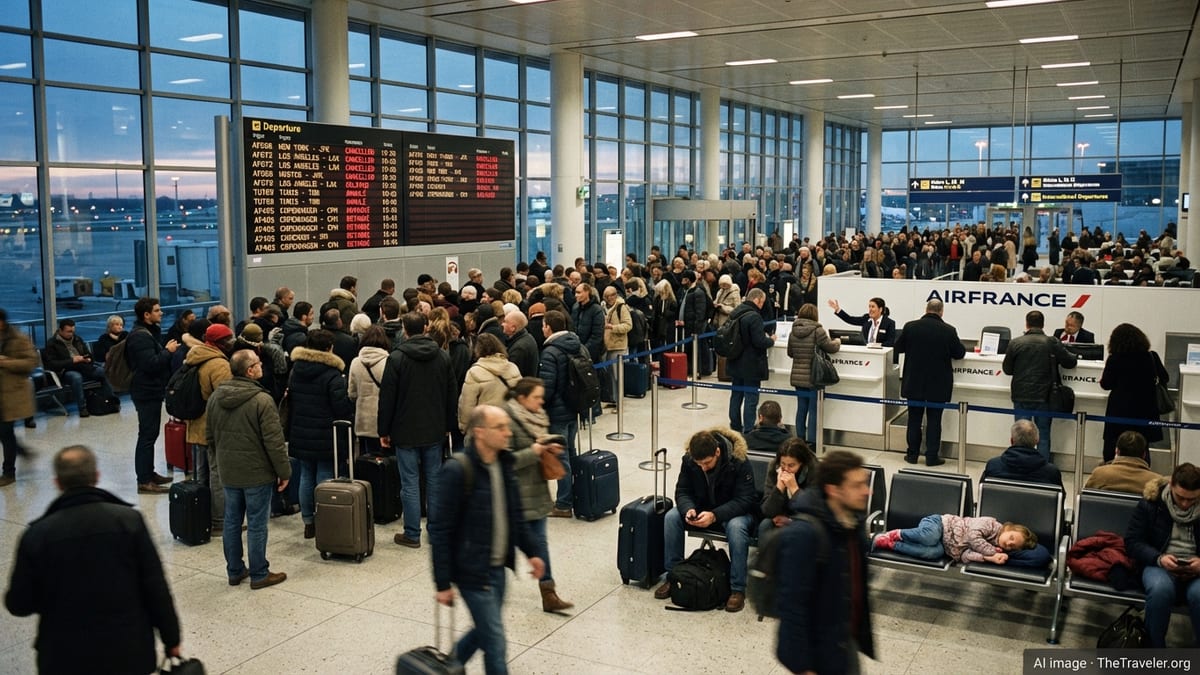
Technical failures and airspace disruption leave travellers in limbo
In early September 2026, a major technical problem at the United Kingdom’s air traffic control system triggered the cancellation of more than 2,000 flights and widespread delays, according to international news reports. The disruption rippled across key hubs including London Heathrow, Gatwick, Manchester and Birmingham, with aircraft and crews left out of position and schedules in disarray.
Coverage from multiple outlets describes scenes of passengers stranded in terminals and on grounded aircraft while airlines attempted to rebook customers and reposition aircraft. Some travellers were left overnight with limited information, highlighting how vulnerable passengers can be when a core part of aviation infrastructure experiences a sudden failure.
Although flight schedules are gradually recovering, the operational fallout continues. Airlines are trying to move displaced passengers, manage crew duty limits and catch up on maintenance slots. For many travellers, that has meant missed connections, abandoned holidays and business trips that never happened.
Adding to the frustration, many affected passengers are being told that despite the chaos they may not qualify for compensation payments, even when flights were cancelled at short notice.
Why many cancelled flights are classed as ‘extraordinary circumstances’
Under UK and European-style passenger rights rules, commonly referred to as UK261 or EC261, travellers can be entitled to fixed-sum compensation when flights are cancelled or significantly delayed and the airline is at fault. Public guidance from the UK Civil Aviation Authority explains that compensation is generally only due when the disruption is within the airline’s control, such as staffing issues or certain technical faults.
Situations outside the airline’s control are typically labelled “extraordinary circumstances” in the legislation. Published guidance and specialist legal analysis list severe weather, security incidents, air traffic control strikes and major air traffic control system failures among the scenarios that normally fall into this category. When a cancellation is caused directly by those events, airlines may have no legal obligation to pay compensation, although they still owe care and assistance.
Recent consumer coverage of the UK air traffic control incident notes that passengers whose flights were cancelled or heavily delayed because of the system failure are, in many cases, unlikely to receive compensation. Legal commentators point out that air traffic restrictions imposed by a separate authority are usually treated as extraordinary, even when the resulting disruption is severe.
For travellers, that distinction can be difficult to accept. From a passenger’s perspective, a ruined trip feels the same whether the cause is an airline crew shortage or an external systems outage. Yet in law, the label attached to the cause often determines whether cash compensation is available.
Rights to refunds, rerouting and basic care still apply
Even when compensation is not payable, passengers affected by cancellations retain important rights. Official guidance from the UK government and the Civil Aviation Authority states that, for flights departing from the UK, travellers whose flights are cancelled can generally choose between a refund and rerouting at the earliest opportunity or at a later convenient date, subject to seat availability.
Airlines must also provide assistance such as meals, refreshments and, when necessary, hotel accommodation and transfers during long waits. Consumer advice from regulators and ombudsman services stresses that these care duties can apply regardless of what caused the cancellation, including where extraordinary circumstances are involved.
Similar principles apply on many routes to or from the United States. Information from the US Department of Transportation confirms that passengers are entitled to a refund if a flight is cancelled and they decide not to travel, regardless of the reason. However, beyond that refund, US airlines have wide discretion over whether to offer meal vouchers, hotel rooms or rebooking on other carriers, and policies vary between airlines.
Travel experts therefore encourage passengers to separate two issues: the right to a refund or alternative transport, which is relatively robust, and the right to additional compensation, which depends heavily on the cause of the disruption and the applicable legal regime.
Complex rules, ‘knock-on’ delays and mixed messages at airports
The complexity of passenger rights rules can lead to confusion at airports, especially when staff are dealing with large numbers of disrupted travellers. Some passengers report being told at customer service desks that they are not entitled to anything beyond a seat on the next available flight, even where public guidance indicates that meals or overnight accommodation should be provided.
One recurring disagreement involves so-called “knock-on” delays. Specialist guidance on EC261 and UK261 notes that while an initial cancellation may be caused by an extraordinary event such as an air traffic control failure, airlines must still show they took reasonable measures to limit subsequent disruption. If later flights are cancelled primarily because of internal rescheduling choices, those passengers may, in some circumstances, still have a claim for compensation.
Consumer organisations warn that airlines sometimes adopt a broad view of extraordinary circumstances, citing external causes even when there may have been opportunities to mitigate the impact. Passengers are often advised to keep detailed records of boarding passes, booking confirmations and receipts for expenses in case they need to challenge an airline’s decision.
Independent information sites and financial commentators also highlight the role of travel insurance. Policies vary, but some may cover additional costs or offer benefits when airlines are not legally obliged to pay compensation, particularly where trips are abandoned entirely due to lengthy delays.
What stranded passengers can do next
For travellers still trying to resolve claims from this latest wave of cancellations, the starting point is to confirm the airline’s explanation for the disruption and to compare it with publicly available guidance. If the cause clearly fits within the extraordinary circumstances category, a cash compensation claim may not succeed, but passengers should still request refunds, rerouting and any care they are owed.
If there is doubt about whether the airline did everything reasonable to avoid or reduce disruption, passengers in the UK can raise concerns with the relevant alternative dispute resolution body or with the Civil Aviation Authority’s complaints service. On many international routes, local regulators or ombudsman services offer similar escalation channels.
Consumer advocates also recommend checking payment card protections and travel insurance policies, which can sometimes help recover losses from non-refundable accommodation, tours or car hire when flights are cancelled. In jurisdictions where automatic statutory compensation is limited, these private arrangements can make a significant difference to the final cost of a disrupted journey.
Ultimately, recent events underline a persistent gap between what many passengers expect when flights are cancelled at the last minute and what the law currently guarantees. As major disruptions linked to weather, infrastructure and staffing continue to affect global aviation, calls for clearer rules and more consistent support for stranded travellers are likely to intensify.
UK Civil Aviation Authority: Am I entitled to compensation?
UK government air passenger travel guide
US Department of Transportation: refunds and cancellations
Recent coverage of UK airport disruption and passenger rights