


On paper, bunq looks like the ideal bank for frequent travelers: slick app, instant sub-accounts, real card controls and competitive exchange rates. Many digital nomads and long-term travelers in Europe now use it as their main banking hub. Yet once you land in Bangkok, tap your Metal card at a New York bar, or try to get your rent deposit back in Berlin, you quickly discover there are practical details nobody mentioned in the glossy marketing copy. This guide walks through the lesser-known realities of using bunq on the road so you can decide if it matches how you actually travel.
Get the latest updates straight to your inbox!
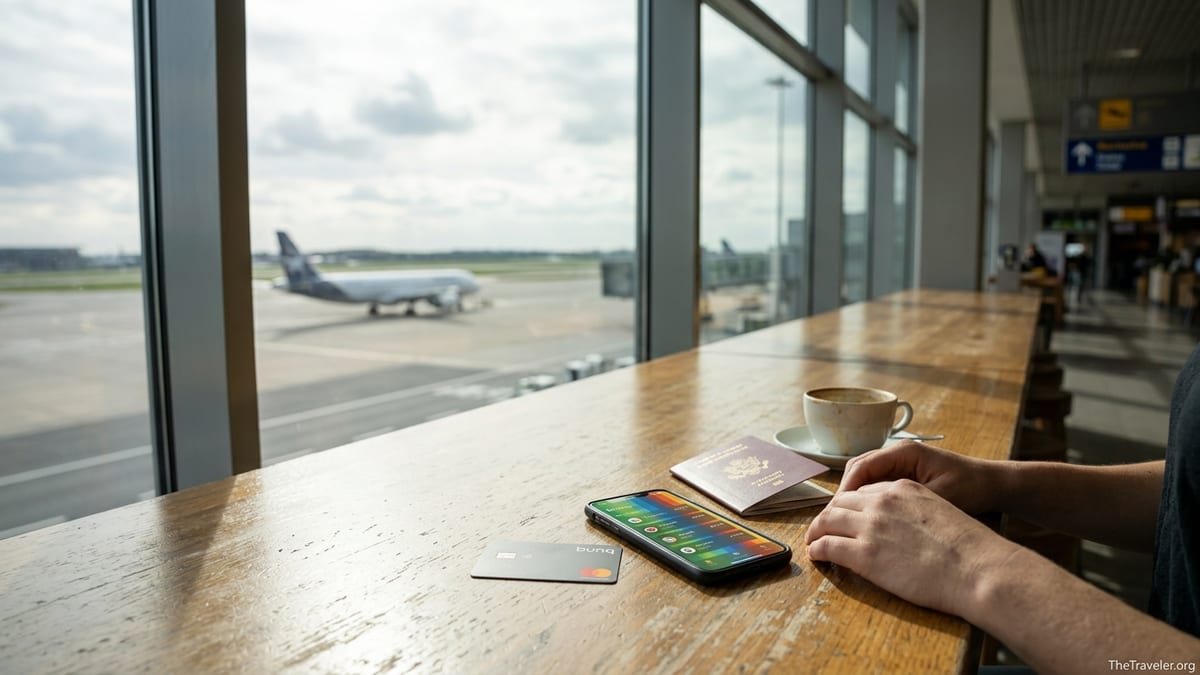
bunq Is a Real Bank, but Your Guarantee Lives in the Netherlands
bunq is not just a prepaid card or a lightweight e-wallet. It holds a full European banking license and your euro deposits sit with bunq B.V. in the Netherlands, covered by the Dutch deposit guarantee scheme up to 100,000 euros per person. That means if bunq itself were to fail, the Dutch scheme would step in, in line with European rules that harmonize coverage across EU countries at 100,000 euros per depositor. In practice, this protection is broadly comparable to what you would get with a traditional German, French or Belgian bank, even if you opened your account with a French or German IBAN in the app.
From a traveler’s perspective, the detail that often surprises people is that local IBANs in places like Germany or France do not change where your money is legally guaranteed. A bunq account with a German IBAN used to pay rent in Berlin is still protected by the Dutch scheme, not the German one, because the banking license sits in the Netherlands. For most travelers this nuance will never matter, but it is important if you are parking a large house deposit or business funds in bunq while living abroad.
Another underappreciated point is that deposit protection is not a blanket promise for every product bunq might offer. If you use bunq to access third-party investments or savings products in the future, only the actual current account and eligible savings balances at bunq B.V. fall under the Dutch guarantee. Travelers who like to chase higher yields inside banking apps should always check whether any “savings” or “investment” features are still regular deposits or separate investment products with different risk profiles.
Finally, bunq is supervised under Dutch and broader European rules for anti-money laundering and payment services. This is one reason why travelers occasionally experience unexpected questions about income sources or card usage patterns, especially when they use bunq as their main hub while living in multiple countries. The standards are similar to those facing traditional EU banks, but the way they are enforced inside a fully digital app can feel more abrupt.
ZeroFX Is Great, but It Is Not Always Free
One of bunq’s biggest selling points for travelers is its ZeroFX feature, which promises the real Mastercard rate when you spend or withdraw cash in a foreign currency. Instead of a typical 2 to 3 percent conversion fee many legacy banks add on top of Visa or Mastercard rates, bunq applies a small adjustment of about 0.5 percent to the live Mastercard rate to allow for currency fluctuations when markets are open. In real terms, if you spend the equivalent of 1,000 euros during a trip to Thailand, the extra cost from bunq’s markup is roughly 5 euros, compared with 20 to 30 euros at many high street banks.
What many new users miss is that ZeroFX is not automatically available on every plan. bunq has rebranded and reshuffled its plans several times, and in recent years the full ZeroFX benefit has typically been included on mid and top-tier accounts, while more basic tiers may have higher fees or reduced benefits. A traveler who signs up for a cheaper plan because they “just need a card for holidays” sometimes discovers after booking flights that their tier does not include full ZeroFX treatment on ATM withdrawals, or that free card payments only apply up to a certain limit.
Weekend and off-market effects can also surprise travelers. Like most providers that promise real card-scheme rates, bunq must protect itself against currency swings when markets are closed. That is where the 0.5 percent buffer comes in. If you pay for a 200 dollar bar tab in New York on a Saturday night, bunq will convert at Mastercard’s rate with its small adjustment, while many traditional banks would add several percent. The result is still attractive, but you should not mistake it for “zero cost.” These small differences matter on long trips, where a couple of euros saved or lost per day add up over months.
To get full value from ZeroFX, travelers also need to avoid dynamic currency conversion at terminals and ATMs. In practice this means always choosing to pay or withdraw in the local currency instead of accepting an offer to charge your card in euros. A hotel in Mexico City, for example, might propose to bill your bunq card in euros at a poor in-house rate. If you accept, bunq’s competitive FX never gets a chance to apply. For a month-long stay where the bill runs to 2,000 euros, that one menu choice at check-out can easily cost 60 to 80 euros extra.
Pricing Tiers, Card Limits and “Free” Features That Are Not Quite Free
bunq’s pricing structure is more complex than many travelers expect. Instead of a single “standard” account, there are several tiers that have changed names over time, typically ranging from basic accounts with limited features to more expensive plans that include multiple cards, up to 25 or more sub-accounts, ZeroFX and higher ATM allowances. Monthly fees are competitive compared with some traditional banks but can look expensive next to free tiers at rivals such as N26 or Revolut’s standard offering. As of mid 2026, reviews and rate tables in European comparison sites still highlight that using bunq seriously often means paying a monthly fee rather than expecting a fully free package.
The confusion often arises when a traveler signs up for a plan on promotion or via an in-app trial. You might land a few months of a higher tier at a discount, enjoy lots of sub-accounts and travel perks, and then discover back at home that the regular price is substantially higher than you realized. Some users downgrade to cheaper plans and later find out that certain features they came to rely on, such as automatic budgeting sub-accounts linked to specific cards, no longer work the way they did on the premium tier. For someone budgeting a year of travel, that difference between, say, 4 and 15 euros per month can be significant.
Card and ATM limits are another area where small details matter. Like other EU neobanks, bunq sets daily and monthly caps on card payments and cash withdrawals, which you can usually adjust in the app within certain boundaries. If you arrive in Buenos Aires planning to pay a large apartment deposit by card or to withdraw the equivalent of 1,500 euros in cash for a private tour, you might run into these limits if you have not changed them in advance. Because bunq is not a local bank in Argentina and relies on card networks to deliver cash, you may also face local ATM caps and fees on top of bunq’s own generous or limited allowance.
bunq also monetizes several side features that initially feel free. Requesting extra physical cards, ordering a replacement Metal card, or using certain cash deposit partners in countries like Germany may incur one-off charges in the range of 5 to 100 euros, depending on the service and your plan. For a digital nomad who frequently moves and changes addresses, the cumulative cost of card shipments and replacements over a couple of years can exceed a hundred euros. It is worth mapping how often you realistically lose or replace cards, or need cash deposits, before committing to a setup that depends on them.
Sub-Accounts, Local IBANs and How They Work in Real Life
bunq’s signature feature is its rich sub-account system. You can hold dozens of separate IBANs that behave like little envelopes for your money. On a practical level, this is one of the strongest reasons travelers stick with bunq long-term. You can, for instance, create a “Portugal 2026 Road Trip” sub-account in euros, link it to a debit card, and keep that card in your wallet only while you are in Portugal. When you leave, you simply un-link or freeze it, preventing future charges from car rental companies or small hotels that forget to close deposits.
These sub-accounts become powerful travel tools when combined with local IBANs. A remote worker staying in Germany for six months can open a German IBAN sub-account in bunq and use it to set up local direct debits for gym memberships, mobile contracts and health insurance. Landlords who insist on a “proper German account” will usually accept it because it looks and behaves like a domestic IBAN. The same traveler might keep a Dutch IBAN as their main income account and a separate French IBAN for a co-working space in Paris, all within the same app.
However, the reality on the ground is not always as smooth as the app demo. Some local employers, rental agencies or government bodies use older systems that still reject foreign-based IBANs, even though EU rules forbid this discrimination. A French landlord’s property manager might insist on a French bank with a local branch they recognize, rather than accepting a bunq FR IBAN. In that scenario, you may need to spend time educating them, escalate the issue, or ultimately open a secondary account with a traditional bank to satisfy that requirement.
There is also a learning curve in managing which card pulls from which sub-account. A common mistake is to link the wrong account to a plastic card before a trip, leave the right one on a virtual card inside Apple Pay or Google Pay, and then find that a hotel deposit in Rome has just drained your “Tax Savings” pot instead of your “Italy Trip” budget. bunq gives you strong tools to fix this, but only if you make a habit of double-checking card-account links before major bookings and of using the app actively while you travel.
Support, Compliance Reviews and What Happens When Something Goes Wrong
Most days, bunq simply works. Card payments clear instantly, internal transfers land in seconds and push notifications keep you informed. The trouble is that on the rare day something does go wrong, you are dealing with a fully digital bank without a branch network. User reviews across independent sites and forums describe a mixed pattern: some travelers report chargebacks and disputes resolved within minutes inside the chat, while others report waiting days or weeks for responses about blocked accounts and missing refunds. Experiences can differ depending on your plan, your language and the complexity of your case.
Compliance reviews are one area that catches travelers off guard. Like other EU fintechs, bunq uses automated systems to flag unusual patterns: a sudden spike in cash deposits through retail partners in Germany, several large transfers from crypto platforms, or repeated high-value cashbacks from promotion apps. In some recent cases described online, users saw their accounts temporarily locked for a “security review” after such patterns. During that time, cards and transfers could be restricted, causing real-world stress if rent or salary payments were scheduled for the same week.
For a long-term traveler, the key lesson is diversification and planning. Relying solely on bunq while living abroad can be risky if a security review coincides with a border crossing, medical bill or flight booking. Many seasoned digital nomads keep at least one backup account, often with a different provider such as a domestic bank in their country of residence or another major neobank, and spread funds so that a single freeze cannot paralyze them. They also avoid routing high-risk transactions, such as payments to or from lightly regulated crypto services, through their main everyday bunq account.
Chargebacks and merchant disputes also work a bit differently in practice than newcomers expect. Although bunq issues Mastercard-branded cards with all the protections that implies, you still need to follow process: collect written proof from the merchant, file the complaint in-app and wait for bunq to liaise with Mastercard. Travelers disputing a no-show refund from a hotel in Bali or a car rental damage fee in Croatia sometimes expect instant refunds, but investigations can take weeks. When those funds represent a big share of your travel budget, the delay can be painful, so it is sensible to keep a buffer or credit limit outside bunq to bridge such gaps.
How bunq Compares to Other Travel-Friendly Banks in Daily Use
Comparing bunq to other popular travel banking options illustrates where its strengths and weaknesses lie. Against Revolut, bunq often wins on the richness of its sub-accounts, the ability to link specific cards to specific pots, and its status as a straightforward European bank rather than a hybrid payment institution. For a family traveling around Europe, being able to set up separate accounts for rent, food, kids’ activities and business expenses, each with their own card, can make life simpler than juggling multiple apps and cards.
However, Revolut’s free tier and aggressive foreign exchange pricing on weekdays can look more attractive for short trips. Someone flying from Madrid to New York for a week might open a Revolut account in the airport, top it up, and enjoy fee-free card payments in dollars up to certain limits, all without paying a monthly fee. By contrast, bunq’s most compelling travel benefits usually live on its paid tiers. Over a multi-month trip, those monthly fees still tend to be good value, especially when spread across a couple or small business, but for once-a-year holidaymakers they can feel like overkill.
Compared with N26 or a domestic online bank such as DKB in Germany, bunq stands out in its user experience and the granularity of its budgeting tools. Travelers who move countries frequently, earn in one currency and spend in another, or manage shared expenses in international households often find bunq’s approach more flexible. At the same time, traditional online banks may offer cheaper or even free accounts, especially if you maintain a salary deposit or mortgage with them, and they sometimes provide perks like free worldwide ATM withdrawals on certain cards that bunq cannot fully match.
For non-European travelers who spend extended periods in the EU, bunq can serve as a convenient “anchor” bank. An American remote worker in Lisbon might keep their US credit cards for travel rewards but use bunq to handle local bills, receive payments from European clients and hold euros. In that case, bunq is competing less with Revolut or N26 and more with the hassle of keeping a foreigner-friendly account at a Portuguese brick-and-mortar bank. Here, the ability to sign up with a European address and manage everything from an app can outweigh the monthly plan cost.
Practical Tips to Make bunq Work Smoothly When You Travel
To get the most out of bunq as a traveler, you need to treat it as a tool that rewards active management. Before each trip, review your plan tier and check whether it includes the level of ZeroFX, ATM withdrawals and card numbers you need. If you are embarking on a long backpacking route through Southeast Asia, for example, it might be worth upgrading for a few months to a plan that offers extra physical or virtual cards, higher FX limits and sub-accounts dedicated to that journey, then downgrading once you are back home.
In the app, take time to set sensible card limits and sub-account links. For a month-long trip to Japan, you could create sub-accounts for accommodation, everyday spending and emergencies, assign a physical card to the everyday pot and keep a separate virtual card in your phone wallet for online bookings. During peak travel days, such as arrival and departure, raise your limits so that hotel deposits, high-speed train tickets and airport transfers do not fail. Once you settle into a routine, reduce limits again to reduce the impact of any fraudulent charge.
Always carry at least one alternative way to pay. Even in card-friendly cities like Amsterdam or Copenhagen, small shops and rural gas stations can temporarily lose connectivity or insist on local debit cards tied to domestic networks. In parts of South America, card terminals occasionally reject European neobank cards for no clear reason, while accepting local bank cards and major credit cards without issue. A traditional credit card from your home country, or a second neobank card in a different wallet, can save you from being stranded when bunq or the card network experiences a temporary issue.
Finally, keep your expectations realistic about in-app support. bunq’s chat-based help has improved over time, but it is still not a concierge service. When you file a complex complaint about a disputed transaction on a Sunday night from a hostel in Mexico, you may not receive a detailed response until the next business day. Collect screenshots, receipts and written confirmations from merchants at the time of the incident, and approach support with clear, chronological explanations. Doing that will not guarantee a fast resolution, but it will significantly increase your chances compared with a vague “my card doesn’t work” message hours or days later.
The Takeaway
bunq can be an excellent banking companion for travelers, digital nomads and expats across Europe and beyond, but it is not a magic solution that works perfectly in every scenario. Behind the slick app sit the same realities that shape any serious bank: deposit guarantees anchored in one country, compliance rules that can trigger account reviews, card network quirks in far-flung ATMs and pricing structures that reward some users more than others. The better you understand those realities before you leave home, the less likely you are to be surprised when you are thousands of kilometers away.
If you value granular budgeting, multi-country IBANs and competitive foreign exchange, bunq is worth serious consideration, especially if you travel often enough to justify a paid plan. If you only take one big trip a year and want a simple, free card to tap abroad, a rival with a strong free tier may suit you better. Either way, treat your bank as part of your travel kit: test it close to home, learn its strengths and limits, and always pack a backup. That way, when you stand at a ticket machine in Tokyo or a toll booth in rural Italy, your only concern will be where to go next, not whether your card will work.
FAQ
Q1. Is bunq safe to use as my main bank while traveling long term?
bunq is a fully licensed European bank and your eligible euro deposits are protected up to 100,000 euros under the Dutch deposit guarantee scheme. For long-term travel, many people use bunq as their main account but keep at least one backup account elsewhere in case of technical issues or unexpected compliance reviews.
Q2. Does bunq really use the real Mastercard exchange rate abroad?
For supported plans with ZeroFX, bunq uses the live Mastercard rate and adds a small adjustment of around 0.5 percent to account for currency fluctuations. This is usually much cheaper than the 2 to 3 percent fees that many traditional banks charge on foreign card transactions, but it is not literally zero cost.
Q3. Which bunq plan is best for frequent travelers?
The most suitable plan depends on how often and how you travel. Frequent travelers tend to benefit from mid or top-tier plans, which usually include full ZeroFX, higher ATM allowances, multiple cards and more sub-accounts. Occasional holidaymakers often find that a cheaper tier is enough, especially if they combine bunq with another travel card.
Q4. Can I get a local IBAN with bunq for countries like Germany or France?
Yes, bunq offers local IBANs for several European countries, which you can use for salary payments and direct debits like rent or utilities. In daily life, most employers and landlords treat these as domestic accounts, though a few older systems or conservative institutions may still insist on a traditional local bank.
Q5. How does bunq handle ATM withdrawals when I am abroad?
On eligible plans, foreign ATM withdrawals benefit from ZeroFX, using the Mastercard rate with a small markup. However, there may be monthly limits on free or discounted withdrawals, and local ATM operators can still add their own fees. It is important to check your plan’s allowance and always choose to withdraw in the local currency rather than euros.
Q6. What happens if bunq blocks my account for a security review?
If bunq’s systems flag unusual activity, your account can be temporarily restricted while they complete a review, which may affect card payments and transfers. You will usually be asked to provide additional information or documents through the app. This process can take time, so keeping some money with a second bank or card provider is wise when you travel.
Q7. Does bunq work well for travelers outside Europe?
bunq cards function anywhere Mastercard is accepted, so you can use them in places like the United States, Thailand or Mexico. The app and exchange rates remain the same, but you may encounter higher local ATM fees or occasional compatibility issues with some terminals. Carrying an extra card from a different provider is a sensible precaution for non-European destinations.
Q8. How fast is bunq’s customer support when I have a problem abroad?
Response times vary. Many users report quick, helpful chat replies for simple issues, while more complex cases such as chargebacks or compliance reviews can take days or longer. Support is app-based, so you will need data or Wi-Fi to contact them. When traveling, it helps to gather all evidence and explain your issue clearly to reduce back-and-forth.
Q9. Can I use bunq to manage shared travel expenses with friends or a partner?
Yes, bunq’s sub-accounts are well suited to shared budgets. You can create a joint sub-account for a trip, invite another bunq user, and each of you can get a card or use your phone wallet linked to that pot. This setup makes it easy to track who is spending what on accommodation, fuel or groceries during a group trip.
Q10. Is bunq cheaper than Revolut or N26 for travel?
It depends on your usage. bunq’s monthly fees can be higher than some competitors’ free tiers, but its sub-account system, local IBAN options and solid FX rates can offer better value for people who travel often or live across borders. For occasional travelers who want a mostly free card, Revolut or N26 may appear cheaper, while bunq tends to shine for heavy users who take advantage of its full feature set.