


More news on this day
Rail regulators and policymakers in Europe are advancing a new framework designed to improve how operators care for and compensate passengers left stranded on the rail network, following high-profile disruption and growing scrutiny of passenger rights.
Get the latest news straight to your inbox!
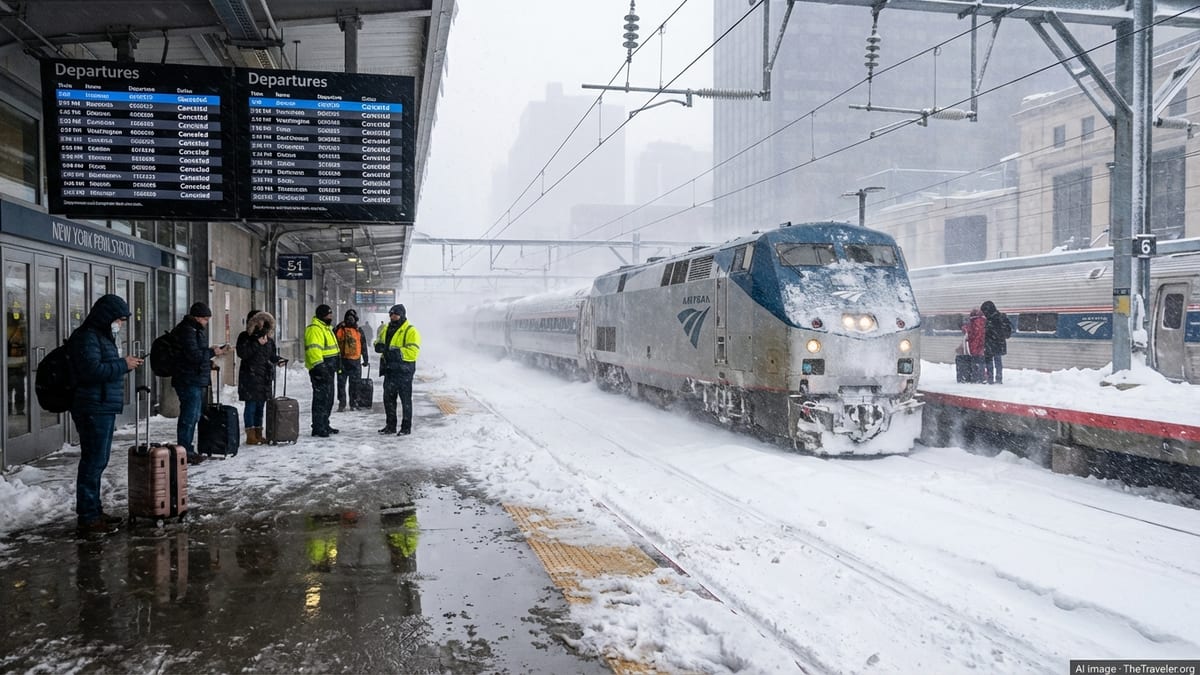
Focus Shifts to Treatment of Stranded Passengers
Recent disruption incidents on busy rail corridors have drawn attention to what happens when trains are immobilised between stations or passengers are unable to continue their journeys. Reports indicate that passengers have faced long waits in crowded carriages, limited access to food and water, and scant information about when services would resume or how alternative transport would be arranged.
Publicly available information shows that regulators in the United Kingdom have been pressing operators to improve how they respond when trains are stranded, after several well-publicised events in 2024 and 2025 in which passengers were stuck on trains for hours. These events highlighted gaps between the promises in passenger charters and the reality on board, especially for older and disabled travellers who rely more heavily on assistance.
Industry updates indicate that similar concerns have emerged elsewhere in Europe and North America, as climate-related weather events and ageing infrastructure increase the risk of sudden line closures. Policymakers are therefore looking beyond traditional delay compensation towards more comprehensive schemes that address welfare, communication and reliable redress for those left in limbo.
For leisure and business travellers alike, the key question is increasingly not only whether they will receive a partial refund for a delay, but whether they can depend on practical help, clear rerouting options and overnight arrangements if their train cannot move.
New Redress Framework for Missed Assistance
In Britain, the Office of Rail and Road has opened consultation on a new framework for determining redress when pre-booked passenger assistance is not delivered, a situation that can leave disabled or older passengers effectively stranded at stations or on trains. The proposed model is intended to provide clearer, more consistent remedies when assistance such as boarding help, ramp provision or escorted transfers fails to materialise.
According to the consultation documents, the framework would guide operators on the level of compensation or other redress that is appropriate in different scenarios, while also encouraging non-financial remedies such as follow-up support and targeted service improvements. This is framed as part of a wider move toward an accessible railway, in which the ability to complete a door-to-door journey is treated as seriously as punctuality statistics.
Although the consultation focuses on booked assistance, travel analysts note that its principles overlap with the wider issue of stranded passengers. When assistance is not provided at an interchange station or during disruption, passengers can miss connections and find themselves unable to navigate unfamiliar platforms or alternative routes, effectively experiencing a form of being stranded even when services are still technically operating.
Industry observers suggest that, once agreed, the redress framework is likely to influence operator policies on customer care during major disruption, encouraging clearer commitments about staff support, accessible information and guaranteed onward travel for those who most need help.
EU Moves to Strengthen Rights When Journeys Break Down
At the European level, the European Commission has tabled new proposals to strengthen passenger rights when a rail journey breaks down, with a particular focus on through-tickets that cover multiple operators or cross-border legs. Published coverage of the proposals highlights plans to guarantee rerouting, reimbursement and assistance when a single-ticket trip is interrupted, not just when a single operator’s train is delayed.
The initiative responds to longstanding complaints from travellers who found themselves stranded mid-journey after a missed connection, only to discover that each operator disclaimed responsibility. Under the proposed scheme, passengers would gain clearer entitlements to meals, accommodation and rebooking on later services if a disruption on one leg prevents them from completing the whole journey.
The proposals sit alongside wider efforts in Brussels to simplify rail booking and require dominant operators to open their digital ticketing platforms to rivals. Travel advocates argue that easier access to through-tickets must be matched by robust, enforceable protections if anything goes wrong, otherwise passengers will continue to perceive long-distance rail as a risky alternative to air travel in terms of reliability.
For international travellers, particularly those planning multi-country itineraries, the new rules could significantly reduce the fear of being left stranded at intermediate hubs with limited information and no clear path to reimbursement or rerouting.
From Delay Compensation to Comprehensive Care
For more than a decade, rail passengers in many European countries have relied on schemes that compensate them for delays above a certain threshold, returning a proportion of the fare when timetables are not met. While these programmes remain central to consumer protection, recent debates point to their limitations when passengers are immobilised for extended periods or face overnight disruption far from home.
Travel commentators note that a narrow focus on time-based compensation does little to address the immediate hardships of being stranded, such as lack of heating or cooling, access to toilets, and the absence of clear, timely information. In such situations, a modest refund weeks later may feel out of step with the stress and uncertainty experienced at the time.
The emerging schemes under discussion, in both national and European forums, place greater emphasis on practical care. This includes obligations around the supply of drinking water, access to basic refreshments once certain thresholds are reached, and structured protocols for safely disembarking passengers from stranded trains when conditions allow.
There is also growing attention to communication standards, with calls for minimum requirements on how frequently updates should be provided, what level of detail should be shared, and how information should be made accessible to those with sensory or cognitive impairments. In combination, these approaches signal a shift from pure financial compensation toward a concept of duty of care that is more familiar in aviation.
What Travellers Can Expect in the Coming Years
Although many of the proposed changes remain at the consultation or legislative stage, the direction of travel is clear. Regulators, passenger groups and rail companies are converging on the view that leaving passengers stranded without clear support is no longer acceptable in a modern rail system competing with air and road travel.
In practical terms, travellers may begin to see more explicit guarantees on tickets and operator websites regarding assistance in the event of major disruption. These could include commitments to arrange hotel rooms when the last train of the day is cancelled, clearer rerouting options during incidents, and better integration between rail and other modes so that substitute buses or alternative services are deployed more quickly.
For international and long-distance passengers, new European rules are likely to make it easier to purchase a single ticket across multiple operators while still benefiting from joined-up protection if the journey breaks down. This may encourage more travellers to consider rail for cross-border trips, reassured that they are less likely to be left to fend for themselves if something goes wrong far from home.
Even as the details are refined, the trend toward a more comprehensive scheme for stranded rail passengers suggests that future disruption, while still inconvenient, should come with clearer rights, more consistent care and a stronger expectation that operators will help travellers reach their destination safely.