


France’s TER regional trains are one of the most flexible ways to explore the country, but that flexibility can be confusing for visitors used to rigid reservations on high speed services. While most TER trains still operate without compulsory seat reservations, there are important tickets, passes, and add ons you should book before you travel if you want a smooth journey. Knowing what really needs to be organized in advance, and what can wait until the day of travel, can save you money, stress, and even a missed connection.
Get the latest updates straight to your inbox!
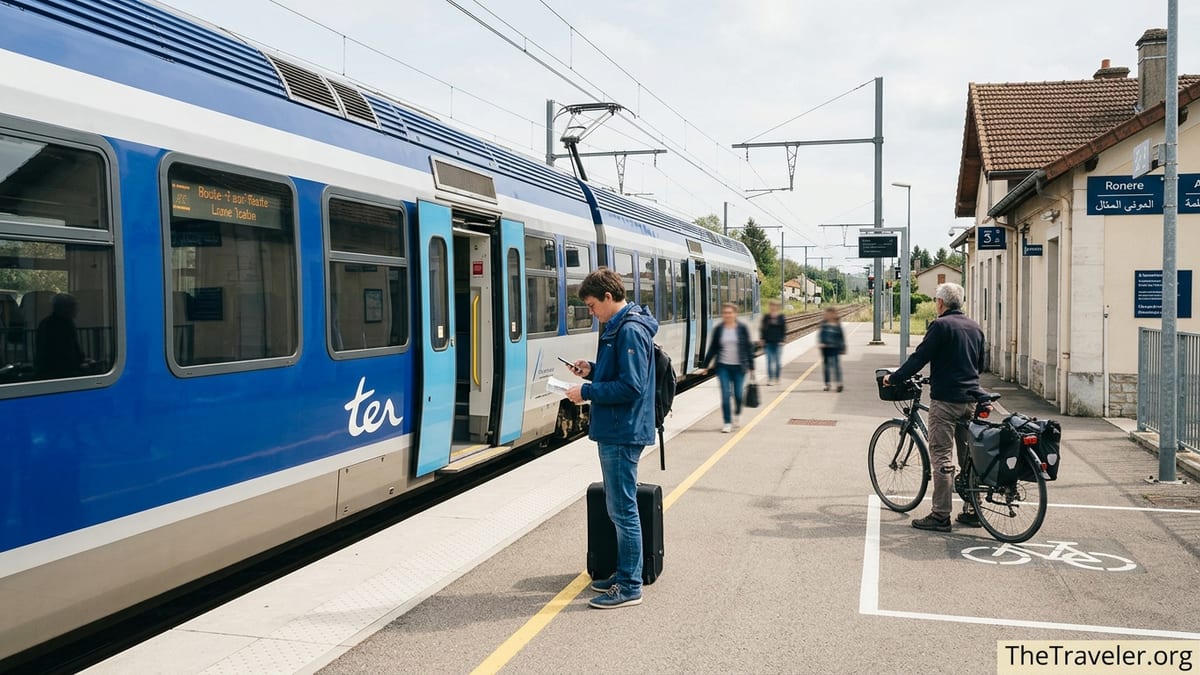
Understanding How TER Tickets and Reservations Work
TER, short for Transport Express Régional, is the network of regional trains that connect French cities, suburbs, and rural areas. Unlike TGV high speed trains, most TER services do not use compulsory seat reservations. You usually buy a ticket that is valid for a route and date, then board any compatible TER service, sitting in any free seat or standing if the train is full. For example, between Lyon Part Dieu and Grenoble, a standard TER ticket typically allows you to take any TER on that route for the chosen day, instead of being locked into the 09:08 departure only.
However, this does not mean you can travel without a ticket or that planning is unnecessary. Many regions now sell dated, sometimes train specific digital TER tickets through platforms such as SNCF Connect, and some former Intercités routes that were reclassified as TER offer optional reservations or use booking to cap capacity on crowded trains. In Normandy, for instance, certain Paris to Caen and Paris to Rouen trains now appear in booking systems with the option, or in some peak cases the requirement, to hold a reservation, even though they are operated under the TER brand.
The result is a hybrid system that can surprise travelers who assume that “regional train” always equals “show up and ride.” Before a trip, it is worth checking how your specific route is sold in the booking engine and whether your ticket is tied to a particular train or simply to a travel date. This will determine how much you need to lock in beforehand and how flexible you can be on the day.
For international visitors using rail passes like Interrail or Eurail, the picture is similar. Most pure TER routes accept passes without a reservation, so a passholder could ride, for example, a TER between Nice and Cannes by simply hopping on and showing the pass. But on some ex Intercités services that have been transferred into the TER system, or on regional lines with very heavy holiday traffic, booking a passholder reservation in advance can be advisable or occasionally required to secure space.
Booking the Right TER Ticket Before You Travel
The first and most important thing to book before traveling on TER is the correct ticket for your route. In many regions, advance purchase is not strictly mandatory, because you can still buy on the day from station ticket machines or staffed counters. Yet there are practical reasons to organize at least your key legs in advance, especially for popular routes into major cities or for travel around public holidays.
Take a common tourist route such as Bordeaux to Arcachon on summer weekends. On a sunny Saturday in August, TER trains on this line can be extremely busy, with families heading to the beach and day trippers carrying surfboards. If you wait until just before departure to buy a ticket on the platform, you may find long lines at the machines, especially at Bordeaux Saint Jean. Buying a dated digital TER ticket the day before through SNCF Connect or a similar official booking channel means you can bypass the queue, head directly to the platform, and focus on boarding early to find a seat.
Another example is Lyon to Annecy, a gateway journey into the Alps. On winter Saturdays, when skiers and weekenders from Lyon crowd onto the morning TERs, tickets can still be available up to departure, but last minute buyers sometimes deal with congested ticket offices and may misinterpret a sold out message, not realizing it relates to a specific discounted fare and not to all tickets. Booking at least your outbound ticket in advance clarifies that you do indeed have a place on the route, even if the train itself is unreserved, and allows you to compare different departure times calmly rather than rushing at the station.
For digital travelers, it is worth noting that most regions now recognize downloadable or app based TER tickets that you purchase before you access the train. These tickets often no longer need to be validated in a yellow stamping machine; instead, the QR code or digital format itself is proof of validation. Being familiar with this before you arrive avoids last minute confusion at the platform and the risk of a fine for traveling with an unvalidated paper ticket on routes where paper tickets are still in use.
Apps, Accounts, and Payment Methods to Set Up in Advance
Long before you roll your suitcase into a French station, one of the most useful “bookings” you can make is a simple digital setup. Creating an account in an official booking app, adding a payment method, and saving your personal details streamlines every future purchase of TER tickets and associated services. This might sound basic, but for many visitors the real bottleneck comes when they try to sign up or enter card details on a weak station Wi Fi signal minutes before departure.
Consider a traveler flying into Paris Charles de Gaulle Airport who wants to connect directly by TER from Paris Gare de Lyon to Dijon. If they have already installed an official rail booking app at home, verified their email, and saved a debit or credit card, they can buy their TER ticket during the airport train ride into central Paris, even if mobile data is intermittent in tunnels. If they leave all that to the last moment, a card verification issue or identity check could easily cause them to miss their target departure.
Adding extra details to your account can also be beneficial. Saving the names and birth dates of regular travel companions, for example, speeds up buying multiple tickets for a family trip from Marseille to Avignon. Some regional offers require you to hold a specific discount card or pass issued by that region; adding the card number to your account once ensures that every fare search automatically reflects your reduced rates, so you are not manually re entering discount information while standing in line at the station.
From a payment perspective, having at least two options prepared is sensible. Many official platforms accept major bank cards and popular digital wallets, but international cards can occasionally trigger fraud checks or be refused by automatic ticket machines. Bringing a physical card, a backup card stored in a mobile wallet, and a small amount of cash for less equipped rural stations gives you alternatives if your primary method fails at a critical moment.
Regional Passes, Discount Cards, and the New Rail Passes
Beyond single tickets, various passes and discount cards can significantly lower the cost of TER journeys, especially if you plan to base yourself in one region. These almost always need to be purchased and sometimes registered before you start traveling, and choosing the right one in advance avoids paying full price when a cheaper option would have worked better for your itinerary.
In Brittany, for example, regional products under the BreizhGo label include passes and cards that offer recurring discounts on TER journeys within the region. A traveler spending a week visiting Rennes, Saint Malo, and Quimper could, in many cases, reduce their overall transport cost by buying a local discount card at the beginning of the week instead of individual full fare tickets for every leg. Similarly, in regions such as Bourgogne Franche Comté or Poitou Charentes, long running regional reduction cards offer lower prices on internal journeys, particularly at weekends and during school holidays, which can be especially advantageous if you are planning several day trips from a single base city.
On a national level, special seasonal passes have recently been launched to encourage train use among younger travelers and during peak holiday months. One example is a summer rail pass product valid during July and August for unlimited travel on certain regional and intercity trains over a set period. For a traveler planning a two week loop from Paris to the Atlantic coast, down through Occitanie, then across to Provence using mainly TER services, such a pass can be excellent value if booked in advance before the limited sales period closes or before quotas on specific days are reached.
International rail passes like Interrail and Eurail also interact with TER in a useful way. Since pure regional TER routes generally do not require reservations for passholders, buying the pass well ahead of your trip gives you the freedom to improvise on many legs without extra booking fees. You could, for example, use a global pass to decide on the day whether to travel from Montpellier to Nîmes, then continue by TER toward Avignon, simply checking live departure boards and boarding without seat reservations. The key is to understand, before you leave home, which of your planned journeys are entirely on TER and which involve high speed trains that do still require separate reservations.
Whichever product you choose, make sure you understand the activation rules. Some passes require you to specify the first day of validity in advance, others allow flexible activation via an app on the day. Aligning your pass dates with hotel bookings and flights before you travel avoids paying for days of validity you do not need or discovering that your pass expires one day before your last important TER connection.
When and How to Book Bikes, Groups, and Special Services
Beyond your own ticket, some of the most important advance reservations on TER concern what you bring with you and who you are traveling with. Bicycles are a prime example. On many TER routes, especially in regions that brand themselves to cyclists such as Grand Est and parts of the Loire Valley, you can take a standard bicycle on board without charge and without a reservation, as long as space is available in the designated bike areas. However, on particularly popular lines or in summer, certain routes now require an advance bike reservation, sometimes at a symbolic fee, to manage demand.
One concrete case is in the Provence Alpes Côte d’Azur region, home to the scenic Marseille to Nice coastal line. During peak months, a selection of TER services on this corridor require cyclists to obtain a specific bike reservation in addition to their own ticket. The reservation might be priced at around one euro, primarily as a way to control numbers rather than to raise revenue. If you turn up with a loaded touring bike on a July weekend without having booked a slot, you might find that the conductor cannot accept your bike on the intended train and that you must wait for a later service with free capacity.
Group travel is another area where advance booking is essential. A language school arranging for twenty students to travel by TER from Toulouse to Carcassonne, for example, should not treat the train as a simple urban metro that will always absorb them. Group booking channels can offer reduced fares or at least ensure the operator knows to expect a large party, sometimes allocating them to carriages with more free seating. Making these arrangements several weeks ahead avoids a scenario where part of the group is left on the platform during a busy evening peak.
Travelers with reduced mobility or specific access needs should also consider pre booking assistance. Many French stations provide a service where staff help passengers board and alight, especially on stations with significant gaps between train and platform. If you know you will be taking a TER from, say, Limoges to Brive with heavy luggage or a wheelchair, registering for assistance at least 24 to 48 hours in advance is recommended so that staff and ramps are ready when your train arrives. While ad hoc help is often provided, formal booking increases the likelihood that support will be timely and properly coordinated with your exact train.
Connections, Timing, and What to Reserve Around Your TER Journey
A smooth TER trip is rarely just about the train itself. Tightly timed connections to or from TGVs, buses, or flights demand planning, and sometimes reservations, around your TER legs. The good news is that booking through a single channel for your entire journey often creates a “through ticket” that links your TER and long distance trains into one itinerary, with recognized connections and sometimes better protection if you miss a connection due to delays.
Imagine you are traveling from a small town like Albi to catch an international TGV from Toulouse to Barcelona. If you buy the Albi to Toulouse TER separately on the day, leaving what seems like a comfortable 40 minute connection, a minor delay to the regional train could be enough to jeopardize your TGV. If instead you book the entire route at once in advance, choosing a recommended connection time, the itinerary will be constructed according to official minimum transfer times in Toulouse Matabiau. You will also see clearly whether a slightly earlier TER is advisable, and in case of disruption you will have a single booking reference that can be presented to staff.
At airports, planning is even more critical. From Marseille Provence Airport into Marseille city center, for example, you may use a shuttle bus to connect with TER services from Vitrolles station. While tickets for the shuttle are often flexible, they can be bundled with rail tickets or need to be purchased via a separate operator site. Looking this up and, where possible, pre booking the airport transfer at the same time as your TER ticket helps you avoid scrambling between agents and machines with your luggage after landing.
Local urban transport at each end of your TER journey can also be reserved or at least researched beforehand. In some regions, TER tickets can be combined with city transport, giving you a single fare that covers a tram or metro connection from the station. For instance, a visitor heading to central Rennes might choose a combined TER plus local transport product rather than buying separate metro tickets upon arrival. Checking these options before departure and deciding whether to book them in advance or buy on arrival can save a few euros and, more importantly, a few minutes of confusion in an unfamiliar station.
Hotel check in times and rental car bookings complete the picture. If you know that your car hire desk in Dijon closes at 19:00 and the last realistic TER from Paris Bercy arrives at 18:40, it makes sense to reserve that specific train in your mind and organize your broader day, and any long distance bookings, around it. Allowing at least one earlier TER as a backup connection and building that awareness into your reservations reduces the risk of an expensive missed pickup fee or a night in an unplanned hotel.
The Takeaway
Traveling by TER in France remains refreshingly flexible compared with strictly reserved high speed trains, but flexibility does not eliminate the need for preparation. You rarely need a classic seat reservation for a purely regional TER route, yet there are more and more exceptions, especially on corridors that used to be served by long distance trains or that see heavy seasonal crowds. The smartest approach is to treat each route individually: check how tickets are sold, whether any specific trains require reservations, and how your journey interacts with longer distance legs, airports, or hotels.
Before you leave home, set up a booking app account, save your payment methods, and decide whether regional discount cards or a broader rail pass suit your itinerary. If you are traveling with a bike, in a group, or with accessibility needs, look up the relevant policies for your regions and, when required, book bike spaces or assistance services several days in advance. For complex routes that combine TER with TGV or intercity trains, try to book them as one coherent itinerary so transfer times and protections are built in.
With this groundwork done, you can confidently enjoy what TER trains do best: frequent departures, access to smaller towns and scenic lines that TGVs bypass, and the freedom to improvise day trips without constant battles for seat reservations. A little strategic booking, focused on the elements that really matter, turns the TER network into a relaxed, budget friendly backbone for exploring France.
FAQ
Q1. Do TER trains in France require seat reservations?
In most cases, no. Classic TER routes operate without compulsory seat reservations, and you simply buy a ticket for the route and date, then sit wherever space is available. However, some lines that were formerly long distance services, or that are extremely busy at peak times, may offer or require reservations on specific trains, so it is always worth checking your exact route in a booking app before you travel.
Q2. How far in advance should I buy a TER ticket?
You can often buy TER tickets on the day of travel, sometimes right up to departure, but buying at least key legs a few days ahead is wise for peace of mind and to avoid queues at machines. For busy leisure routes, such as coastal lines in summer or access to ski areas in winter, purchasing as soon as your plans are fixed, often a week or more in advance, helps you secure the best schedule and avoid last minute stress.
Q3. If my TER ticket shows a specific train time, can I still take a different train?
That depends on the fare rules and the region. Some TER tickets remain flexible within the day, letting you board another train on the same route if you miss your planned departure, while other digital tickets are tied to a specific train for capacity or pricing reasons. Always read the conditions during booking; if in doubt, assume that changing to a different train without checking could be risky and ask station staff before boarding.
Q4. Can I use an Interrail or Eurail pass on TER trains without booking?
Generally yes. Pure TER services typically accept rail passes without any reservation, which makes them ideal for spontaneous day trips and flexible itineraries. The main exceptions are routes that now function like long distance services under the TER label, where optional or required reservations may appear in pass booking systems, so you should check each long TER leg in your pass app before relying on just turning up.
Q5. Do I need to reserve a space for my bike on TER trains?
On many TER lines you can bring a standard bicycle without a reservation, subject to available space in the designated bike areas. On others, particularly busy tourist routes or during summer months, certain trains require a low cost bike reservation that must be booked in advance in addition to your own ticket. If your trip involves popular coastal or mountain routes, check the regional TER website or booking app well ahead and secure a bike slot for peak dates.
Q6. Are TER tickets cheaper if I book them early?
TER pricing is generally more stable than high speed trains, so you will not see the same sharp early booking discounts. That said, some promotional fares and regional offers are limited in quantity or tied to specific trains, so booking earlier can help you access these lower prices before they sell out or disappear from the search results. Even when the price is the same, advance purchase reduces the risk of last minute machine queues or confusion at the station.
Q7. What should I book if I am traveling in a group on TER?
For groups, especially of ten or more people, it is best to contact official sales channels to inquire about group offers and to pre register your party. You may be offered special fares or at least guidance on which departures can comfortably handle your group. Turning up unannounced with a large school class or tour group on a peak hour TER can lead to overcrowding and the possibility that some travelers are asked to wait for a later train.
Q8. Do I need to validate my TER ticket before boarding?
Paper TER tickets usually need to be validated in a machine at the station before boarding, while digital tickets and app based QR codes are typically considered already validated. Because practices can vary by region and by ticket type, you should always check instructions printed on the ticket or shown in the app and, if you are unsure, ask at the station. Traveling with an unvalidated paper ticket can result in a fine even if you bought it legitimately.
Q9. What happens if my TER is late and I miss a connection?
If you booked a through journey that combines TER and long distance trains under a single itinerary, staff are more likely to be able to help rebook you if a delay on the TER causes a missed connection. If you bought completely separate tickets, help will depend on staff discretion and general passenger rights rules. This is why, when possible, it is sensible to book important connections as one combined trip and to allow a generous buffer between trains.
Q10. Is it necessary to book assistance in advance if I have reduced mobility?
While staff often try to help on the spot, travelers with reduced mobility, heavy luggage, or other specific needs are strongly advised to request assistance at least a day or two in advance. Pre booking ensures that personnel and equipment such as ramps are ready when your TER arrives, especially at smaller stations. This advance arrangement makes boarding and alighting much smoother and reduces the chance of last minute delays or difficulties.