


In 2026, the Sagrada Família is busier than ever. With Gaudí’s centenary celebrations and the completion of the Tower of Jesus Christ turning the basilica into the tallest church in the world, tickets routinely sell out days in advance. Turning up on the day and hoping to walk in can mean 90-minute queues outside, or discovering that every time slot is gone. Smart travelers avoid this by pre-booking key elements of their visit long before they see the spires rise above Barcelona’s Eixample district.
Get the latest updates straight to your inbox!
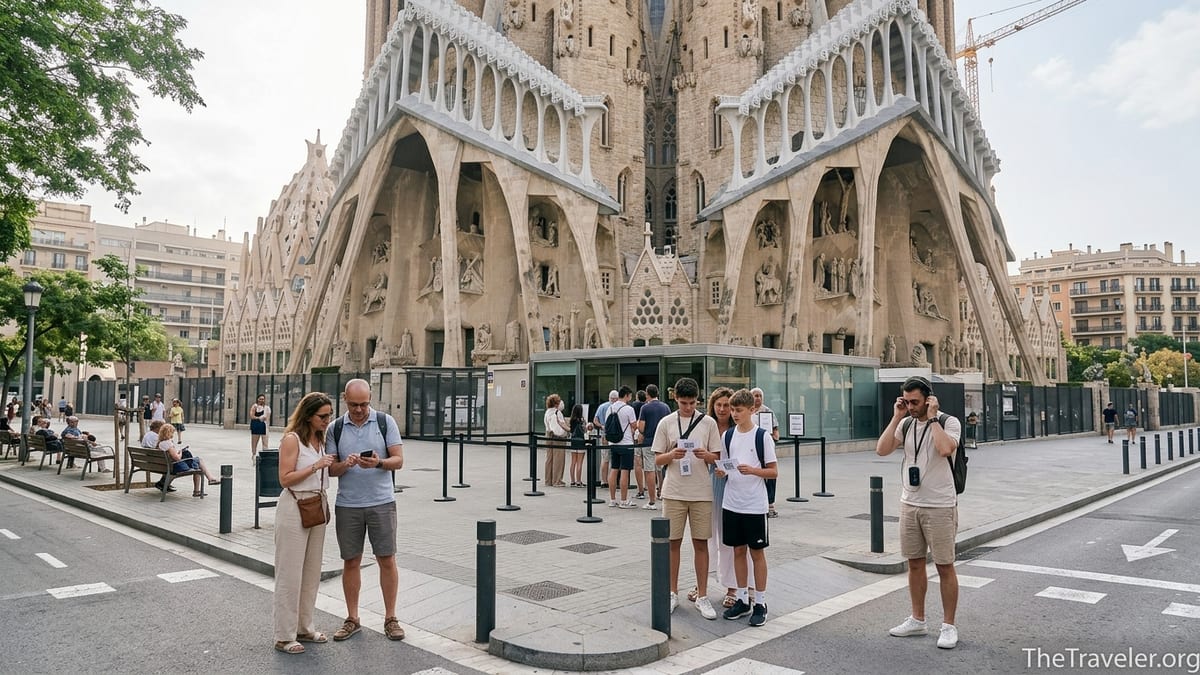
Why You Must Plan Ahead for Sagrada Família in 2026
2026 is an exceptional year for Sagrada Família, and that has a direct impact on how you should plan your visit. The basilica is marking the centenary of Antoni Gaudí’s death and celebrating the completion of the Tower of Jesus Christ, which has pushed the height of the church to about 172.5 meters and consolidated its status as a global icon. Visitor numbers have surged accordingly, especially on weekends, public holidays and during school vacations.
This spike in demand means that “we’ll just get tickets when we arrive” is no longer realistic in peak periods. Travelers checking the official booking calendar for February or Easter week in 2026 have already reported entire days marked as sold out for general entry. Others find that basic entry still exists, but every guided tour in their language is unavailable for the dates they’re in Barcelona. If you have only one or two days in the city, that can mean missing the inside of Sagrada Família altogether.
Queues are not just about buying tickets. Even with a pre-booked timed entry, you still pass through airport-style security and bag checks. On busy August mornings, the line at the correct entrance can easily snake around the block, and visitors arriving without a fixed time slot can wait more than an hour or be turned away. Advance booking is therefore not just about convenience, but about actually getting inside the basilica in a reasonable amount of time.
The takeaway is simple: if Sagrada Família is a highlight of your trip, treat it like a limited-seat event rather than a casual drop-in sight. That means booking tickets, tours and even some local transport in advance, especially if you are traveling in summer 2026, around major events, or during long weekends in Spain and the rest of Europe.
Book Your Official Timed-Entry Ticket First
The single most important thing to book before visiting Sagrada Família is a timed-entry ticket bought through the official system. In 2026, standard adult tickets for basilica entry with audio guide are typically around the mid‑20 euro mark, with tower access and guided tours costing more. While prices can change, what does not change is the logic: you choose a specific day and time, pay online, and receive a QR code that acts as your ticket.
Time slots are strictly enforced. The rules published by the basilica make it clear that tickets are valid only for the designated time window, and late arrivals can be refused entry. In practice, staff normally allow a small grace period of about 15 minutes, but if you arrive half an hour late you are at the mercy of security. Travelers posting about their experiences in May and June 2026 describe watching latecomers politely but firmly turned away and told to buy a new ticket for a later hour, if any were left.
Booking a timed slot also shortens the time you spend outside in line. With an official ticket for, say, 10:00, you should aim to arrive at the correct entrance (usually Carrer de la Marina for standard visitors) about 15 to 20 minutes early. You will still queue for security, but it is the controlled, flowing line of people with reservations. Those trying to buy a ticket on the day are directed to a separate, often much slower queue, and in peak season they may simply see a “sold out” notice instead.
Concrete example: a family of four traveling in August might book a weekday 9:00 or 9:15 slot three to four weeks in advance. When they arrive, they join the short line for their time window, clear security in about 15 minutes, and are walking under the stained glass by 9:30. Another family who made no reservation may show up at 10:30, join a long line under the sun to ask about tickets, and discover that the next available slot is late afternoon or that the day is already fully booked.
Choose the Right Ticket Type to Minimize Backtracking and Queues
Once you know you need a timed-entry ticket, the next step is choosing the right type. In 2026, the official options usually include a basic entry with audio guide, a ticket with tower access, a guided tour inside the basilica, and a guided tour plus tower combination. Each comes with a different price point and has implications for how much time you spend waiting or moving between areas.
Basic entry plus audio guide is adequate if you are on a budget and happy to self-guide. It usually involves the least waiting once you are inside, because you are free to move at your own pace. Tower tickets, on the other hand, are sold in very specific time slots and involve a separate line inside the basilica for the elevators. If you buy tower access but only realize at the last minute that your ascent is scheduled for 10:30, you might end up rushing your interior visit or waiting around in a crowded corner until your slot opens.
Guided tours add another layer. Official tours run in several languages and usually last around 50 to 90 minutes, starting at a fixed time with a small group. Travelers who book a 10:00 guided tour plus towers in high season describe a smooth experience because the guide shepherds them directly to the tower queue at the right moment. By contrast, visitors who buy a cheap third-party “fast-track tour” sometimes report spending 20 to 30 minutes outside waiting for the guide to gather a scattered group, partially defeating the purpose of paying to skip the line.
For many visitors who care most about avoiding delays, the sweet spot is an official guided tour without towers, scheduled early in the day. It gets you past the entry checks with minimal fuss, you benefit from priority movement inside with your guide, and you are done before midday when the interior is busier. If you have a strong head for heights and time to spare, opt for a combined guided tour plus tower ticket, but understand that it adds another queue for the elevators and a longer overall visit.
Reserve Popular Time Slots Early, Especially Around Major Events
Not all time slots are equal. The earliest entries of the day, usually between opening time and mid‑morning, consistently receive the best feedback from visitors who want fewer crowds and cooler temperatures. Late afternoon, especially the last hour or two before closing, is prized for the way the sun slants through the stained glass and fills the nave with color. Both of these windows are the ones that sell out first online, days or even weeks in advance.
In 2026, certain dates are even more pressured because of special events linked to Gaudí’s centenary and religious ceremonies in the basilica. For example, around high-profile celebrations or papal visits, entire mornings or afternoons can be blocked off to the general public while the church hosts official liturgies. On those days, the few remaining public slots tend to vanish quickly, and nearby dates also see higher demand as tour groups reshuffle their schedules.
A practical strategy is to decide early which kind of experience you want and then check the official calendar as soon as you know your travel dates. If you are visiting in July or August, or over a long weekend, treat an early morning or golden-hour late afternoon ticket like you would a sought-after concert seat. Book it first and then arrange your flights, meals and other sightseeing around it, not the other way around.
Travelers who wait until arrival often end up with awkward midday slots in the harshest heat, or none at all. One common scenario in 2026 is couples landing in Barcelona on a Friday, opening the booking system at their hotel and discovering that both Saturday and Sunday are entirely sold out, with the next available slot on Monday afternoon. If your trip does not extend that long, you will see the basilica only from the outside.
Book Transport and Arrival Logistics to Protect Your Time Slot
Having the perfect 9:00 ticket is useless if you arrive at 9:30. To genuinely avoid long waits and the risk of losing your slot, you should also think about how you will get to Sagrada Família and book or plan the key pieces of that journey in advance. This is particularly important if you are coming straight from Barcelona’s port, airport, or another part of the city at rush hour.
If you are arriving from the cruise terminals, estimate 40 to 60 minutes to disembark, clear any checks, reach a taxi, and drive to the basilica in morning traffic. Booking a taxi or ride-hail pick-up time that aligns with your entry slot is wise; trying to flag a cab at the last minute on a busy morning can add a frustrating extra 15 minutes. From central areas like Plaça de Catalunya or Passeig de Gràcia, the metro usually takes about 15 to 25 minutes, but remember that trains can be crowded and you may need extra time to navigate stations if you are unfamiliar with the system.
Families with young children or older travelers should build in even more margin. A practical rule is to plan to be outside the basilica 30 to 40 minutes before your entry time. That gives you space for unexpected metro delays, traffic jams, or simply the slow pace of crossing wide Eixample intersections. It also allows a quick coffee or bathroom stop nearby so that you are comfortable once inside, where facilities are more limited and queues for restrooms can be long.
Do not forget to verify which entrance your ticket requires. Standard visitors are normally routed through Carrer de la Marina, while school groups and some special-access visitors may use different gates. Take a moment the night before to look at a map and identify your target corner. Many travelers who end up in the wrong place lose 10 precious minutes walking around the block to find the correct line, in some cases arriving so late that their entry becomes a negotiation rather than a formality.
Consider Officially Sanctioned Combos, Cards and Reputable Tours
Another way to avoid long waits while maximizing value is to book Sagrada Família as part of a broader ticket or city card. Barcelona’s official tourism channels and major, well-reviewed operators offer combination products that bundle the basilica with other attractions like Park Güell, the hop‑on hop‑off bus, or airport transfers. When these are properly managed, they can secure timed entries at both main sites and smooth out your day, eliminating separate ticket lines.
For example, a common 2026 offering is a combo that includes skip‑the‑line Sagrada Família entry plus a guided tour of Park Güell on the same day, with bus transport between the two. Travelers who choose this type of package describe being collected near the basilica after their timed visit and driven directly to Park Güell, saving them a half-hour metro journey and the risk of missing a separate Park Güell entry slot. The total cost is higher than buying two basic tickets, but the reduced stress and time spent waiting for public transport are often worth it.
On the other hand, the boom in demand has attracted unofficial resellers using confusing website names and “priority access” branding. Numerous visitors in 2026 have reported paying more than double the official price after clicking on a site that looked like the basilica’s own. In some cases the ticket itself was valid but started significantly earlier or later than the time they thought they were buying, leading to a rushed visit or conflicts with other plans. In worse cases, tours were canceled a day or two beforehand and customers were unable to secure replacement tickets at all.
If you want to avoid these problems, prioritize either the official ticketing system or clearly identified partners recommended by trusted sources such as Barcelona’s tourist office. When booking through large international platforms, read every line of the description to confirm that the voucher is a real timed-entry ticket and not simply a “reservation request.” Check recent reviews mentioning 2025 or 2026 to see if people complain about last-minute cancellations or queueing with tour groups even after paying for “skip the line.”
Pre‑Plan Security, Dress Code and Bag Rules
Long waits at Sagrada Família are not limited to ticket lines; security screening can also be a bottleneck. The basilica operates strict bag checks, including X‑ray scanners and manual inspections during busy periods. Visitors with large backpacks, suitcases, or bulky items are sometimes sent to a separate line or refused entry. If you show up with carry‑on luggage straight from the airport, you may find yourself stuck outside or losing half an hour negotiating with staff.
Before your visit, review the latest rules concerning bags, tripods, food and drink, and prohibited items like knives or tools. Plan to carry only a small daypack or handbag with essentials such as water, a light cover‑up, and your phone. The lighter and simpler your belongings, the quicker the security check. If you must bring luggage, consider booking a luggage storage service near Sagrada Família or at a major station like Sants and dropping your bags there well before your time slot.
Dress code is another consideration that can cost you time if you are unprepared. As an active place of worship, Sagrada Família requires visitors to dress “with decorum.” That means shoulders and knees should be covered, and beachwear is not allowed. While enforcement can vary, travelers in 2026 still report being asked to cover bare shoulders or change out of very short shorts before being allowed through. Coming prepared with a light scarf or cardigan and modest shorts or a skirt avoids awkward conversations at the gate.
Photography rules can also impact your experience. Tripods and professional lighting are generally prohibited without prior authorization. During mass or special services, parts of the basilica may be off‑limits for visitors with cameras, and movement may be restricted. If your heart is set on a particular interior or exterior shot, check the basilica’s schedule for major services and consider booking your timed entry outside those windows to avoid unexpected closures that could leave you waiting in cordoned‑off areas.
Plan for Accessibility, Children and Mobility Concerns
Families and travelers with mobility issues need to take extra steps before visiting Sagrada Família to avoid stressful waits and blocked access. While the basilica is broadly accessible, some areas, particularly the towers, have specific restrictions. Children under a certain age are not permitted to go up in the tower elevators, and those with significant mobility limitations or vertigo are strongly discouraged from doing so. The descent from the towers often involves narrow staircases that can become congested when groups meet on the way down.
If you are traveling with young children who are too small for the towers, it may be better to skip tower tickets altogether and invest in a high‑quality guided tour of the nave and facades. This not only avoids the frustration of a child being turned away at the elevator but also simplifies your time management: you will not be juggling multiple internal time slots or keeping bored kids occupied in tower queues. Parents who made this adjustment in 2026 report a much more relaxed visit, with time afterward to enjoy the playgrounds and cafés in the surrounding streets.
Wheelchair users and visitors who cannot manage many stairs should contact the basilica or check the most recent accessibility information before booking. While the main nave is accessible and there are dedicated entry arrangements, not every ticket type or tour follows an accessible route. Booking the standard self-guided option and then requesting on-site assistance is often smoother than joining a large group tour with a fixed, stair-heavy itinerary.
Finally, consider how long you realistically want to spend inside. Many visitors underestimate the time needed for a meaningful visit, planning only an hour before their next booking elsewhere in the city. Between security, collecting audio guides, moving through the nave, visiting the museum area and souvenirs, and perhaps pausing for reflection, a comfortable visit is closer to 90 minutes to 2 hours. Building that into your schedule protects you from having to rush or skip parts of the basilica you might otherwise linger in.
The Takeaway
A successful visit to Sagrada Família in 2026 is less about spontaneous wandering and more about a few key decisions made in advance. The basilica’s soaring popularity, special centenary events and strict timed-entry rules mean that simply turning up is likely to lead to queues, compromises on timing, or disappointment. By contrast, travelers who book the right ticket type early, choose a smart time slot, and plan their transport and security strategy enjoy an unhurried experience beneath Gaudí’s extraordinary vaults.
Think of your Sagrada Família plans as you would an international flight: secure your “seat” first, then arrange everything else around it. That may mean getting up early for a quiet morning visit, locking in a late afternoon slot to watch the light shift through the stained glass, or splurging on a reputable guided tour that handles logistics for you. Combine that with light luggage, respectful dress, and a clear understanding of the rules, and you will spend less time in lines and more time absorbing one of the world’s most remarkable pieces of architecture.
FAQ
Q1. How far in advance should I book Sagrada Família tickets in 2026?
For peak months like June to September and major holiday periods, aim to book at least two to three weeks in advance for popular morning or late-afternoon slots. In shoulder seasons, a few days may be enough, but last-minute availability is never guaranteed.
Q2. Is a skip-the-line or fast-track ticket really necessary?
In 2026, some form of timed skip-the-line entry is effectively standard. Buying a same-day ticket at the door often means long waits or finding the day fully sold out. A pre-booked timed ticket is the safest way to avoid major queues.
Q3. Do I still have to queue if I have a timed-entry ticket?
Yes, but usually only for security checks rather than to buy tickets. With a timed-entry QR code you join a shorter, faster-moving line for your time slot instead of the slower general ticket line.
Q4. What happens if I arrive late for my time slot?
If you are only a few minutes late, staff may still let you in, but there is no guarantee. Arriving 20 to 30 minutes late can mean being refused entry and needing to purchase a new ticket, subject to availability.
Q5. Are tower tickets worth it if I want to avoid waiting?
Tower tickets provide fantastic views but add an extra internal queue for the elevators and a stair descent. If your priority is minimizing waiting and complexity, a high-quality guided tour of the basilica without towers is usually more efficient.
Q6. Can I buy tickets from third-party websites safely?
Yes, but only through reputable operators and platforms, and always at a clear premium. Check that the offer includes a confirmed timed-entry ticket, read recent reviews, and avoid sites that mimic the official branding or hide the real ticket price.
Q7. How much time should I plan for a full visit?
Allow at least 90 minutes for a basic visit, and closer to two hours if you have a guided tour, tower access, or like to move slowly. This includes time for security checks, audio guide collection and the museum area.
Q8. What should I wear to avoid any dress-code issues?
Wear clothing that covers shoulders and roughly to the knees, and avoid beachwear or tops that are extremely low-cut. Bringing a light scarf or cardigan is an easy way to adapt if it is hot outside but you need extra coverage inside.
Q9. Are there special considerations for visiting with children?
Yes. Very young children are not allowed up the towers, and the narrow staircases can be uncomfortable for older kids who dislike heights. For families, booking a morning entry without towers and planning breaks before and after often makes for a calmer day.
Q10. What is the best time of day to visit to avoid crowds?
The first slots after opening tend to be the quietest and coolest, while late afternoon offers spectacular light but more people. Both early morning and late afternoon sell out fastest, so book those times as soon as your travel dates are fixed.