


In a city packed with icons, from the Gothic Quarter to the beaches of Barceloneta, it is the forest of stone at Sagrada Família that most powerfully defines Barcelona today. The basilica’s spires now dominate the skyline as the tallest church in the world, the culmination of more than 140 years of construction and the life’s work of architect Antoni Gaudí. For visitors, it is not just another monument to tick off a list but a living, evolving space where architecture, light and local life collide in unforgettable ways.
Get the latest updates straight to your inbox!
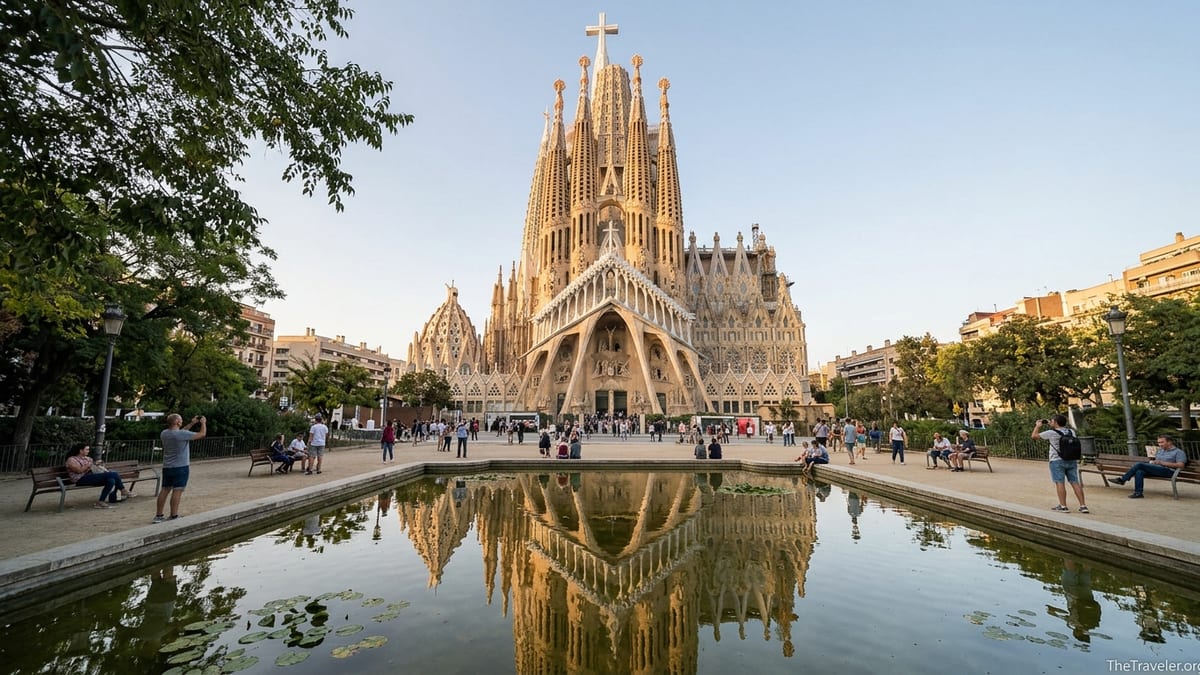
A Living Landmark at the Heart of Modern Barcelona
Stand at the busy junction of Carrer de Mallorca and Carrer de la Marina and you feel immediately why Sagrada Família is a must-see. Commuters rush past on bikes, kids spill out of nearby schools, and above it all rise 18 intricate towers in stone and glass. With the completion of the central Jesus Christ tower in early 2026, crowned by a gleaming white cross at 172.5 meters, the basilica has become the tallest church on earth, a new reference point in Barcelona’s skyline after 144 years of work.
Unlike many European cathedrals finished centuries ago, Sagrada Família is still in progress, and that is part of its appeal. Visitors today walk through active construction zones, with cranes arcing overhead and stone pieces being hoisted into place. This sense of a project shared across generations is tangible; guides routinely point out sections finished in the 1920s beside work completed only last year. It feels less like a frozen relic and more like a city-wide collaboration unfolding in real time.
The basilica also anchors Barcelona’s tourism economy and daily life. Local reports estimate that millions of people a year pass through its doors, and in 2025 alone ticket revenue reached well over one hundred million euros. Yet the building remains a parish church where neighborhood residents attend mass, local schools visit on weekday mornings, and Barcelona’s city government uses it as a stage for major cultural moments, from Gaudí-themed festivals to drone shows celebrating the new tower.
For travelers, this means Sagrada Família is not only a place to admire but a window into how Barcelona negotiates heritage and modernity. The queues snaking around the block, the forest of selfie sticks, the quiet early-morning prayer services, and the ever-present construction noise all tell a story about a city that has learned to live with its most famous monument as a daily neighbor.
Inside Gaudí’s Stone Forest: A Sensory Experience
Many visitors say the real magic of Sagrada Família begins the moment you step inside. After the busy, traffic-clogged streets, the nave opens like a stone forest: slender columns rise like tree trunks, branch out into a canopy, then dissolve into a ceiling of geometric “leaves.” The effect is deliberately organic. Gaudí, deeply inspired by nature, used catenary arches and inclined columns to mimic the way trees support their own weight. Walk down the central aisle around midday on a sunny day and you will see patches of colored light moving slowly across the floor like sunlight shifting through branches.
The stained glass windows are a highlight in themselves. On the Nativity side, cool blues and greens wash the interior in soft aquatic tones, while the Passion side explodes with oranges and reds, giving the impression of walking from dawn to dusk. Photographers often position themselves near the central crossing around 11:00 am or 4:00 pm, when the angle of the sun sends shafts of color diagonally through the space, ideal for wide shots on a smartphone or DSLR without harsh shadows.
Sound is another layer of the experience. During organ recitals or mass, the acoustics transform the building into a vast resonant chamber. Even on normal visiting days, conversations drop to a murmur, and you hear the echo of footsteps mixing with distant chisel work from upper levels. Since February 2026, the basilica has also introduced a daily “hour of silence” from 9:00 to 10:00 in the morning, when general noise is kept to a minimum. Travelers who enter during this window often describe a surprisingly peaceful atmosphere, with time to sit in a pew and simply watch the colors shift across the stone.
Because Sagrada Família is still a functioning basilica, you may also witness moments of local life that break the tourist bubble. On weekday mornings, for example, school groups from across Catalonia arrive with clipboards and sketchbooks, spreading out at the base of the columns to draw details of the capitals. On Sundays or during major church events, you might see wedding parties taking quick photos under the towers or local families attending mass, mixing with travelers from every continent waiting for their timed entry slots.
Architecture, Faith and Symbolism Intertwined
Even if you are not an architecture expert, Sagrada Família offers an accessible masterclass in design, symbolism and engineering. Gaudí combined Catalan Modernisme with Gothic and Art Nouveau influences, then filtered everything through his own experimental vision. The result is a building where almost nothing is purely decorative. Every curve, carving and color supports a symbolic or structural purpose, which guides love to unpack with visitors.
The three main facades illustrate this layered meaning. The Nativity Facade, completed largely during Gaudí’s lifetime, is exuberant and almost playful: you will find birds, flowers, and intricate biblical scenes carved into stone so densely that many visitors spend half an hour just scanning the details. In contrast, the Passion Facade, designed by sculptor Josep Maria Subirachs, presents stark, angular figures and empty space, a visual representation of suffering that some first-time visitors find almost unsettling. The third, the still-developing Glory Facade, is planned as a monumental entrance symbolizing the path to God and the final judgment, and current visitors can watch ongoing work as new sculptural elements are installed.
Symbolism continues in the towers. There are 18 in total: twelve for the apostles, four for the evangelists, one for Mary, and the tallest for Jesus Christ. Climb or take the lift up one of the completed towers and you can spot colored mosaics and inscriptions that reference these figures. The recently finished central tower has transformed the basilica’s outline, and local media celebrated its inauguration in February 2026 with papal blessings, light shows and drone displays visible across the city.
For many visitors, the interplay of faith and art is what sets Sagrada Família apart from other monumental churches. Even irreligious travelers often describe a sense of awe that goes beyond architectural appreciation. One concrete example: the Basilica’s dedicated prayer chapel, tucked away from the main nave, is accessible for quiet contemplation without a direct view of the busiest tourist routes. This deliberate separation shows how the foundation tries to balance the site’s spiritual role with its global popularity as a tourist magnet.
Planning Your Visit: Practical Details and Real-World Tips
Sagrada Família is one of the most visited sites in Europe, and treating it as a spontaneous stop often leads to disappointment. Same-day tickets frequently sell out in peak season, especially for tower access. As of mid-2026, official adult tickets for the basic basilica visit with audioguide start in the mid-twenties in euros, with prices rising for options that include tower access or guided tours. Third-party operators may charge significantly more, so most experienced travelers recommend booking directly through the basilica’s official ticketing platform.
The basilica’s standard opening hours typically run from 9:00 in the morning until late afternoon or early evening, with shorter hours on December 25 and 26 and January 1 and 6. Travelers arriving in shoulder seasons like March or November may find slightly less crowding but similar schedules. Because time slots can sell out, especially between 10:00 and 15:00, it is common for visitors staying only two or three days in Barcelona to choose their Sagrada Família slot first, then plan the rest of their itinerary around it.
Real-world examples underline the importance of planning. It is not unusual to hear of travelers who booked tickets through non-official resellers, then struggled to download or change them. One visitor recounted arriving from the United States to find their QR code missing from a third-party app, requiring frantic calls and, in some cases, purchasing new tickets at the gate. By contrast, those who purchase official tickets usually receive a PDF and confirmation email that can be stored in standard wallet apps or printed in advance.
Another key decision is whether to include a tower visit. Tower tickets cost more, but they reward visitors with panoramic views over the Eixample grid all the way to the Mediterranean. Access generally involves taking an elevator up and then descending via a narrow spiral staircase. Travelers with vertigo or knee problems often choose to skip this option and instead spend longer inside the nave and along the museum level, where construction models, historic photos and short videos explain how the basilica has evolved from Gaudí’s original plaster models to today’s computer-assisted stone cutting.
Guided Tours, Audioguides and the Best Ways to Explore
Given the density of detail and symbolism, many visitors find a self-guided wander is not enough to fully appreciate Sagrada Família. The official audioguide, included in many standard tickets through a smartphone app and headphones, is a strong starting point, walking you through the facades, nave, and museum at your own pace. For budget-conscious travelers, this option offers good value, effectively turning a one- to two-hour visit into a structured introduction without additional cost beyond the ticket.
Those looking for deeper context often opt for small-group guided tours. In 2026, official guided visit packages typically start around the high thirties to low forties in euros for adults, with tours in languages like English, Spanish, French, and Italian. Independent platforms sometimes advertise “skip-the-line” tours from around 60 euros per person, rising to 70 or more for premium small-group or combined tours that add other Gaudí sites such as Park Güell or Casa Batlló. The main advantage is having an accredited guide who can explain lesser-known details, such as the numerical magic square on the Passion Facade or the way Gaudí used broken ceramic tiles to create his distinctive mosaics.
Private tours, while more expensive, can turn a visit into a tailored experience. Families traveling with children often appreciate a private guide who adjusts explanations to younger audiences, turning the visit into a treasure hunt for specific animals or symbols hidden in the stone. Couples celebrating special occasions sometimes time a late-afternoon private tour to coincide with the warm light flooding through the western windows, then continue to a nearby restaurant in the Sagrada Família neighborhood for tapas and cava, turning the basilica visit into the centerpiece of a full evening.
Whatever format you choose, one practical tip holds: bring your own wired or wireless headphones, especially if you are relying on the audioguide. Rental headphones are available but limited, and frequent travelers often prefer using a familiar pair to block out some of the ambient noise from tour groups, creating a more immersive, museum-like experience.
Timing, Crowds and How to Find Moments of Calm
Because of its global fame, Sagrada Família rarely feels empty. Yet there are clear patterns that can help you avoid the densest crowds. Mid-morning and early afternoon, especially in June, July and August, are the busiest, with tour buses dropping off groups and independent travelers converging before or after beach time. During these hours, you can expect queues at security, limited space to linger in the central nave for photos, and busy viewpoints along the balconies.
In contrast, early entry slots around 9:00, especially on weekdays outside of peak summer and Easter, often provide a markedly calmer experience. With the new “hour of silence” introduced in 2026, the first hour of the day is particularly peaceful, with staff encouraging whispers and limiting loud group explanations. Travelers who book these early slots frequently describe being able to sit quietly in the pews, photograph entire sections of the nave without people in the foreground, and appreciate the subtle shifts in morning light as the sun rises over the city.
Even during peak times, small choices can help. Entering the basilica and immediately veering to the side aisles, for example, can create pockets of space away from the central flow of tour groups. Visiting the museum level under the main nave in the middle of your slot rather than at the end can offer a break from the crowds and surprising views up into the structure through glass floors and openings. Families with young children might plan a short break afterward in nearby Plaça de Gaudí, the park with a reflecting pond on the Nativity side, where kids can burn energy while adults enjoy one last full-façade view.
For serious photographers, timing is everything. Morning slots are best for the Nativity Façade, which catches the rising sun, while late afternoon and golden hour favor the warmer tones of the Passion Façade. Inside, the most dramatic stained-glass effects tend to occur when the sun is low but still strong, roughly mid-morning in winter and later afternoon in summer. Travelers with flexible schedules sometimes book two separate visits on different days and times, a splurge that allows them to experience the space under changing light conditions.
Beyond the Basilica: The Neighborhood and Local Life
Sagrada Família is not an isolated monument on a hill but the centerpiece of a dense residential neighborhood. Step a block or two away from the tourist routes and you are in a very ordinary Barcelona district of corner bakeries, hardware stores, and small supermarkets. Many residents’ balconies frame startling views of Gaudí’s towers, a constant backdrop to daily routines like hanging laundry or walking dogs.
For visitors, this proximity to local life offers a chance to balance intense sightseeing with slower exploration. Before an early slot, you might have a simple Catalan breakfast of coffee and a croissant or a slice of tomato-rubbed pa amb tomàquet at a bar on Carrer de Provença, surrounded by commuters reading the morning paper. After a late-morning visit, families often grab lunch menus del día at neighborhood restaurants a few blocks from the basilica, where fixed-price meals typically include a starter, main dish and dessert for a moderate cost compared with the tourist-focused spots directly around the main squares.
The area also provides convenient links to the rest of Barcelona. The Sagrada Família metro station sits just across the street, connecting the basilica to central hubs like Passeig de Gràcia and Plaça de Catalunya in minutes. Some visitors structure their day as a Gaudí-themed arc, visiting Sagrada Família in the morning, then heading to Park Güell or Casa Milà in the afternoon, with metro and bus rides that trace the city’s modernist spine through the Eixample.
At night, the basilica’s illuminated facades take on a different character. While the interior closes earlier, the exterior lighting makes an evening stroll worthwhile, especially for those staying within walking distance. Couples often return after dinner to sit on benches in Plaça de Gaudí or Plaça de la Sagrada Família, watching the towers glow against the dark sky and reflecting on the sometimes overwhelming experience of the daytime visit.
The Takeaway
There are many reasons travelers fall in love with Barcelona: the sea breeze along Barceloneta, the labyrinthine streets of the Gothic Quarter, the food markets and nightlife. Yet for most visitors, Sagrada Família becomes the emotional and visual anchor of their stay. It is where the city’s ambition, creativity and contradictions are carved into stone.
Practically speaking, the basilica rewards the effort it demands. The advance planning, timed tickets, security checks and inevitable crowds are more than compensated by the sensory richness waiting inside: the play of light through stained glass, the vertiginous views from the towers, the whispered explanations of guides, and the quiet moments in side chapels. Whether you spend an hour or an afternoon, the experience tends to linger in memory long after other attractions blur together.
More than a postcard backdrop, Sagrada Família is a living project that invites each generation of Barcelonans and visitors to participate in its story. To come to Barcelona and skip this encounter is to miss not only a masterpiece of world architecture, but also one of the clearest expressions of what the city has become in the 21st century: confident, complex, and still very much under construction.
FAQ
Q1. Is Sagrada Família finally finished in 2026?
The central Jesus Christ tower and main structural elements are complete, making it the tallest church in the world, but some facades and urban integration works are still ongoing.
Q2. How far in advance should I buy tickets?
In peak season it is wise to book at least several days ahead for basic entry and one to two weeks ahead if you want a specific time slot or tower access.
Q3. What is the best time of day to visit?
Early morning around opening time offers fewer crowds and a quieter atmosphere, while late afternoon provides dramatic stained-glass light, especially on sunny days.
Q4. Are the towers suitable for people with vertigo or mobility issues?
Probably not. Tower visits involve narrow spiral staircases and heights that can unsettle those with vertigo, and access may be restricted for visitors with significant mobility limitations.
Q5. Can I visit Sagrada Família without booking a guided tour?
Yes. A standard ticket with the official audioguide is enough for many visitors and allows you to explore at your own pace while still getting essential explanations.
Q6. Is there a dress code to enter?
Yes. As an active basilica, Sagrada Família asks visitors to dress respectfully, avoiding swimwear, very short shorts, strapless tops and clothing with offensive prints.
Q7. How long does a typical visit take?
Most visitors spend between one and a half and two hours inside the basilica, and those adding a tower visit or lingering in the museum level may stay closer to three hours.
Q8. Are there discounts for students or children?
Yes. Reduced fares are usually available for children, students and seniors with valid identification, and young children often benefit from significantly cheaper or free entry.
Q9. Can I attend mass without buying a tourist ticket?
Yes. Regular religious services and special liturgies are typically accessible through separate entrances, though seating is limited and schedules can change on major feast days.
Q10. Is photography allowed inside the basilica?
Yes, non-flash photography for personal use is generally allowed, but tripods and professional equipment may be restricted, and visitors are asked to respect worshippers and ongoing services.