


For many travelers, visiting the Sagrada Família in Barcelona is a once-in-a-lifetime moment. Yet every day, people arrive late and lose their tickets, queue in the wrong place, dress in ways that get them turned away from the basilica, or spend half their visit worrying about pickpockets instead of looking up at Gaudí’s towers. With a bit of practical planning and a clear idea of what commonly goes wrong, you can sidestep the usual mistakes and experience the basilica the way it deserves.
Get the latest updates straight to your inbox!
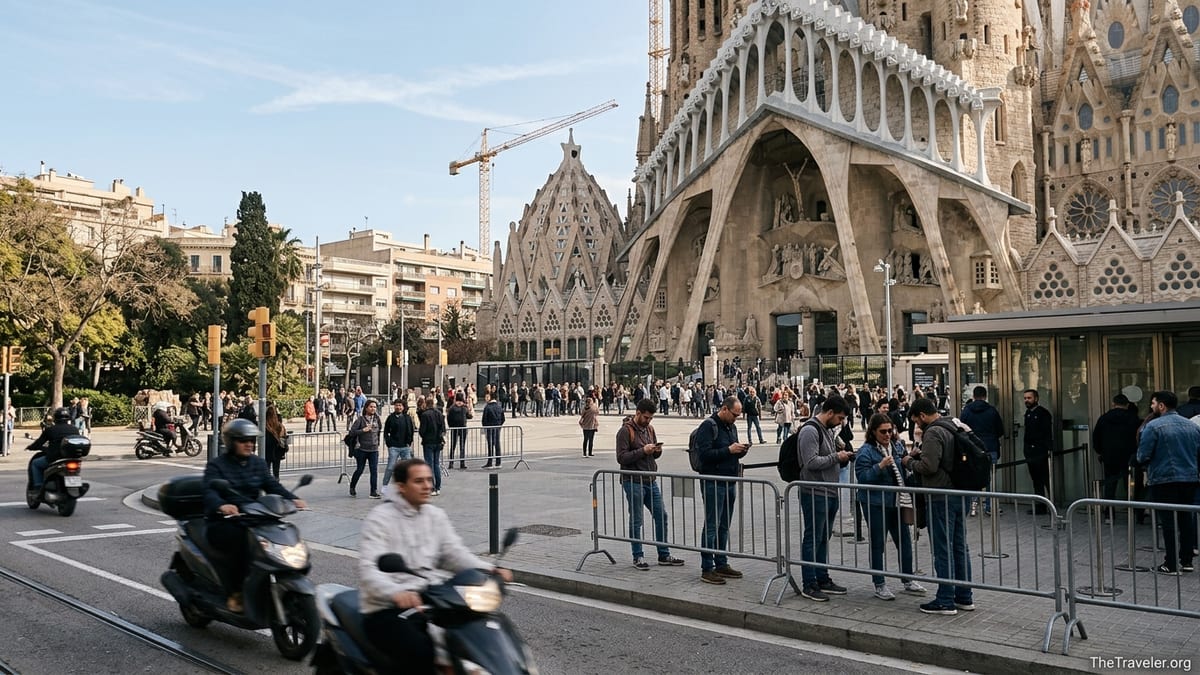
Misunderstanding How Sagrada Família Tickets Actually Work
One of the most common mistakes at Sagrada Família happens long before anyone sees the Nativity facade: buying the wrong ticket, or buying it from the wrong place. The basilica now uses dated and timed tickets, and most days in peak season the main slots sell out in advance. Visitors still regularly show up at the entrance expecting to “just buy a ticket on site” like they might at a smaller church. Instead, they find a sign announcing that same-day entry is sold out or that only late-evening slots remain, which can destroy a carefully planned Barcelona itinerary.
Another widespread error is purchasing tickets from resellers that look official but are not. Travelers report paying far above the typical basic entry price for so‑called “waiting list” or “priority” tickets from third-party vendors, only to discover that the time windows are misleading, the inclusions unclear, or the customer support nonexistent if anything goes wrong. A typical scenario is someone paying premium rates for what they believe is a flexible visit “anytime between 11:00 and 19:15,” then learning at the gate that their ticket is valid only for a narrow slot and they have already missed it.
To avoid these problems, treat ticket purchase the way you would for a high-demand museum: buy directly from the official Sagrada Família website or from a well-reviewed, clearly labeled tour operator if you specifically want a guided tour. Expect that basic timed tickets without towers will usually be the most economical option, with audio guide and tower access priced higher. Book at least several days ahead in high season such as June through September, and do not count on last-minute same-day availability if you are visiting on a weekend or public holiday.
Finally, do not confuse ticket type with entry process. Regardless of whether you buy a simple ticket, an audio guide ticket, or a guided-tour option, everyone must pass through the same security checks. Payment for an upgraded ticket does not mean you can wander in at any time or bypass basic controls. Read the confirmation email carefully, check the exact access time and entrance gate, and keep the QR code easily accessible on your phone for scanning.
Arriving Late or at the Wrong Time of Day
Another classic mistake is underestimating how strict the timed-entry system is. Many visitors treat their scheduled time as a vague guideline rather than something enforced. They stop for a leisurely coffee on Avinguda de Gaudí, join the security queue ten or fifteen minutes after their slot, and then argue with staff when told they are outside their allowed range. Especially in busy months, arriving significantly late can mean being denied entry or having to wait until staff can accommodate you, which is never guaranteed.
Traffic and public transport delays around the basilica catch people off guard too. The Sagrada Família metro station, served by two lines, is almost always busy. At peak times, queues form just to exit the station or use the ticket machines, and moving through the crowds across the surrounding streets can add another ten minutes. If you plan to arrive “right on time” based on the metro schedule, you may find that the last stretch from platform to security queue is what makes you late.
Timing during the day also affects the quality of the experience. Many travelers unintentionally choose the most crowded and hottest period, between late morning and mid-afternoon in summer, assuming that “late morning is perfect sightseeing time.” Inside, this can mean difficulty hearing audio guides over the murmur of tour groups, waiting to get close to key details like the Passion facade sculptures, or feeling rushed along by the sheer flow of visitors. By contrast, those who book for early morning or late afternoon often find calmer interiors, more space for photos, and softer light pouring through the stained-glass windows.
To protect your visit, aim to be at the perimeter of the basilica at least 30 to 40 minutes before your entry time, particularly in high season. That buffer covers metro delays, security lines, a quick bag check, and time to orient yourself at the correct entrance. If you are staying farther out in the city, avoid connecting through the busiest metro stations right at rush hour and consider walking the last few blocks to enjoy the Eixample neighborhood instead of cutting it close with a tight connection.
Ignoring Dress Code and Security Rules
Because Sagrada Família is such a major tourist attraction, many visitors forget that it is also an active basilica. The site has a published set of rules covering clothing and behavior, and visitors are sometimes surprised to find that they are turned away, asked to modify their outfit, or told to remove certain items. Mistakes here range from wearing swimwear or very revealing tops immediately after coming from Barceloneta beach to carrying large banners or costume pieces that security considers inappropriate for a place of worship.
Dress-code expectations are similar to those at many European churches. Bare torsos and backs, transparent clothing, excessively short shorts, and beachwear are all likely to cause problems. Travelers have reported being asked to cover shoulders with a scarf or jacket in summer, or told that a slogan on a T‑shirt was not appropriate. While staff sometimes exercise discretion, relying on that flexibility can be a gamble if your only top layer is a beach cover-up or cropped sports bra and you are on a fixed schedule.
Security rules also surprise people who assume the basilica is as relaxed as a city park. Large suitcases, bulky hiking backpacks, tripods, glass bottles, and anything resembling a weapon can be refused at the entrance. This catches out travelers coming directly from or going straight to the airport with all their luggage. If security deems an item dangerous, it may be confiscated or you may be denied entry altogether, with no ticket refund.
To avoid stress at the gate, dress as you would for a respectful visit to any major church: covered torso, shorts or skirts of a reasonable length, and no clothing that could be interpreted as offensive. Carry a light scarf or packable cardigan in summer if your normal top is sleeveless. Leave large luggage in your accommodation or a staffed luggage storage service near a central metro or train station, and bring only a small daypack or crossbody bag with essentials. Double-check security guidelines for restricted items before you arrive so that nothing in your bag raises issues.
Underestimating Crowds, Queues, and “Skip-the-Line” Confusion
Many first-time visitors arrive at Sagrada Família assuming that a “skip-the-line” ticket purchased from a reseller means the entire visit will be fast and friction-free. In reality, every visitor must pass through security screening similar to an airport, and on busy days there will still be a queue to reach the metal detectors, regardless of ticket tier. People who expect to walk up to a special door, flash their phone, and be instantly waved inside often feel frustrated when they discover a single security funnel for everyone at the perimeter.
Adding to the confusion, the area around the basilica is a tangle of different lines: tour groups queueing at one gate, independent visitors at another, and a general crush of people in the surrounding streets taking photos and crossing in front of entrances without realizing they are blocking access. It is surprisingly easy to accidentally stand for twenty minutes in a line that turns out to be for a guided group tour you are not part of. By the time someone from staff reaches you and checks your ticket, you have lost valuable time and may be dangerously close to missing your slot.
Crowds also affect comfort once inside. On a midday visit in June or July, the nave and the towers can feel intensely busy. Visitors report inching along spiral staircases and interior balconies, waiting at small windows to take a quick photo while others queue behind them, and struggling to find a quiet spot to absorb the details of the interior columns. Those who are claustrophobic or anxious about heights can find the tower section especially stressful when every landing is packed.
Manage expectations by understanding that “skip-the-line” usually means you bypass any on-site ticket purchase counter or you join a dedicated entrance for your pre-booked time, not that you skip mandatory security. When you arrive, look for clear signage indicating your specific entrance and ask staff if you are in doubt instead of passively joining the longest line. If you are sensitive to crowds, book the first available morning slot or a late afternoon one, and think carefully before adding tower access during peak midday hours when both the stairs and lifts are busiest.
Not Preparing for Pickpockets and Street Scams
The area around Sagrada Família is one of Barcelona’s classic pickpocket zones, particularly in the streets around the basilica and within the nearby metro station. The risk is not violent crime but quick, opportunistic theft in crowds. A typical pattern is a visitor standing with a smartphone half out of a back pocket while photographing the facade, or wearing a backpack behind them on the metro. In the time it takes to frame a shot or squeeze onto a train, an experienced thief can open zippers, lift a wallet, or pull a phone without being noticed.
Common tactics include distraction near the metro doors, where someone might bump into you as they exit while an accomplice slips a hand into your bag. Another occurs at the street-level viewpoints: a stranger offers to take your photo, or a group gathers around a street performer, and in the jostling your bag is unzipped. There are also occasional reports of people posing as petition collectors or charity workers who use a clipboard to obscure their hands as they reach for your belongings.
The consequences are more than financial. Losing a phone can lock you out of digital tickets, hotel reservations, and boarding passes, effectively derailing your travel plans. Travelers have described having carefully planned Sagrada Família slots ruined because their phone with the QR codes was stolen on the metro ride over. Sorting out police reports and emergency replacements can consume precious vacation time and mental energy.
To minimize risk, treat the whole surrounding area, especially the metro station, as you would any major European transport hub. Use a crossbody bag worn in front of your body, with zippers fully closed. Keep your phone and wallet in interior pockets that require unzipping or unfastening to access. On the metro, carry backpacks in front of you and avoid standing right by the doors if you can move further inside the carriage. When someone creates unexpected physical contact, do an instant “pat check” of your pockets and bag zips. Most visitors experience no problems at all, but a few simple habits sharply reduce the already manageable risk.
Rushing the Visit and Skipping Context
A different kind of mistake at Sagrada Família is not about security or logistics but about depth. Many visitors budget little more than an hour, dashing in for a quick look at the nave and a handful of photos before hurrying off to Park Güell or the Gothic Quarter. Without context, the visit can blur into “another big church,” and details like the symbolism of the facades, the forest-like interior columns, or Gaudí’s engineering innovations can be easy to miss.
For example, travelers who arrive without an audio guide or any prior background often stand beneath the Nativity facade without realizing how its densely carved scenes depict different episodes from the life of Christ, or why the figures on the Passion facade are so stark and angular by comparison. Inside, they may walk straight past the models and exhibits in the lower museum area, which explain how Gaudí used hanging chains and gravity to model the catenary curves visible in the vaults above.
On a practical level, this lack of preparation can mean wandering somewhat aimlessly, doubling back through crowds, and missing quieter vantage points. Visitors frequently spend most of their time craning their necks in the central nave and then discover only as they are leaving that there was a museum space with original drawings, or that the best view of the interior geometry lies from a particular side aisle. Once outside, some realize they never properly walked around to appreciate the contrast between the three main facades.
Plan to spend at least two to three hours onsite if you want a meaningful visit that goes beyond snapshots. Consider downloading the official audio guide or joining a small-group tour with a licensed guide who can point out hidden details, from the tortoises at the base of the Nativity facade columns to the way the colored glass is arranged to bathe the interior in different tones throughout the day. Even if you prefer to explore independently, reading a short introduction to Gaudí’s life and vision before you arrive will help the building come alive.
Overlooking Practical Comfort: Heat, Footwear, and Facilities
Practical comfort is another area where visitors easily trip up. In warm months, the plaza areas and queues around Sagrada Família can be hot and exposed, with limited shade. Travelers who arrive just before noon without water, hats, or sunscreen often spend their first minutes focused more on the sun than the architecture. While the interior is generally cooler, the combination of crowds and stained-glass-filtered light can make it feel surprisingly warm, especially if you are climbing towers or navigating narrow staircases.
Footwear is a similar issue. Many people come straight from a morning at the beach or from wandering Barcelona in unsupportive sandals. Once inside the basilica, the hard stone floors and extended standing time can take a toll. Tower access, in particular, involves tight spiral staircases and confined landings where good grip and secure footing matter. Visitors wearing loose flip flops or very high heels sometimes find themselves uncomfortable or unsteady.
Facilities and food catch guests out as well. You cannot eat or drink inside the basilica beyond small sips of water, and there is no full café within the secure perimeter. Families arriving with hungry children or travelers who skipped breakfast to reach an early slot can find themselves trying to concentrate on the basilica while thinking mostly about lunch. Similarly, assuming that restrooms will be as plentiful as in a large shopping center can lead to unnecessary stress.
Address these comfort issues before they arise. Wear comfortable walking shoes or supportive sandals with straps, even if you are prioritizing stylish photos. Bring a refillable water bottle and take advantage of nearby cafés or bakeries for a light snack before your entry time, leaving enough margin so you are not rushing the last sips. Apply sunscreen in advance if you will be in the queue during the middle of the day, and know where the nearest public restrooms are or plan a quick stop at a café before you enter.
The Takeaway
Most of the problems travelers encounter at Sagrada Família are preventable. They stem from treating one of the world’s most visited basilicas as a casual drop-in attraction rather than as a highly regulated, deeply symbolic, and heavily touristed site. Arriving without a valid timed ticket, turning up late, wearing clothing that clashes with the dress code, carrying valuables loosely in crowded spaces, or budgeting only a rushed hour inside are all choices that can turn a dream visit into a forgettable or stressful one.
With a modest amount of forethought, the experience transforms. Booking official timed tickets, allowing generous buffers for transport and security, dressing with respect for a place of worship, securing your belongings, and giving yourself two or three unhurried hours inside create the conditions for a very different kind of encounter. Instead of worrying about logistics, you can watch the light shift across the stained glass, listen calmly to an audio explanation of Gaudí’s designs, and step out into the Barcelona streets feeling that you have truly met the building rather than simply passed through it.
If Sagrada Família is on your list, treat the logistical side as part of the pilgrimage. The reward is not only smoother entry but a richer understanding of why this unfinished basilica has captivated generations of architects, pilgrims, and travelers from around the world.
FAQ
Q1. Do I really need to buy Sagrada Família tickets in advance?
Yes. While last-minute tickets are occasionally available in low season, popular dates and times often sell out. Buying in advance directly from the official source gives you a guaranteed time slot and avoids disappointment at the entrance.
Q2. How early should I arrive before my timed entry?
Plan to be at the perimeter of the basilica 30 to 40 minutes before your scheduled time. This allows for delays on the metro, finding the correct entrance, and passing through security without stress.
Q3. Is there an official dress code at Sagrada Família?
Yes. As an active basilica, Sagrada Família expects visitors to dress respectfully. Avoid beachwear, bare torsos, very short shorts, and clothing with offensive slogans. Bringing a light scarf or extra layer is a good idea in summer.
Q4. Are “skip-the-line” tickets worth it?
Pre-booked tickets are essential, but no ticket lets you bypass security. What many people call “skip-the-line” usually means you skip an on-site ticket counter, not the metal detectors. The real benefit is a precise entry time, not instant access.
Q5. How bad is the pickpocket problem around Sagrada Família?
The main risk is pickpocketing in crowded areas and on the metro, not violent crime. If you keep your phone and wallet in secure, zipped pockets, wear your bag in front, and stay alert in crowds, you are unlikely to have an issue.
Q6. Can I bring luggage or a large backpack inside?
Large suitcases and bulky packs are generally not allowed past security. If you are arriving or departing the city the same day, store big bags at your accommodation or in a staffed luggage storage service and visit the basilica with only a small day bag.
Q7. Is the tower visit suitable for people with vertigo or mobility issues?
The towers involve lifts and narrow spiral staircases that can feel tight and exposed. They are not recommended for visitors with serious vertigo, mobility challenges, or a strong fear of heights. In such cases, focus on the nave and museum areas instead.
Q8. How much time should I plan for a proper visit?
For a meaningful visit that includes the nave and museum area, plan at least two hours. If you add tower access or a guided tour, allow closer to three hours so you are not rushed.
Q9. Are audio guides and guided tours worth it?
Yes for most visitors. An audio guide or a small-group tour adds context that helps you understand the symbolism of the facades, the design of the interior, and Gaudí’s methods, turning the visit from simple sightseeing into a more memorable experience.
Q10. Can I attend a religious service instead of a regular visit?
There are scheduled masses and special services where entry works differently from standard tourist visits, often with limited seating and specific arrival instructions. If you wish to attend, check the latest information in advance and plan your clothing and timing accordingly.