


New Brunswick, New Jersey, is often treated as shorthand for Rutgers University. Yet just beyond the lecture halls and tailgate lots is a compact river city with a serious arts scene, a walkable downtown, and easy access to parks, neighborhoods, and day trips that have nothing to do with midterms or football. Whether you are visiting a student, in town for business, or simply curious about central New Jersey, New Brunswick rewards anyone willing to step off College Avenue and explore.
Get the latest updates straight to your inbox!
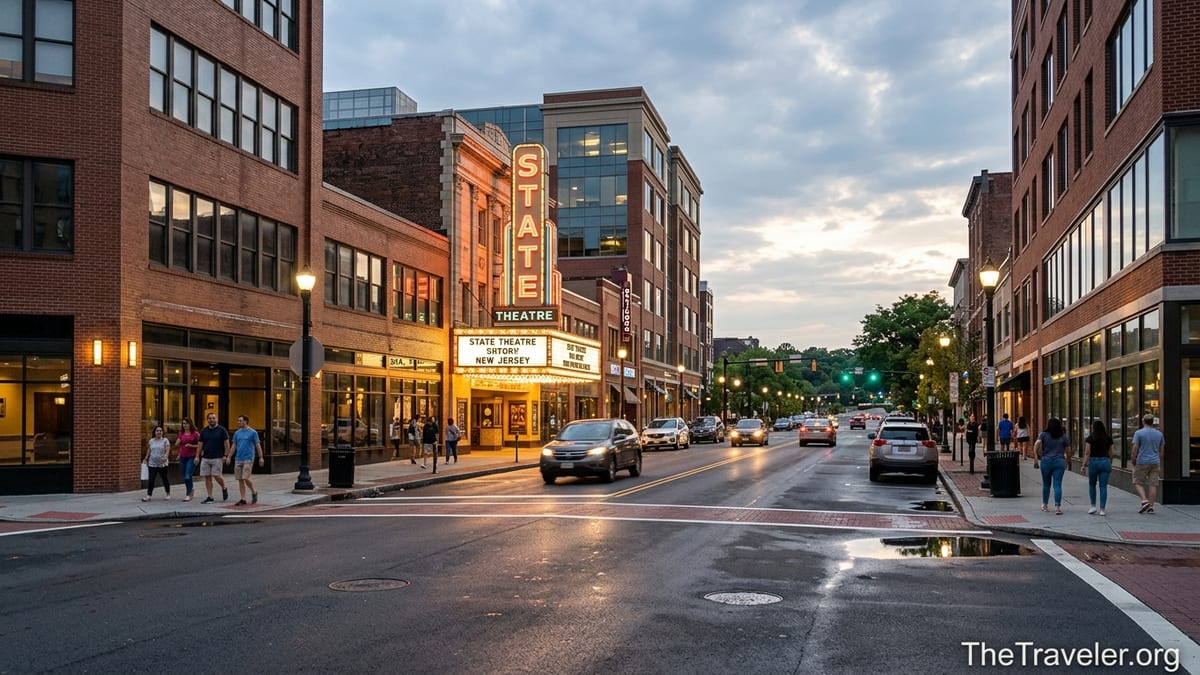
Get Oriented in a Walkable Small City
New Brunswick sits on a bluff above the Raritan River, roughly midway between New York City and Philadelphia. NJ Transit’s Northeast Corridor line stops right in downtown, and from New Brunswick Station you can walk to most of what you will do here in 10 to 15 minutes. The city center spreads out from the intersection of George Street and Albany Street, while the Raritan River and Boyd Park form a green edge to the south.
Visitors who arrive thinking only of Rutgers are often surprised to find a proper small city, with mid-rise apartment blocks, corporate offices, and a full theater district clustered within a few blocks. Johnson & Johnson’s global headquarters occupies a striking glass complex near Albany Street, and new residential towers like The Aspire and The Quincy signal how much has been invested in downtown living. For travelers, this translates into a concentration of restaurants, arts venues, and hotels that make it easy to stay central and explore without a car.
It is worth giving yourself a simple first walk: from the station, stroll down Albany Street toward the river, loop up George Street past the bars and cafes, then cut over to Livingston Avenue, where the main theaters sit shoulder to shoulder. This thirty-minute circuit gives you the basic mental map you will rely on for the rest of your stay and quickly makes clear that you do not need to be on a campus to feel the pulse of New Brunswick.
Explore the Theater District and Live Arts
One of New Brunswick’s biggest surprises is its density of professional performing arts. On Livingston Avenue, the historic State Theatre New Jersey dates to 1921 and now seats roughly 1,800 people in a fully restored Art Deco auditorium. In a typical season it hosts national touring Broadway shows, big-name comedians, family productions, and concerts, drawing audiences from across central New Jersey. Tickets for major touring musicals can run in the range of what you would expect in a mid-sized regional theater, while weekday performances and balcony seats often come in noticeably cheaper than equivalent seats in Manhattan.
Next door, the New Brunswick Performing Arts Center houses several modern stages under one roof, including the resident George Street Playhouse. This respected regional company has been premiering new plays and reimagined classics since the 1970s and now stages them in sleek, purpose-built theaters with excellent sightlines and sound. Depending on the show, you might find intimate dramas in a black-box space one week and a polished musical in a 500-seat theater the next, often with talkbacks or pre-show discussions that add context for visitors.
The area around Livingston Avenue comes alive on show nights. People spill out of parking garages and hotels to grab a pre-theater dinner, and bars along George Street get busy afterward with both students and older theatergoers. Even if you do not buy a ticket, a quick evening walk past the lit-up marquee of the State Theatre and the glassy facade of the arts center gives you a feel for how central the performing arts have become to New Brunswick’s identity beyond Rutgers.
Walk the Raritan Riverfront and Boyd Park
For all its urban energy, New Brunswick has easy access to the outdoors along the Raritan River. South of downtown, Boyd Park stretches for roughly 20 acres along the waterfront. It was extensively rehabilitated as part of the city’s open space plans, so the park now features a wide riverside promenade, lawns, a band shell, and historical markers that explain New Brunswick’s maritime and industrial past. The Raritan slows to tidewater here, so you get broad, reflective views rather than whitewater, especially at sunrise and sunset.
On a fair-weather weekend morning, a typical local routine is to pick up coffee from a George Street cafe and walk down to the park. Benches line the walkway, and the grassy slope makes a good spot for an impromptu picnic with takeout from downtown. Several city festivals and cultural events use the park’s open space and stage for outdoor concerts and fairs, which means you may find live music or a food event without having planned for it.
If you are up for a longer outing, you can connect from Boyd Park toward the Delaware and Raritan Canal State Park Trail. This historic canal corridor runs for dozens of miles between New Brunswick and Trenton, offering a mostly flat, crushed-stone path popular with cyclists and runners. From town, locals often bike west along the canal towpath toward the smaller river communities and farm stands. Even a modest ride or walk of 30 to 45 minutes out and back quickly replaces downtown traffic with tree canopy, canal locks, and occasional herons along the water.
Sample a Surprisingly Global Food Scene
New Brunswick’s compact size hides an unusually global dining scene, influenced by decades of immigration and a constant flow of students, researchers, and medical professionals. Along George Street and the surrounding blocks you will find everything from South Asian curry houses and Central American diners to Korean fried chicken, ramen, and modern American bistros. Prices vary widely, so you can eat on a student budget at a counter-service taco shop one night and then splurge on a coursed New American dinner the next.
Because of the year-round demand from university and hospital workers, many places stay open late and maintain solid weekday business. This is helpful if you are in town for a conference or hospital visit and can only wander out after evening commitments. Expect to see white coats and ID lanyards at lunch, followed by a more mixed crowd of students, residents, and visitors in the evenings. When local events are on at the State Theatre or New Brunswick Performing Arts Center, reservations at the better-known sit-down restaurants can be wise, especially on Saturdays.
Beyond the core, nearby Highland Park on the opposite side of the Raritan has an additional strip of independent eateries along its main street. Many visitors stroll or bike over the bridge for a quieter, neighborhood feel and slightly more low-key cafes and bakeries. It is an easy way to extend the sense of discovery beyond the borders of New Brunswick itself without needing a car or transit.
Experience Museums and Culture Outside the Classroom
Even if you intend to avoid a formal campus tour, some of New Brunswick’s most interesting cultural stops exist in that gray zone between “Rutgers-related” and “city institution.” The Zimmerli Art Museum, located at 71 Hamilton Street on the edge of downtown, is a public museum with free admission policies and rotating exhibitions that draw on its strong collections in European, American, and Russian and Soviet art. Families appreciate that it offers family-friendly programming and clear visitor guidelines, while casual art fans can drop in for an hour between meals or shows.
A short walk away on Somerset Street, the Rutgers Geology Museum operates as another small but engaging stop that happens to be open to the public. Its displays of fossils, minerals, and New Jersey-focused geology are especially appealing to kids or anyone fascinated by dinosaurs and rocks. Both institutions blur the line between campus and city and demonstrate that you do not need a student ID to benefit from the research and collections rooted here.
Beyond university-affiliated sites, New Brunswick’s civic history emerges in smaller ways. Historical signage in Boyd Park explains how the Raritan functioned as a transportation and industrial artery, while plaques on older downtown buildings tell the story of New Brunswick as a colonial-era river town and later as a manufacturing hub. Exploring on foot, you will notice how layers of red-brick warehouses, Victorian homes, mid-century towers, and contemporary glass projects stack together in just a few blocks.
Discover Neighborhoods and Everyday Life
To understand New Brunswick beyond its institutions, spend time in its neighborhoods. Downtown itself is not especially large, which makes it easy to wander past the theater district and into residential streets where students, long-time residents, and newer arrivals live side by side. You will see triple-decker houses, small corner groceries, and backyard gardens within a ten-minute walk of the main commercial strips, a reminder that this remains a lived-in city rather than a purpose-built campus.
Across the Raritan, Highland Park offers a change of pace. This separate borough has the feel of a small town, with tree-lined streets and a main drag of independent shops, kosher bakeries, and low-rise apartment buildings. Many people who work or study in New Brunswick choose to live here for the quieter environment while still walking or biking to downtown and the station. Visitors often enjoy an afternoon spent browsing its used bookshop, grabbing coffee from a local roaster, and people-watching from a bench before heading back across the bridge for evening plans.
Further afield, other Middlesex County communities demonstrate the diversity that shapes New Brunswick’s cultural life. While they may require a short drive or bus ride, they are part of the mental map locals hold when they consider “things to do around New Brunswick,” from large suburban malls to pockets of regional cuisine where particular immigrant groups have settled. Travelers with more time can treat New Brunswick as a hub and plan forays into these surrounding areas for a fuller sense of central New Jersey.
Use New Brunswick as a Day-Trip Base
New Brunswick’s position on the Northeast Corridor rail line makes it an effective base for day trips without a car. Trains run regularly to New York Penn Station in Manhattan and to Newark, offering access to world-class museums, Broadway, and major league sports while letting you sleep in a quieter, less expensive city. Many families visiting a Rutgers student plan one full day in New York, leaving early on a morning train and returning late after a show, secure in the knowledge that New Brunswick’s restaurants and bars will still be open for a late bite.
In the other direction, the same line links New Brunswick to Trenton and to connections for Philadelphia, giving ambitious travelers a chance to sample two major cities over a long weekend. Closer to home, the Delaware and Raritan Canal State Park and other central New Jersey towns are accessible by a combination of train, bike, and rideshare for those who want to balance urban exploration with nature. This flexibility is part of the appeal for visitors who might find a full week in Manhattan overwhelming or expensive but still want easy access to it.
Because New Brunswick is not primarily a tourist town, hotel rates and restaurant prices often feel more manageable than in major city centers, particularly outside peak graduation and move-in periods. This makes it a viable home base for travelers who value both budget and the feeling of dipping in and out of different urban and suburban environments over a few days.
The Takeaway
Viewed from a train window, New Brunswick can look like just another college stop on a long line. Up close, however, it reveals itself as a compact, layered city where historic theaters, riverfront parks, global food, and working neighborhoods coexist within a short walk. Rutgers may be what put New Brunswick on many maps, but the life of the city extends well beyond game days and lecture schedules.
For travelers, that means choices. You can spend an evening immersed in a professional theater production, a morning wandering an art museum, an afternoon biking along a historic canal, and a late night sampling tacos or dumplings with locals from every imaginable background. Used as either a destination in its own right or a strategic base between New York and Philadelphia, New Brunswick rewards curiosity, comfortable shoes, and a willingness to see what lies just off campus.
FAQ
Q1. Is New Brunswick safe for visitors who stay downtown?
Downtown New Brunswick is an active college and business district with a regular police presence, especially around the station, theaters, and main restaurant streets. As in most small cities, it is wise to stay aware of your surroundings at night, stick to well-lit areas, and use common sense, but many visitors comfortably walk between hotels, restaurants, and venues after dark.
Q2. Do I need a car to enjoy New Brunswick beyond Rutgers?
You can explore most of central New Brunswick on foot from the train station, including the theater district, riverfront park, and many restaurants. A car or rideshare becomes more useful if you plan to ride longer stretches of the Delaware and Raritan Canal trail, visit more distant malls, or explore other towns in Middlesex County, but it is not essential for a short stay focused on downtown.
Q3. When is the best time of year to visit New Brunswick?
Spring and early fall offer the most pleasant combination of weather and city life, with outdoor events along the river and a full theater schedule. Summer tends to be quieter on campus but still lively downtown, while winter can be cold and occasionally snowy, which makes the performing arts and dining scenes the main draw.
Q4. How far is New Brunswick from New York City by train?
New Brunswick sits on NJ Transit’s Northeast Corridor line, and typical local trains to New York Penn Station take around an hour, depending on the specific service. This makes it realistic to plan a full day or evening in Manhattan while basing yourself in New Brunswick for lower hotel costs and a slower-paced environment.
Q5. Are the theaters in New Brunswick suitable for children?
State Theatre New Jersey regularly programs family-friendly events such as children’s theater, kid-focused concerts, and holiday shows, and the New Brunswick Performing Arts Center sometimes hosts productions appropriate for younger audiences. It is important to check age recommendations and content notes for individual shows, but many families from around central New Jersey treat these venues as reliable options for a cultural outing with kids.
Q6. Can I bike safely around New Brunswick and the Raritan River?
Experienced cyclists do ride around New Brunswick’s streets and connect to the Delaware and Raritan Canal State Park trail near the river. While there are some bike lanes and shared-road markings, traffic can feel busy, so less confident riders may prefer to walk their bikes through denser intersections and enjoy the calmer paths along the riverfront and canal.
Q7. What kind of food can I expect to find in New Brunswick?
The city’s food scene reflects its diverse population, with options ranging from casual taquerias and pizza slices to Indian, Korean, and Central American restaurants and more formal American bistros. Many places are reasonably priced and cater to students, while a handful of higher-end spots attract theatergoers and business diners, so it is easy to match your meals to your budget.
Q8. Are there free things to do in New Brunswick besides walking around campus?
Yes, several attractions are free or very low-cost, including the Zimmerli Art Museum, which typically offers free general admission, and the Rutgers Geology Museum, which opens its small but engaging collection to the public. Strolling along the Raritan in Boyd Park, exploring downtown architecture, and attending some community festivals also provide no-cost ways to experience the city.
Q9. Where should I stay if I want to focus on non-campus activities?
Staying in or near downtown, within walking distance of the train station, puts you closest to the theaters, main restaurant streets, and riverfront. Hotels clustered around Albany Street and the station offer the greatest convenience for visitors who prefer to do most of their exploring on foot and only venture to campus for specific events.
Q10. How long should I plan to stay in New Brunswick to see things beyond Rutgers?
A full weekend gives enough time to sample downtown dining, catch a show, walk the riverfront, and visit at least one museum without rushing. Travelers using New Brunswick as a base for day trips to New York or other parts of New Jersey might stay three or four nights, alternating between local exploration and excursions further afield.