


Just 30 kilometers east of Rome, Tivoli has long been the place where Romans escape the heat and chaos of the capital for cool air, flowing water and grand villas. For modern travelers planning an Italy itinerary packed with big-name sights, the question is simple: is Tivoli worth carving out a day or even an overnight stay, especially when time in Italy always feels too short? The answer depends on what you love most about travel, how much time you have in Rome and how willing you are to trade a museum queue for cypress trees, fountains and Roman ruins.
Get the latest updates straight to your inbox!
What Tivoli Actually Offers That Rome Does Not
Many visitors hear Tivoli mentioned as “a nice day trip from Rome” without really understanding what makes it special. In practice, Tivoli delivers three very different experiences in one compact area: the vast ruins of Hadrian’s Villa, the theatrical Renaissance gardens of Villa d’Este and the wild gorge and waterfalls of Villa Gregoriana. Each could justify a visit on its own; taken together, they create a rare blend of archaeology, landscape and architecture that you simply cannot match inside Rome’s city limits.
Hadrian’s Villa, or Villa Adriana, was the country estate of Emperor Hadrian in the 2nd century. Spread over a large area in the valley below Tivoli, it feels closer to a small city than a single residence, with baths, palaces, temples and the famous Canopus pool framed by columns and statues. Travelers who have already seen the Colosseum and Roman Forum often describe Hadrian’s Villa as the place where the scale of imperial life finally clicks into focus, because you can wander for a couple of hours through spaces that were never hemmed in by later construction.
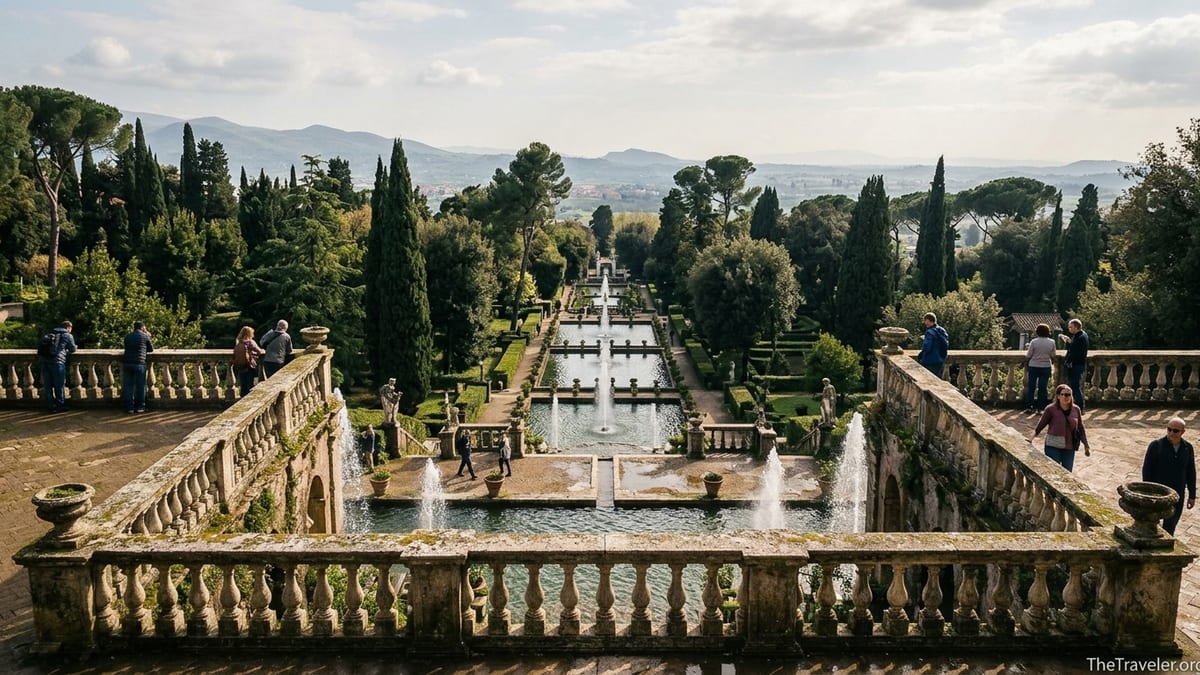
Villa d’Este, up in Tivoli’s historic center, could not be more different. This 16th century cardinal’s palace is celebrated for its hillside gardens packed with hundreds of fountains, grottoes and pools. When the water is flowing at full strength on a warm afternoon and music drifts up from the lower terraces, many visitors find Villa d’Este as memorable as anything they see in Rome, especially if they enjoy photography. It is also a welcome contrast to the stone and concrete of Italy’s big cities, with shady paths and mist from the fountains cutting the summer heat.
Villa Gregoriana, just below Tivoli’s acropolis, offers yet another mood. A walking path zigzags down into the gorge carved by the Aniene River, passing viewpoints over the artificial waterfall, caves and fragments of ancient structures. For travelers who crave greenery after several days of museums and churches, the park feels surprisingly wild given that it begins just steps from Tivoli’s central piazza. You will not find this combination of cliffside views, waterfalls and archaeological traces in central Rome.
How Much Time Tivoli Really Deserves
Whether Tivoli is “worth it” often comes down to how much time you can realistically devote to it. From central Rome, most visitors either squeeze Tivoli into a long day trip or slow down with an overnight stay. Both approaches work, but they offer very different experiences.
If you have four full days or more in Rome, dedicating one of those to a Tivoli day trip is easier to justify. Many travelers manage two major sites in a single day, typically Hadrian’s Villa in the morning and Villa d’Este in the afternoon. This is intense but doable if you start early. Expect to spend at least 2 to 3 hours at Hadrian’s Villa to walk through the main complexes, then another 2 hours at Villa d’Este for the palace interiors and gardens. You will also need to factor in transport between the two, usually by local bus or taxi.
Trying to see all three sites in one day is theoretically possible but often leaves people feeling rushed. A more realistic three-site plan might be: Hadrian’s Villa early, transfer to Tivoli’s center for lunch, Villa d’Este mid-afternoon and a shorter late-day walk through Villa Gregoriana before catching the train or bus back to Rome. This kind of itinerary can easily run 10 to 11 hours door to door, which is why it suits energetic travelers who do not mind plenty of walking and stairs.
If your Italy trip is already packed and you have only two or three days in Rome, Tivoli becomes more of a trade-off. Choosing Tivoli would mean giving up some time at major Roman sites like the Vatican Museums or the Capitoline. In that scenario, Tivoli tends to appeal most to repeat visitors to Rome, to people who care deeply about Roman archaeology beyond the city center or to travelers who know they become quickly exhausted by big-city crowds and need at least one day of fresher air and green space.
Getting From Rome to Tivoli: Time, Cost and Convenience
Reaching Tivoli from Rome is straightforward once you understand your options. Travelers typically choose between the regional train from Rome to Tivoli station or the Cotral buses that depart from Rome’s Ponte Mammolo bus terminal. Both routes take roughly 40 to 70 minutes depending on traffic and schedule, so it is more a question of which fits your starting point and comfort level.
The regional train is appealing to many first-time visitors because it feels familiar. Trenitalia’s Regionale services run from stations like Roma Termini and Roma Tiburtina to Tivoli, with the fastest journeys taking around 36 minutes and more typical runs closer to 50 minutes. Recent sample fares show one-way tickets starting at just a few euros per person, making this one of the cheapest day trips you can take from Rome. The train ride also offers scenic views of the countryside, especially in the last third of the journey as you approach Tivoli.
The bus option begins with a short metro ride to Ponte Mammolo on Rome’s Line B, then a Cotral coach out to Tivoli. This can be particularly convenient if you are staying near a Line B station, because you can pay once for a combined day ticket that covers both the metro and the bus zones in and out of the city. Cotral buses also stop closer to Hadrian’s Villa along the main road between Rome and Tivoli, making them useful if you plan to visit the villa first before continuing up into town. Travelers who have recently used this route often describe the buses as less crowded than Rome’s urban lines, but schedules can be more irregular in the middle of the day.
For those who prefer minimal logistics, organized day tours from central Rome remain a popular choice. Several operators offer combined Hadrian’s Villa and Villa d’Este excursions that include coach transport, a guide, and sometimes lunch in a traditional restaurant in Tivoli’s historic center. Prices naturally sit well above public transport and individual tickets, but many travelers find the extra cost worth it to avoid studying bus timetables, figuring out local transfers and keeping an eye on train departure times after a long day of walking.
Costs, Tickets and Practicalities on the Ground
Budget is another factor in deciding whether Tivoli deserves a place in your itinerary. The good news is that entrance fees for Tivoli’s sites are generally modest compared to some of Italy’s most famous attractions, especially if you take advantage of combination tickets when available. However, exact prices can shift when temporary exhibitions are in place, so it is wise to check current information shortly before your trip.
For Hadrian’s Villa and Villa d’Este, the Italian culture ministry operates a combined pass that periodically bundles both UNESCO-listed sites into one ticket. While the precise cost varies over time, it typically represents a meaningful saving compared with buying separate admissions, especially for adults. Youth discounts for visitors from the European Union in the 18 to 25 age bracket are common at state-run sites, and children under 18 often receive free or reduced admission with appropriate identification. Because staffing and exhibition schedules can affect what is open, checking the latest details a few weeks before you travel helps you avoid surprises at the gate.
Villa Gregoriana is managed separately and sells its own tickets at the entrance and through various vendors. Recent examples place standard adult admission in the range of a modest restaurant meal in Rome, with discounted or family tickets available to make the park more affordable for those traveling with children. Visitors should note that Villa Gregoriana is typically open seasonally, from late winter until shortly before the December holidays, and can sometimes close temporarily in adverse weather due to its steep paths and proximity to the waterfall.
On the ground, most travelers find ticket buying straightforward. At the main entrances to Hadrian’s Villa and Villa d’Este, you will see official ticket offices where you can pay by card or cash, often with self-service machines in addition to staffed counters. Queues tend to be shorter than at the Colosseum or Vatican Museums, but on popular spring and autumn weekends you may still wait a bit, particularly when school groups arrive. Arriving early in the day or later in the afternoon is a simple way to sidestep the busiest windows.
Who Will Love Tivoli Most, and Who Might Skip It
Because Tivoli offers such a particular mix of experiences, it tends to delight certain types of travelers while leaving others lukewarm. Understanding where you fall on that spectrum can help you decide if it earns a spot in your Italy plans. In broad terms, Tivoli is a strong fit for travelers drawn to history, gardens, photography and quieter small-town streets, and a weaker fit for those whose main priorities are shopping, nightlife and ticking off headline monuments in major cities.
History enthusiasts, especially fans of the Roman Empire, often rank Hadrian’s Villa among the highlights of their entire trip. The site allows you to stand in the remains of the emperor’s private retreats, baths and ornamental lakes, imagining the movements of courtiers and guards in a way that complements rather than duplicates what you see in central Rome. Pairing Hadrian’s Villa with Rome’s imperial forums or the Pantheon can turn your journey into a more coherent narrative of Roman political and cultural power.
Garden and landscape lovers, meanwhile, may find Villa d’Este reason enough to leave Rome for a day. Photographers are drawn to the long perspective views over the fountains, terraces and distant hills, and couples sometimes liken the mood to a romantic film set, albeit one where hundreds of real visitors wander the paths at any given time. Travelers visiting in summer particularly appreciate Tivoli’s slightly higher altitude and the cooling effect of running water in the gardens, which can feel noticeably more comfortable than the enclosed stone streets of Rome in the afternoon heat.
On the other hand, travelers with very limited time in Italy or those whose interests lie primarily in contemporary culture might choose to skip Tivoli. The town itself, while pleasant, is a quiet hill community with traditional restaurants, small shops and evening passeggiata rather than cutting-edge galleries or nightclubs. If your dream Italy itinerary focuses on fashion districts, rooftop bars and modern design, you may find that an extra day in Milan, Turin or even Rome itself offers more of what you love.
What It Feels Like to Spend a Day in Tivoli
Trying to decide if Tivoli is “worth it” can become an abstract exercise until you picture an actual day there. Imagine leaving your Rome accommodation around 8 in the morning, hopping on a metro to Tiburtina or Ponte Mammolo and riding through the suburbs as commuters check their phones and chat in Italian. By 9 or 9:30, you are already shifting gears in the Lazio countryside, with the skyline of Rome behind you and the green hills ahead.
If you start with Hadrian’s Villa, you might find yourself walking along dusty paths lined with cypress trees, with only a few other small groups scattered across the ruins. As you turn a corner and see the Canopus pool reflecting broken statues and arches, the traffic noise of Rome feels very far away. Travelers who have been moving from one crowded museum gallery to the next often comment on how liberating it feels to explore a large archaeological site at their own pace, stopping to sit on a low wall in the sun or shade without being jostled.
After a quick lunch in a simple trattoria or bar near Tivoli’s main square, you might enter Villa d’Este and step directly into another world: frescoed ceilings, marble floors and then, suddenly, the hillside gardens with their countless fountains. Walking down through different terraces, you hear the sound of water from every direction, see teenagers posing by ornate stone balustrades and older locals using their annual passes for a slow afternoon stroll. In late afternoon light, when the sun drops behind the hills, the silhouetted cypress trees and distant views back toward Rome can be especially striking.
If you still have energy, Villa Gregoriana can provide a coda of nature before returning to the city. Descending along the path, smelling damp earth and pine resin, and looking back at the stone houses of Tivoli clinging to the cliff edge, you might feel as if you have stepped far outside a big-city itinerary, even though you are only an hour or so from your hotel in Rome. This emotional contrast is precisely what convinces many travelers that Tivoli is not just “nice if you have time” but a memorable component of their Italy journey.
Tips to Make Tivoli Worth Your Time
Like many worthwhile detours, Tivoli is most rewarding when approached with a bit of planning. One key decision is whether to prioritize depth or breadth. If you know that your energy fades after a few hours of sightseeing, choose two sites and experience them fully rather than trying to run between all three. For example, combining Hadrian’s Villa with Villa d’Este gives you one archaeological site and one garden palace, which many travelers feel is a balanced and satisfying pair.
Timing also matters. Spring and autumn weekdays often provide the best mix of pleasant temperatures and manageable crowds. Summer visits can still be enjoyable if you start early and take advantage of shady corners, while winter visits will depend on shorter daylight hours and the potential for some gardens to have reduced water features or partial closures. Checking opening hours for each villa shortly before your trip is essential, as schedules can shift for maintenance, public holidays or temporary exhibitions.
Comfort on the ground will shape your experience more than you might expect. Footpaths at Hadrian’s Villa are largely unshaded, and distances between structures can be longer than they appear on the map, so comfortable walking shoes, water and sun protection are crucial. Villa d’Este’s gardens involve stairs and inclines, while Villa Gregoriana’s gorge path includes significant elevation changes and is not ideal for those with mobility challenges. Factoring in these physical realities beforehand can help avoid frustration and allow everyone in your group to choose sites that match their capabilities.
Lastly, think about how Tivoli fits emotionally into your broader Italy journey. If you are moving quickly between major cities like Florence, Venice and Naples, a day in a smaller town with more sky, trees and water can restore some balance. On the other hand, if your itinerary already includes several hill towns and countryside stays, Tivoli might feel less essential unless you have a particular passion for Hadrian or Renaissance water gardens. Aligning the stop with your overall rhythm often makes the difference between a rushed box-tick and a memory that stands out when you look back on the trip.
The Takeaway
For travelers building an Italy itinerary, Tivoli is not an obligatory stop on the level of Rome, Florence or Venice, but it is far more than a throwaway excursion. It offers a rare concentration of UNESCO-recognized heritage, from sprawling imperial ruins to ornate fountain gardens and a dramatic river gorge, all within easy reach of Rome by train or bus. When approached thoughtfully, a day or overnight in Tivoli can deepen your understanding of Roman history, broaden your visual experience beyond stone streets and deliver a welcome change of pace.
If you have at least four full days in Rome, enjoy history or gardens and appreciate quieter corners, Tivoli is very likely worth visiting. If your time is extremely limited or your interests lean decisively toward modern urban culture, you might reasonably choose to focus on Rome itself and keep Tivoli for a future trip. Ultimately, Tivoli’s value lies in contrast: the feeling of standing by a hillside fountain looking across olive-dotted hills, knowing that the crowds and monuments of the capital are close enough to return to, but distant enough to feel like another world.
FAQ
Q1. Is Tivoli worth visiting on a first trip to Italy?
Yes, if you have at least four full days in Rome and care about Roman history, gardens or quieter small-town streets, Tivoli can be a highly rewarding addition.
Q2. Can I visit Tivoli as a day trip from Rome?
Yes. Most visitors do Tivoli as a day trip, leaving Rome in the morning and returning in the evening by regional train or Cotral bus.
Q3. How long does it take to get from Rome to Tivoli?
Regional trains typically take around 40 to 50 minutes each way, with the fastest services in about 36 minutes, while buses are similar depending on traffic.
Q4. Is it realistic to see Hadrian’s Villa, Villa d’Este and Villa Gregoriana in one day?
It is possible but demanding. Many travelers find that focusing on two sites allows a more relaxed experience with time for lunch and breaks.
Q5. Do I need to book tickets for Tivoli’s villas in advance?
Advance booking is not always required, but checking current conditions and buying ahead for popular days can save time at the ticket offices.
Q6. Is Tivoli suitable for children and families?
Yes, especially for children who enjoy outdoor spaces. However, expect walking, stairs and unshaded areas, so plan for breaks and sun protection.
Q7. Are the sites in Tivoli accessible for travelers with limited mobility?
Access varies. Some areas of Hadrian’s Villa and Villa d’Este are challenging due to uneven ground and stairs, and Villa Gregoriana has steep paths.
Q8. What is the best season to visit Tivoli?
Spring and autumn usually offer the most pleasant combination of weather, greenery and manageable crowds, though visits are possible year-round.
Q9. Is Tivoli very crowded compared with Rome?
Tivoli can be busy on weekends and holidays, but overall it feels less crowded than major Roman sights, especially early or late in the day.
Q10. Should I stay overnight in Tivoli or just do a day trip?
An overnight stay suits travelers who prefer a slower pace and evening quiet, while a day trip works well for those based in Rome with limited time.